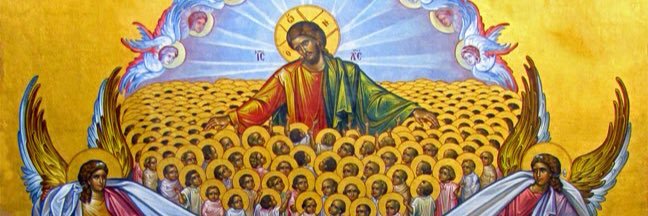
One last little liturgy for Christmas Day - suitable (maybe?) for use at home right before opening presents. Or maybe once you've had some Christmas breakfast.
https://t.co/671R0KdmQa
I should give this one another try. I didn't like it when assigned as a 6th grader (in NE); however, I still regularly recall moments from it all these years later - I had some sort of quiet impact.
It's the 5th anniversary of the full size Septuaginta: Reader's Edition, and we've partnered with Hendrickson to make this abridged edition as a less intimidating entrypoint to studying the Septuagint
(e.g., I gave one yesterday to a high schooler at church who is studying Greek)
One whole side of the David/Bathsheeba story I never noticed until I interacted with Asian Christians?
Uriah knew everything.
It’s obvious when you read the story in a culture closer to the text. The folks I interacted with were a few generations removed from emperors and concubines and court politics.
The king doesn’t send for the most beautiful woman in the city when her husband is away without the neighbors knowing. In those cultures, if it is POSSIBLE that you could have been alone together as a man and a woman, then you slept together. It was assumed and known. People talk.
Uriah knew.
He was called back from the front, and was given a big dinner by the king, and told to relax and go sleep with his wife. He replied that his conscience couldn’t bear it with the soldiers of Israel still in the field.
This is court political talk.
Just like pharaoh and Moses debating in public about the sacrificial festival in the wilderness, both sides know exactly what is being really debated. There is stuff that can’t be directly acknowledged in public to save face, but it’s obvious to anyone in the know. Moses is demanding to take the Israelites for good. David is insisting that Uriah cover for David impregnating his wife.
Uriah knows he can’t publicly accuse the king of what they both knew he did. But Uriah would rather die than play the cuckold. So he makes some big righteous excuse for never being home alone with his wife, thus making it impossible for anyone to say that the child is his.
Uriah knows this means death. David knows this means death. The two of them understand each other.
Uriah is looking him in the eye and saying, “I can’t do anything to you, you dishonorable bastard, but I’ll be damned if I play along and cover for you. Do your worst—finish your dirty work.”
David coldly says in his eyes, “so you have chosen death.”
Uriah isn’t a clueless goody two shoes sap. He’s a man of honor and a tragic hero.
🧵This is a great point.
I'm a novelist, & when you write a story you construct setting, characterization, plot, etc. to show-not-tell your point. The biblical authors are master storytellers. They are not spinning made-up tales, but they are making story-telling choices.
Why Read The Bible In Hebrew?
So, remember how Joseph gets sold into slavery in Egypt and eventually rises to become Pharaoh's second-in-command?
Well...why doesn't Joseph ever write home to his father to tell him that he's alive?
A thread (for non-Hebrew readers too!) 🧵1
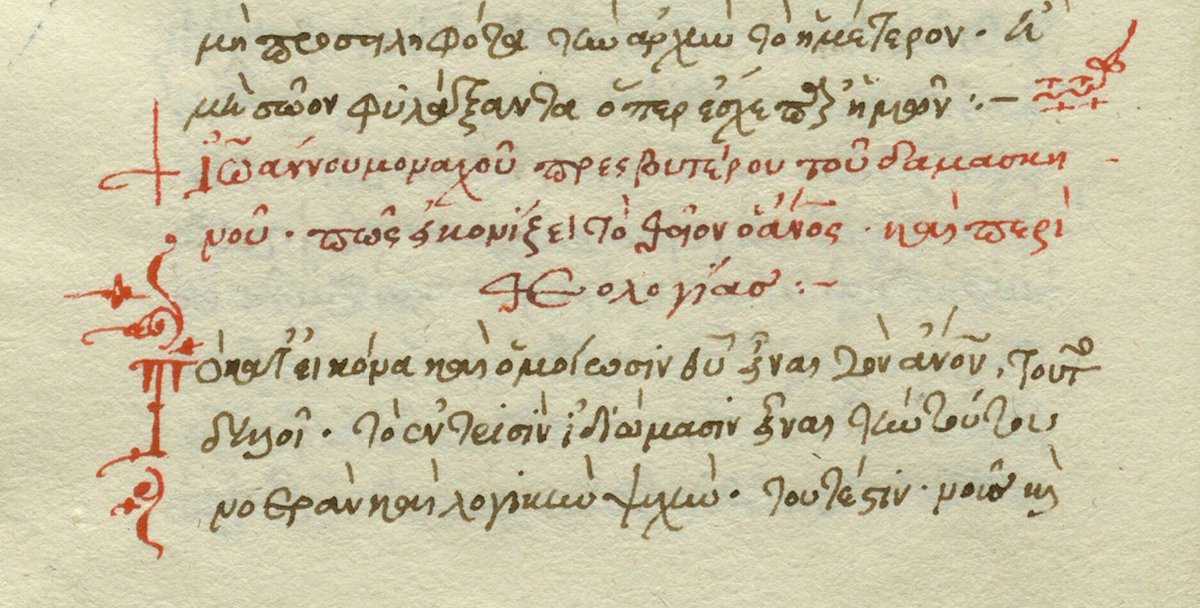
On this feast of St John Damascene, read 'On Theology' (CPG 8087.5) and 'How Man is the Image of God' (CPG 8087.4), two very short and frequently cited opuscula attributed to Saint John.
https://t.co/PDvHEqW5pQ
It seems that for St Paul the "image of God" is not *just* Christ, but the resurrected and glorified Jesus. This means that the "imago Dei" of Genesis 1 is based on the complete work, not just the enfleshment, of God.