So happy to announce that my book with @tara_slough is now out at Cambridge Elements!!
External Validity and Evidence Accumulation
Part 1 develops key theoretical concepts for evidence accumulation. Part 2 applies those concepts to meta-analysis, replication, and extrapolation
Thrilled to announce the release of Uprooted: How Post-WWII Population Transfers Remade Europe today with @CUP_PoliSci! 🎉🎉🎉
📚[Amazon link: https://t.co/rBASq40mxp]
Every year, millions are displaced by war, repression, disasters, and climate change. My book shows that accommodating the displaced population can strengthen states and benefit local economies in the long run.
I study the effects of large-scale displacement on social and economic development using rich historical data from post-WWII Poland and West Germany.
A thread about the book below: (1/n)
Peter Esaiasson and I spent a lot of time on this newly published paper. It was NOT one of those papers that wrote itself. (Is there ever?) We make two bigger points.
💡Do women's experiences in employment, education, and outside of marriage drive them to the left? Does that contribute to the modern gender vote gap? 👭 New article with @RosieShorrocks in @cps_journal where we tackle this question using 🇬🇧🇩🇪🇨🇭panel data: https://t.co/sBJvV3HtqF
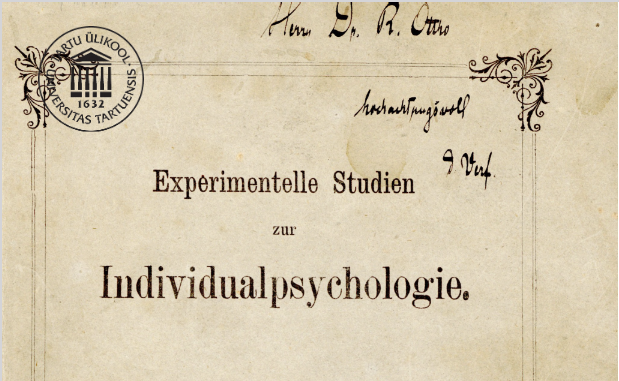
We've worked on individual differences since 1889! Come write the next chapters in history with @unitartu and @ESTbiobank!
🔔Post-docs sought for personality, cognition, well-being, genetics and/or health research using a large population study.
Please RT /1
It’s disturbing how many people have made willful ignorance a central part of their identity.
I see people on here bragging that they refuse to read something and others cheering them on.
It’s not shameful to read something you don’t agree with. You might learn something. Or at least you will understand where other people are coming from.
I’ve read many books I expected to hate and then been surprised by how thoughtful and nuanced they were.
An open mind is a powerful tool for understand the world. It’s far more complex than any ideology or belief system will ever fully capture.
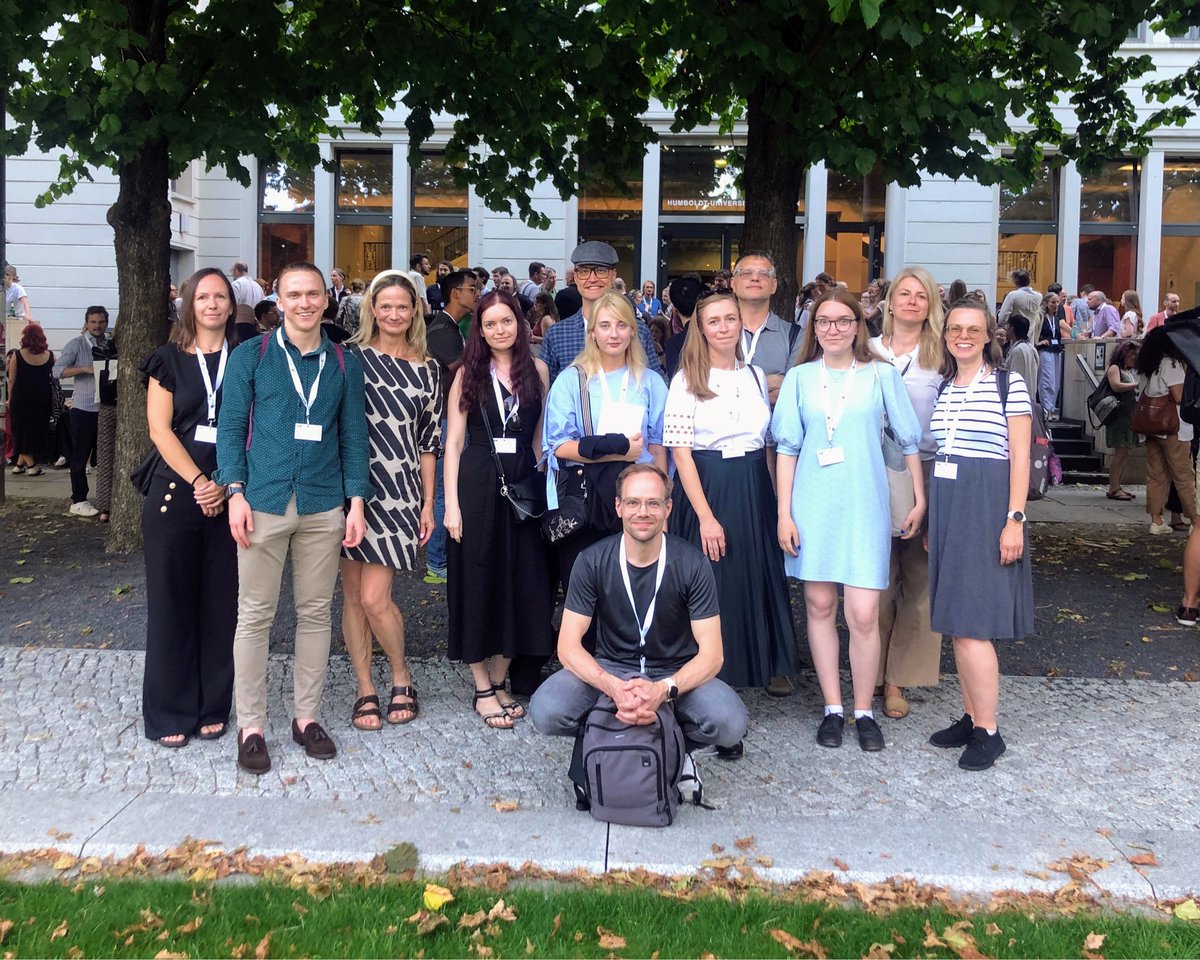
Many thanks for comments and words from supervisors, conference participants, reviewers and editors! And sweet office mates who surprised me with some cinnamon roll (when I was pretending to be working) to have a small celebration in my office today❤️
Glad that my first paper is now online! @UU_PoliSci There are many ways of investigating the typically observed strong relationship between educational attainment and attitudes toward immigration. Here, I use three natural experiments with Swedish twin data 👇
New article out by @QinyaFeng in Journal of Experimental Political Science! In the paper, she uses not one, not two, but -three- natural experiments in Swedish twin data to scrutinize the relationship between education and attitudes towards immigration. https://t.co/UFr7mhKDDm
10) The paper partly adds to existing studies on the edu-immigration attitude link, and partly join growing research using various family design and triangulation to strengthen causal inference (in epidemiology, e.g., Lawlor 2017, in psychology, e.g., van de Weijer et al. 2024)
📝New paper w/ @ruofan_ma and Aleksei Opacic on the pitfalls of a common way to test for causal mechanisms: the "intermediate outcome test." We show that they are only informative under very strong assumptions that are almost never discussed in practice.
https://t.co/JdTofLYVul




![vcharnysh's tweet photo. Thrilled to announce the release of Uprooted: How Post-WWII Population Transfers Remade Europe today with @CUP_PoliSci! 🎉🎉🎉
📚[Amazon link: https://t.co/rBASq40mxp]
Every year, millions are displaced by war, repression, disasters, and climate change. My book shows that accommodating the displaced population can strengthen states and benefit local economies in the long run.
I study the effects of large-scale displacement on social and economic development using rich historical data from post-WWII Poland and West Germany.
A thread about the book below: (1/n)](https://pbs.twimg.com/media/Gc67sTCaAAIBWid.jpg)