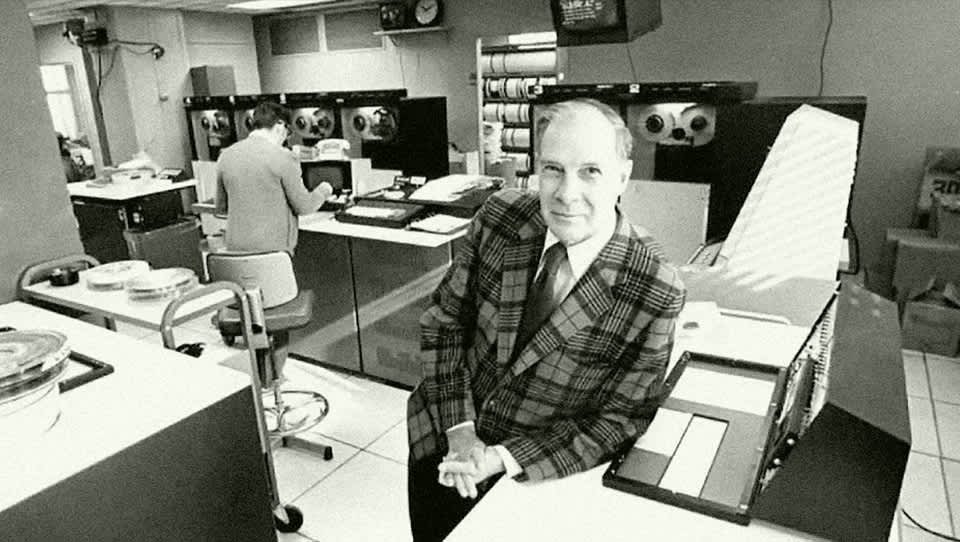
A mathematician who shared an office with Claude Shannon at Bell Labs gave one lecture in 1986 that explains why some people win Nobel Prizes and other equally smart people spend their whole lives doing forgettable work.
His name was Richard Hamming. He won the Turing Award. He invented error-correcting codes that made modern computing possible. And he spent 30 years at Bell Labs sitting in a cafeteria at lunch watching which scientists became legendary and which ones faded into nothing.
In March 1986, he walked into a Bellcore auditorium in front of 200 researchers and told them exactly what he had seen.
Here's the framework that has been quoted by every serious scientist for the last 40 years.
His opening line landed like a punch. He said most scientists he worked with at Bell Labs were just as smart as the Nobel Prize winners. Just as hardworking. Just as credentialed. And yet at the end of a 40-year career, one group had changed entire fields and the other group was forgotten by the time they retired.
He wanted to know what the difference actually was. And he said it wasn't luck. It wasn't IQ. It was a specific set of habits that almost nobody is willing to follow.
The first habit was the one that hurts the most to hear. He said most scientists deliberately avoid the most important problem in their field because the odds of failure are too high. They pick a safe adjacent problem, solve it cleanly, publish it, and move on. And because they never swing at the hard problem, they never hit it. He said if you do not work on an important problem, it is unlikely you will do important work. That is not a motivational line. That is a logical one.
The second habit was about doors. Literal doors. He noticed that the scientists at Bell Labs who kept their office doors closed got more done in the short term because they had no interruptions. But the scientists who kept their doors open got more done over a career. The open-door scientists were interrupted constantly. They also absorbed every new idea passing through the hallway. Ten years in, they were working on problems the closed-door scientists did not even know existed.
The third habit was inversion. When Bell Labs refused to give him the team of programmers he wanted, Hamming sat with the rejection for weeks. Then he flipped the question. Instead of asking for programmers to write the programs, he asked why machines could not write the programs themselves. That single inversion pushed him into the frontier of computer science. He said the pattern repeats everywhere. What looks like a defect, if you flip it correctly, becomes the exact thing that pushes you ahead of everyone else.
The fourth habit was the one that hit me the hardest. He said knowledge and productivity compound like interest. Someone who works 10 percent harder than you does not produce 10 percent more over a career. They produce twice as much. The gap doesn't add. It multiplies. And it compounds silently for years before anyone notices.
He finished the lecture with a line I have never been able to shake.
He said Pasteur's famous quote is right. Luck favors the prepared mind. But he meant it literally. You don't hope for luck. You engineer the conditions where luck can land on you. Open doors. Important problems. Inverted questions. Compounded hours. Those are not traits. Those are choices you make every single day.
The transcript has been sitting on the University of Virginia's computer science website for almost 30 years. The video is free on YouTube. Stripe Press reprinted the full lectures as a book in 2020 and Bret Victor wrote the foreword.
Hamming died in 1998. He gave his final lecture a few weeks before. He was 82.
The lecture that explains why some careers become legendary and others disappear is still free. Most people who could benefit from it will never open it.
Italian efficiency when it comes to coffee should be studied.
In Italy:
- Walk into a bar and look at the guy
- Un caffe
- 30 seconds later it’s ready
- Shoot it
- Leave €1
- Walk out
In the US:
- Join a line
- Wait
- Order coffee
- Answer 12 questions: Size? Milk? Roast? Sugar? Temperature? Colombia beans? Name? How do you spell it?
- $12.34
- Ask for a 20% tip. Click 5 times on a ipad to have a custom tip
- Tap phone
- ask where to send the invoice
- Wait again on a different line
- Someone call a name that sounds similar to mine
- get the coffee
- too hot, can't drink it
- finally at temperature
taste like shit
J.D. Vance in April 2025: “I think a lot of European nations were right about our invasion of Iraq. Frankly, if the Europeans had been a little more independent, and a little more willing to stand up, then maybe we could have saved the entire world from the strategic disaster that was the American-led invasion of Iraq…I don’t want the Europeans to just do whatever the Americans tell them to do. I don’t think it’s in their interest, and I don’t think it’s in our interests, either.”
https://t.co/xrDhe7AL9V
Before the war:
1) Iran didn't control the Strait Of Hormuz, now it does
2) Iran oil was sanctioned, now it's not
3) Iran was not building a nuke, now it will
4) US bases in the Gulf were assets, now liabilities
5) Inflation was declining, now increasing
Definitely winning!
This video's misleading: Cardinal Pizzaballa's worship service was within guidelines permitting services under 50 people. Police denied him anyway and lied about it. Rabbis continue to lead small prayer gatherings from the Western Wall uninterrupted by police restrictions
Can’t help but think of this Sun Tzu quote with everything going on:
“Victorious warriors win first and then go to war, while defeated warriors go to war first and then seek to win”
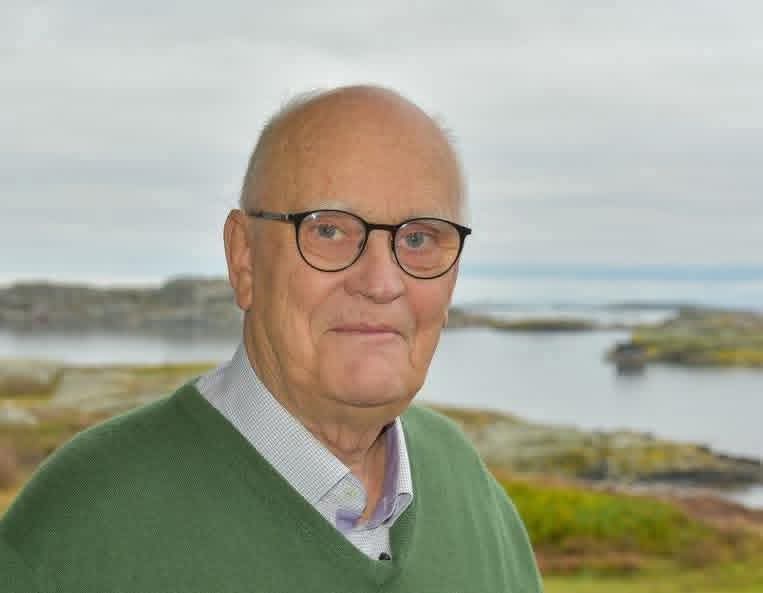
A Swedish billionaire donates 800 million kronor to Gaza… the largest support of its kind through UNICEF
Swedish businessman Roger Akelius has announced a massive donation of 800 million Swedish kronor to support the Gaza Strip through UNICEF, in a remarkable humanitarian step considered one of the largest ever.
According to the Swedish newspaper *Expressen* and other Swedish websites, this support will be channeled through the Akelius Foundation, with the aim of supporting the education sector in Gaza amid the difficult conditions faced by children there.
The report explained that this amount could help build hundreds of schools, as the cost of constructing a school that accommodates around 250 students—while providing education and meals for several years—is estimated at only a few million kronor, meaning thousands of children could benefit.
Kerstin Engström, head of the foundation, also confirmed that the donation could contribute to building up to 400 schools, providing broad educational opportunities for children in the sector.
This donation is considered the largest individual contribution received by UNICEF in Sweden, as part of international efforts to support children and families affected in Gaza.
Photo: Akelius Foundation
Source: Swedish newspaper Expressen
Swed 24
"When true humanity shines, money becomes a means rather than an end, and values triumph over interests. An inspiring initiative that reminds us that giving can truly make a difference in the lives of thousands of children".
Elon, Andreesen, Sacks, Ackman, Chamath, Vivek, on and on, I remember when for all these guys it was critical to elect Trump because our national debt was a crisis and existential threat to the future of America only he would tackle. Don’t hear so much about that anymore.
For idiots w/either short memory or lack of historical curiosity/sophistication, a reminder that Sadam w/U.S. support invaded S. Iran in 1980 to grab a contested area thinking that it would be a "matter of days" w/an Iran "weakened" by the revolution.
The war ended 8 y later.
How often do LLMs claim to prove false mathematical statements?
In our latest benchmark, BrokenArXiv, we find they do so very often. The best model, GPT-5.4, only rejects 40% of incorrect statements obtained by perturbing recent ArXiv papers, and other models do much worse.
Interesting facts about books:
Roosevelt was known for his prodigious reading an average of one book a day.
Four books bound in human skin can be found in the Harvard University library.
Iceland is the world leader in book reading per capita.
In Brazilian prisons, reading books can reduce a sentence by four days.
The most frequently stolen book in the world is the Bible.
In Victor Hugo's Villain, there is a sentence that contains an impressive 823 words.
Virginia Woolf wrote all her works while standing, not sitting.
Leo Tolstoy's wife copied the manuscript of War and Peace seven times.
Over 20,000 books have been written about chess, highlighting its depth and complexity.
The Mahabharata is the only epic in the world that contains over 1200 characters.
Words like "rush" and "addiction" were created by the great Shakespeare.
The longest novel ever written is Marcel Proust's In Search of Lost Time, which clocks in at over 1.2 million words.
The first printed book in history was Gutenberg's Bible, published in 1455.
JK Rowling became the first billionaire author thanks to the worldwide success of the Harry Potter series.
Charles Dickens was paid per word, which explains why many of his works are so long.
Congress handed the president the power to start a war so they could avoid accountability at the ballot box. That is not statesmanship. That is cowardice. The Constitution is clear. War must be declared by Congress, not announced in an 8-minute video at 2:30am. @FoxNews
https://t.co/68K8yEou2E