Bridging deep theory & everyday wonder ✨
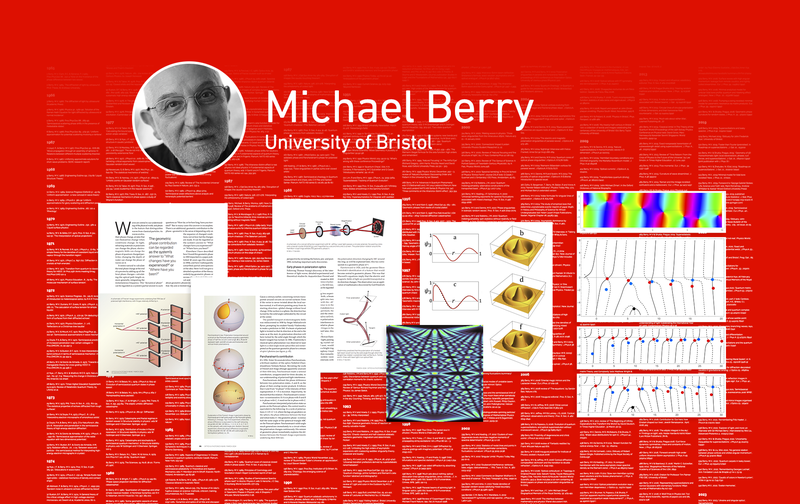
From tidal bores to twinkling stars, 2024 #WolframInnovatorAward winner Sir Michael Berry uses Wolfram technology to reveal the physics connecting nature to the quantum world.
https://t.co/0dRPhY4CHY
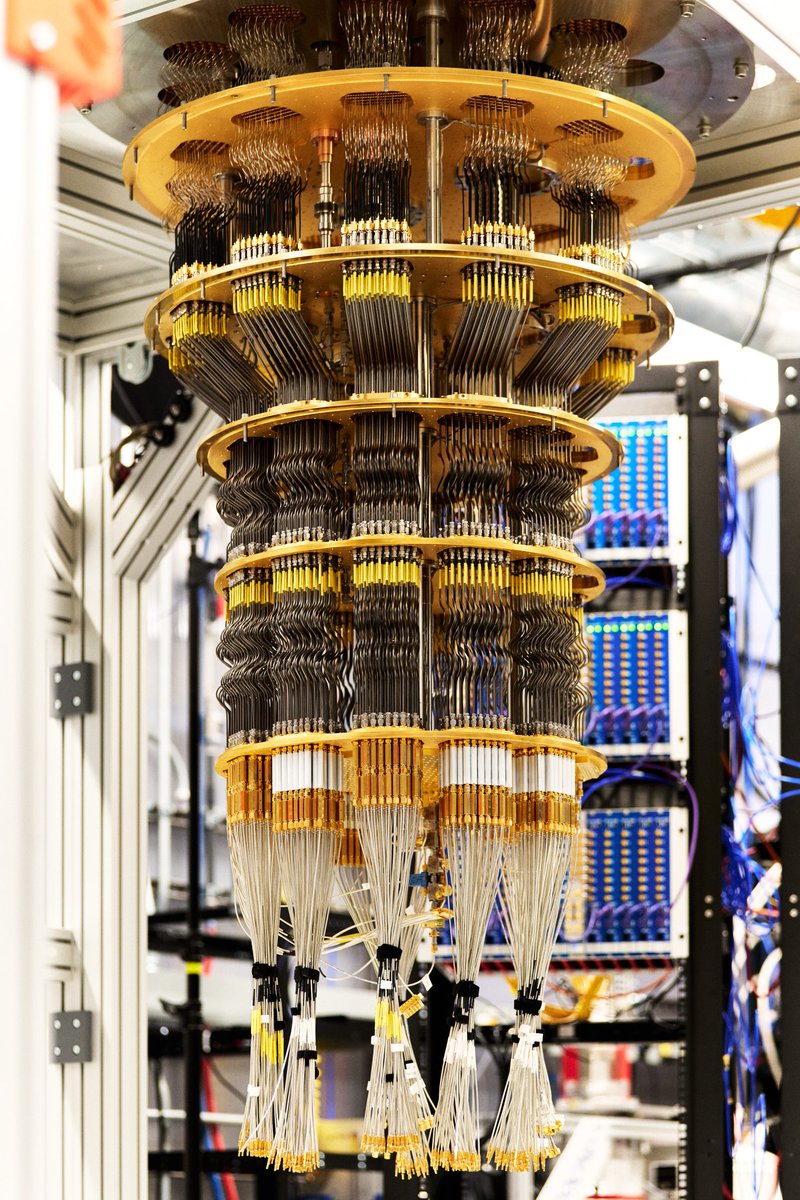
New breakthrough quantum algorithm published in @Nature today: Our Willow chip has achieved the first-ever verifiable quantum advantage.
Willow ran the algorithm - which we’ve named Quantum Echoes - 13,000x faster than the best classical algorithm on one of the world's fastest supercomputers. This new algorithm can explain interactions between atoms in a molecule using nuclear magnetic resonance, paving a path towards potential future uses in drug discovery and materials science.
And the result is verifiable, meaning its outcome can be repeated by other quantum computers or confirmed by experiments.
This breakthrough is a significant step toward the first real-world application of quantum computing, and we're excited to see where it leads.
Quantum physics principles are fundamental to many real-life technologies, including lasers, MRI scanners, and the transistors that power all modern electronics. In the realm of artificial intelligence, quantum machine learning (QML) is an emerging field that harnesses quantum phenomena like superposition and entanglement. This allows for the processing of vast datasets and the solving of complex problems much faster than classical computers. QML has the potential to revolutionize areas such as drug discovery by simulating molecules, optimizing financial models, and enhancing pattern recognition.
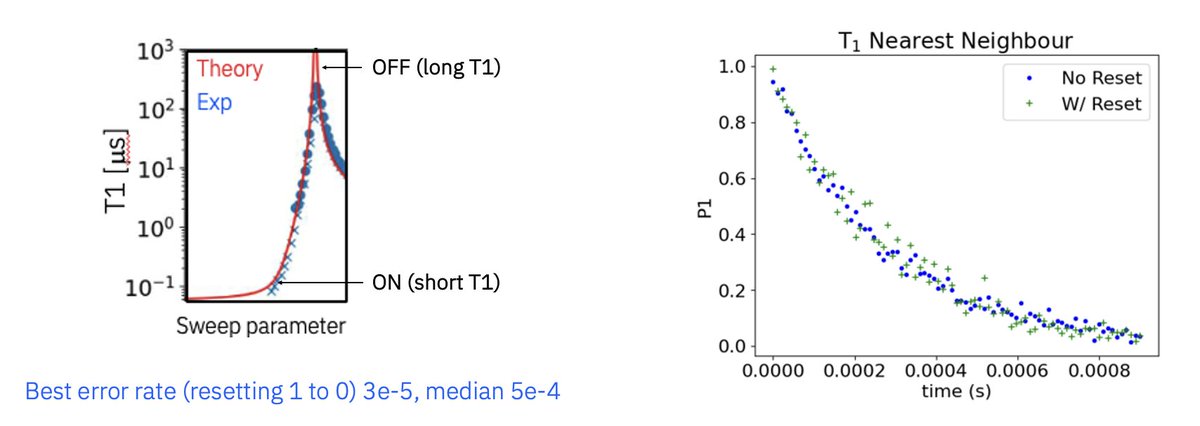
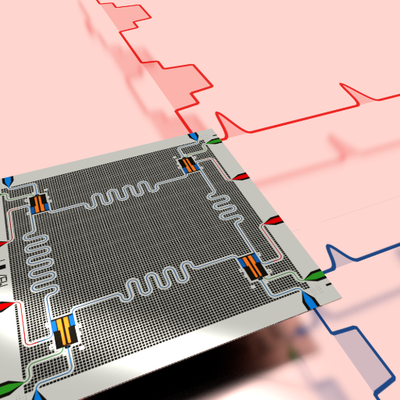
The ability to reset a qubit at will is critical for scaling quantum computing. Our team has now shown this can be done with a dynamic range of more than four orders of magnitude. In the RESET OFF spot, the qubit maintains hundreds of microseconds of coherence, while in the RESET ON spot its lifetime drops below 100 ns. Just as important, we confirmed that neighboring qubits remain completely undisturbed during the reset. This is a key step toward fast, scalable quantum computing.
Learn how the Wolfram Quantum Framework brings quantum concepts to life for students—combining symbolic computation, visualizations & interactive demos to make quantum mechanics & computing more intuitive for teaching.
https://t.co/Oo8Sqh8R2P
Since 2016, we’ve been giving researchers free access to IBM quantum computers.
Now, the upgraded IBM Quantum Credits program provides access to our most powerful systems to drive high-impact research toward quantum advantage.
Apply here: https://t.co/3h6TqRLd9S
New Livestream Alert:
Join us today at 4pm ET for "Storytelling with Stephen Wolfram" where, by popular demand, Stephen will explore anecdotes and stories from his life.
https://t.co/JK2jNzmjuL
Why guess when you can simulate?
Visualize reactions in bioreactors, visualize heat transfer and more in real-time #WithWolfram!
https://t.co/pSJm13GLsf
Our team is #hiring a Senior Research Scientist at Google Quantum AI 🔍⚛️ — a unique theory-leading role.
Apply here 🔗 https://t.co/KNd61Lu69H
#quantumcomputing#quantumAI
📷The Quantum 100: A Global Snapshot of Careers & Community is still open for one more week!
👏This major global initiative will celebrate the diverse community of people powering quantum science and technology. Each person included will be recognised in an online photo gallery, and have their achievements highlighted in a special report to the United Nations and at the IYQ closing ceremony.
📅Timeline
- Initial submission period: April 28 to June 11
- Review of submissions: May 28 to June 25
- Quantum 100 notified of selection: W/C June 30
- Formal announcement of the Quantum 100 begins: July 29
ℹ️ For more information and details on how to submit, visit: https://t.co/P2U4MIBwKq
#QuantumPhysics #IYQ2025 #Quantum100 #Quantum2025
We just showed how to do error detection inside a large quantum circuit.
These spacetime checks are local, efficient, and scalable.
- 236× fidelity gain
- 50-qubit Clifford circuits
- Built for near-term hardware
- Single-shot samples, no magic in post
Paper: https://t.co/uL7zE9vjfE
Quantum computing offers a radically new approach to modeling catalytic reactions, going beyond classical approximations to capture the full complexity of chemical dynamics. Our latest research with @Stanford lays out an end-to-end state-of-the-art framework to simulate real-time chemical reactions on a quantum computer, unlocking new possibilities for catalyst design, materials science, and cleaner energy solutions.
Read our blog: https://t.co/33CddDzNez
Read the paper: https://t.co/qsKbKacOky
Level up your quantum expertise. Enroll in our free Coursera course on quantum error correction from Google Quantum AI and become a contributor to the next era of computing.
→ https://t.co/JWnJ1Xaesw
→ https://t.co/fQoB1DJ4MU
The future of quantum computing relies on overcoming errors. Quantum error correction is how we'll build reliable and scalable quantum systems. What excites you most about the potential of quantum error correction? #QuantumAI
Jason Alicea opines that topological quantum computing is entering the POST-Q era. High quality topological qubits are not likely to arise suddenly; rather (like other qubits) they will improve gradually over an extended period. Jason explains here.
https://t.co/QYgmJnca04
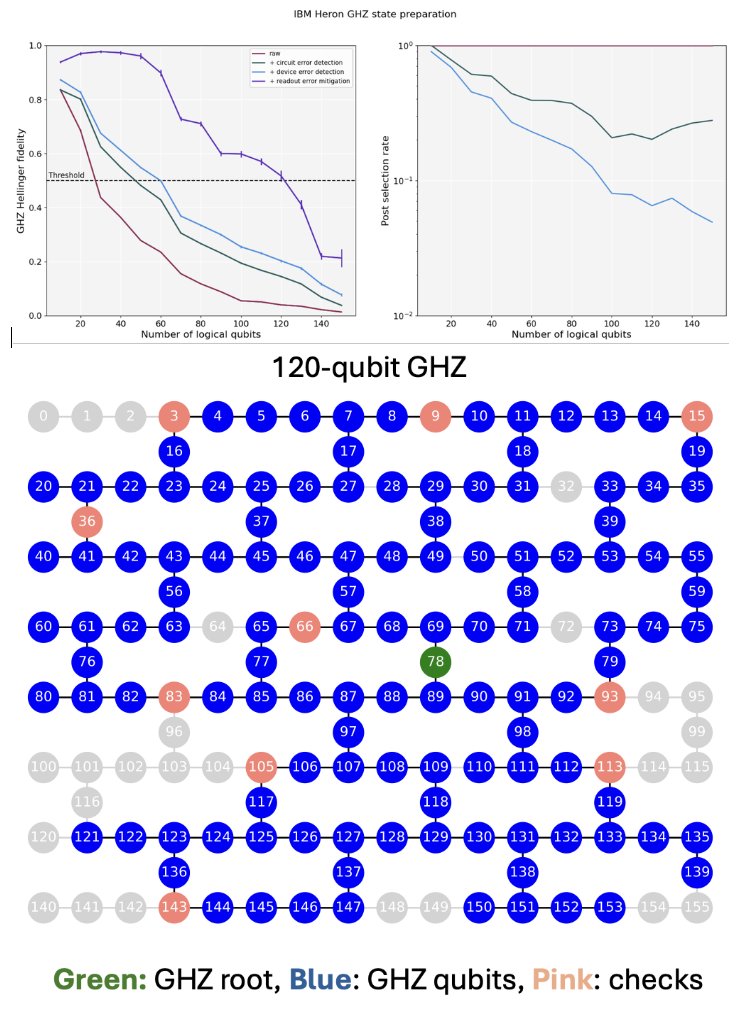
Preparing large GHZ states have long been a test of hardware capabilities. Using the IBM's Heron QPU the team recently showed that 120 logical qubits can be entangled in a GHZ state - a new world record. Work done by @AliJavadiAbhari and Simon Martiel.
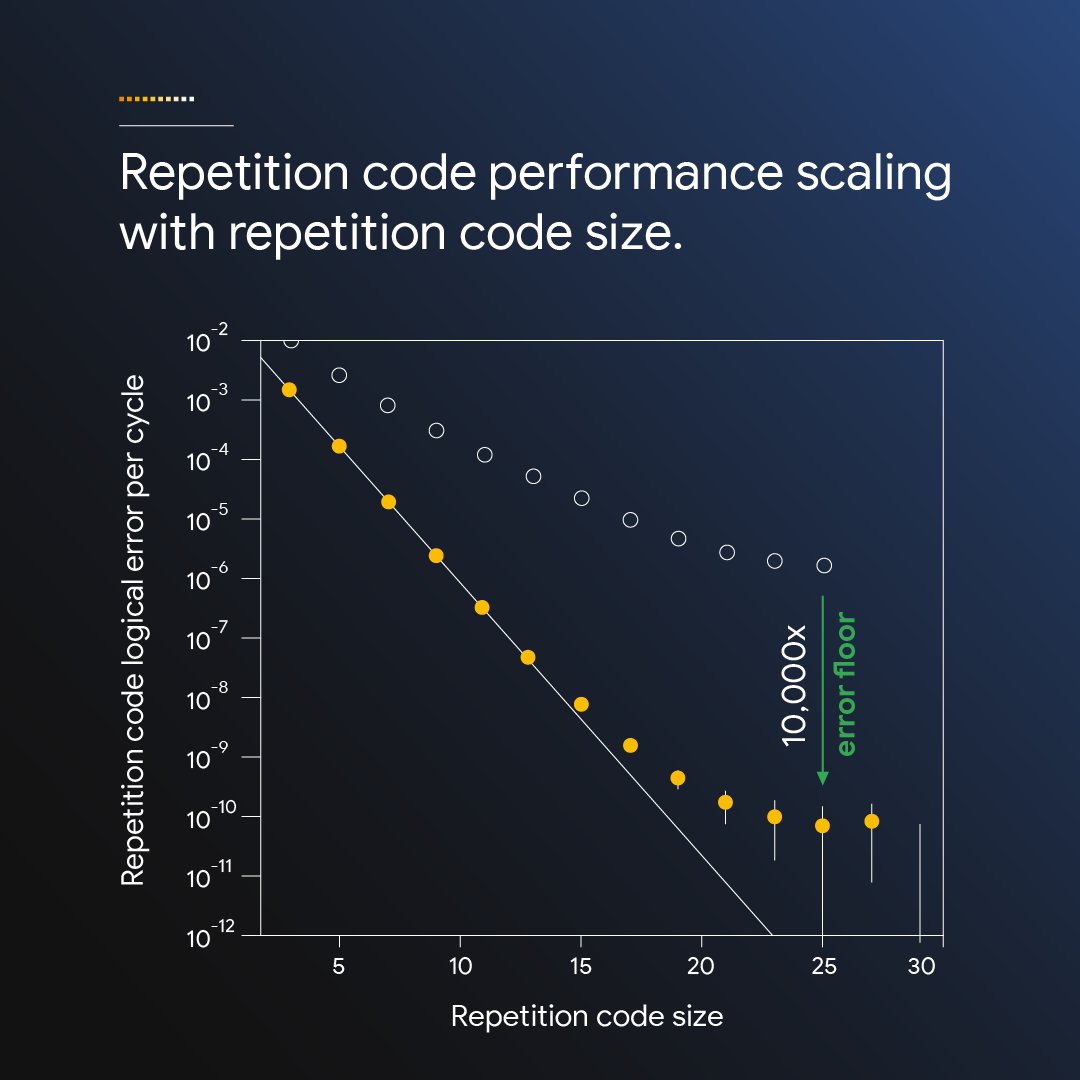
Willow has achieved a 10,000x improvement in error correction compared to our Sycamore chip. New research explores the challenges of reaching near-perfect qubits, with exciting results. Dive in → https://t.co/1uxGKoOVEI