Cloudflare added per-domain visibility into post-quantum TLS key exchange. That turns PQC from a checkbox into something operators can measure: which connections use hybrid ML-KEM, which fall back, and where legacy clients remain. https://t.co/jMwGi1Jh0S
Hand-picked by Danial Motlagh from Xanadu (@XanaduAI)'s Algorithms team, these are the top quantum compilation papers from summer 2026. 🙌
From optimization and circuit synthesis to hardware execution, catch up on the season's standout research before diving into your fall projects.
Dive in and stay tuned on Thursday for our top picks in Quantum Algorithms! 👀
https://t.co/6yKEgPeqT4
#ICIQJobs
🔝 ICIQ is looking for a #postdoctoral researcher in the group of Prof. @JRGM_ICIQ. The candidate will carry out materials synthesis, processing and electrochemical experiments under #magnetic fields.
Apply 👉🏼 https://t.co/gXFJwCzgx0
The 2026 @IBM Quantum user survey is now open: https://t.co/jC2QKJ91ds
Over the last two years, your input has helped us improve #Qiskit stability, expand documentation examples, and clarify learning experiences.
Help us prioritize what's next.
Is PennyLane in your quantum stack? 🛠️
Support open-source quantum software by taking the 2026 Unitary Foundation Quantum Open Software Source Survey.
Your feedback helps us build better tools for researchers, educators, and developers worldwide.
Take the survey: https://t.co/uaRRDezdz0
Thank you to our customers, colleagues, partners in academia and government, and all who came together for a momentous Quantum World Congress this week.
As our CEO @NiccoloDeMasi said in his keynote address, "We want to work with everyone who is here."
We strive to build a trusted quantum ecosystem for all, where quantum's full potential is realized and its positive impacts are felt throughout the world. #QuantumWorldCongress
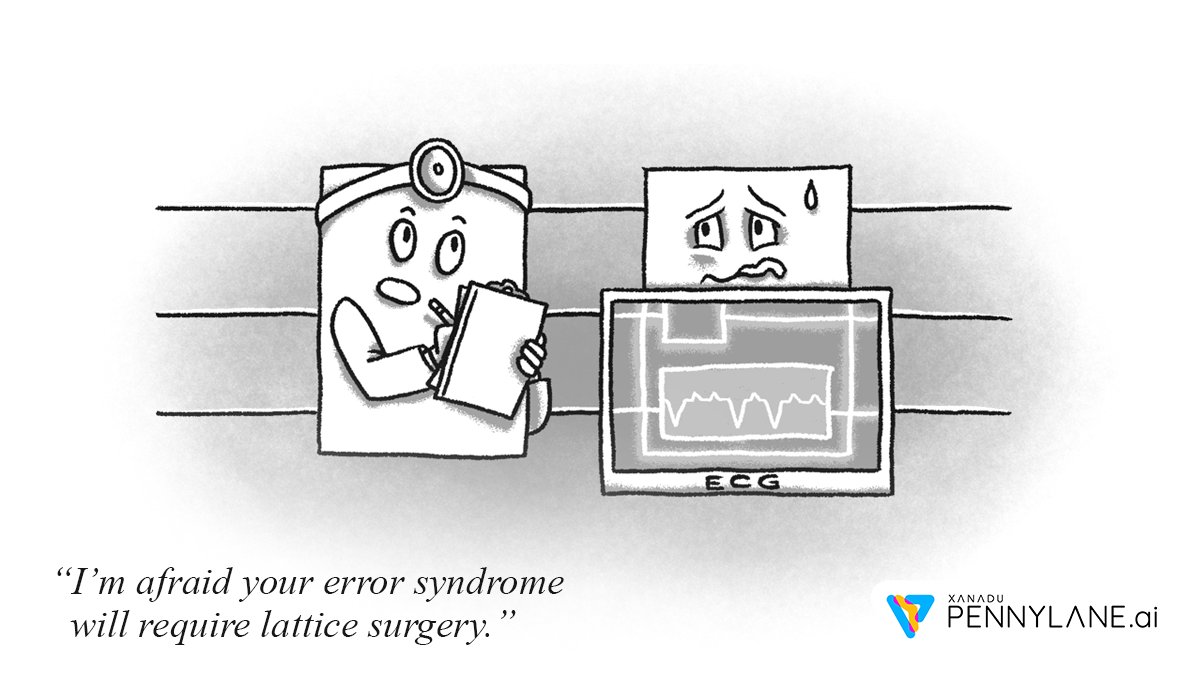
Sharing our latest quantum comic today. We want to see your favourite quantum memes and jokes in the comments below.
Sign up for the PennyLane Newsletter for exciting announcements, news, educational opportunities, and more comics:
https://t.co/RqH7RNKMGP
Don't go into the arena alone—QHack 2026 team creation is now open! 🤜💥🤛
Rally your squad of up to 4 members (or ride solo as a team of one) and get ready to tackle USD $67,000* in cash prizes.
Lock in your roster today by logging in to your profile at https://t.co/cRXqaaqw81 to create your team or join an existing one using your invite code.
https://t.co/qsJtuiLn84
*Terms and conditions apply
Qiskit Fall Fest 2026 is live: https://t.co/fxlBslmR81
The program brings quantum computing to local communities around the world through in-person and virtual events planned by university students and volunteers, with support from @IBM Quantum.
Sign up. Connect. Learn. #Qiskit
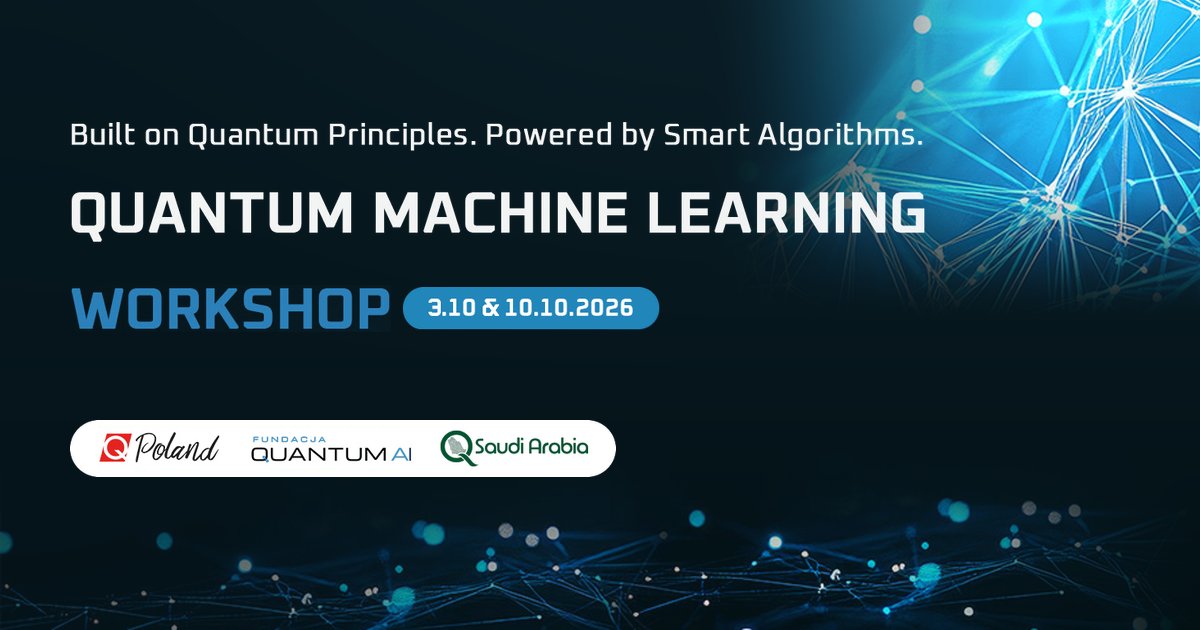
We invite you to attend the next free, online Quantum Machine Learning workshop organized together by QPoland, Fundacja Quantum AI and QSaudiArabia.
The workshop will take place on 3.10 & 10.10.2026, starting at 10:00 UTC+2, and will be led by Dr Jacob Cybulski.
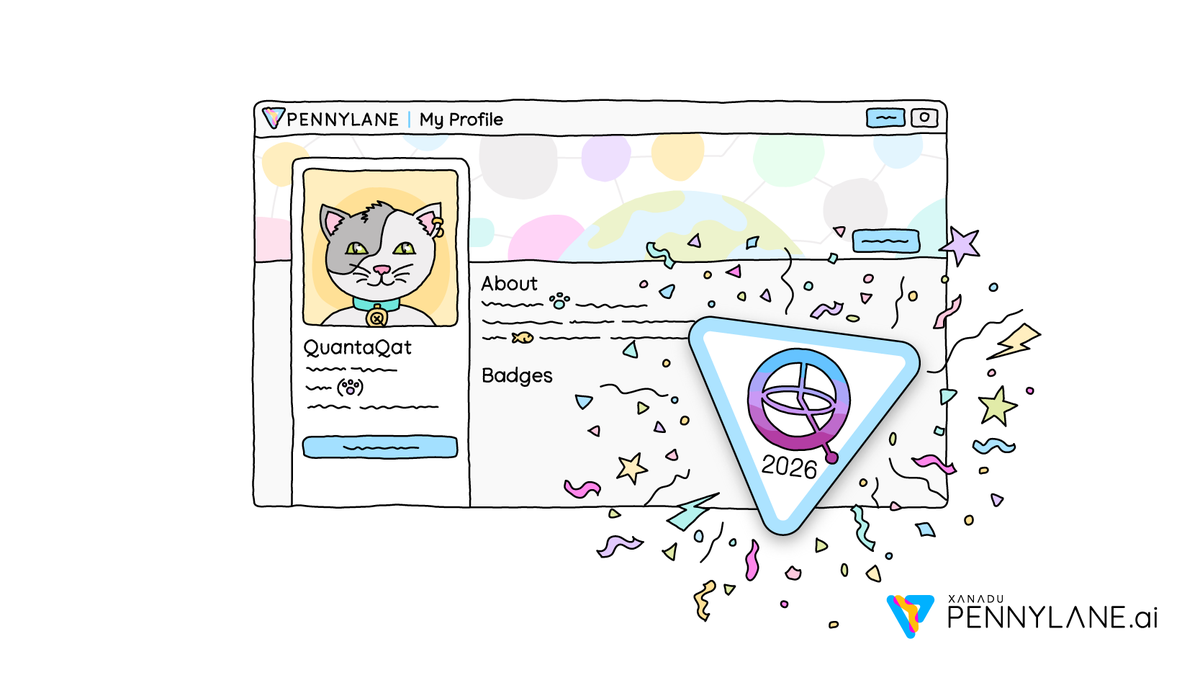
The PennyLane Challenge for Q-SITE Hacks 2026 kicks off September 19! 🎉
Whether you're just starting out or looking to test your problem-solving abilities, jump into the challenge powered by PennyLane and earn a limited-edition Q-SITE badge to display on your PennyLane profile and add to your collection.
Learn more:
https://t.co/7zolMKyWop
🌐 The 2026 Quantum Open Source Software Survey is open! Share your perspective on the quantum software ecosystem and help shape a clearer picture of our community.
📝 Take the ~20-min survey and make your voice heard: https://t.co/737qfhY3ip
The 2026 @IBM Quantum user survey is now open: https://t.co/jC2QKJ91ds
Over the last two years, your input has helped us improve #Qiskit stability, expand documentation examples, and clarify learning experiences.
Help us prioritize what's next.
Put QoolQit to work‚ and share what you build.
To celebrate the launch of QoolQit, @pasqal_quantum invites developers, researchers, students, and quantum practitioners to take part in the QoolQit Contest.
https://t.co/SSUB01W8cN
We are excited to announce that we have successfully demonstrated the Helix code on Helios – validating our plans for large-scale fault tolerance on real hardware. The demonstrations included a world-record per qubit, per round error rate of 4.6 x 10^-5 — with no post selection.
On top of that, we put the pieces together for real fault tolerant operation: memory, Clifford gates, and even a heterogeneous code architecture that allows us to use the best code for the job; optimizing for gates and magic state production separately.
This demonstration goes beyond component- or primitive- level functionality. The Helix code is a full QEC architecturethat will get us to the targets on our roadmap.
Read more in our blogpost here: https://t.co/RQU334NONS
2,000 atoms. 💡
That is the target PASQuanS2.1 set for programmable quantum simulators, with a path toward 10,000.
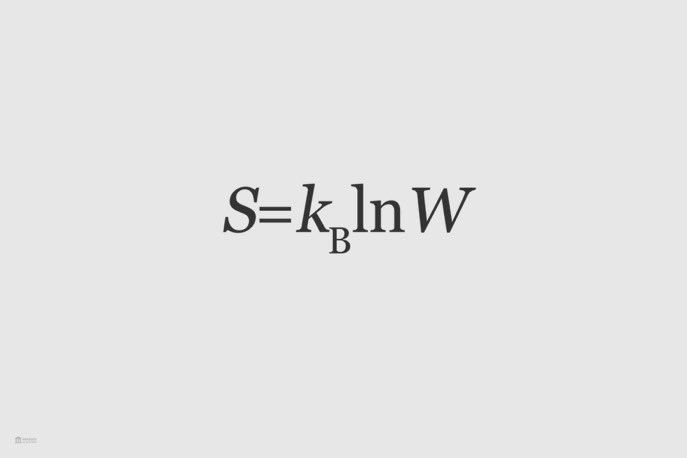
Every atom you add roughly doubles the cost of simulating the system classically. A few hundred is already beyond any supercomputer that will ever be built.