Big money is still buying Bitcoin
BlackRock’s Bitcoin ETF pulled in $54.8M in one day, while U.S. Bitcoin ETFs saw $31M in total inflows.
Bitcoin dipped -> institutions kept buying!
That’s a notable sign of continued institutional demand
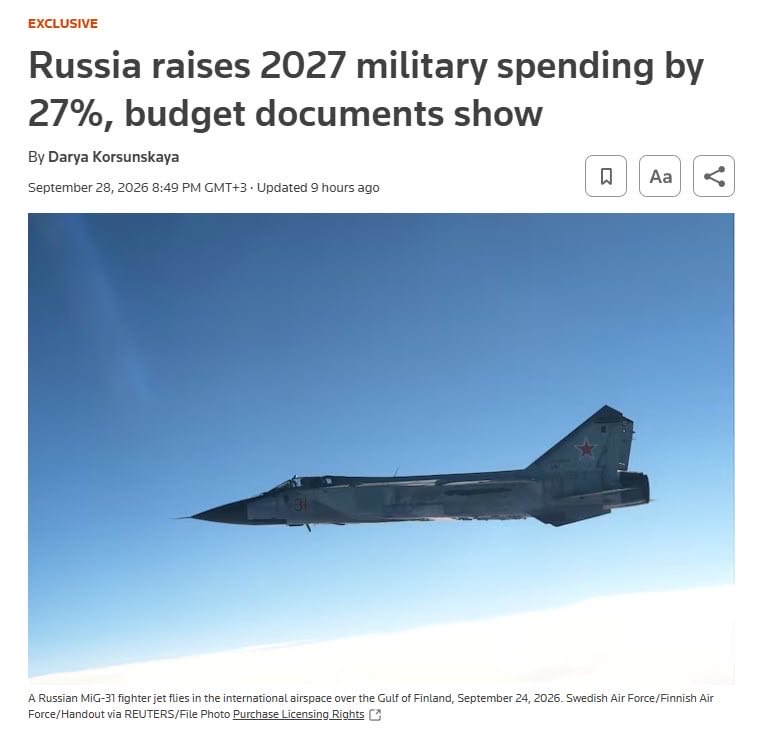
Russia plans to spend around $202 billion on the war in 2027 – Reuters.
Russia intends to allocate 17.1 trillion rubles ($202.6 billion) for defense – 27% more than originally planned. This also marks the highest figure since the start of the full-scale war.
Russia's budget deficit is projected at 3.2% of GDP for 2026, while national debt could rise to 21.7% of GDP by 2027.
Russia does not want peace – the numbers don't lie.
@CryptoNobler Wall Street at 2 PM:
4.00% → “SELL EVERYTHING”
3.75% → “WE’RE FINE”
3.50% → “BUY THE UNIVERSE”
One decimal place. Three different personalities. 😂
$6+ diesel a gallon...
Iran is still fighting, the Houthis are hitting Saudi.
Trump didn't succeed to defeat the "good guys"
The strongest military in the world is not American
And now Americans are paying for it...
@haydeninvestsX WHY:
Japanese champions like Tokyo Electron make the actual machines that manufacture advanced chips.
When U.S. labs pause, they stop ordering expensive hardware from Japan.
To me, this is the ultimate lesson: software gets the headlines, but physical hardware carries the risk.
@BullTheoryio WHY:
Japanese champions like Tokyo Electron make the actual machines that manufacture advanced chips.
When U.S. labs pause, they stop ordering expensive hardware from Japan.
To me, this is the ultimate lesson: software gets the headlines, but physical hardware carries the risk.
I keep telling people to stop looking only at California if they want to understand AI.
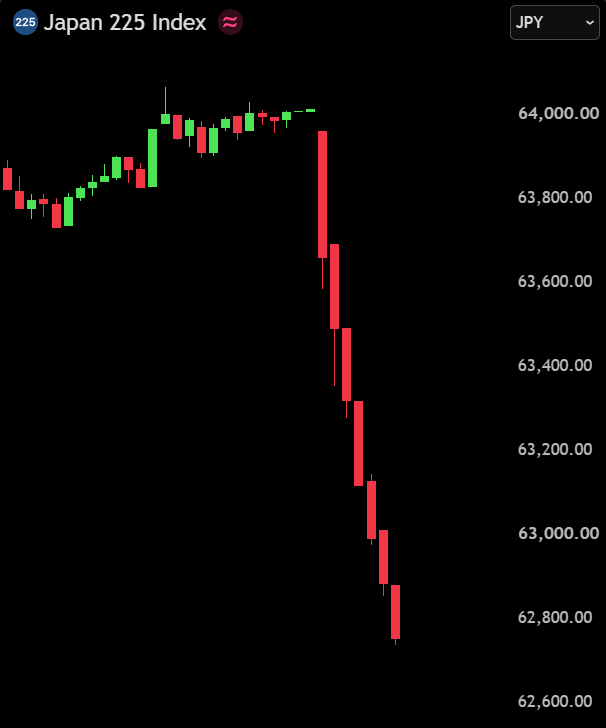
This morning, Japan’s Nikkei index (their main stock market) lost $150 billion in a flash.
Why?
Because OpenAI's Sam Altman killed his 2026 IPO, and Anthropic’s CEO said we need to slow down frontier AI.
Silicon Valley tapped the brakes, and Tokyo took the hit.
Japanese champions like Tokyo Electron make the actual machines that manufacture advanced chips.
When U.S. labs pause, they stop ordering expensive hardware from Japan.
To me, this is the ultimate lesson: software gets the headlines, but physical hardware carries the risk. Watch the factories!
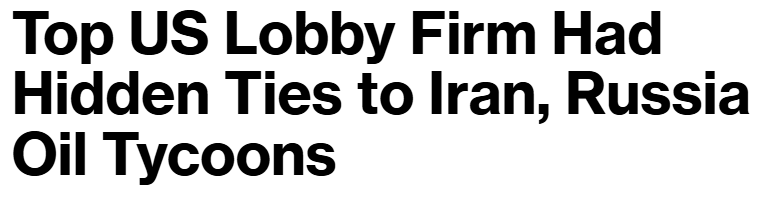
An investigation reveals that Qorvis represented entities linked to sanctioned oil magnates and 2Rivers, the network trading Russian crude. When energy prices spiked in March, the firm pushed to relax oil restrictions.
Shortly after, the US Treasury issued waivers allowing tankers with sanctioned crude to unload.
The timeline exposes how shadow fleet networks influence decisions inside the American government.
We blacklist tankers at sea while their lobbyists operate in Washington.
Our own capital is weakening sanctions from within.
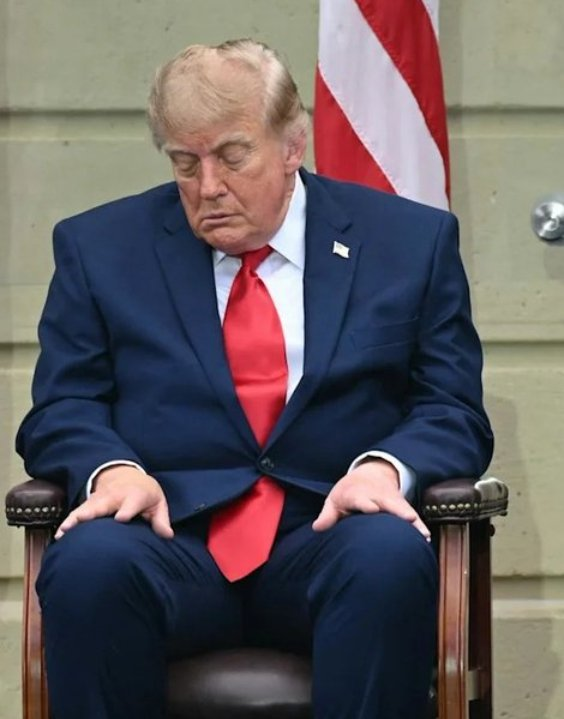
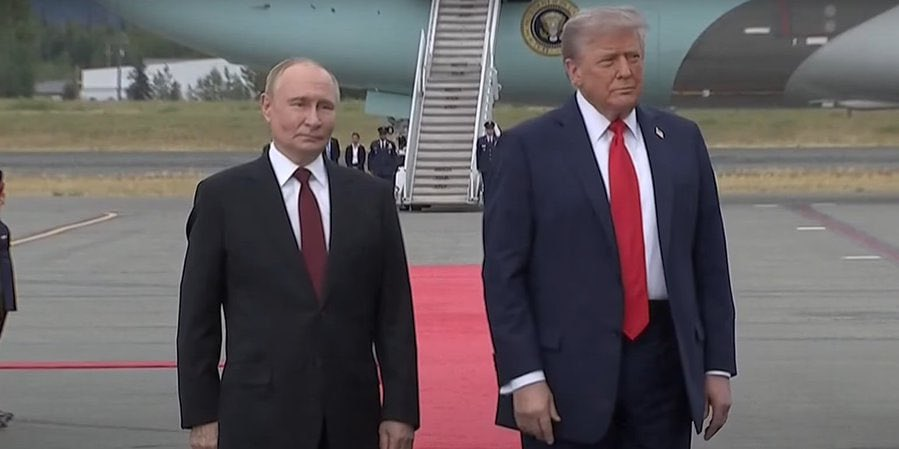
Trump held a "constructive" call with Putin, and I am skeptical.
Trump believes every dictator is just a "good guy" you can charm over the phone.
But Putin is not a business partner; he is playing Trump for time while missiles rain on Ukraine.
What is happening? In a simpler way:
China’s banks are basically moving money from low-yield yuan assets into higher-yielding U.S. Treasuries.
For regular people, that matters because it can support the dollar, affect the yuan, and keep global borrowing costs higher for longer.
The bond flows are changing even if the headline Treasury holdings don’t show it.
China's domestic bond yields are near record lows.
The US 10-year Treasury yields 4.76%.
Chinese banks have noticed.
They're offering close to 4% on some dollar deposits and reportedly investing the cash in US Treasuries.
That comes as China's reported Treasury holdings have fallen 13% to $633B, their LOWEST since 2008.
Beijing gets a double win: dollars absorbed means a slower yuan rally, and pressure comes off its own bond market.
So even as China's reported Treasury holdings fall, Chinese commercial banks are reportedly buying again.
The Strait of Hormuz is an active war zone
The U.S. destroyed 5 Iranian oil tankers after missile attacks on a warship, while Iran launched a massive retaliatory wave on Gulf ships
With crude racing toward $100 and reserves at 40-year lows, the safety is gone...
Goldman Sachs is warning that oil could spike to $120, and here is how fast it will hit your local gas station.
Is $120 oil possible? Absolutely
Brent crude is already hovering near $97 after recent U.S. and Iranian tanker strikes.
The terrifying reality is that the U.S. and its allies have already drained their Strategic Petroleum Reserve to 1982 lows.
With zero emergency inventory buffer left, any further disruption in the Strait of Hormuz immediately triggers a massive price spike.
When do you feel it at the pump?
In roughly two to three weeks
Refineries need time to process expensive crude into retail gasoline, but station owners usually hike pump prices in days to protect their margins.
Get ready for an expensive autumn...
Why it's not possible?
$120 oil needs a sustained, major supply shock.
If shipping gets disrupted, prices can spike, but the market also has strategic reserves, alternative routes, demand destruction and spare capacity to absorb part of the shock.
$120 is possible but it’s far from automatic.
Why it's not possible?
$120 oil needs a sustained, major supply shock.
If shipping gets disrupted, prices can spike, but the market also has strategic reserves, alternative routes, demand destruction and spare capacity to absorb part of the shock.
$120 is possible but it’s far from automatic.
Why it's not possible?
$120 oil needs a sustained, major supply shock.
If shipping gets disrupted, prices can spike, but the market also has strategic reserves, alternative routes, demand destruction and spare capacity to absorb part of the shock.
$120 is possible but it’s far from automatic.