i built a CT explorer that runs RADAR right in the browser. 🔥
RADAR maps 18 organs and returns 146 finding scores in 12.1s, locally on WebGPU. click the kidney, land on its slice.
radiologists: what would you click first?
Different AI models serve different use cases.
At Apsara Conference 2026, Galih Permadi, Founder & CEO of Lapis AI, shared how Qwen supports applications from text-to-image to image-to-video. Customization and fine-tuning help customers choose models for their needs.
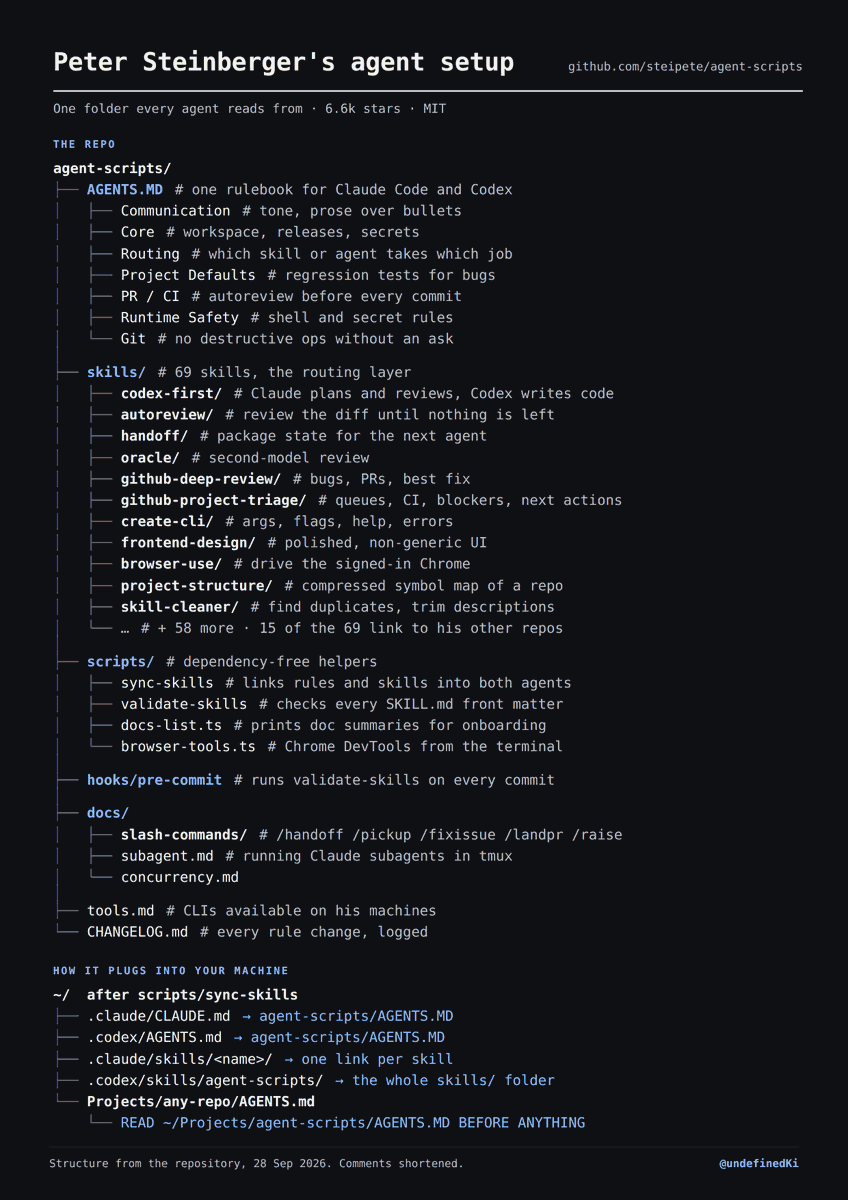
Peter Steinberger, the creator of OpenClaw, open-sourced his entire agent setup
The core idea is one folder that every agent on his machines reads from.
A single AGENTS.MD holds his rules, and a script symlinks it into ~/.claude/CLAUDE.md and ~/.codex/AGENTS.md
This way Claude Code and Codex always follow the same instructions.
Every other repo gets one line at the top:
READ ~/Projects/agent-scripts/AGENTS.MD BEFORE ANYTHING.
Change a rule once and every project picks it up.
Skills work the same way. 69 of them live in one place, each with a short description the agent reads to decide what to load, and scripts/sync-skills links them into both agents.
Fork it, replace his rules with yours, and delete the skills you do not need. His AGENTS.MD is full of his own hosts and accounts.
6.6k stars, MIT - https://t.co/3XQj9GxI6b
ANTHROPIC PUBLICÓ UN TALLER GRATUITO SOBRE CÓMO CONSTRUIR UNA EMPRESA USANDO SOLO AGENTES DE IA
agentes que se dividen las tareas, colaboran entre sí y ejecutan procesos de forma autónoma, sin intervención humana
subtitulado al español
📕 guárdalo, te va a servir
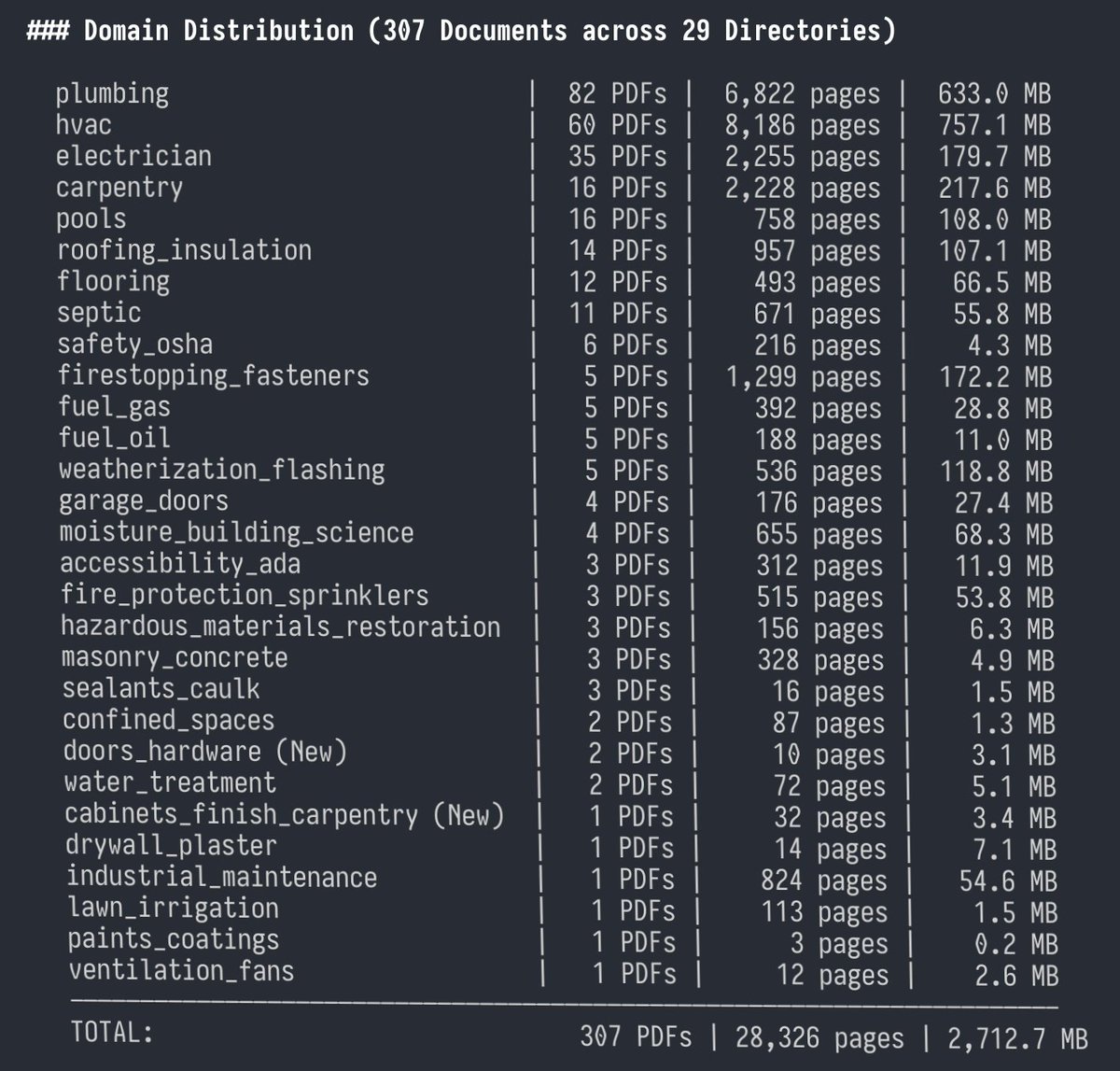
Antigravity with Gemini 3.8 Flash is really good at finding relevant PDFs on the web and organizing them into a corpus. Now I just need to 100x this. This skill of mine is helping to keep the costs down a lot, too:
https://t.co/HjoZ4EgUbG
Most Kubernetes engineers don't know these kubectl tricks that save hours during outages
𝗸𝘂𝗯𝗲𝗰𝘁𝗹 𝗴𝗲𝘁 𝗲𝘃𝗲𝗻𝘁𝘀 -𝗔 -𝘄 | 𝗴𝗿𝗲𝗽 -𝘃 "𝗡𝗼𝗿𝗺𝗮𝗹"
--> Watch only the bad stuff across the entire cluster
> It streams warnings and failures from every namespace in real time so you can catch issues before they turn into incidents.
𝗸𝘂𝗯𝗲𝗰𝘁𝗹 𝗱𝗶𝗳𝗳 -𝗳 𝗱𝗲𝗽𝗹𝗼𝘆𝗺𝗲𝗻𝘁.𝘆𝗮𝗺𝗹
--> See exactly what will change before applying
> It helps catch accidental changes like wrong image tags, deleted environment variables, or broken resource limits before deployment.
𝗸𝘂𝗯𝗲𝗰𝘁𝗹 𝗴𝗲𝘁 𝗽𝗼𝗱𝘀 -𝗔 --��𝗼𝗿𝘁-𝗯𝘆='.𝘀𝘁𝗮𝘁𝘂𝘀.𝗰𝗼𝗻𝘁𝗮𝗶𝗻𝗲𝗿𝗦𝘁𝗮𝘁𝘂𝘀𝗲𝘀[𝟬].𝗿𝗲𝘀𝘁𝗮𝗿𝘁𝗖𝗼𝘂𝗻𝘁'
--> Find unstable pods instantly
> This sorts pods by restart count so the most unstable workloads appear first.
𝗸𝘂𝗯𝗲𝗰𝘁𝗹 𝘁𝗼𝗽 𝗽𝗼𝗱𝘀 -𝗔 --𝘀𝗼𝗿𝘁-𝗯𝘆=𝗺𝗲𝗺𝗼𝗿𝘆 --𝗰𝗼𝗻𝘁𝗮𝗶𝗻𝗲𝗿𝘀
--> Find who is actually consuming memory
> The `--containers` flag breaks usage down per container instead of showing only pod-level metrics.
𝗸𝘂𝗯𝗲𝗰𝘁𝗹 𝗱𝗲𝗯𝘂𝗴 -𝗶𝘁 <𝗽𝗼𝗱-𝗻𝗮𝗺𝗲> --𝗶𝗺𝗮𝗴𝗲=𝗯𝘂𝘀𝘆𝗯𝗼𝘅 --𝗰𝗼𝗽𝘆-𝘁𝗼=𝗱𝗲𝗯𝘂𝗴-𝗽𝗼𝗱
--> Debug a pod without touching the original workload
> This creates a copy of the failing pod with a debug container attached for investigation.
𝗸𝘂𝗯𝗲𝗰𝘁𝗹 𝗴𝗲𝘁 𝗽𝗼𝗱𝘀 -𝗔 -𝗼 𝘄𝗶𝗱𝗲 --𝗳𝗶𝗲𝗹𝗱-𝘀𝗲𝗹𝗲𝗰𝘁𝗼𝗿 𝘀𝗽𝗲𝗰.𝗻𝗼𝗱𝗲𝗡𝗮𝗺𝗲=<𝗻𝗼𝗱𝗲-𝗻𝗮𝗺𝗲>
--> See every workload sitting on a node before you touch it
> Run this before cordoning or draining a node during maintenance.
𝗸𝘂𝗯𝗲𝗰𝘁𝗹 𝗴𝗲𝘁 𝗲𝘃𝗲𝗻𝘁𝘀 --𝗳𝗶𝗲𝗹𝗱-𝘀𝗲𝗹𝗲𝗰𝘁𝗼𝗿 𝗶𝗻𝘃𝗼𝗹𝘃𝗲𝗱𝗢𝗯𝗷𝗲𝗰𝘁.𝗻𝗮𝗺𝗲=<𝗽𝗼𝗱-𝗻𝗮���𝗲> --𝘀𝗼𝗿𝘁-𝗯𝘆='.𝗹𝗮𝘀𝘁𝗧𝗶𝗺𝗲𝘀𝘁𝗮𝗺𝗽'
--> Get the full chronological event history for one object.
> kubectl describe only shows recent events. This pulls the complete timeline for a specific pod, useful when you're trying to reconstruct what happened over the last hour.
A laser begins with a random photon. One excited atom emits it spontaneously, and that photon can trigger another excited atom to emit an identical photon. But first, the laser needs population inversion: more atoms in the excited state than the lower state.
The photons then bounce between the mirrors, multiplying through stimulated emission. The energy of each emitted photon is set by
E₂ − E₁ = hν
A small fraction escapes through the partially reflecting mirror as the laser beam. The key idea: a laser does not simply produce bright light; it turns atomic energy into highly organized light.
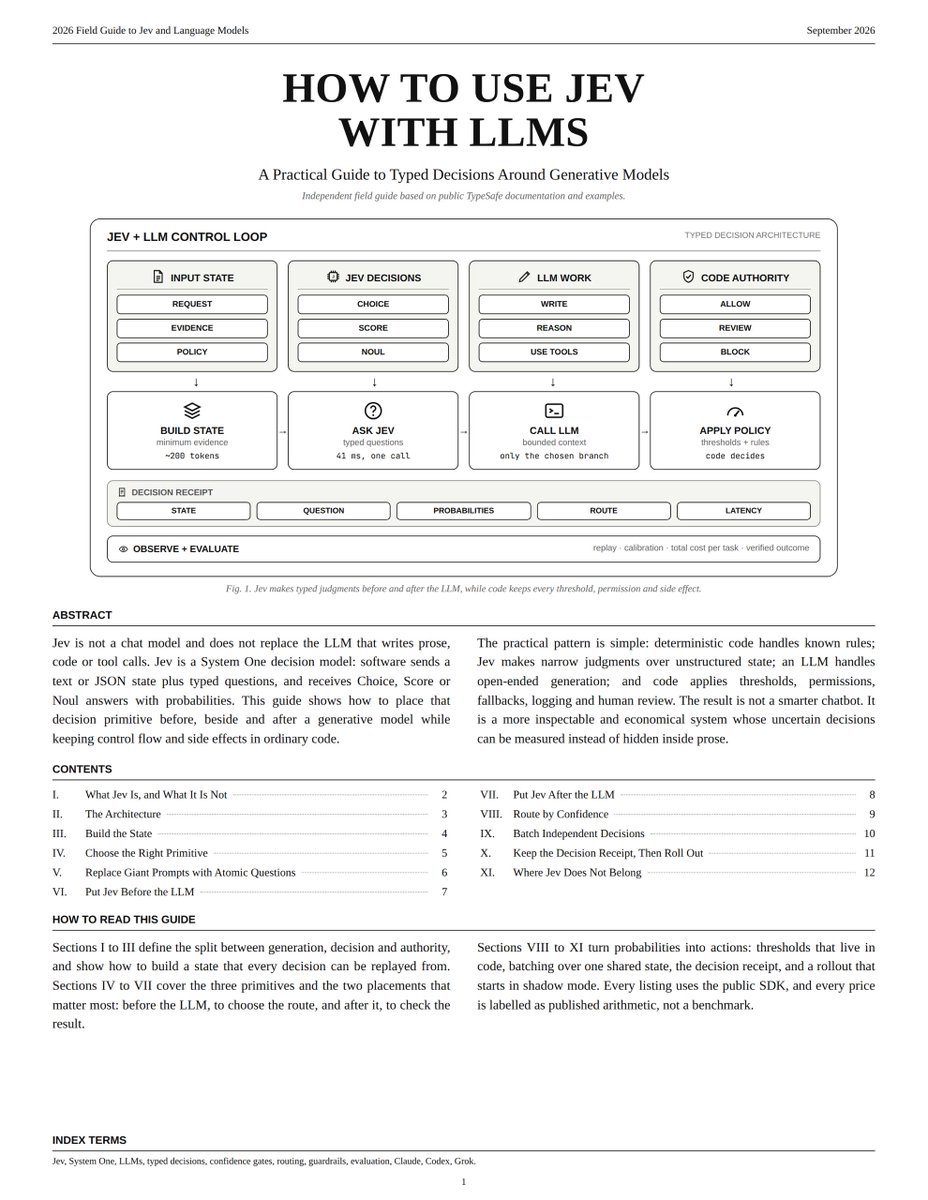
Jev Founder, Diogo Almeida, just released a 12-page PDF on how to use Jev with LLMs
It is more useful than most paid AI courses:
this is a 10-step blueprint for building a faster, cheaper and more controllable system around Claude, Codex, Grok or any other LLM:
step 1 → split the jobs: the LLM generates, Jev makes bounded decisions, deterministic code keeps authority
step 2 → build the state: the request, the relevant evidence, the policy and the proposed action, never the whole conversation
step 3 → pick the primitive: Choice selects a route, Score grades an ordered rubric, Noul returns the probability something is true
step 4 → go atomic: intent, urgency, evidence, risk and scope become five typed questions instead of one giant evaluation prompt
step 5 → Jev before the LLM: choose the context, tools, provider and workflow before the expensive call is paid for
step 6 → give the LLM one job: only the instructions, files and tools the chosen branch actually needs
step 7 → Jev after the LLM: does the result answer the request, rest on enough evidence and stay inside scope
step 8 → route by confidence: high confidence and low risk proceeds, uncertain asks for more context, consequential goes to review
step 9 → batch the judgments: many Choice, Score and Noul questions over one shared state, one call, not one LLM call per judgment
step 10 → keep the receipt: state version, question, probabilities, route, model, latency, outcome and human override
most AI courses teach you how to write a bigger prompt
this 12-page guide teaches you the control system that sits around every prompt
the result: smaller contexts, fewer LLM calls, 10,000 decisions for $0.42 instead of $100, and decisions you can actually inspect, test and improve
Send this PDF and the original Jev article to Claude Code or Codex and start rebuilding one expensive LLM decision at a time ↓
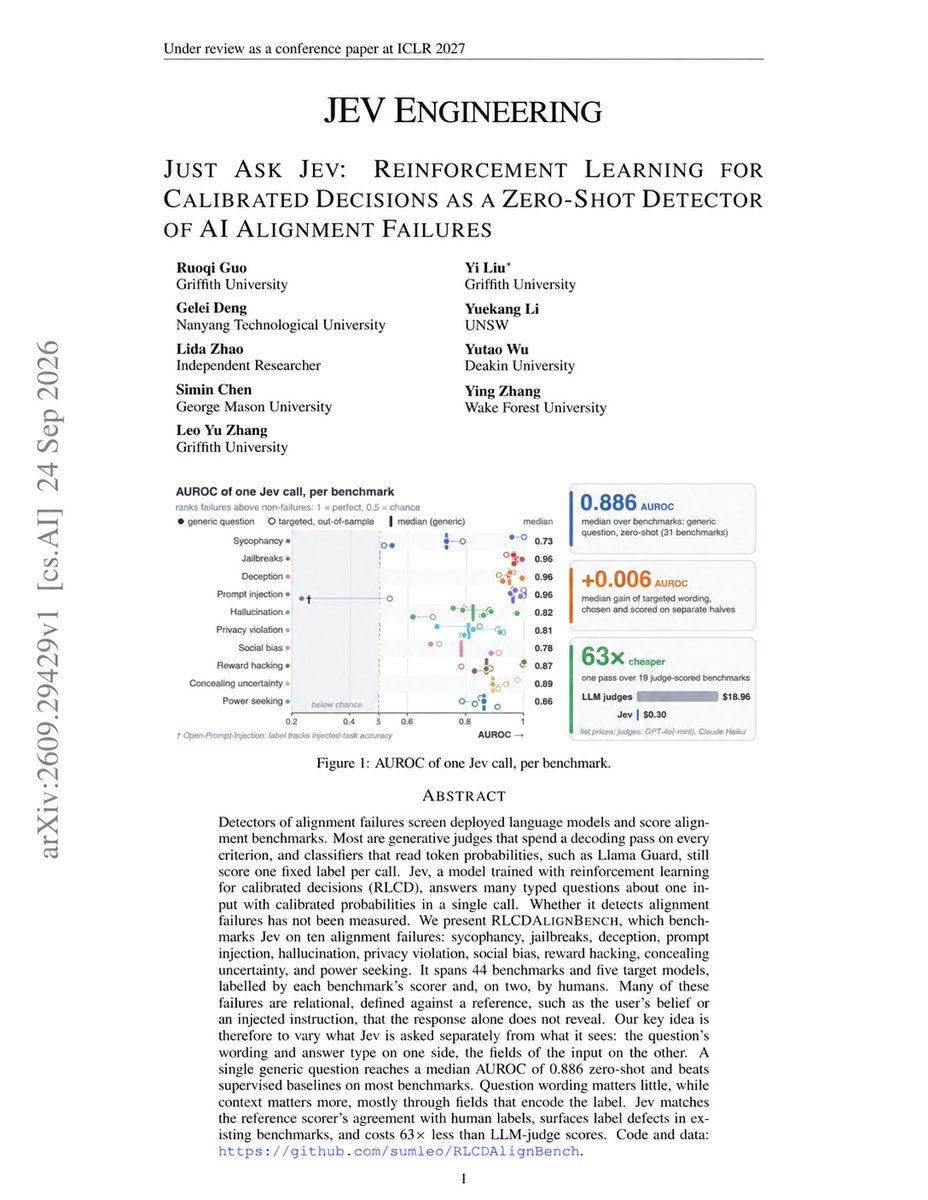
Chinese students just found the best way to use JEV for any LLM or AI agent - released a PDF research
the shift: I pasted it into Claude and GPT - and cut my costs by~63х
here’s what they found across 44 benchmarks:
1 → 7,193 responses, 10 types of failure. Jev was tested on hallucinations, prompt injections, data leaks, and other AI failures
2 → One simple question worked: 0.886 median AUROC, beating trained baselines on 25 of 31 benchmarks without task-specific training
3 → Context beat clever prompting - give Jev the source or rule it needs to check the answer against
4 → Keep the probability, not just "yes" or "no" - Fitting a threshold on 10 labeled examples raised median F1 from 0.706 to 0.793
5 → Among the 50% most confident decisions, median accuracy reached 0.933 - send uncertain cases for another review
6 → Jev even helped uncover labeling errors in three benchmarks. Sometimes the test’s "correct answer" was the problem
7 → 11.4 questions per call, with 0.31-second median latency - on 19 benchmarks, checking cost $0.30 vs $18.96 with LLM judges - roughly 63× cheaper
the result: It will made your setup CHEAPER and FASTER than what 95% of people are running
Copy the Jev setup researchers tested across 44 benchmarks - then read the full Jev architecture ↓
EARTH HAS A COSMIC CLOCK. Earth's climate doesn't stay exactly the same forever. Over thousands to hundreds of thousands of years, Earth's orbit and orientation in space slowly change. These changes are called the Milankovitch cycles. There are three major cycles: ECCENTRICITY Earth's orbital shape changes from more circular to more elliptical over roughly 100,000 years. OBLIQUITY Earth's axial tilt varies between about 22.1° and 24.5° over roughly 41,000 years. PRECESSION Earth's rotational axis slowly wobbles like a spinning top over roughly 26,000 years. Together, these cycles change where and when sunlight is distributed across Earth, particularly at high latitudes. Over geological timescales, these orbital changes are an important factor in Earth's long-term climate variations and the timing of many glacial and interglacial periods. Think about the scale: Earth's orientation changes over tens of thousands of years... while a human lifetime is only a tiny moment on that clock. The planet isn't just traveling around the Sun. Its entire orbital geometry is slowly changing too. Which cycle surprised you most: eccentricity, obliquity, or precession?
Teman2 yang lagi cari rumah di Jabodetabek, bisa cek web buatan tim jurnalisme data @hariankompas ini. Di web ini ada data 37 ribu rumah, lengkap dengan lokasi, luas, harga, dan jarak ke pusat kota. Bisa filter berdasar penghasilan juga 😃
Cek di sini: https://t.co/wqQRkKNvKm
Tanah kosong bapak gue di Bandung, 3 bulan nggak ditengok. Pas ditengok, udah berubah jadi parkiran motor berbayar Rp10 ribu 😭
Gue tanya, “Izin siapa?”
Jawabnya, “Udah lama di sini, Pak.”
Gue tunjukin sertifikat. Eh, malah dibilang, “Kalau mau dipakai, bayar uang keamanan aja Rp200 ribu sebulan.”
Lah, tanah sendiri kok malah disuruh bayar ke orang yang nyerobot 😭 Logika parkir liar emang kebalik.
Gue mau lapor, tapi bingung juga. Mau lapor ke siapa? Bukti apa? Kan awalnya cuma omongan. Takutnya malah ditanya polisi, “Ada rekamannya? Ada bukti dia pungut?” Kalau nggak ada bukti, kita yang malah dianggap fitnah.
Akhirnya gue coba cara halus dulu. Gue pasang plang kecil tulisan tangan:
“TANAH PRIBADI – DILARANG PARKIR”
Besoknya plangnya hilang. Dibuang ke selokan 💀
Ternyata bukan cuma tanah gue. Dua tetangga sebelah juga tanahnya jadi parkiran liar pas mudik Lebaran.
Modusnya sama: tanah kosong dibiarin → awalnya cuma 1 motor → lama-lama jadi 20 motor → terus mulai dipatok tarif.
Kalau dibiarin terus, orang bisa mulai merasa itu tanah yang mereka kelola. Ini yang katanya dalam hukum agraria bisa jadi celah penguasaan liar.
Gue konsultasi ke temen yang ngerti agraria. Katanya, tanah kosong yang nggak dijaga secara fisik harus tetap dikasih tanda dan bukti kepemilikannya juga harus disiapin.
Jaga fisik: kasih tanda yang jelas kalau itu tanah lo.
Jaga bukti: dokumentasikan siapa yang masuk tanpa izin.
Akhirnya gue pasang plang yang proper, bukan kertas. Tulisannya:
“TANAH PRIBADI – DILARANG PARKIR – AREA CCTV 24 JAM”
Plangnya gue baut ke tembok biar nggak gampang dicabut kayak plang kertas.
Sejak plang itu dipasang, parkiran liar berkurang drastis karena kelihatan kalau tanahnya memang dijaga dan bukan tanah terlantar.
Tapi masih ada 1–2 orang yang bandel parkir malam-malam. Akhirnya gue pasang CCTV yang mengarah ke tanah. Jadi setiap ada motor masuk, kejadian bisa terekam lengkap dengan tanggal dan jam. Lampu sensor juga nyala kalau ada gerakan.
Dari situ gue punya bukti kalau mereka masih masuk dan bahkan narik uang parkir.
Baru setelah punya bukti lengkap, gue berani lapor. Gue bawa ke RT, terus ke Polsek.
Gue tunjukin sertifikat tanah, bukti plang udah dipasang, sama rekaman kalau mereka masih masuk dan narik uang parkir.
Nggak perlu ribut, nggak perlu otot-ototan. Polisi langsung tindak karena buktinya jelas. Tiga hari kemudian tanahnya udah kosong lagi.
Buat kalian yang punya tanah kosong atau ruko yang lagi tutup dan sering dijadiin parkiran liar, jangan cuma ngamuk di Threads 😭
Kalau bisa, mulai dari:
Pasang tanda fisik yang jelas dan permanen.
Siapin bukti rekaman, jangan cuma mengandalkan cerita.
Kalau dua hal itu udah ada, baru lebih enak kalau mau laporan karena punya bukti yang jelas.
Jev vs. LLMs, clearly explained
The key difference is not that Jev generates faster.
Jev does not generate text at all.
A traditional LLM receives context and produces an answer one token at a time. Even when the output is a small JSON object, every token depends on those generated before it.
Jev receives the same context but evaluates predefined decisions directly. When those decisions are independent, it can evaluate all of them in parallel.
Consider an agent handling a failed deployment. It may need to determine:
→ Whether the incident is urgent
→ Which team should handle it
→ Whether the proposed command is risky
→ Whether the task is complete
An LLM generates a response containing these answers sequentially. The application then parses and validates it.
With Jev, you define the questions and expected answer types upfront. It evaluates them together and returns typed answers with probabilities.
LLMs generate new language when the answer space is open. Jev evaluates known paths when the answer space is bounded.
The article below is a full breakdown explaining Jev and where it fits.
Check it out ↓
𝗛𝗢𝗪 𝗧𝗢 𝗦𝗘𝗟𝗟 𝗔𝗜 𝗔𝗨𝗧𝗢𝗠𝗔𝗧𝗜𝗢𝗡 𝗧𝗢 𝗦𝗠𝗔𝗟𝗟 𝗕𝗨𝗦𝗜𝗡𝗘𝗦𝗦𝗘𝗦
You don’t need to be a hardcore developer.
You need to find real business problems and solve them with AI + automation.
𝗪𝗛𝗬 𝗕𝗨𝗦𝗜𝗡𝗘𝗦𝗦𝗘𝗦 𝗡𝗘𝗘𝗗 𝗜𝗧
→ Save time on repetitive tasks
→ Reduce manual work and costs
→ Improve team productivity
→ Scale operations more easily
→ Deliver a better customer experience
𝗧𝗛𝗘 𝟲-𝗦𝗧𝗘𝗣 𝗣𝗥𝗢𝗖𝗘𝗦𝗦
01 — 𝗙𝗜𝗡𝗗 𝗬𝗢𝗨𝗥 𝗧𝗔𝗥𝗚𝗘𝗧
Look for businesses with repetitive workflows.
02 — 𝗙𝗜𝗡𝗗 𝗧𝗛𝗘𝗜𝗥 𝗣𝗔𝗜𝗡 𝗣𝗢𝗜𝗡𝗧𝗦
Find manual data entry, slow responses, missed leads, invoicing or follow-up problems.
03 — 𝗗𝗘𝗦𝗜𝗚𝗡 𝗧𝗛𝗘 𝗔𝗨𝗧𝗢𝗠𝗔𝗧𝗜𝗢𝗡
Map the workflow and identify where AI can remove unnecessary manual steps.
04 — 𝗕𝗨𝗜𝗟𝗗 𝗔 𝗣𝗥𝗢𝗢𝗙 𝗢𝗙 𝗖𝗢𝗡𝗖𝗘𝗣𝗧
Create a small demo using tools like Make, Zapier, OpenAI, Airtable or Google Sheets.
05 — 𝗦𝗛𝗢𝗪 𝗧𝗛𝗘 𝗥𝗘𝗦𝗨𝗟𝗧
Don’t just explain the technology.
Show:
→ Hours saved
→ Faster responses
→ Fewer manual tasks
→ More leads handled
06 — 𝗖𝗟𝗢𝗦𝗘 + 𝗢𝗣𝗧𝗜𝗠𝗜𝗭𝗘
Set up the system, train the client, monitor results and add more automations over time.
𝗛𝗜𝗚𝗛-𝗗𝗘𝗠𝗔𝗡𝗗 𝗔𝗨𝗧𝗢𝗠𝗔𝗧𝗜𝗢𝗡𝗦
• Lead capture & follow-up
• Appointment scheduling
• Data entry & processing
• Invoicing & payment reminders
• Reporting & insights
• Review & feedback automation
𝗣𝗥𝗜𝗖𝗜𝗡𝗚 𝗘𝗫𝗔𝗠𝗣𝗟𝗘𝗦
One-time setup: $500–$2,000+
Monthly support: $300–$1,500+/month
Performance-based: 10%–30% of results
Start small. Deliver results. Then expand the automation.
𝗧𝗛𝗘 𝗞𝗘𝗬 𝗟𝗘𝗦𝗦𝗢𝗡:
Don’t sell “AI.”
Sell the outcome.
Businesses care about saved time, fewer errors, more leads and better operations.
𝗔𝗜 𝗜𝗦 𝗧𝗛𝗘 𝗧𝗢𝗢𝗟. 𝗧𝗛𝗘 𝗦𝗢𝗟𝗨𝗧𝗜𝗢𝗡 𝗜𝗦 𝗧𝗛𝗘 𝗥𝗘𝗦𝗨𝗟𝗧.
Save this if you’re learning AI automation or planning to offer it as a service.
Follow @AamirAnsar94694 for more AI, tools, automation & tech insights.
#AI #AIAutomation #Automation #AITools #SmallBusiness #AIForBusiness #DigitalMarketing #Entrepreneurship
This self-evolving trading system kills 97% of its own strategies
It's called SETS Machine. Nobody writes its strategies. It breeds them, tests them and kills them by itself
Observe → hypothesize → mutate → backtest → select → deploy. Then again. Every 5 seconds
Each strategy is a grid bot with 8 genes: entry logic, lookback, entry threshold, grid levels, spacing, size multiplier, take-profit, stop
Every generation: 96 strategies. 8 random newcomers get injected. 80 offspring are bred from the strongest parents. Everything gets backtested on real BTC candles
Then comes the part most "AI trading bots" skip
Every strategy has to survive data it has never seen. It trains on 70% of the history and gets judged on the last 30%. Lose money there, draw down more than 10%, or win less than half your trades, and you're dead
Only the elite live to the next generation. Everyone else is buried
Four species compete at once: momentum, mean reversion, volatility breakout, range grid. Quotas stop one lucky species from wiping out the others
The winner gets hot-swapped into a paper-trading grid, sized by Kelly. You watch every fill, every take-profit, every stop in real time
This is the loop quants get paid $650K a year to run: take an idea, test it on history, kill it if it doesn't work, repeat
Here it never stops
No PhDs. No team. No servers
And it's fully open source. Engine, backtests, dashboard, tests. No API keys, no build step. It runs right in your browser
Click any strategy in the gene pool and see its DNA. Change the seed and grow a completely different evolution
It even shows you honestly where it loses to buy & hold. Because a system that hides its losses isn't worth running
GitHub: https://t.co/mzvzah4xMj







![livingdevops's tweet photo. Most Kubernetes engineers don't know these kubectl tricks that save hours during outages
𝗸𝘂𝗯𝗲𝗰𝘁𝗹 𝗴𝗲𝘁 𝗲𝘃𝗲𝗻𝘁𝘀 -𝗔 -𝘄 | 𝗴𝗿𝗲𝗽 -𝘃 "𝗡𝗼𝗿𝗺𝗮𝗹"
--> Watch only the bad stuff across the entire cluster
> It streams warnings and failures from every namespace in real time so you can catch issues before they turn into incidents.
𝗸𝘂𝗯𝗲𝗰𝘁𝗹 𝗱𝗶𝗳𝗳 -𝗳 𝗱𝗲𝗽𝗹𝗼𝘆𝗺𝗲𝗻𝘁.𝘆𝗮𝗺𝗹
--> See exactly what will change before applying
> It helps catch accidental changes like wrong image tags, deleted environment variables, or broken resource limits before deployment.
𝗸𝘂𝗯𝗲𝗰𝘁𝗹 𝗴𝗲𝘁 𝗽𝗼𝗱𝘀 -𝗔 --��𝗼𝗿𝘁-𝗯𝘆='.𝘀𝘁𝗮𝘁𝘂𝘀.𝗰𝗼𝗻𝘁𝗮𝗶𝗻𝗲𝗿𝗦𝘁𝗮𝘁𝘂𝘀𝗲𝘀[𝟬].𝗿𝗲𝘀𝘁𝗮𝗿𝘁𝗖𝗼𝘂𝗻𝘁'
--> Find unstable pods instantly
> This sorts pods by restart count so the most unstable workloads appear first.
𝗸𝘂𝗯𝗲𝗰𝘁𝗹 𝘁𝗼𝗽 𝗽𝗼𝗱𝘀 -𝗔 --𝘀𝗼𝗿𝘁-𝗯𝘆=𝗺𝗲𝗺𝗼𝗿𝘆 --𝗰𝗼𝗻𝘁𝗮𝗶𝗻𝗲𝗿𝘀
--> Find who is actually consuming memory
> The `--containers` flag breaks usage down per container instead of showing only pod-level metrics.
𝗸𝘂𝗯𝗲𝗰𝘁𝗹 𝗱𝗲𝗯𝘂𝗴 -𝗶𝘁 <𝗽𝗼𝗱-𝗻𝗮𝗺𝗲> --𝗶𝗺𝗮𝗴𝗲=𝗯𝘂𝘀𝘆𝗯𝗼𝘅 --𝗰𝗼𝗽𝘆-𝘁𝗼=𝗱𝗲𝗯𝘂𝗴-𝗽𝗼𝗱
--> Debug a pod without touching the original workload
> This creates a copy of the failing pod with a debug container attached for investigation.
𝗸𝘂𝗯𝗲𝗰𝘁𝗹 𝗴𝗲𝘁 𝗽𝗼𝗱𝘀 -𝗔 -𝗼 𝘄𝗶𝗱𝗲 --𝗳𝗶𝗲𝗹𝗱-𝘀𝗲𝗹𝗲𝗰𝘁𝗼𝗿 𝘀𝗽𝗲𝗰.𝗻𝗼𝗱𝗲𝗡𝗮𝗺𝗲=<𝗻𝗼𝗱𝗲-𝗻𝗮𝗺𝗲>
--> See every workload sitting on a node before you touch it
> Run this before cordoning or draining a node during maintenance.
𝗸𝘂𝗯𝗲𝗰𝘁𝗹 𝗴𝗲𝘁 𝗲𝘃𝗲𝗻𝘁𝘀 --𝗳𝗶𝗲𝗹𝗱-𝘀𝗲𝗹𝗲𝗰𝘁𝗼𝗿 𝗶𝗻𝘃𝗼𝗹𝘃𝗲𝗱𝗢𝗯𝗷𝗲𝗰𝘁.𝗻𝗮𝗺𝗲=<𝗽𝗼𝗱-𝗻𝗮���𝗲> --𝘀𝗼𝗿𝘁-𝗯𝘆='.𝗹𝗮𝘀𝘁𝗧𝗶𝗺𝗲𝘀𝘁𝗮𝗺𝗽'
--> Get the full chronological event history for one object.
> kubectl describe only shows recent events. This pulls the complete timeline for a specific pod, useful when you're trying to reconstruct what happened over the last hour.](https://pbs.twimg.com/media/HTC8gJFbgAEMDYn.jpg)