Associate pastor at Sycamore Hills Baptist Church, Independence, MO; Husband to Ruthanne; Father of 5; Musician-Theologian; Congregational song writer.
📙 It’s another day of #MBTSBooks!
For day 2, we're giving away "10 Questions About the Bible" by Dr. @ToddRChipman.
FOLLOW US, LIKE, and RT to enter!
🎁 Plus, don’t miss our BIG giveaway of the month — the complete 67-volume New Studies in Biblical Theology series. Enter to win: https://t.co/cMD9RwyPTR
“But blessed is he who hath a relish for Christ Jesus! Dear hearer, is He sweet to you? Then He is yours. There never was a heart that did relish Christ but what Christ belonged to that heart. If thou hast been feeding on Him, and He is sweet to thee, go on feasting, for He who gave thee a relish gives thee Himself to satisfy thine appetite.”
- Charles H. Spurgeon, Till He Come.
https://t.co/yXN02OOwzK
@reachjulieroys This is tragic on so many fronts. Drawing attention to real problems is not sin. But crusading comes with its own dangers. Dangers without. Dangers within. Turning inward on self. Darkness that eclipses the beauty of Christ. Despair. Kyrie eleison. Christe eleison.
📗 It’s Day 1 of #MBTSBooks!
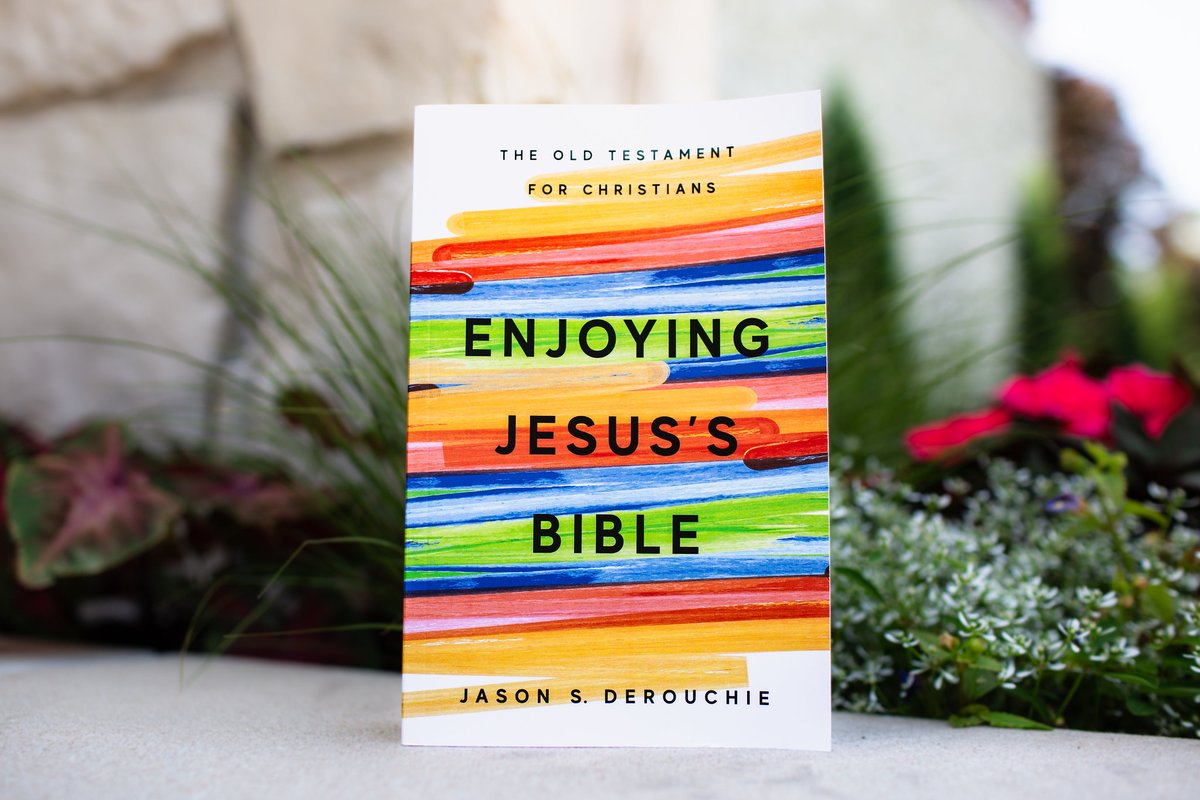
We’re giving away "Enjoying Jesus’ Bible" by Dr. Jason DeRouchie.
FOLLOW US, LIKE, and RT to enter!
🎁 Plus, don’t miss our BIG giveaway of the month — the complete 67-volume New Studies in Biblical Theology series.
Enter to win here: https://t.co/cMD9RwyPTR
@pudicat11 Steve...many Baptists repudiate the enthusiasts. They were/are firmly confessional and catholic. Protestant. Some even Reformed. Just not Lutheran. The anabaptists and certain kinds of Baptists were/are a different story. Don't lump us all together. 😉 Sola fide. Sola gratia.
@Haveaverse@mustardseed63@pudicat11 I see a difference between aspiration and admission. As a new creation, I aspire to walk as Jesus walked. At the same time, I admit that I fall short of God's glory. He is changing me. The Spirit's power is real, not theoretical. But my ground of assurance is always, only Jesus.
@markdtooley@ThomasSKidd Agreed. It likely means we're not engaging in robust member to member discipleship. We're no longer the family of God. We're a den of consumers. A consumeristic church leads to consumeristic Christians who leave to find the latest and greatest thing.
@DavidReinker@ScottAniol I think the point is that forsakenness means the Father did not rescue the incarnate Son from his sin-bearing death on the cross. But His oneness with the Father (according to his divinity) did not cease. Some speak of forsakenness in such a way that God is at odds with Himself.
@DavidReinker@ScottAniol Yes. The incarnate Son isn't saved from death in that moment. Yet before he breathes his last he commends his spirit to the Father, who does not allow his Holy One to see corruption but raises him on the third day. No Trinitarian rupture. Not ultimately forsaken.
@drantbradley So, he's not pretending to be Jesus. But it's hard not to see the imagery portraying him as divine or at the very least semidivine. That's still pretty bad. Nebuchadnezzar, anyone?
@pudicat11@expositcllctv In the best light, getting far enough with Christ may simply mean that they have uncovered the riches of wisdom and grace found in him. They have come to know the depth of their sin AND the depth of His love . . . simul justus et peccator.
-The Apostles' Creed 𝙘𝙤𝙡𝙡𝙚𝙘𝙩𝙨 the 3 persons:
I believe in the Father, Son, and Holy Spirit.
-The Nicene Creed 𝙘𝙤𝙣𝙣𝙚𝙘𝙩𝙨 the 3 persons:
begotten, proceeding.
-The Athanasius Creed 𝙘𝙤𝙧𝙧𝙚𝙘𝙩𝙨 possible errors about the 3 persons (one God, 3 persons).
Those of us who have been engaged in retrieval conversations for the last 10-15 years need to take note of Protestant conversions to Orthodoxy and Catholicism and why they happen. There are obviously a million reasons why people change church traditions, and they’re often not merely intellectual, but I think it’s part of it.
I’ve been convinced the last few years that we need to talk a lot more about Protestant methodology when it comes to retrieval. The whole church tradition absolutely belongs to Protestants too (and the Reformers constantly said this).
But mistake I made, at least early on, was introducing students and pastors to the Christian tradition without helping them think through how to do it in a way that is Protestant (biblically regulated and critically appreciative) versus some sort of narrative about unity and historical purity going back to the apostles.
This is where theological interpretation (or choose whatever phrase you want to replace that with) can be so helpful. We need to have a hermeneutic and methodology that roots doctrine in Scripture, rather than merely tradition. We need to affirm the Trinity, for example, because we think the Bible clearly teaches it, not merely because it is a good doctrine of necessary consequence hashed out in later centuries or because we think the Nicene Creed is important.
I have been much more intentional in my church history classes, for example, of showing students how different traditions receive church history, and why it matters. If people are going to leave Protestantism, we want them to actually know what they’re leaving and what they’re headed to. It can’t be merely on vibes, grievances, or buying false narratives.
Ad fontes! Semper reformanda! Etc!