Canalpalooza is nearly here!
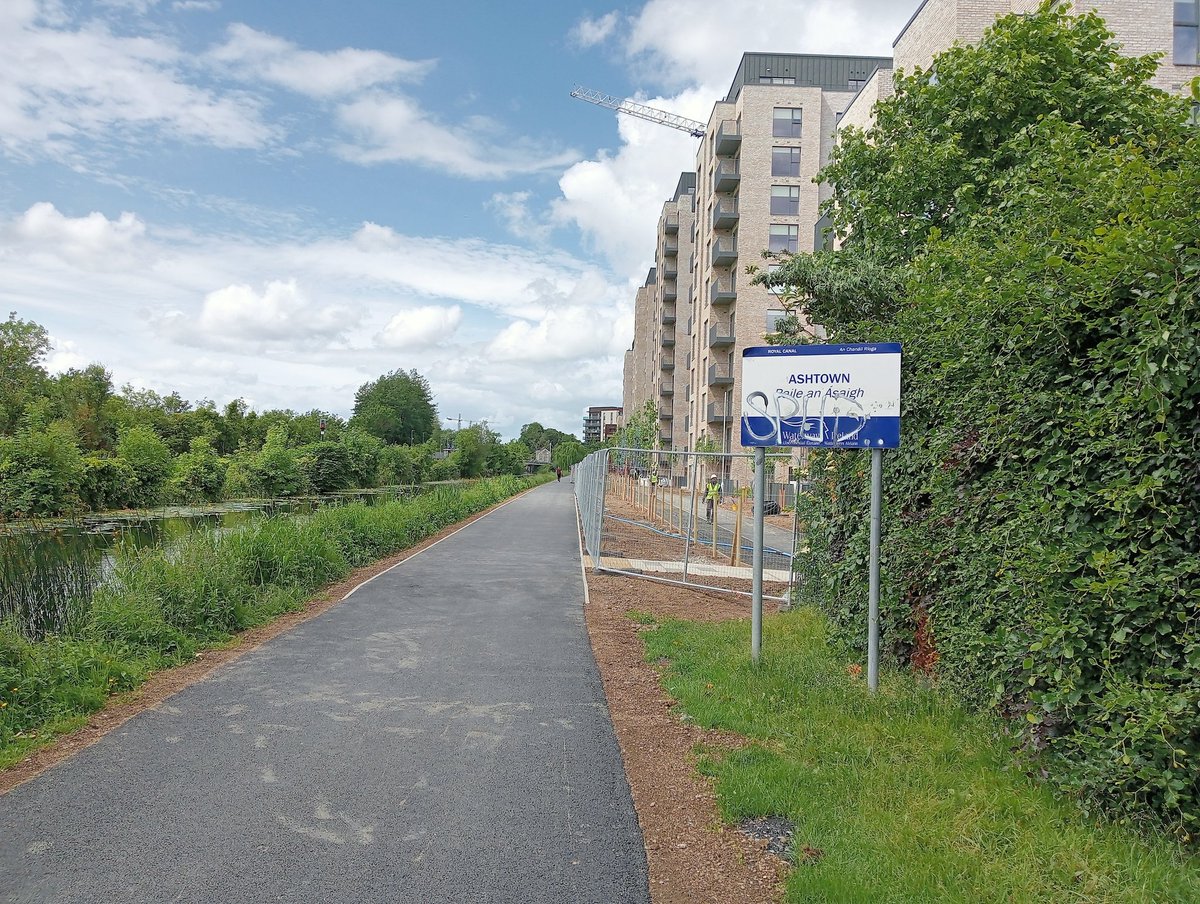
Join us in Crescent Park, Royal Canal Park on Saturday 13 June from 11am to 5pm for a day of music, sport, performances, family activities, food and plenty of surprises.
Brought to you by the wonderful @RCPCA1
In order to ensure the safety of participants in the Irish Runner 5 Mile Race taking place on the morning of Sunday 21st June 2026, the following restrictions will apply in the Phoenix Park on that date. The roads listed below will re-open as soon as it is safe to do so.
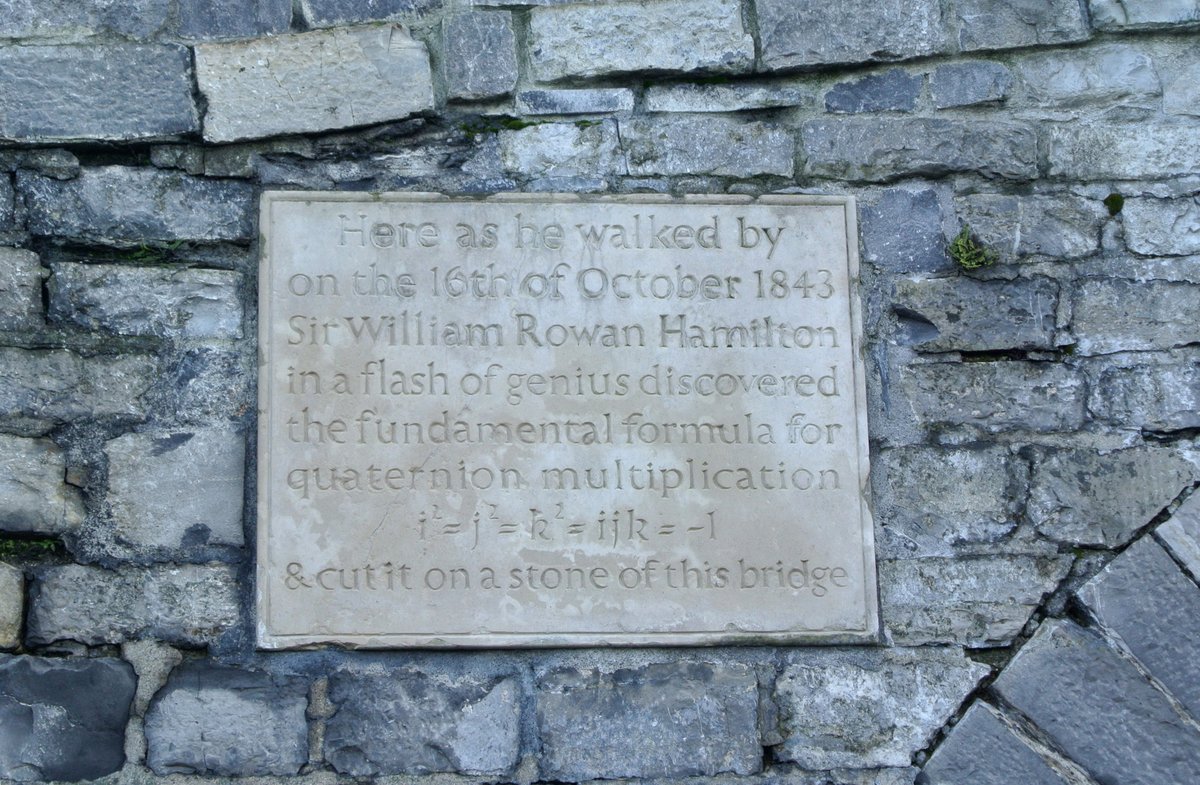
On 16 October 1843, William Rowan Hamilton was walking with his wife along the Royal Canal in Dublin toward a meeting of the Royal Irish Academy. For years he had been trying to extend complex numbers to three dimensions, and his sons had taken to teasing him at breakfast: "Well, Papa, can you multiply triples?" — to which he always had to answer no.
As he crossed Brougham Bridge (now Broom Bridge), it suddenly came to him that the trick was to use four dimensions, not three, and to abandon commutativity. He carved the fundamental rules into the stone of the bridge: i² = j² = k² = ijk = −1. The original scratching is long gone, but a stone plaque on the bridge commemorates it, and mathematicians make an annual pilgrimage there on the anniversary — the Hamilton Walk, founded in 1990.
For those travelling with Luas this Bank Holiday Monday, make sure you're aware of changes to Luas service.
Normal services will run Saturday 30 May & Sunday 31 May. Sunday Operating Hours & Frequency will run on Bank Holiday Monday 1 June.
Plan ahead and allow plenty of time for travel.
See https://t.co/6gjos61J4q for travel updates.
🚊 If you need help, you can ask our staff - drivers, Luas Security and Revenue Protection for assistance.
We want you to feel safe on all of your journeys with us!
In emergencies, dial Gardaí at 999/112 first.
See https://t.co/HiwGI2GHbk
The Royal Canal Odyssey is a truly immersive and unique Bloomsday Festival event. Part literary tribute, part endurance run, the Royal Canal Odyssey is a 100km run that is the first of its kind.
Info can be found on https://t.co/khDQSXUIdy
#bloomsdayfestival
The issue has been resolved and some services operating through Broombridge station this evening may experience delays. Staff are working to return services to regular operating schedule - MH
@BordBiaBloom Ireland’s largest festival of gardening, food, and sustainable-living begins on Thursday at the Phoenix Park and continues over the June Bank Holiday weekend.
🌻 Are you thinking of going along?
🚊 Take Luas. Plan ahead and allow plenty of time for travel.
#KeepingDublinMoving
Update:
Ongoing delays on DART/Commuter and Enterprise services.
DART +50 minutes on some services.
Northern commuter +25 minutes
M3/Maynooth commuter +20
Delays due to an earlier train breaking down in Killester.
Update to follow.
-CL
🚨Engineering works🚨
Sat 30th May-Mon 01st June
🚂Belfast services
Drogheda↔Dundalk
🚌Bus transfers in place
Sat 30th May-Mon 01st June
❌NO DARTs between Connolly-Greystones
🚌Rosslare bus transfers Connolly & Bray
🚧Northern Commuter alterations -AD
https://t.co/U2HeEcemmD
Monday 1 June is a Bank Holiday, so there will be some changes to Luas service. Saturday and Sunday will run normal services, and on Bank Holiday Monday 1 June, Luas will run Sunday Operating Hours & Frequency.
Plan ahead and allow plenty of time for travel.
See https://t.co/6gjos61J4q
During the chaotic 1800s a gangster patriarch called The King of Mud Island ruled a rural neighbourhood between North Strand and Ballybough, the Royal Canal and the Tolka. This little no-go zone for law enforcement or citizens who didn't particularly want to be robbed, murdered and thrown in a watery grave.
But being thugs and thieves was only a hobby for the Mud Islanders. Living in makeshift huts and hovels, many were dairy farmers, jarvey drivers, fruit sellers, port and dock workers. The area was also home to notorious illegal taverns and brothels, frequented by sailors and even pirates!
Various highwaymen and smuggler "kings" ran the community. Most noteworthy was Christopher McDonnell (1798 - 1852). His headquarters was a large compound with offices, farmland & orchards at the end of a road now called Kings Avenue.
A short man with several wives & at least 6 children, his power was not just crime but sand. Excavated from pits in the area, the precious commodity & building resource was sold at a huge profit. A constant caravan of carts laden with sand, and local urchins perilously hanging on for a jaunt, left & returned to the kingdom each day.
When the Dublin Metropolitan Police were absolutely forced to enter the fiefdom, the King of Mud Island roused his people to ensure the law got a warm welcome. The denizens would flood out from their homes and swarm any officer or customs agent often with fatal results. And with every witness from the neighbourhood swearing loyalty to their king arrests were an impossibility. As you would expect the Mud Island subjects were ruled with an iron fist.
They paid rent and tribute on illicit earnings to McDonnell. If they didn't avail of his protection, and he was feeling charitable, he would only personally ransack their gaff, taking everything he fancied. That was the first and last chance lucky families got. Enslavement, tarring and feathering, murder and rape were not out of the question.
Eventually, a challenge came to this gangsters dominion. It wasn't the city fathers trying to enforce Dublin law or a band of rebels rising against tyranny. It was that most powerful of forces in the world, a rich greedy English aristocrat. In November 1817 the 3rd Earl of Aldborough bought the entire territory, seizing the kingdom with the wave of a pen. King McDonnell was now just another tenant of Mud Island & he was not happy.
The King forced his neighbours to enter reciprocal agreements over their parcels of land & once again he became a broker and shareholder of sorts. Ironically, despite him profiting from this parasitic relationship, getting a slice of his subjects rent, he refused to pay a single hapenny himself on his massive property.
This new arrangement escalated violent tensions to a new level. The "Mud Island Rangers/Fusiliers", the ad hoc army of the King, engaged in frequent cat and mouse duels and running battles with the newly emboldened DMP and port authorities.
In 1820 a gang of nervous bailiffs, protected by a squad of soldiers, entered the kingdom & arrested the sordid sovereign. Chaos ensued. Hundreds of islanders descended on the troops in a violent desperate attempt to free their king. Apart from stones & knives, their main improvised weapon was a pikestaff mounted with a chisel. Nasty business wherever it was stuck. But they were no match for the soldier's guns.
The islanders outnumbered the invaders & forced them to retreat with their prisoner to nearby Aldborough House. The grim but glorious protected structure still stands today beside the Five Lamps.
The bailiffs and soldiers were besieged by the now furious force of locals. The King slipped his captors & shouted "Cock Crow!", the war cry of the islanders. The mud islanders stormed the gates and liberated their king. McDonnell died in 1852 & was buried in a paupers grave in Prospect Cemetery, Glasnevin.
Buy the Dublin Time Machine a pint and support the DTM Book
https://t.co/U7jtCrOTtb
Walking “The Royal canal”.
National famine way. Remembrance.
30 pairs of bronze children's shoes mark the National Famine Way, a 165 km trail tracing the 1847 forced march of 1,490 evicted tenants from Roscommon to Dublin. Walkers retrace the emigrants' harrowing steps.