For African countries with high under-5 mortality, the subnational composition of leading causes can vary dramatically. There is a need to consider the totality of burden before identifying optimal targeted interventions https://t.co/gzNpAHO3Dw @NatureComms@IHME_UW
Mosquitoes are the deadliest animal to humans, but @WMPglobal scientists have discovered how to transform one kind of mosquito into a surprisingly powerful ally: https://t.co/T6H9dVZYP0. #MosquitoWeek🦟
In order to achieve optimal health, all people must be safe to be themselves and have access to affordable, quality health care. We stand with LGBTQ+ individuals & communities worldwide. #PRIDE
What steps can the US take to reduce inequity in its vaccine rollout? Post-Bachelor Fellow Katie Welgan and Associate Professor @RCReinerJr weigh in for @ThinkGlobalHlth ⤵️ https://t.co/tGJ6tqaKm1
Efficacy of a Spatial Repellent for Control of Aedes-Borne Virus Transmission: A Cluster Randomized Trial in Iquitos, Peru https://t.co/kAfzccLTUs #medRxiv
#COVID19 has shown major issues in how we track, report, and share data in a timely manner. Across the globe each week we see anomalous reporting. I thought I'd start sharing some of the problems
Science means admitting we don't know everything but use best available data to make rational conclusions and take action as appropriate. Best available data change; honesty means changing our conclusions. Support honesty. #FollowTheScience#IStandWithFauci
Our study in Vo’ has been published in @nature today! We found that ~40% of infections were asymptomatic, comparable viral load between symptomatic and asymptomatic infections and that timely interventions can suppress #covid. @MRC_Outbreak@imperialcollege@UniPadova
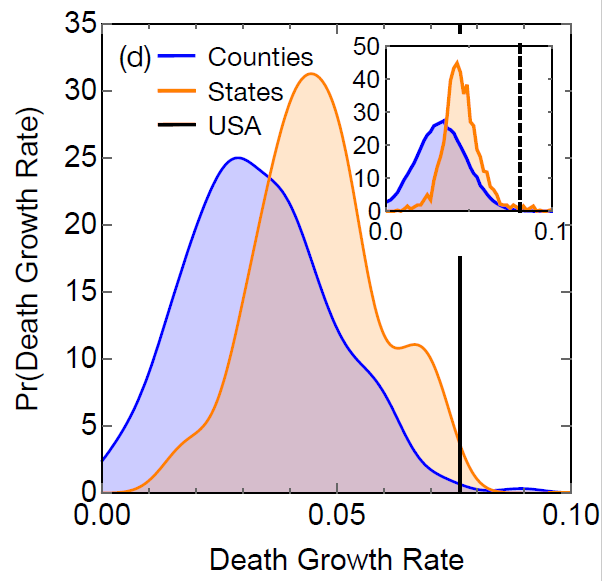
Our paper shows that spatial aggregation of COVID19 data biases estimates of how quickly the disease is spreading: growth rate in states is higher than their own counties, and growth in cities higher than their neighborhoods. Simpson's paradox again! https://t.co/6ZWniB6FQY
Our analysis of global human mobility from over 300 million smartphones via @google
Shows movement data can inform economic development, urban planning and response to natural disasters, conflicts & diseases like #COVID19
https://t.co/KpTQ3oGj2c…
@MOUGK@RCReinerJr@Sadilek
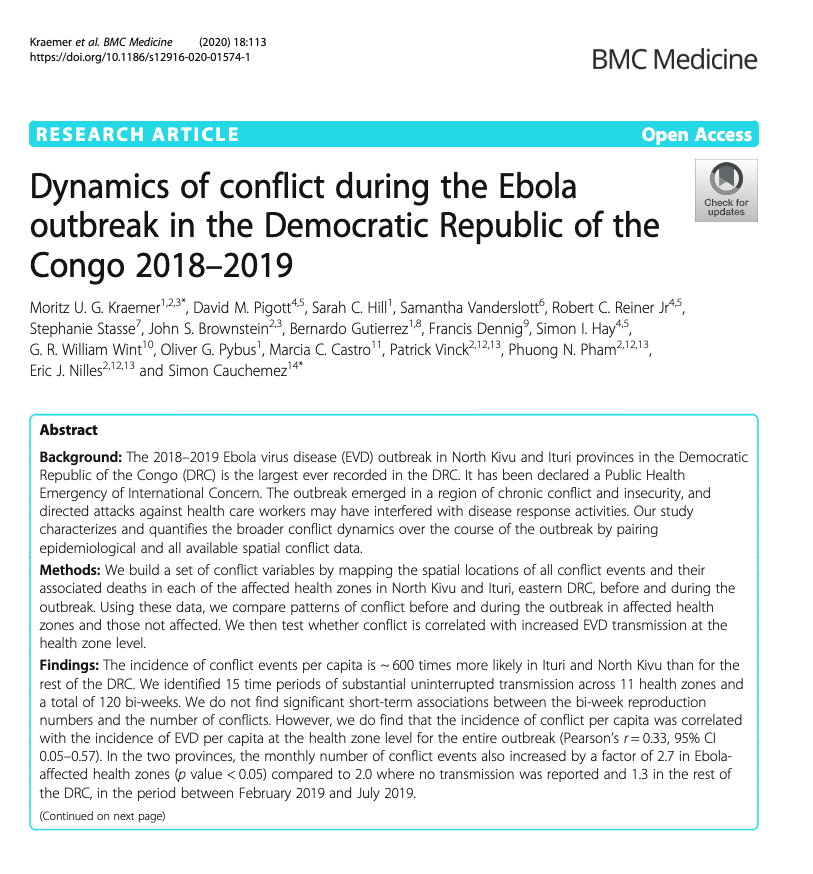
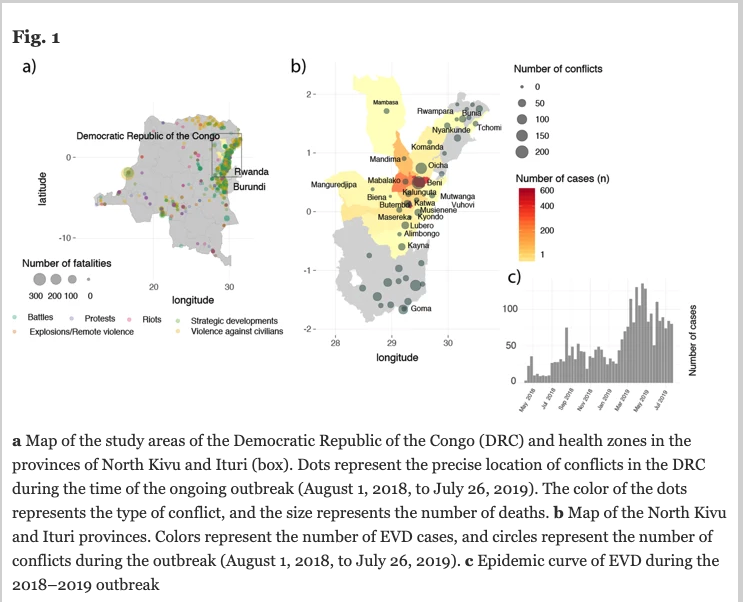
We analysed how conflict impacted the #Ebola epidemic in eastern #DRC in 2018-2019. We find evidence for both, conflict events driving larger epidemics and presence of disease increasing frequency of conflict events. https://t.co/xOEMusyEOo #openaccess w/@SCauchemez@BMCMedicine
#BREAKING: Researchers from @IHME_UW find demand for beds in US hospital intensive care units is likely to far exceed capacity for #COVID19 patients as early as the second week of April. Press release➡️https://t.co/UvHE3cBPWA
Would love to hear thoughts from the smart & time-generous ID modelers on Twitter about this UOxford model that suggests half of the UK may already have been infected with #Covid19.
https://t.co/ZwdeNITeqo
Currently includes #COVID19 reports from Germany @rki_de, Spain @sanidadgob, France @santeprevention, and Italy @istsupsan. Knowingly missing a fair few! (Thailand, South Korea, Nigeria). Time series are incomplete for some. Also going to write a page with relevant urls.