Pakistan's PRSC-EO3: an unusual orbit for an optical satellite
Radar tracking via @LeoLabs. Processed via COMSPOC SSA.
PRSC-EO3 (visualized in cyan) launched April 25, 2026 on a Long March 6. It's an optical imager — but its orbit is curious.
Most optical LEO satellites use sun-synchronous orbits (~97-105° inclination), which provide consistent lighting for imaging. PRSC-EO3 is in a 38° inclined orbit instead. This sacrifices global coverage and consistent lighting, but increases revisit rates over a specific latitude band: 20-40°N. That's India, Kashmir, and Pakistan.
Now consider PRSC-S1 (visualized in pink), Pakistan's SAR satellite launched July 2025, sitting in a 41° orbit. Similar inclination, similar altitude — but their RAANs are ~175° out of phase. When one passes over South Asia in daylight, the other passes in darkness.
SAR works day and night. Optical needs sunlight. The geometry appears to allow complementary coverage.
We ran the access analysis [Image 1]. The SAR sensor (unconstrained) and optical sensor (daytime-constrained) together provide repeatable revisit across day and night. The gaps left by one are filled by the other.
Then there's PRSC-HS1 — a hyperspectral satellite in SSO [Image 2], capable of detecting camouflage and identifying materials from orbit.
Optical shows you the picture. SAR shows you the picture at night and through weather. Hyperspectral tells you what you're looking at.
Five remote sensing satellites in 16 months [Image 2]. All launched by China. All with orbits favoring South Asian coverage. The stated missions are civilian. The orbital architecture appears consistent with a multi-modal ISR constellation.
@shell_jim , @planet4589, @joroulette, @SpaceNews_Inc , @IntegrityISR
#Pakistan #Space #SAR #ISR #PRSC
👀USA 325 keeps an eye on COSMOS 2589 as it settles into GEO
COSMOS 2589 🇷🇺 (launched last June) spent the past few weeks circularizing its orbit before parking at ~98°E. USA 325 🇺🇸 (GSSAP-6) was watching the whole time.
Things got interesting around April 19th when COSMOS 2589 actually drifted past USA 325 mid-maneuver. USA 325 repositioned, and by late April both were sitting at the same longitude.
From there, observation passes came twice a day due to their different inclinations. Closest was ~13 km on 1 May, with sun angles lining up nicely for a good look.
3D visualization attached — you can really see how COSMOS 2589 tightened its orbit while USA 325 adjusted to stay in position.
This is what GSSAP does: when something new shows up in GEO, they're there to take a look.
Analysis via COMSPOC SSASuite.
@SpaceNews_Inc@SpaceflightNow@BreakingDefense@joroulette@shell_jim@planet4589
#GSSAP #COSMOS #GEO #SDA
3/ CO-ORBITAL ASATs:
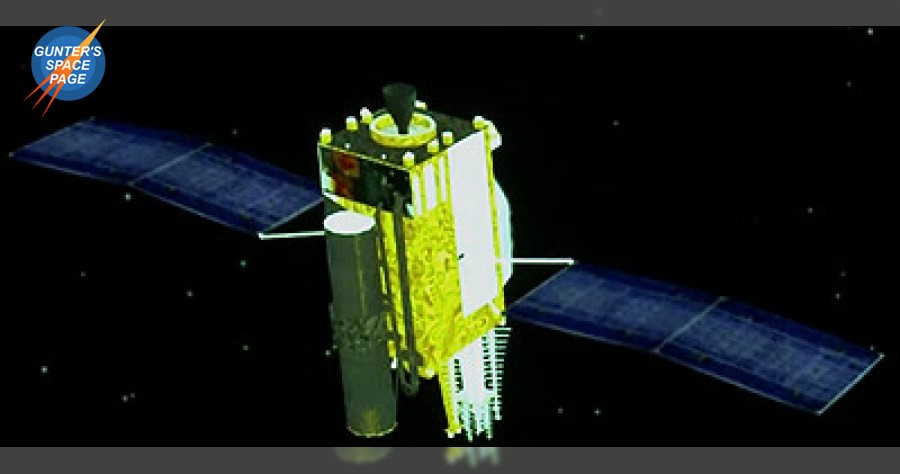
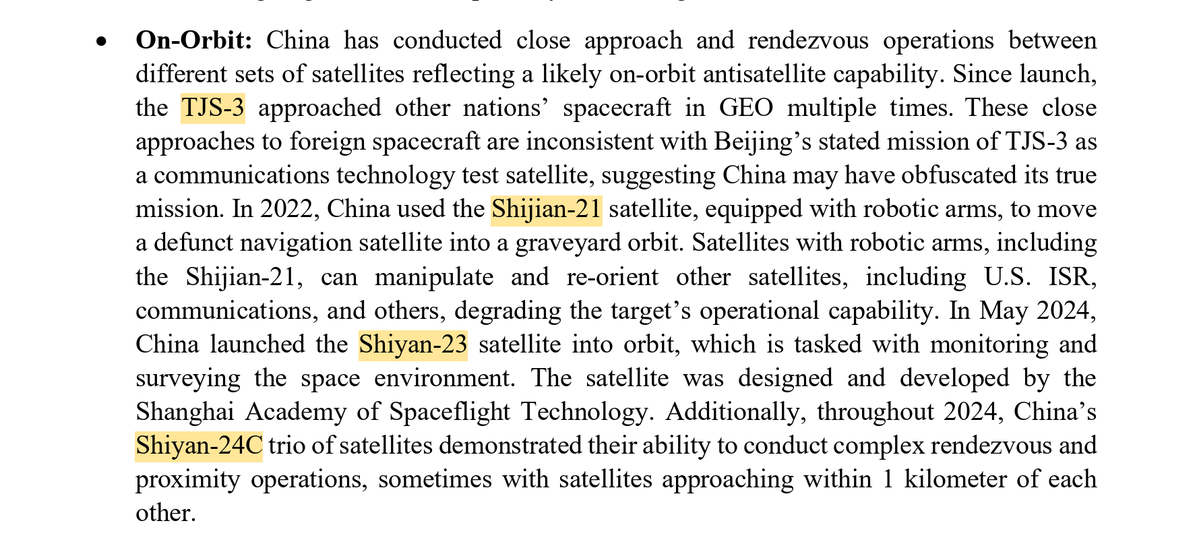
For the first time, the U.S. government names specific Chinese spacecraft it suspects are capable of on-orbit anti-satellite operations, including the TJS-3's movements in geosynchronous orbit.
(More on this by @WeTheBrandon: https://t.co/QXqgoCB9Og).
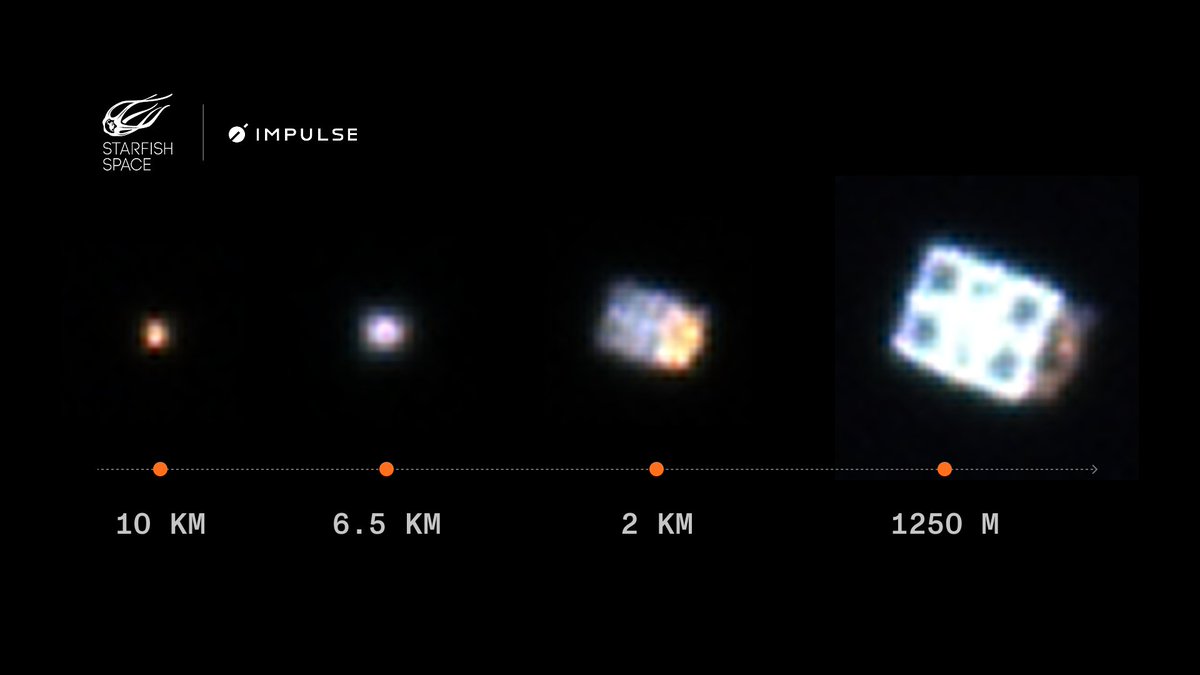
Surprise! Mission accomplished. We just executed Remora, our first closed-loop rendezvous mission, in orbit. The entire operation relied on a single camera sensor and peripheral flight computer, an industry first. The Remora mission was developed in just nine months with our partners @GoToImpulse, and quietly launched earlier this year on board Impulse’s LEO Express 2 Mira.
See our full press release here: https://t.co/BkGzXEGuWT
Sea-Based X-Band Radar (SBX-1) early-warning radar station in Pearl Harbor, Hawaii. Dome deflated with radar array exposed for maintenance - November 20, 2025 SRC: FB- Kaleb Laurent
"OTV-8 exemplifies the #X37B's status as the U.S. Space Force's premier test platform for the critical space technologies of tomorrow."
– William Blauser
Acting Director, Air Force Rapid Capabilities Office
📰: https://t.co/3BPVZZZahH
A P-8A using tactical hex #AE689F as MADFOX33 is currently operating over the Caribbean, out of San Juan (SJU/TJSJ) 🇵🇷.
While nothing is confirmed, there is a chance this is 169563, an AAS-equipped P-8A. The other possible one is 168436.
H/t to @Dragon75_2010 for the callsign.
Navigational Warnings have appeared for the @SpaceForceDoD #X37B spaceplane mission #OTV8 (USSF-36).
Falcon 9 upper stage deorbit area suggests Low earth orbit of inclination 49.5 deg. Window opens 22 Aug 3:40 UTC.
@DutchSpace@planet4589@coastal8049
INVESTIGATION – U.S. Strike on Fordow
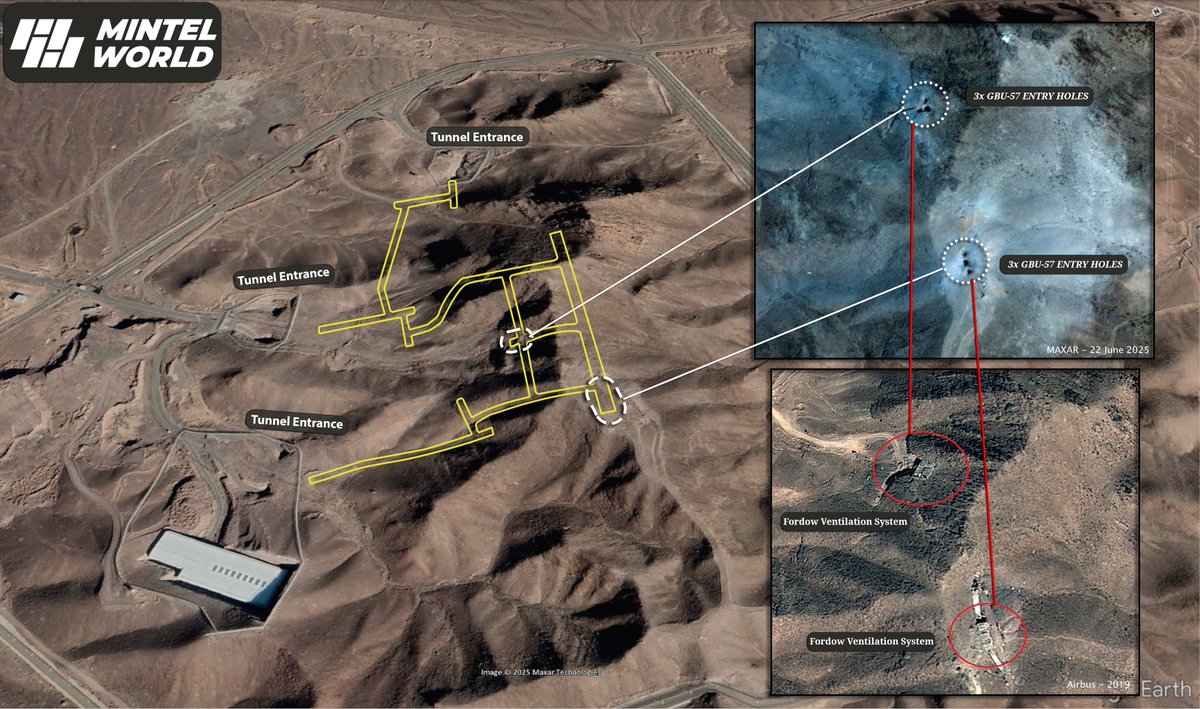
U.S. B-2 bombers targeted Iran’s Fordow Uranium Enrichment Facility with at least six GBU-57A/B Massive Ordnance Penetrators (MOPs). Satellite imagery shows that each of the facility’s two ventilation systems was hit by three MOPs, each carrying 5,000 pounds of explosives, amounting to a total of 30,000 pounds per site. These strikes likely caused significant damage to the underground structure and may have triggered collapses throughout the tunnel network.
Kim Jong Un’s fury inducing crippled in botched sideways launch destroyer spotted TODAY under blue tarps 👇
2nd Choe Hyon-class North Korea destroyer is sunk, leaning on her starboard side, bow over slipway.
Wonder why tarps also over slipway. Hiding pieces or what?
𝗣𝗔𝗙 𝘃𝘀 𝗜𝗔𝗙: 𝗧𝗵𝗲 𝗠𝗼𝘀𝘁 𝗠𝗼𝗱𝗲𝗿𝗻 𝗔𝗲𝗿𝗶𝗮𝗹 𝗖𝗹𝗮𝘀𝗵 𝗼𝗳 𝘁𝗵𝗲 𝗖𝗲𝗻𝘁𝘂𝗿𝘆 (A minute by minute breakdown)
On the night of May 07, the world witnessed the most modern aerial combat of the 21st century in which Pakistan Air Force fighter jets shot down six aircraft of Indian Air Force .
This aerial clash featured most advanced 4.5-generation fighter jets of the world and lasted around 1 hour.
China lanzó un (raro) Chang Zheng 6A desde Taiyuan este domingo, a las 13:27 UTC. A bordo viajaron 3 satélites de reconocimiento desconocidos con fines de "sondeo del entorno electromagnético". Esta fue la misión Yaogan-40 02 🚀🇨🇳
1/x
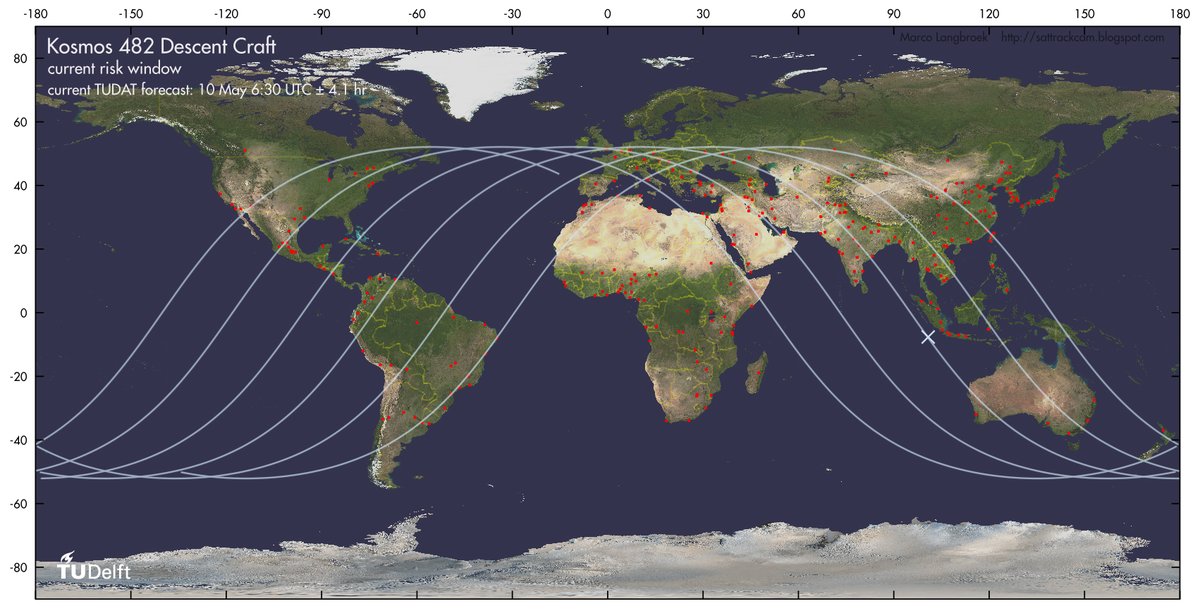
Our latest TUDAT #reentry forecast for the #Kosmos 482 Descent Craft:
10 May 6:30 +/- 4.1h UTC
Link to updated blogpost with details in next tweet.


![COMSPOC_OPS's tweet photo. Pakistan's PRSC-EO3: an unusual orbit for an optical satellite
Radar tracking via @LeoLabs. Processed via COMSPOC SSA.
PRSC-EO3 (visualized in cyan) launched April 25, 2026 on a Long March 6. It's an optical imager — but its orbit is curious.
Most optical LEO satellites use sun-synchronous orbits (~97-105° inclination), which provide consistent lighting for imaging. PRSC-EO3 is in a 38° inclined orbit instead. This sacrifices global coverage and consistent lighting, but increases revisit rates over a specific latitude band: 20-40°N. That's India, Kashmir, and Pakistan.
Now consider PRSC-S1 (visualized in pink), Pakistan's SAR satellite launched July 2025, sitting in a 41° orbit. Similar inclination, similar altitude — but their RAANs are ~175° out of phase. When one passes over South Asia in daylight, the other passes in darkness.
SAR works day and night. Optical needs sunlight. The geometry appears to allow complementary coverage.
We ran the access analysis [Image 1]. The SAR sensor (unconstrained) and optical sensor (daytime-constrained) together provide repeatable revisit across day and night. The gaps left by one are filled by the other.
Then there's PRSC-HS1 — a hyperspectral satellite in SSO [Image 2], capable of detecting camouflage and identifying materials from orbit.
Optical shows you the picture. SAR shows you the picture at night and through weather. Hyperspectral tells you what you're looking at.
Five remote sensing satellites in 16 months [Image 2]. All launched by China. All with orbits favoring South Asian coverage. The stated missions are civilian. The orbital architecture appears consistent with a multi-modal ISR constellation.
@shell_jim , @planet4589, @joroulette, @SpaceNews_Inc , @IntegrityISR
#Pakistan #Space #SAR #ISR #PRSC](https://pbs.twimg.com/media/HHv9OrFW4AQk91y.jpg)








![COMSPOC_OPS's tweet photo. Pakistan's PRSC-EO3: an unusual orbit for an optical satellite
Radar tracking via @LeoLabs. Processed via COMSPOC SSA.
PRSC-EO3 (visualized in cyan) launched April 25, 2026 on a Long March 6. It's an optical imager — but its orbit is curious.
Most optical LEO satellites use sun-synchronous orbits (~97-105° inclination), which provide consistent lighting for imaging. PRSC-EO3 is in a 38° inclined orbit instead. This sacrifices global coverage and consistent lighting, but increases revisit rates over a specific latitude band: 20-40°N. That's India, Kashmir, and Pakistan.
Now consider PRSC-S1 (visualized in pink), Pakistan's SAR satellite launched July 2025, sitting in a 41° orbit. Similar inclination, similar altitude — but their RAANs are ~175° out of phase. When one passes over South Asia in daylight, the other passes in darkness.
SAR works day and night. Optical needs sunlight. The geometry appears to allow complementary coverage.
We ran the access analysis [Image 1]. The SAR sensor (unconstrained) and optical sensor (daytime-constrained) together provide repeatable revisit across day and night. The gaps left by one are filled by the other.
Then there's PRSC-HS1 — a hyperspectral satellite in SSO [Image 2], capable of detecting camouflage and identifying materials from orbit.
Optical shows you the picture. SAR shows you the picture at night and through weather. Hyperspectral tells you what you're looking at.
Five remote sensing satellites in 16 months [Image 2]. All launched by China. All with orbits favoring South Asian coverage. The stated missions are civilian. The orbital architecture appears consistent with a multi-modal ISR constellation.
@shell_jim , @planet4589, @joroulette, @SpaceNews_Inc , @IntegrityISR
#Pakistan #Space #SAR #ISR #PRSC](https://pbs.twimg.com/media/HHv9kZxWUAEYDiC.jpg)