Light Volumes v.2.0.0 released!
Now it has Light Volume based super optimized analytical Point Lights, Spot Lights and Area Lights. (Up to 128 at the same time)
Ability to project images and cubemaps.
Also baked shadow masks and even more features!
https://t.co/5AyGfWEO1s
#VRChat #Gamedev #Unity #Shader #VR
Working on a GPU particles rain system that can work together with VRC Light Volumes and my prototype of a volumetric fog. Every raindrop creates ripples and small droplets from it. Twitter compresses the quality like crazy, it looks 100 times better in game.
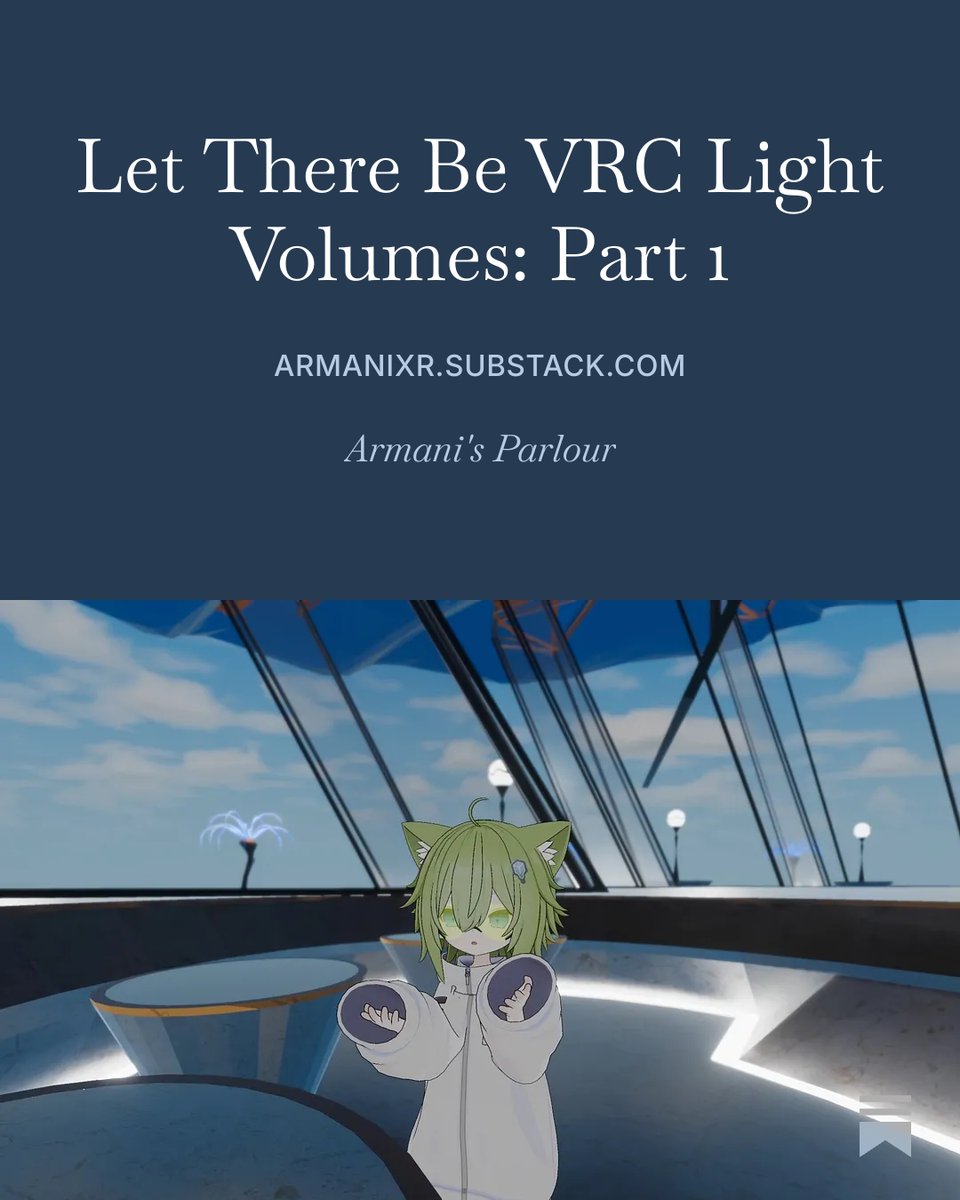
@RED_SIM For part 2 of this interview series, @RED_SIM speaks on how to use VRC Light Volumes with Unity and how social life has been in VR over multiple years. 💙💛#VRChat#computeshaders#socialVR#gamedev
https://t.co/YvtJX7HVrD
For this interview series, ArmaniXR meets with @RED_SIM to hear more about how he created VRC Light Volumes and so much more for worlds in social VR! You can learn more about his journey below. #VRChat#computeshaders#socialVR#gamedev 💙💛 :
https://t.co/x8ZXPRcvAE
Okay I figured out a pretty decent and fast way to get nice looking isosurfaces for sparse liquids in VRChat.
But its applicable in general. I suspect I could make it even faster if I had access to compute shaders. Oh well, its already impressive as is
I made a shader striping feature for VRC Light Volumes v.3.0.0! It's something similar to what Poiyomi or lilToon does when you lock your shader, but for worlds, not avatars. And I can say, it's a game-changer in terms of world performance!
@FixedVisuals Hard to provide any exact data, because it depends on the world and which features you use, but we got something like ~30% FPS boost in a world we tested it in.
It will do nothing to avatar shaders/materials cuz avatars can be viewed in different worlds with different features, so we can't strip them. It will also require no extra work for shader developers to implement the stripping support.