The @EPA has updated its list of New Approach Methodologies (NAMs) for chemical assessment and launched a new program for stakeholders to nominate NAMs to the list.
Read our summary of the updates here: https://t.co/d58rZ5oLb7
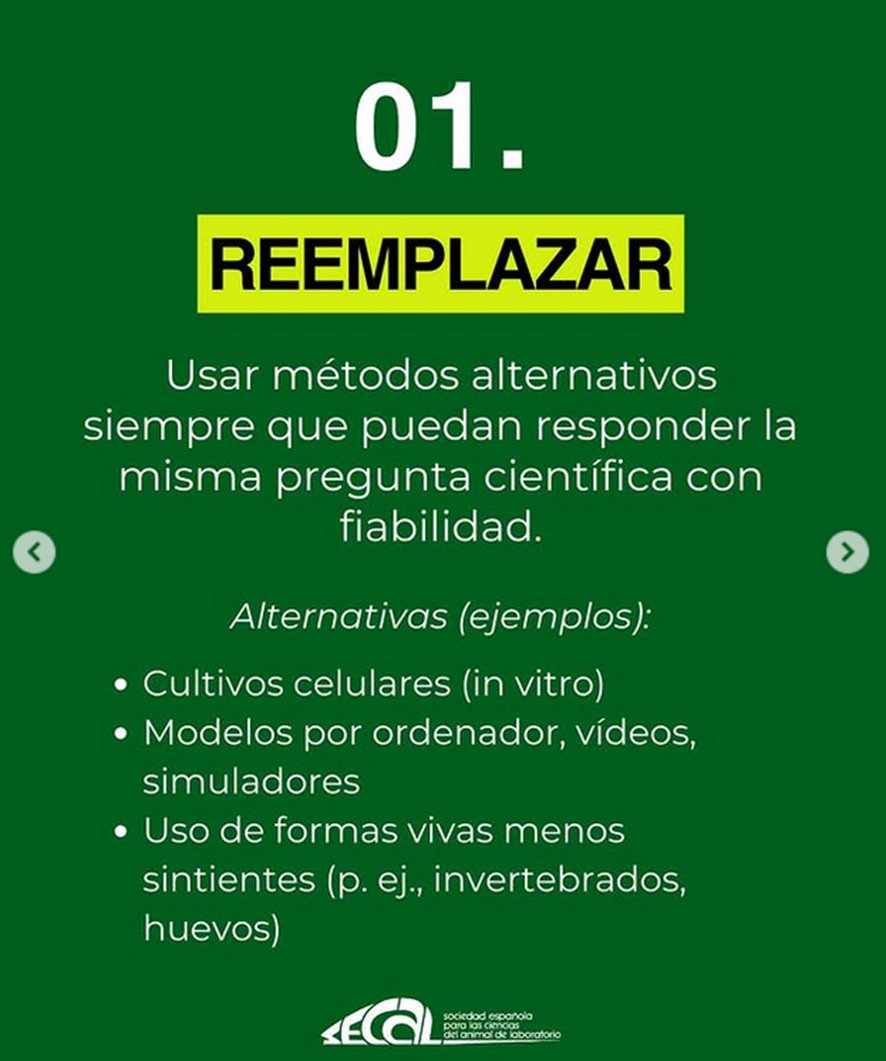
Además de la sesión en inglés que recoge la noticia de EARA, haré una sesión demo en español el próximo día 3 de junio a las 13:00 horas (Madrid). Registro: https://t.co/PnpaJXwCJm @EARA_ES@SECAL_T@REMAlternativas
Register now for the third webinar in our Eco-NAMs Webinar Series, "In silico approaches to replace acute fish toxicity," featuring speakers from @MarioNegriIRCCS and @KREATiS_models.
🗓️May 28, 2026; 8:00-9:30 am EST
Register here: https://t.co/7HAa836owJ
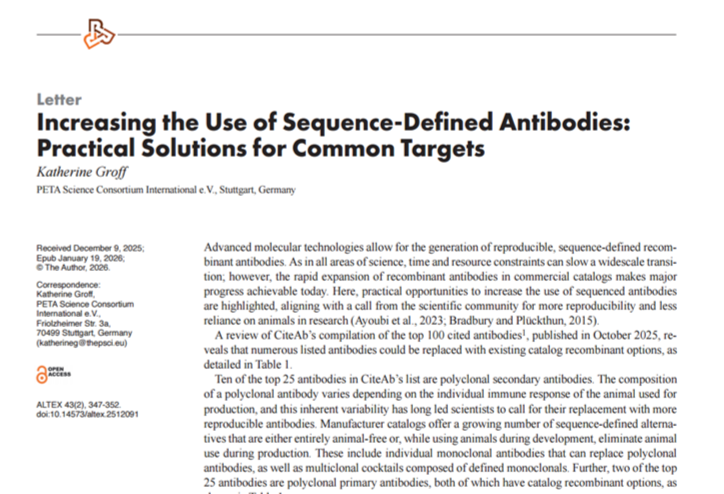
Researchers looking to transition to sequence-defined antibodies, start here! Our latest review in ALTEX highlights catalogue recombinant antibodies available today that can replace antibodies produced using animals.
Access the review here: https://t.co/oRo6wRqqwW
In this January episode of @MayoClinic's Tomorrow’s Cure podcast, host @CathyWurzer explores how 3D bioprinting is advancing human‑relevant skin research.
Guests @drwyles_derm (@MayoRegMed) and Adam Feinberg, Ph.D. (@cmu_bme & @cmu_mse at @CMUEngineering), discuss building living skin models from human cells and biologic materials to study aging, wound healing, and disease.
Dr. Wyles introduces the concept of “skin span,” emphasizing the importance of modeling how skin structure and function change over time and across conditions. Dr. Feinberg describes bioprinting collagen to mimic native human tissue and improve predictive value in research.
Both emphasize how these models support the shift away from animal testing:
“Dr. Feinberg adds that moving away from animal testing is a growing priority, and engineered human tissue models may improve prediction because animal physiology differs from humans.”
This work can lead to reliable preclinical testing, a better understanding of chronic wounds, and improve equity in how science is conducted and who it benefits from it.
Give it a listen:
https://t.co/yEVK9h37XB
Or read the episode summary by @cheesebabe here:
https://t.co/hNrwc1dlfp
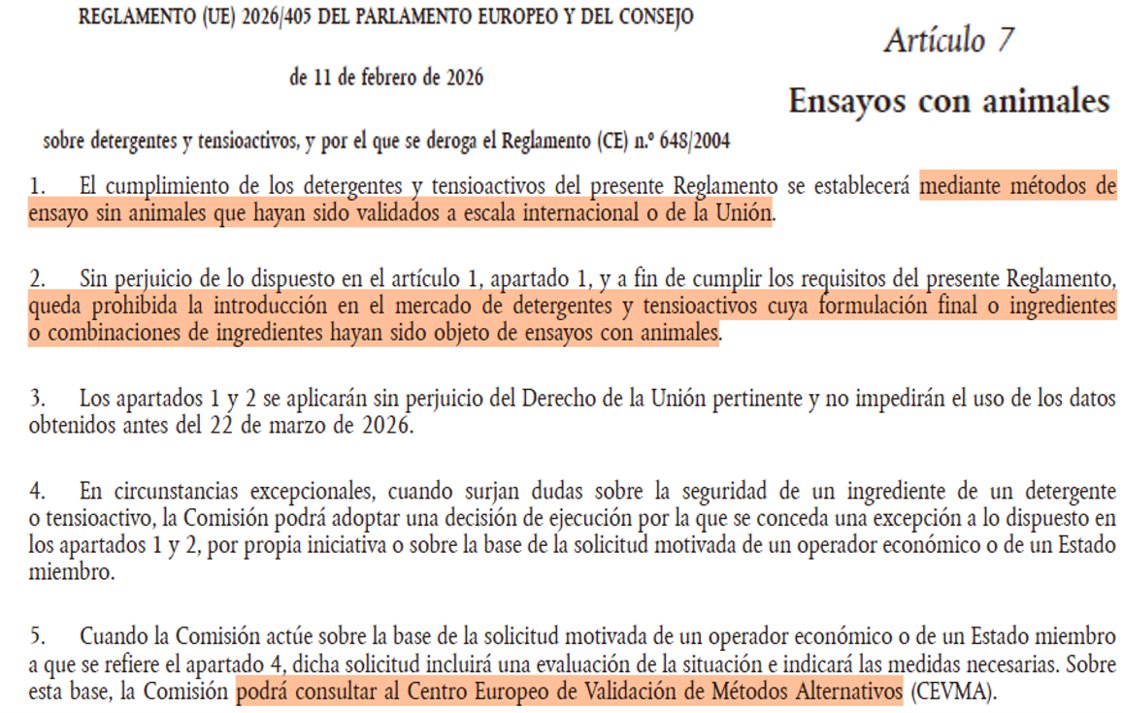
22-03-2026 El Reglamento (UE) 2026/405 prohíbe la introducción en el mercado de #detergentes o #tensioactivos cuya formulación final o ingredientes se hayan #ensayado con #animales a partir del 23-09-2029
https://t.co/uOoVvw1JfA
🧠💪 En un estudio con células humanas, dos #hormonas (estradiol y 3β-diol) lograron proteger los músculos afectados por la distrofia FSHD, frenando el daño causado por el gen DUX4. ¡Podrían abrir nuevas vías para tratar esta enfermedad muscular hereditaria! 🌟🧪
#investigacionanimal
https://t.co/rB7FPhI06d
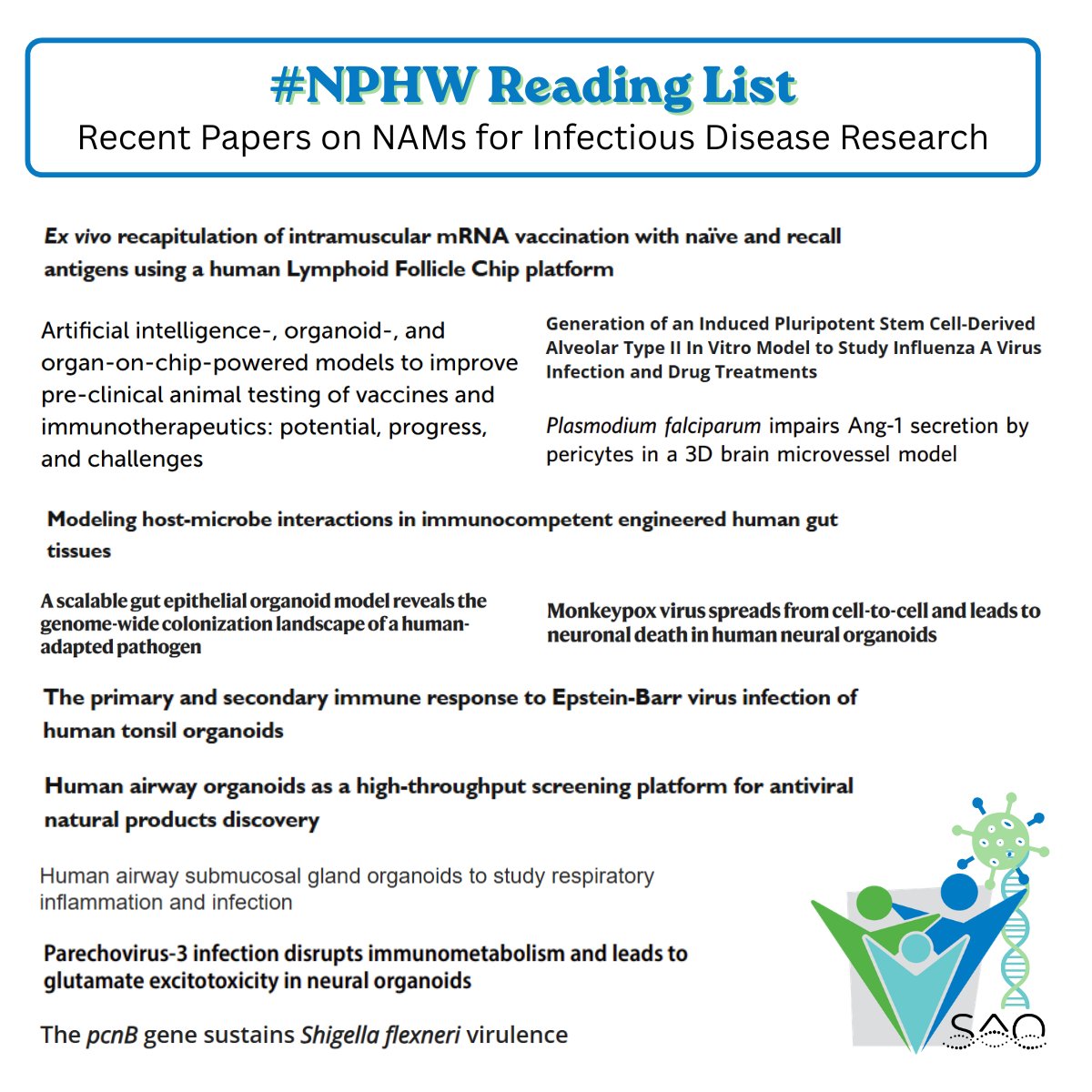
Across infectious disease research, experiments on animals fail to capture human‑specific immunity, tissue biology, & host–pathogen interactions.
Check out these recent papers describing how human‑based technologies can deliver predictive insights into disease mechanisms, immune responses, & therapeutic efficacy (good reading for #NPHW!):
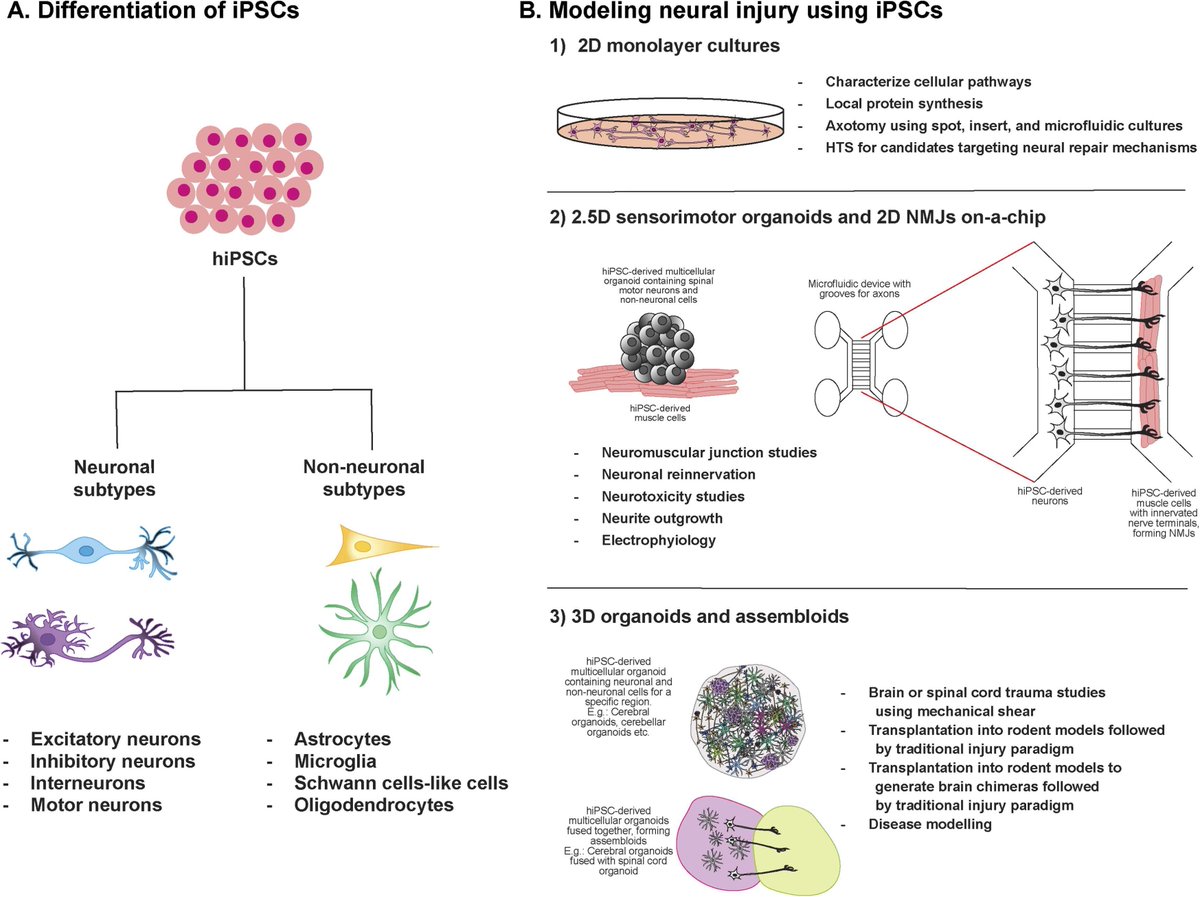
Progress in treating nervous system injuries has been historically limited by a lack of human‑relevant models.
Neural repair experiments on animals "fall short in replicating human-specific features such as long axonal architecture, species-specific gene regulation, and cellular diversity, all of which are critical for understanding neural repair in humans."
In this new review, @RutgersBioSci researchers highlight how human induced pluripotent stem cell (iPSC)–based models are changing what's possible for this field.
https://t.co/8Ru2J4YESN
From 2D cultures and 3D organoids to microengineered injury platforms and patient‑specific cell types, these models are revealing key regulators of neurite growth, clarifying how disease‑linked mutations disrupt axonal integrity, and accelerating the discovery of neuroprotective and pro‑regenerative compounds.
@manasiagrawal1, Meghal Desai, Shruti Ghumra, Yashashree Bhorkar, and @SahooLab discuss how iPSC‑derived neurons, glia, Schwann cells, and neuromuscular junctions are advancing our understanding of remyelination, axon‑glia interactions, and circuit‑level repair—areas where translation from experiments on animals has repeatedly fallen short.
Investing in human‑relevant platforms offers the best chance of developing therapies that restore function after nervous system injury and for furthering the field of regenerative neuroscience.
In response to criticism of @CDCgov's decision to end its in-house experiments on non-human primates, Lynn Taylor, MD (@LMTaylor79), Etai Bally, and Zach Burns, DO penned a powerful letter outlining the many reasons the agency's choice was a good one.
✅ Myriad studies show that experiments on non-human primates fail to predict human responses.
✅ Scientific techniques exist that are more relevant to human health.
✅ "Nonhuman primates are highly intelligent, sensitive, social beings. Using them in research is cruel and sadistic, inflicting avoidable pain, fear and suffering."
✅ The use of monkeys in laboratories and the international monkey trade that supplies them poses zoonotic disease risks that endanger public health.
✅ Most of the world's primates are at risk of extinction.
✅ Past contribution does not entail present necessity.
Read and share their letter in @JIDJournal:
https://t.co/cuJHxkxpB3
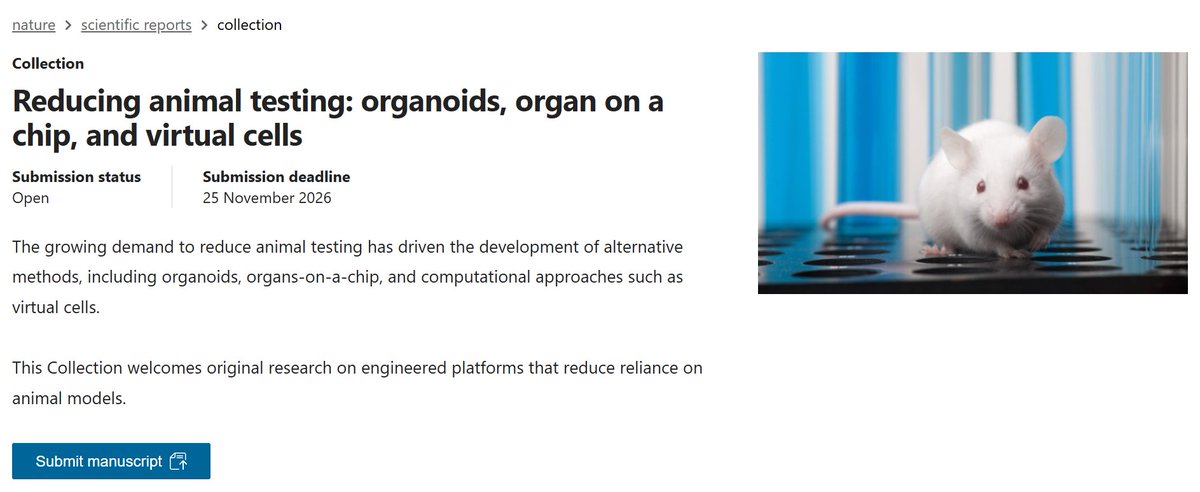
Call for papers! 📣 @SciReports welcomes papers for a new collection, "Reducing animal testing: organoids, organ on a chip, and virtual cells."
https://t.co/oIjP3XRzsT
Submit yours by November 25th!
Edited by @Neurobionics (@RMIT), Masaki Nishikawa (@engineering_UT), and Maria Nordin (@lunduniversity)
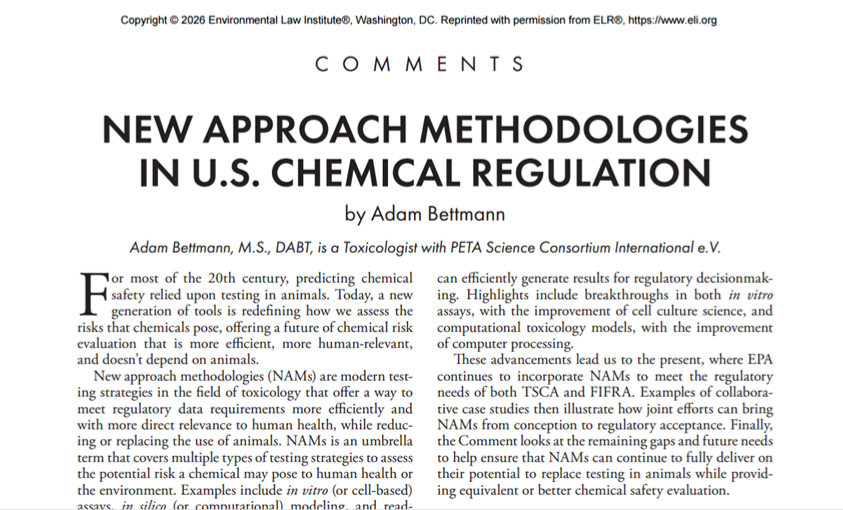
JUST OUT: Our commentary in @EnvLawReporter provides a historical context of the use of animals in chemical toxicity testing and how New Approach Methodologies represent the path forward in chemical risk evaluation.
Read it here: https://t.co/4wZ0O7qAm2