People helping animals are at the top of the scale of human needs - extending Maslow's pyramid of hierarchical needs, with species-transcendence on top of self-transcendence
https://t.co/LQQ2Vr0WJr
Elon spent his Sunday up on a lift, checking the heat tiles on the first Starship ever brought home from orbit.
For 30 years, every time the space shuttle came back from space, crews spent months going over its heat tiles by hand. The whole Starship bet depends on never having to do that again.
Ship 42 flew around the Earth 14 times, spent about 22 hours up there, hit the atmosphere at roughly 17,000 mph, and then got caught by the tower arms at the same pad it launched from. Every Starship before it that survived reentry splashed down in the ocean and was lost. SpaceX engineers have spent years studying this heat shield through telemetry and buoy cameras without ever being able to walk up and look at one that came back.
The shuttle is why this matters so much to him. It had more than 24,000 tiles, and most of them were a different shape from every other tile. Each one was cut for one exact spot on the orbiter and had its own ID number. After every flight, crews re-waterproofed the shield and swapped out 30 to 100 tiles. Elon has said the shuttle's heat shield took more than six months of work by a big team between flights, so he never counted it as truly reusable.
SpaceX went with hexagons. Most of Starship's tiles are the same shape, so they can be made in bulk instead of being cut one at a time like puzzle pieces.
My favorite part of this flight happened before the ship came home. Three of the 26 Starlink satellites it carried up had cameras on them, and after they were released they took pictures of the ship's heat shield in orbit. The photos looked good, so mission control dropped the backup ocean landing and brought it back to Texas. The rocket basically used its own cargo as a mechanic.
Elon's idea of success here is a ship that lands, gets refueled and launches again, with nobody doing a slow, careful inspection in between. Kind of funny that getting there starts with the CEO up on a lift on a Sunday, doing exactly that kind of inspection himself.
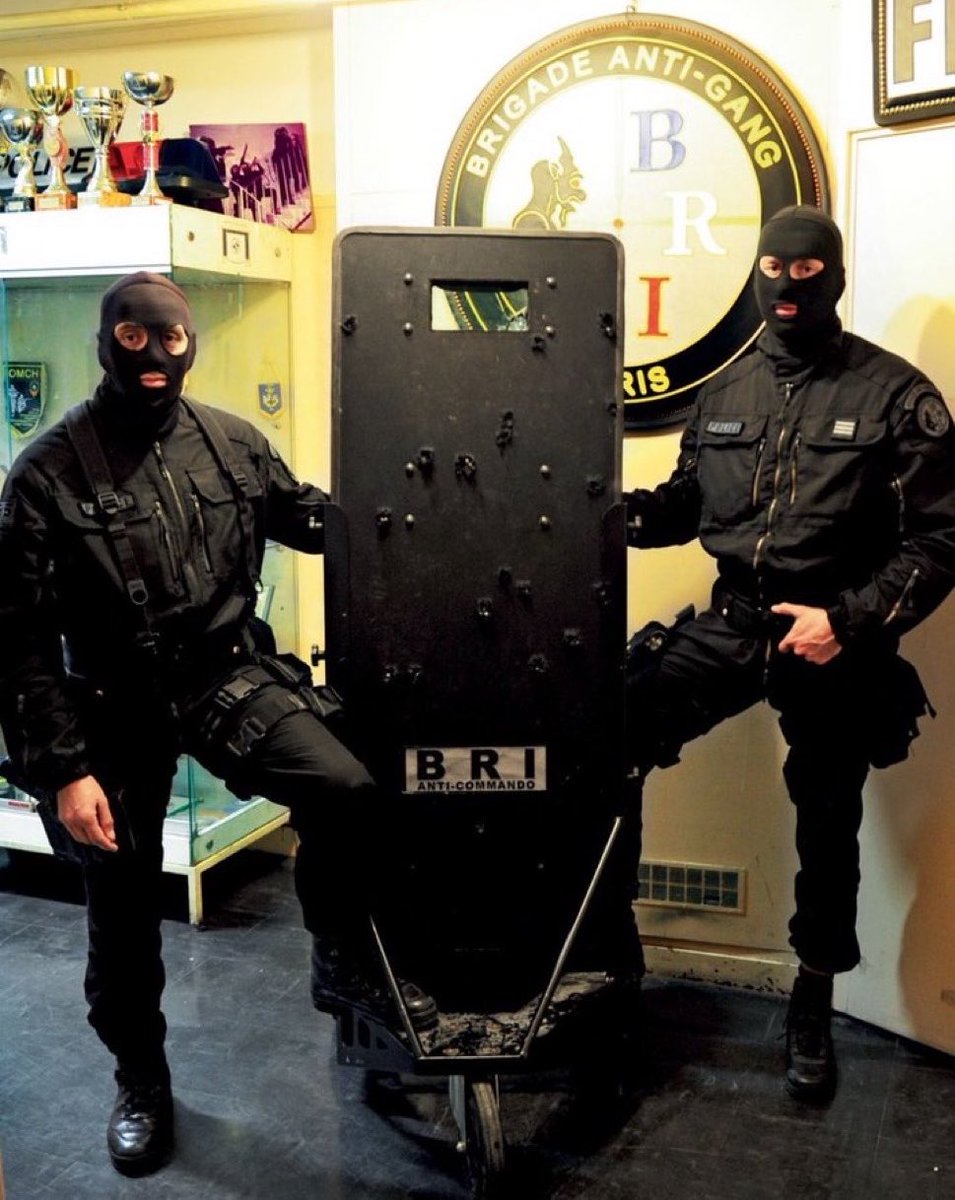
Quand certains disent ACAB, rappelez leur cette histoire :
Lui, c’est Guillaume Cardy.
Le 13 novembre 2015, il est chef adjoint de la BAC de nuit de l’agglomération parisienne. Alors que les terroristes massacrent les spectateurs du Bataclan, il entre avec son équipier, avant l’arrivée des unités spécialisées. Deux policiers, avec leurs armes de poing, face à des hommes équipés de kalachnikovs et de ceintures explosives.
À l’intérieur, ils découvrent des corps enchevêtrés, la fumée, les cris. Sur la scène, un terroriste tient un otage en joue. Les deux policiers ouvrent le feu. Samy Amimour s’effondre et sa ceinture explosive détonne. L’otage parvient à s’enfuir.
Pris pour cible depuis l’étage, ils doivent se replier. Mais leur intervention vient de mettre fin à la tuerie de masse. Les deux autres terroristes restent retranchés avec des otages, avant l’assaut des unités spécialisées.
Guillaume Cardy participe ensuite à l’extraction de victimes. Puis il retourne dans la salle.
Ce courage s’inscrit dans une longue carrière. Reçu au concours de commissaire en 1997, il commence en Seine-Saint-Denis, puis exerce dans plusieurs arrondissements parisiens. Il devient commissaire central du XIe arrondissement en 2009, rejoint la direction du service de nuit de l’agglomération en 2011, puis devient directeur départemental adjoint de la sécurité publique des Alpes-Maritimes en 2016.
En 2021, il témoigne au procès des attentats du 13-Novembre. En janvier 2024, il prend la tête du RAID.
Son nom mérite d’être connu. Celui de son équipier mérite aussi notre reconnaissance. Cette nuit-là, ils sont entrés pour sauver des vies, au péril de la leur.
Respect.
Il y a 11 ans, dans la nuit du 13 novembre 2015, Paris était frappée par une série de huit attentats terroristes qui ont marqué à jamais notre histoire.
Onze ans après, nous n’oublions ni les victimes, ni les familles endeuillées, ni les survivants dont la vie a été bouleversée.
Ne jamais oublier. 🖤
Historic Video: Little bird helicopter crews destroy Haitian terrorist gang bases..
El Salvador’s president Nayib Bukele just delivered the ultimate fuck around and find out, message to the Haitian, terror, gangs kidnapping, and murdering his citizens!
Black Holes Might Literally Split in Half — Physicists Just Found a Narrow Loophole in the Laws of Thermodynamics
We know black holes collide and merge into bigger monsters, ringing spacetime with gravitational waves. But what if the opposite can happen? What if one black hole tears itself into two?
A new theoretical paper in *Physical Review D* (“When Black Holes Admit Pair-of-Pants Topologies”) shows that the usual thermodynamic ban on this process has a tiny, extreme loophole.
Why splitting is normally forbidden
Black-hole entropy is proportional to the area of the event horizon (the Bekenstein–Hawking formula). For an ordinary, non-spinning Schwarzschild black hole, splitting into two smaller ones would shrink the total horizon area. Entropy would go down — a direct violation of the second law of thermodynamics. Nature simply doesn’t allow it.
The spinning loophole
For rapidly rotating Kerr black holes the math changes. Rotational energy alters the relationship between mass, spin, and entropy. The calculations reveal a narrow window where a split no longer decreases total entropy.
There’s a catch: the two newborn black holes must fly apart instead of immediately falling back together. Once that dynamical requirement is included, the window almost disappears. It survives only for black holes spinning *extremely* close to the maximum allowed rate (near-extremal Kerr holes).
Mathematically, the process is allowed. Whether nature ever realizes it is another question.
The “pair-of-pants” geometry
If such a fission occurred, the event horizon would evolve in a distinctive way through spacetime: a single connected surface that pinches and divides into two separate “legs.” Physicists call this a *pair-of-pants topology*. It is not a literal ripping of matter in ordinary space; it is a change in the topology of the horizon itself.
Other exotic routes
The authors also examine more speculative possibilities:
- In theories with extra spatial dimensions, the Gregory–Laflamme instability can make extended black objects unstable and fragment.
- Non-axisymmetric instabilities combined with superradiance (where a spinning black hole sheds energy into surrounding fields).
- Modified-gravity models that change the usual link between mass, horizon radius, and entropy, sometimes making a small fragment energetically preferred.
None of these guarantee that a split will actually happen — only that physics does not absolutely forbid it under the right conditions.
Could we ever see one?
The probability is currently unknown; it depends on physics beyond classical general relativity. Co-author Francesco Sannino notes that tiny primordial black holes formed in the early universe are more promising candidates than the astrophysical black holes we observe today.
Possible signatures could include high-energy radiation from the small fragments. Gamma-ray telescopes such as Fermi-LAT are suggested as one way to look for evidence that these rare “cosmic divorces” have ever occurred.
In short: black holes are still overwhelmingly more likely to merge than to split. But for the fastest-spinning ones, the thermodynamic veto is no longer absolute. The universe may occasionally allow a black hole to put on a pair of pants.
This is why we call it the “Pilot In Command”
This happened in the same vicinity where the ill-fated Lear Jet hit the storm cell.
JetBlue pilot en route from Fort Lauderdale to Austin says to ATC:
“So you're gonna make us go through a, uh, severe thunderstorm?”
The captain then commanded the situation and overrode the ATC:
“So we declare an emergency, making a left turn heading 260 for severe weather avoidance.”
Sometimes piloting demands a specific set of traits - decisiveness, independent judgment, and the backbone to reject an instruction when it doesn’t feel right.
Refusing the assigned heading showed exactly that kind of assertive leadership.
Whoever is pilot monitoring must make these tough calls but ultimately, the captain is the final authority and ultimately accountable for every soul on board.
La France a déjà basculé dans quelque chose d’irrémédiable.
La fracture n’est plus politique.Elle est devenue structurelle, territoriale et anthropologique. Il n’y a plus une France qui s’affronte sur des programmes, mais deux France qui ne partagent plus les mêmes évidences de base : ce qu’est l’ordre, ce qu’est la loi, ce qu’est la nation, ce qui est négociable.L’une reste majoritaire dans le pays réel (villes moyennes, périphéries, campagnes, une large part des classes populaires et moyennes).L’autre concentre une partie des centres urbains, des médias, des universités et des quartiers où l’autorité de l’État n’est plus exclusive. La gauche et l’extrême gauche,même additionnées, sont minoritaires à l’échelle nationale. Elles ne le sont plus dans certains territoires.C’est cette dissociation qui rend la situation nouvelle.
On invoque 1968 comme parallèle mais Il ne l’est pas. En 1968, la France restait un corps politique unique. Les étudiants, les ouvriers, les intellectuels parlaient encore la même langue historique, se référaient encore au même cadre national, et formulaient des revendications adressées à l’État : salaires, conditions de travail, réforme universitaire, pouvoir. Même les plus radicaux avaient quelque chose à obtenir du système existant. Les barricades, les grèves, les violences restaient à l’intérieur d’un conflit social et politique.
L’État pouvait négocier, céder, réprimer puis réintégrer. Le pays sortait de la crise en conservant son unité de référence.
Ce n’est plus le cas.Aujourd’hui les revendications ont disparu. Il ne s’agit plus de réformer le système, mais de le de le substituer. Dans certains territoires, des groupes n’ont plus rien à demander à l’État : ils disposent déjà de leurs réseaux, de leurs économies, de leurs codes et de leurs zones d’influence. L’affrontement ne porte plus sur la répartition des richesses ou des droits à l’intérieur d’un même ensemble. Il porte sur qui impose ses règles, qui contrôle l’espace public, qui décide de ce qui est toléré. La violence n’est plus un moyen de pression pour obtenir une concession ; elle devient parfois une affirmation de présence ou un test de résistance de l’État.
Nous entrons dans le troisième week-end consécutif de « revendication ». La France tient grâce à un dispositif policier hors norme. Ce n’est plus une gestion ordinaire de l’ordre public. C’est une mobilisation continue pour empêcher que la fracture se matérialise en pertes de contrôle territoriales. Un syndicat de police l’a dit après le précédent week-end : sans les forces, des villes seraient tombées. Ce constat n’est pas une opinion. C’est un retour d’expérience opérationnel. L’ordre n’est plus garanti par un consentement majoritaire diffus, mais par la présence massive et dissuasive des forces de l’ordre. Dès qu’elles se retirent, le vide est occupé.
Les mêmes forces ont, ces derniers mois, laissé passer des scènes que personne n’aurait imaginées il y a dix ou quinze ans. C’est le signe que le seuil de tolérance a été relevé pour éviter une escalade immédiate, et que ce relèvement lui-même élargit le périmètre de ce qui devient acceptable. Chaque non-intervention crée un précédent. Chaque précédent affaiblit la crédibilité de la loi partout ailleurs.
La différence avec 1968 est donc radicale sur trois points. D’abord, le cadre commun a disparu : il n’y a plus de langage partagé qui permette de transformer la violence en revendication négociable. Ensuite, une partie des acteurs n’a plus d’intérêt à négocier avec l’État, parce qu’ils ont déjà construit des alternatives locales. Enfin, la réponse de l’État n’est plus temporaire elle devient structurelle. Un pays peut absorber une crise de mai 1968. Il ne peut pas indéfiniment tenir uniquement grâce au nombre de policiers
La bascule n’est pas devant nous. Elle est déjà derrière.Ce qui reste est la gestion, de plus en plus coûteuse et de plus en plus fragile, des conséquences d’une fracture que 1968 ne permet pas de comprendre.
The ugly truth about France and some of the other European countries currently in turmoil - and which none of the politicians want to admit because it'd be political suicide - is that you can't solve the problem by going after immigrants (as the right asserts) or the rich (as the left asserts), but you could solve it by going after the old.
One extraordinary statistic for you: people over 60 in France, a quarter of the population, own 60% of France's wealth, non-financial and financial (https://t.co/IdJ5X7OO12).
And here is another crazy statistic:
that same quarter of the population, those above 60, receive nearly two-thirds of all social spending by the French government (https://t.co/deNRNevIwq) - which is famously among the highest in the world (France's government spending is an insane 57.3% of GDP).
Last statistic: they make up about 40% of voters because they're a third of registered voters (https://t.co/zTa4RnVOmT), and they turn out far more than anyone else (https://t.co/34V2xzs9jH).
Put our 3 statistics together and there's almost a bit of an apartheid situation here: the old own most of the country's wealth, collect most of the social spending and have the political power to keep it that way.
Which makes them a de-facto rentier class, living off assets and transfers paid for by younger generations.
And, of course, at the risk of stating a truism, the future is built by the young. Yet France keeps effectively taking money away from them to give it to those whose working lives are already behind them - and need the money far less since they already own the country's wealth.
What about inheritance, I hear you ask? That's the funniest/saddest aspect: given that life expectancy has kept rising, the French now inherit a home at 54 on average. The most common case is someone in their 80s leaving it to heirs in their 50s, in effect the very old transferring wealth to the about-to-be old (https://t.co/d2RPAqLJGR).
You can add this to our earlier apartheid statement: on top of all the rest, even when the old finally let go of their wealth, it stays within their own "camp".
That's my personal situation, incidentally: I'm 42, my father is 71 and he is starting to look at ways to pass things on to me and my siblings, when our professional lives are already well settled, so it'll arrive when it changes things the least, which is pretty much the French system in a nutshell.
Now, I get that there'd be some unfairness in going after them: they paid into the system their entire working lives, playing by the rules of a social contract that told them if they paid up they'd collect at the end. Changing the rules now means breaking that promise, which is admittedly unfair.
But there's no magic wealth tree in any society: you can only take it where it is. That's the way most major societal transformations end up happening. They're often triggered by a catastrophic event (the so-called "four horsemen": mass-mobilisation war, revolution, state collapse, plague) BUT what really drives change is a transfer: wealth gets pried from the privileged class who've been sitting on it and handed to those who'll build what comes next.
So, in theory and in an ideal world, you can do without the catastrophic event and directly proceed with the transfer...
The fact that in France, and elsewhere in Europe, it's the youth protesting is probably no coincidence - even though they don't frame it as a generational fight. And even though, cruel irony, the left politicians many of them march behind promise to bring the retirement age back to 60 (https://t.co/WrJOhpWqYR), which would make the situation even worse.
Let's say they understand intuitively that the system is stacked against them, even if they haven't yet figured out how. And politicians are obviously doing what politicians do, meaning pandering to the people who actually vote, while pointing the young towards easier - and politically convenient - scapegoats.
To be clear I'm not saying it's the only problem in France, VERY far from it. I'm also not saying that all old people in France live a lavish lifestyle at the expense of younger generations: there are also plenty of very poor retirees who, if anything, would deserve more.
What I am saying is that it's probably the biggest elephant in the room: everyone can see it, nobody dares mention it - no politician, from any side, wants to run on cutting grandma's pension - and it makes every other problem harder to fix.
The typical American guy working full time makes about $35 an hour, so every hour he spends on the couch with his best friend quietly costs him $35. That's the real reason men can't hang out without golf or the game on, and a Swedish economist figured it out back in 1970.
His name was Staffan Linder. He wrote a book called The Harried Leisure Class, and the idea is pretty simple once you hear it.
Every hour you have is worth whatever you could've earned with it. As a country gets richer and wages go up, your free time gets more expensive right along with your work time. Linder said people react by trying to squeeze more out of every free hour, and the easy way to do that is to stack stuff on top of it. So the hour turns into a round of golf, a game on the big TV, a fishing trip, a new grill you want your buddy to see.
That's what Trevor is describing with "the third thing."
When a guy texts "want to go fishing Saturday?" he's attaching something to the hour so it feels worth spending. The fishing gives him a reason to be there. Two guys on a couch just talking feels like nothing got done, so if you grew up somewhere wages are high, your brain files it as wasted time. Even though it's probably the best thing either of them will do all week.
It also explains why Trevor's friends from the township in South Africa and from Trinidad don't have this problem. Trinidadians even have a word for it, liming, which basically means hanging out with zero agenda. An afternoon of doing nothing in Soweto costs a fraction of what it costs in Manhattan, so it never got squeezed out of anyone's week.
Now do the math on an actual close friend. A University of Kansas researcher named Jeffrey Hall found it takes more than 200 hours together before someone becomes a close friend. At $35 an hour, that's almost $7,000 worth of time per friend. Some part of your brain runs a version of that number every time "just come over" feels like it needs a reason attached.
Later in that same interview, Trevor tells a story that's basically Linder's whole book in one afternoon.
Once he was hosting The Daily Show, a theme park offered him and his friends a pass to skip every line. They rode everything a few times over in about three hours, in a park that usually takes all day. He came home with a headache and his friends were dehydrated. They'd barely talked, and it was the most depressing theme park trip they'd ever been on.
That night they tried to figure out what went wrong, and it hit them that the lines were the part they loved. Standing in a queue for an hour meant there was nothing to do but hang out and talk.
That pass did to one afternoon what a big salary does to your whole social life. It got rid of all the dead time, and the dead time was what they came for.
Modern TV can sometimes look like a car commercial. Everything appears sharp, clean, perfectly lit.
Then you rewatch Season 1 of The X-Files and remember how dark television used to be.
The Vancouver seasons have this cold, damp and an almost dreamlike quality.
A lot of that came from the way the show was photographed on 35mm film, and from cinematographer John Bartley's willingness to let darkness remain darkness.
In some of his interviews, he talked about lighting the walls while leaving the actors in shadow, or lighting the actors while letting the background disappear.
And also Vancouver's rain, mist and forests weren't just scenery. The crew used backlighting and steam to turn ordinary locations into something genuinely eerie.
And honestly, that's much harder to replace than people think.
A San Francisco startup says it just turned mercury into real gold, and their own math says gold is one of the cheapest things their machine can make. Aim it at a different metal and it makes a cancer drug ingredient worth tens of billions of dollars a gram.
Here's how it works. When you fuse two kinds of hydrogen, deuterium and tritium, every single reaction kicks out a neutron moving at 14.1 MeV, which is absurdly fast. Fire one into mercury-198 and it knocks another neutron loose on the way through, so two come out and you're left with mercury-197. Give that a few days and it decays into gold-197, the only stable kind of gold there is. The whole trick needs neutrons above about 6 MeV, and regular nuclear reactors barely make those, while fusion makes one every time it fires.
Now swap the mercury for radium-226. Same reaction, one neutron in and two out, and you end up with radium-225, which decays into actinium-225. Novartis is building its next prostate cancer drug around actinium-225, and it's so scarce it sells by the millicurie, roughly $1,200 to $2,500 apiece. Price it by the gram and you're into the tens of billions of dollars, for a material so radioactive nobody could safely hold a gram of it anyway.
Marathon's team actually put a dollar value on a single fusion neutron in a paper this year. Use it to make electricity and it's worth about $3 × 10⁻²⁰. Gold comes in at $2.6 × 10⁻²⁰, basically a wash. Molybdenum-99, which goes into about 80% of nuclear medicine scans, is worth $2.6 × 10⁻¹⁷ a neutron. Actinium-225 is worth about $10⁻¹⁰, around 3 billion times what the electricity's worth.
That's why fusion people should care. Every fusion company you've heard of is chasing electricity, and selling electricity only pays once the plasma puts out something like 10 to 22 times the energy you pump in to heat it. The best result so far, at JET in England, was about a third. Add gold on the side and Marathon's math says you break even around 3x. For molybdenum-99, the number is 0.001x.
So a machine that gives back one-thousandth of the energy you feed it can still make money, as long as the neutrons hit the right metal.
By their numbers, a 3 megawatt machine running way below breakeven could cover the whole world's supply of molybdenum-99, which today comes from splitting uranium in a handful of research reactors. Today's experimental fusion machines already beat the gain that job needs.
Their second post basically says this out loud. Marathon now describes itself as an isotope company for radiopharma. Their chart shows roughly 390 targeted radiotherapy trials. Pluvicto, the prostate cancer drug Novartis launched at $42,500 a dose, did $1.9 billion in sales last year.
Gold still matters to them, just later. It's about a $700 billion a year market, and Marathon's paper figures it could soak up around 2 terawatts of fusion capacity, which is roughly the scale where fusion actually moves the grid. So the plan is to sell cancer isotopes out of small machines now and use gold to pay for the giant ones, years before electricity can pay for itself.
In December 1958 the Polish embassy in Beijing refused to let the sparrow killers onto its grounds, so the Chinese surrounded it with drummers and kept the drums going for two days until every bird sheltering in the garden had dropped dead from the air, and the diplomats cleared them up with shovels.
That is how thorough it was. The campaign had been running since the spring. Every village, school and factory was turned out with gongs, pans and firecrackers to keep the sparrows flying until their hearts gave out. Nests were torn from eaves, eggs smashed, chicks killed, and children went through the fields with slingshots and were paid by the bird. The dead came in by the basket, strung on wires, piled on carts, and the totals went up the chain as a harvest. Something close to two billion sparrows in two years. The embassy garden was the last place in the capital with birdsong in it, and the drums got that too.
A zoologist called Zhu Xi had told them before it started that a king had tried this and lost. Frederick the Great of Prussia had put a bounty on sparrows in the 1740s to save his grain and his cherries, and the sparrows went, and the caterpillars they had been eating stripped his orchards to the stalk, and the king cancelled the bounty and paid to have sparrows brought back from neighbouring states and let loose. The whole episode was in the library. The ministry had a figure for what a sparrow ate and no figure for what it did, and a man with the second figure was told to sit down.
The locusts arrived on schedule. Then the grain borers. A sparrow takes a few grains from a field in autumn and feeds its chicks nothing but insects all spring, and with the sparrows gone the insects had the rice and the wheat to themselves. The counties with the most sparrows to lose saw their grain fall the furthest, and the rice and wheat that had been holding the country up went down together.
That was 1959, and the state took its grain quota anyway, on the harvest that had been reported. What was left in the villages was not enough, and the famine that followed over the next three years is the largest in human history: tens of millions dead, the estimates running from fifteen million to forty-five, whole counties in Anhui and Sichuan where the living could not bury the dead. The sparrows were one cause among several and the economists who have gone back to the county records put the bird's share at something over two million people, with another four hundred thousand never born. Two million, from a campaign against a thing that weighs an ounce.
By 1960 the ornithologist Tso-hsin Cheng, who had been cutting open dead sparrows and counting the insects in their stomachs, got the bird struck off the list and bed bugs put in its place. There were almost no sparrows left in China to pardon. So the government did what Prussia had done two centuries before: it bought a quarter of a million sparrows from the Soviet Union and shipped them east in crates, to be released into a country that had drummed every one of their relatives out of the sky.
The animal that does the invisible job is always the one on the ledger as a cost. Take the sheep off a chalk down and the orchids are under scrub in twenty years. Fence the cattle off a Welsh hill and the bracken takes it. Empty a savannah of its herds and the grass goes to fire. All of it written down, all of it in the library, all of it available to the next committee with a figure for what a cow eats.
Beijing paid Moscow for the birds in hard currency. The men who had said so in 1958 were still not allowed to say so in 1960.
This is wild 🤯
Scientists just built tiny liquid robots made of water coated in Teflon particles. They can squeeze through cracks, swallow objects, merge with each other, and carry cargo — almost like living cells.
They start as ice cubes dusted with superhydrophobic powder, then melt into soft, armored blobs.
The future of soft robotics just got a lot weirder.
Jeremy Clarkson cannot sleep the night before his animals go to the abattoir. He has said so in print, and it is the most important thing the show has taught the public about farmers.
He cried on camera the first time he sent his lambs. It was worse with the cows, he wrote, and worse again with the pigs. He described the drive to the slaughterhouse as having "a hot cricket ball in the pit of my stomach". He kept two of his old sows back and found them a home on a children's farm, because he could not face it.
This is a man who spent thirty years being paid to seem as if he did not care about anything.
Every livestock farmer watching nodded. That feeling is the job. You are there when the animal is born, often with your arm inside its mother at three in the morning. You know it by sight. You keep it fed, dry and well for its whole life, and then you take it on its last journey yourself, because you would not trust anyone else to do it quietly.
People who have never done it call that hypocrisy. It is the opposite. It is the oldest honest bargain there is. The animal gets a good life it would never otherwise have had, and the farmer carries the weight of the ending.
The customer who buys a soya burger carries nothing. The field it came from was sprayed until nothing else lived in it, and nobody lost a night's sleep.
Farmers are accused of not caring about animals by people who have never once had to look their dinner in the eye.
This disgusting barbarism sets an expectation and a new tradition that elephants will be killed to celebrate future national events
I agree boycott Botswana
Botswana is heavily dependent on tourism and this will send a clear message to Botswana to stop this cruelty
The magpie is one of the most intelligent animals to exist. Their brain-to-body-mass ratio is outmatched only by that of humans. Their playful, curious spirit drives adaptation and exploration
[📹 The Magpie Whisperer]