Today, in 1776, the Continental Congress forms a committee of five to draft a declaration of independence. The men chosen are Benjamin Franklin, John Adams, Thomas Jefferson, Robert R. Livingston, and Roger Sherman.
On June 11, 1776, the Continental Congress appointed a Committee of Five consisting of Thomas Jefferson, John Adams, Benjamin Franklin, Robert R. Livingston, and Roger Sherman to explore drafting a Declaration of Independence. Two more committees were then appointed to explore a confederation scheme of governance and a plan to negotiate treaties with foreign powers.
This painting by the great John Trumbull depicts the Committee of Five turning in their homework to President John Hancock.
Gordon Wood taught the first class I attended at Brown, and remains my Platonic ideal of a history professor. He showed that you could combine breadth of knowledge with a genuine appreciation for the way ideas influenced history. I didn't know then how rare this combination was.
I'll end on this: no work like Wood's "The Radicalism of the American Revolution" made me want to be an American so badly. Now that I am a citizen, I'm proud to share in the tradition Wood described and defended.
On Sunday, my friend Gordon Wood was struck and killed in a car accident. Gordon taught history at Brown Univ. and was among the most accomplished historians America has produced. He won the 1993 Pulitzer Prize for The Radicalism of the American Revolution, and his earlier book The Creation of the American Republic, 1776–1787 took the 1970 Bancroft Prize. He also received the National Humanities Medal.
He was, in my view, the finest historian of America's founding—which makes it all the sadder that he did not live to see the nation's 250th birthday. His reputation reached popular culture, too. Matt Damon's character in Good Will Hunting invokes him by name in the famous bar scene, accusing a Harvard student of simply "regurgitating Gordon Wood, talking about [...] the pre-Revolutionary utopia and the capital-forming effects of military mobilization."
I feel fortunate to have collaborated with Gordon on several projects. In a 2019 anthology I compiled, he wrote an essay on the possibility of a shared American narrative. He centered his argument on equal rights as "the most radical and most powerful ideological force" the Revolution unleashed. "This powerful sense of equality is still alive and well in America," he wrote, "and despite all of its disturbing and unsettling consequences, it is what makes us one people."
When I needed jacket blurbs for my new book Lincoln's Compass, coming out this November, I turned to Gordon. The fit was natural: the book argues that Abraham Lincoln took the Declaration's claim that "all men are created equal" as his guiding moral compass—and that he refocused the nation on that claim. Gordon, ever the gentleman, offered generous praise.
He was, in many respects, the dean of American historians. He will be very hard to replace.
On this day—May 25, 1787—the Constitutional Convention convened in Philadelphia.
Intended only to revise the Articles of Confederation, 55 delegates from 12 states (Rhode Island refused to attend) gathered at the Pennsylvania State House. George Washington was unanimously elected president of the convention.
Behind closed doors, the delegates decided to scrap the Articles entirely and draft a new Constitution — creating a stronger federal government with three branches, checks and balances, and a framework that still governs the United States today.
Do you think the Constitution was a good idea, or should they have revised the Articles of Confederation?
Before They Were President: Part I
Surveyor. Tailor. Rail Splitter Hangman.
A thread on the first 25 American presidents and what they did before the office found them.
🧵1/25
James Monroe 🇺🇸 was the first Senator to be elected to the Presidency. He was elected senator of the First United States Congress in 1790. Previous presidents had been elected from cabinet positions at that point
#POTUS
99 years ago today, a 25-year-old airmail pilot climbed into a single-engine plane in New York with no front windshield, no radio, no parachute, and 5 sandwiches.
Six pilots had already died chasing the $25,000 prize for the first nonstop flight from New York to Paris. Two French aces had vanished over the Atlantic just 12 days earlier.
His plane was so overloaded with fuel it barely cleared the telephone wires at the end of the runway. He hadn't slept the night before. To save weight, he'd stripped out everything inessential. No sextant. No radio. A wicker seat instead of a real one. The fuel tank blocked his forward view, so he flew using a periscope.
When a reporter asked about his rations, he said: "If I get to Paris I won't need any more. If I don't get to Paris I won't need any more either."
Somewhere over the Atlantic, hallucinating from exhaustion, Charles Lindbergh later wrote that ghostly figures filled the cockpit and spoke to him. He flew as low as 10 feet above the waves so the spray would keep him awake.
33.5 hours after takeoff, having been awake nearly 55 hours straight, he landed at Le Bourget Field outside Paris.
150,000 people stormed the runway. They tore strips of fabric off his plane as souvenirs.
He went to sleep the most famous person on Earth.
American Patriot.
George Washington refused a paycheck as General of the Continental Army.
After winning the war, he was so financially strained that he had to borrow money just to travel to his own inauguration.
🇺🇸TODAY IN AMERICAN HISTORY🇺🇸
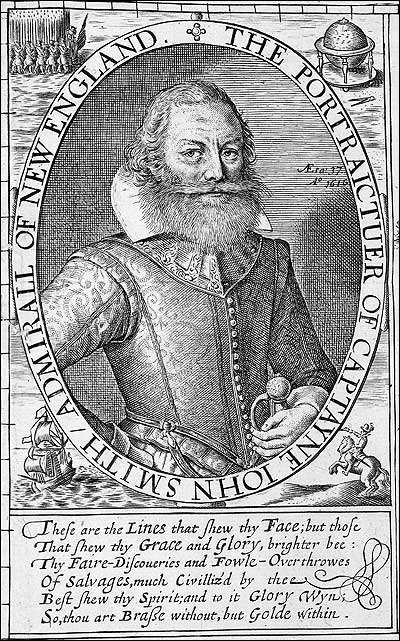
John Smith, and 104 men and boys (no women), disembarked from their three ships, broke ground, and established Jamestown, the first permanent European settlement in North America.
-- More than half of them would be dead (mostly from water-borne illness) by Sept 10
-- By the time Captain Christopher Newport arrived on Jan 2 with their first supply ship, he counted only 38 survivors.
May 14, 1804.
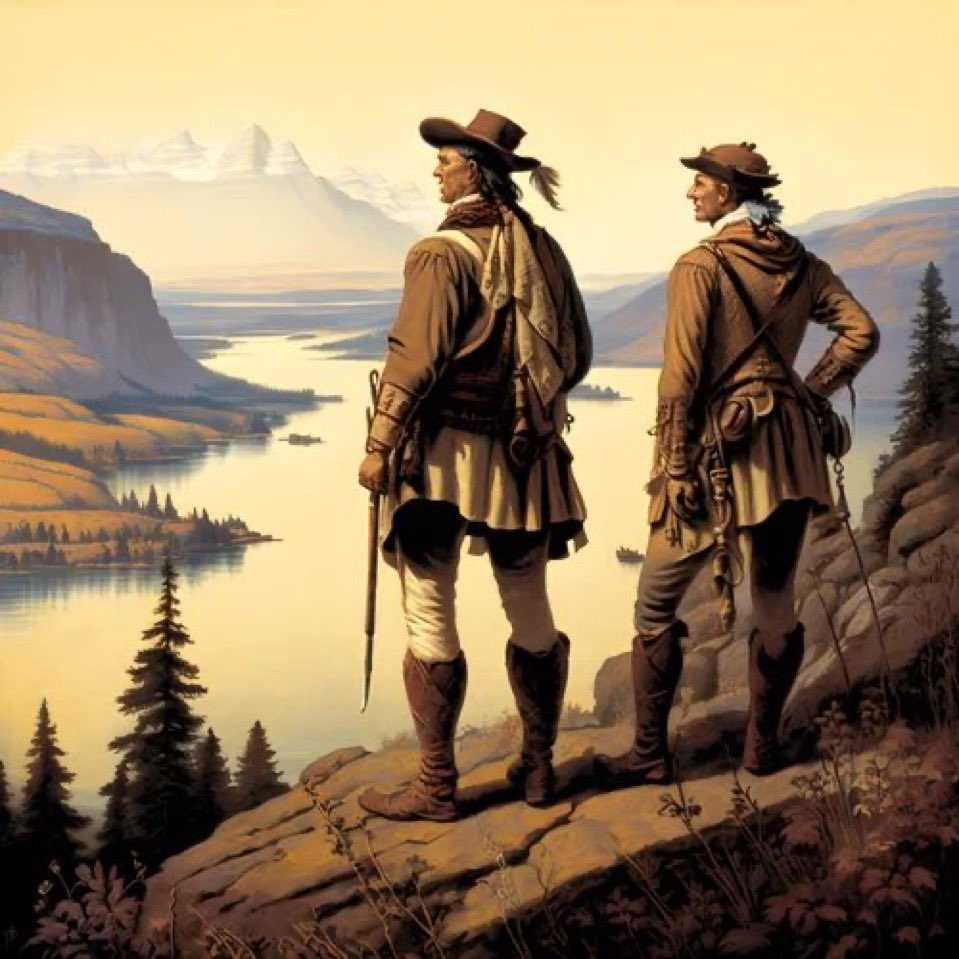
4:00 p.m., a damp gray afternoon on the Mississippi River. A 55-foot keelboat and two smaller pirogues push off from Camp Dubois, just north of St. Louis. On board are roughly 45 men, a Newfoundland dog named Seaman, and supplies including 193 pounds of "portable soup," 50 kegs of pork, 30 gallons of whiskey, and a collapsible iron-frame boat that will later be one of the great failures of American engineering.
They are about to attempt something no one in the United States government actually believes is possible.
Their orders, written personally by Thomas Jefferson on invisible ink-grade secrecy, are to ascend the Missouri River to its source, cross the western mountains, find the Columbia River, and follow it to the Pacific Ocean. Jefferson is convinced this will reveal a continuous water route across the continent, the long-dreamed Northwest Passage. He is wrong. He is so wrong it is almost funny. He believes the Rocky Mountains are a single ridge, like the Appalachians, that the men can portage over in an afternoon.
The Rocky Mountains are not a ridge. They are 3,000 miles of stacked, snow-choked ranges, and crossing them will nearly kill every man in the Corps of Discovery.
Meriwether Lewis is 29 years old, brilliant, melancholic, and prone to depressive episodes that Jefferson, his mentor and former neighbor, has personally observed. William Clark is 33, redheaded, a former Indian fighter, and a far better mapmaker than the Army ever realized. Lewis is in St. Louis settling final affairs. Clark commands the launch. With him is York, a Black man Clark inherited from his father at age 14 and has owned ever since. York will paddle, hunt, fight, scout, and negotiate alongside every other member of the Corps for the next 28 months. Clark will refuse to free him when they return.
They will travel 8,000 miles. They will encounter nearly 50 Native nations, most of whom have never seen a white American and several of whom could have wiped them out in an afternoon and chose not to. They will be saved, repeatedly, by people whose land they are surveying for an empire that intends to take it.
The most famous of those people joins them seven months in. At a Mandan village in present-day North Dakota, they hire a French-Canadian fur trapper named Toussaint Charbonneau as an interpreter. The actual asset is his wife, a 16-year-old Lemhi Shoshone girl named Sacagawea, who had been kidnapped by a rival nation at age 12 and sold to Charbonneau as a captive bride. She is six months pregnant. She gives birth to a son in February 1805 in a dirt-floored cabin, with Lewis assisting the delivery by feeding her crushed rattlesnake rattle in water, which he records as having "very expeditious" effects.
She carries that baby, Jean Baptiste, on her back across the Rocky Mountains. He is two months old when they set out west again.
She is not, contrary to a century of American mythology, their guide. She had been gone from her homeland for four years and most of the route is new to her too. What she is, is something far more valuable: living proof to every nation they meet that this is not a war party. No war party travels with a teenage mother and an infant. Her presence opens doors that rifles never could. In August 1805, starving and lost in the Bitterroot Mountains, they finally meet a Shoshone band. The chief turns out to be Sacagawea's older brother, Cameahwait, whom she has not seen since she was kidnapped. She breaks down sobbing in the middle of the negotiation. He gives them the horses they need to cross the Continental Divide. Without those horses, every man in the Corps dies in the snow.
They reach the Pacific in November 1805. Clark carves into a pine tree, "William Clark December 3rd 1805. By land from the U. States in 1804 & 1805." On the return trip they split into two parties to map more ground, get into the only deadly skirmish of the entire expedition (two Blackfeet men killed by Lewis), and Lewis gets shot in the buttocks by one of his own men who mistakes him for an elk.
They walk back into St. Louis on September 23, 1806. They have been gone two years, four months, and ten days. Everyone in the United States has assumed they are dead. Crowds line the riverbank.
They have lost exactly one man, Sergeant Charles Floyd, almost certainly to a burst appendix in present-day Iowa, an injury no surgeon in the world could have saved him from in 1804.
They have documented 178 plants and 122 animals previously unknown to Western science, including the grizzly bear, the prairie dog, the pronghorn, and the coyote. They have mapped territory that will become eleven future states. They have, without realizing it, accelerated by decades the dispossession of every Native nation whose hospitality kept them alive.
Lewis will be dead within three years, at 35, of two gunshot wounds in a Tennessee inn, almost certainly self-inflicted. Clark will live to 1838 and become the federal government's chief administrator of Indian affairs in the West, signing treaty after treaty with the same nations that fed him. York will eventually be freed, but the date and circumstances of his death are unknown. Sacagawea's fate is disputed: the written record says she died of fever at Fort Manuel in 1812 at about 25. Shoshone oral tradition says she lived to 1884 and is buried on the Wind River Reservation in Wyoming.
The baby on her back grew up speaking English, French, German, and Spanish, was educated in Europe by a German prince he met on the Missouri, and died in 1866 in Oregon at age 61.
All of it, every mile of it, every birth and death and treaty and betrayal, started 222 years ago today, when three small boats pushed off a muddy bank near St. Louis on a gray afternoon and turned upriver into a continent they did not understand.
14 May 1607: #Captain John Smith helps to found the first permanent #English settlement in the U.S. at Jamestown, Virginia. The voyage began December 20, 1606 with three small ships, the Discovery, the Susan Constant, and the Godspeed. #OTD#History#ad https://t.co/JNDRA20E62
The Lewis & Clark expedition trekked 8,000 miles over 28 months.
Pioneers who explored a continent they braved unknown Indian tribes, grizzlies, rapids & untamed wilderness, reaching Pacific shores before returning triumphant.
American, remember who you are descended from.
THE LEWIS AND CLARK EXPEDITION
The Lewis and Clark Expedition was a military operation that took place from May 14, 1804, to September 23, 1806. Led by Meriwether Lewis and William Clark, its purpose was to explore territory on the western frontier and find a water route from the Mississippi River to the Pacific Ocean. The territory included land that the United States acquired from France in the Louisiana Purchase. As a result, Lewis and Clark were also instructed by President Thomas Jefferson to establish trade relationships with the Native American Indian tribes in the region. The expedition included a group of soldiers known as the “Corps of Discovery.” The expedition set out from St. Louis, Missouri, and crossed the Great Plains westward. Over the winter of 1804, a Canadian trader, Toussaint Charbonneau, and his wife, a young Shoshone woman named Sacajawea, joined the expedition. The journey resumed in the spring, crossing over the Continental Divide, the Rocky Mountains, and the Columbia River Plateau. The expedition reached the Pacific Ocean in November 1805, and it returned to St. Louis in September 1806. Along the way, they contacted various tribes, including the Shoshone, Nez Perce, and Blackfoot. They also carefully documented the plants and animals they found and mapped the rivers and waterways. Overall, the Lewis and Clark Expedition was a significant achievement that helped to open the American West to expansion. It inspired further exploration of the territory, settlement, and eventually the concept of “Manifest Destiny.”
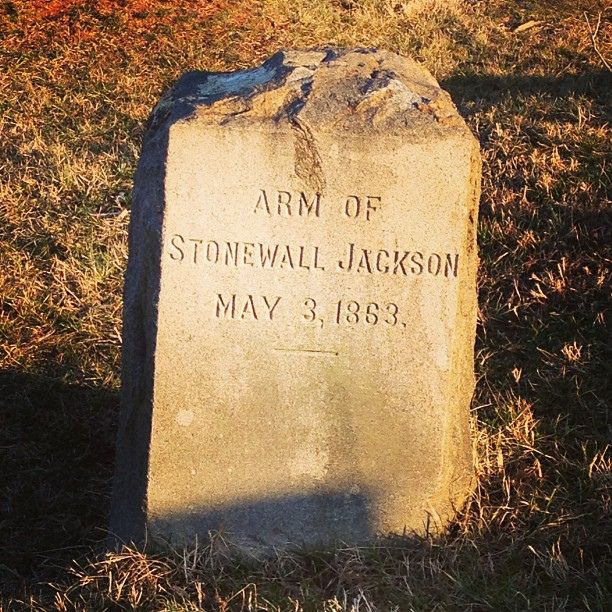
Stonewall Jackson's arm has its own grave.
After the friendly fire incident, surgeons amputated his left arm and went to throw it on a pile of severed limbs.
His chaplain saved the arm, wrapped it in a blanket, rode to a family cemetery and buried it with a Christian funeral.
Jackson died 8 days later. He was buried 100 miles away.
The arm stayed.









![JoshuaClaybourn's tweet photo. On Sunday, my friend Gordon Wood was struck and killed in a car accident. Gordon taught history at Brown Univ. and was among the most accomplished historians America has produced. He won the 1993 Pulitzer Prize for The Radicalism of the American Revolution, and his earlier book The Creation of the American Republic, 1776–1787 took the 1970 Bancroft Prize. He also received the National Humanities Medal.
He was, in my view, the finest historian of America's founding—which makes it all the sadder that he did not live to see the nation's 250th birthday. His reputation reached popular culture, too. Matt Damon's character in Good Will Hunting invokes him by name in the famous bar scene, accusing a Harvard student of simply "regurgitating Gordon Wood, talking about [...] the pre-Revolutionary utopia and the capital-forming effects of military mobilization."
I feel fortunate to have collaborated with Gordon on several projects. In a 2019 anthology I compiled, he wrote an essay on the possibility of a shared American narrative. He centered his argument on equal rights as "the most radical and most powerful ideological force" the Revolution unleashed. "This powerful sense of equality is still alive and well in America," he wrote, "and despite all of its disturbing and unsettling consequences, it is what makes us one people."
When I needed jacket blurbs for my new book Lincoln's Compass, coming out this November, I turned to Gordon. The fit was natural: the book argues that Abraham Lincoln took the Declaration's claim that "all men are created equal" as his guiding moral compass—and that he refocused the nation on that claim. Gordon, ever the gentleman, offered generous praise.
He was, in many respects, the dean of American historians. He will be very hard to replace.](https://pbs.twimg.com/media/HKTRZYnXkAAoZO7.jpg)