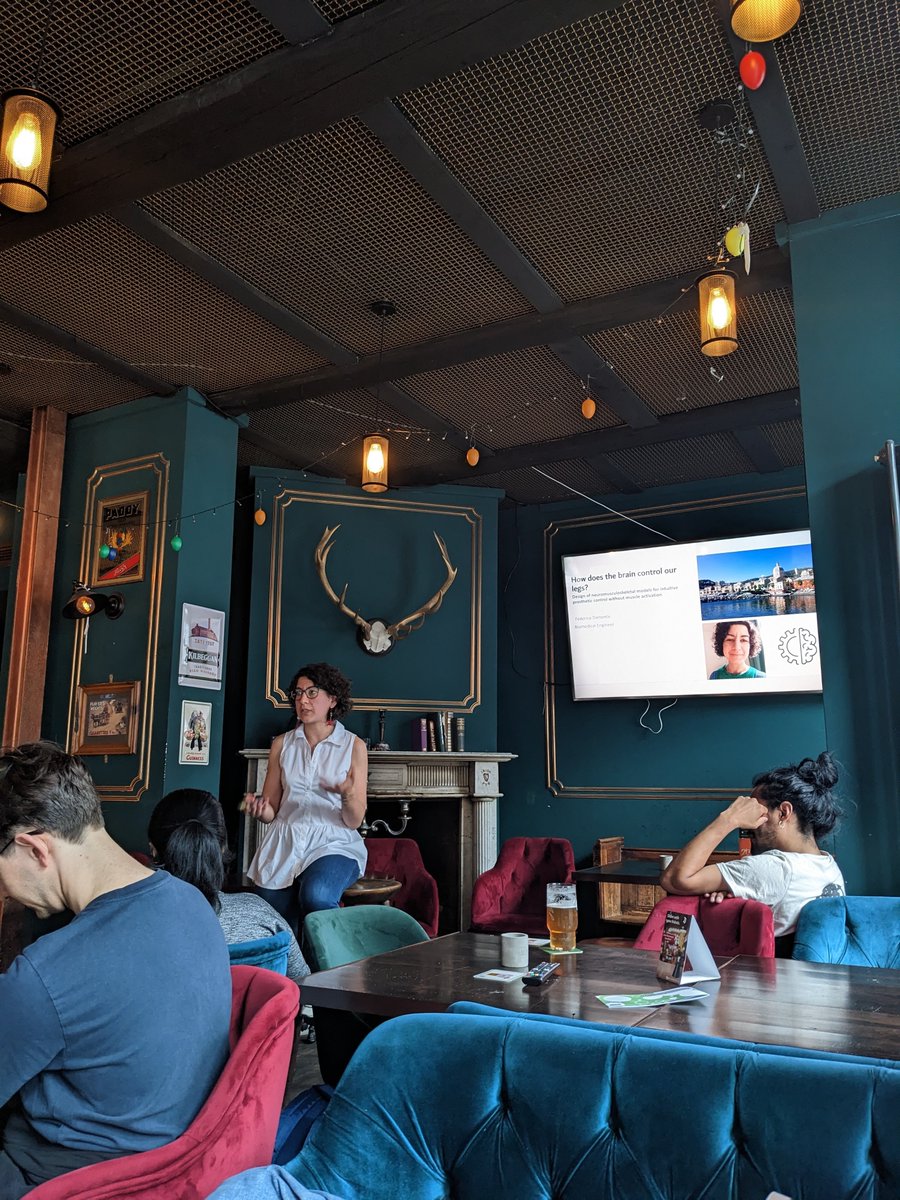
MSCA PhD student in Biomedical Engineering @ Aalborg University and Ottobock. Working on artificial sensory feedback technologies for lower-limb prosthetics 🦿
Big news: Rare back-to-back studies @Nature provide evidence a bile acid called LCA mediates the health & age slowing benefits of low-calorie diets, and may be the elusive endogenous SIRT1 activator that resveratrol mimics. Details below 🧵
https://t.co/lsiepgMgkM
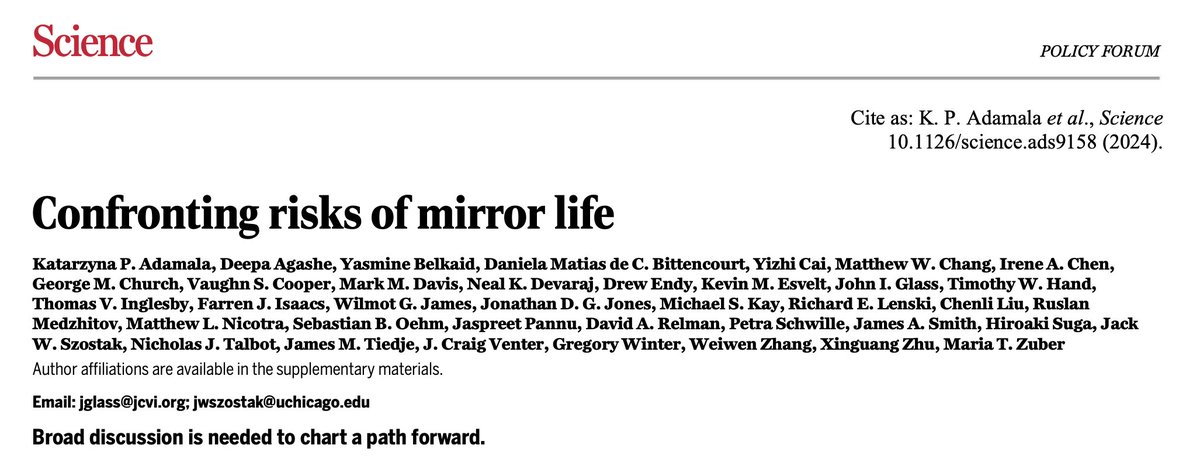
The capability for producing "mirror life" is out there and poses danger. When some scientists who worked on this became aware, they stopped pursuing it, and co-authored this piece, along with over 30 leading scientists—a @ScienceMagazine policy forum that lays out the risks
https://t.co/ud23zfG3o2
What if you could target brain regions important for recovery after spinal cord injury with DBS? Can you say hypothamamus? Guess what Cho and colleagues from Switzerland did just that in a brilliant new paper @NatureMedicine.
Key Points:
- People don't think about it, but guess what, spinal cord injury 'disrupts the neuronal projections from the brain to the region of the spinal cord that produces walking.'
- The authors wanted to know what brain regions would steer recovery following spinal injury.
- They cleverly made a space–time brain-wide atlas of 'transcriptionally active and spinal cord-projecting neurons.'
- What region lit up? The lateral hypothalamus.
- Specifically glutamatergic neurons.
- They tested in mice and it helped.
- They tested in two humans and it immediately improved walking.
My take: WOW. A little serendipity in that no one expected that the lateral hypothalamus was important for mediating recovery of walking in incomplete spinal injury. We have been in the lateral hypothalamus for DBS in humans for obesity and other symptoms and, we will need in future experiments to monitor body weight, psychological status, hormonal profiles, and of course autonomic functions. What I love about this study was the path the scientists and clinicians from Lausanne took. A space–time brain-wide atlas, followed by mice, and then two actual humans. BRAVO! Excited to see what comes next.
https://t.co/YQnX2cueWi #deepbrainstimulation #neuromodulation
A new #MachineLearning framework enables robots to self-learn their morphology, kinematics, and topology.
Learn more in Science Robotics: https://t.co/txHBXJYybZ
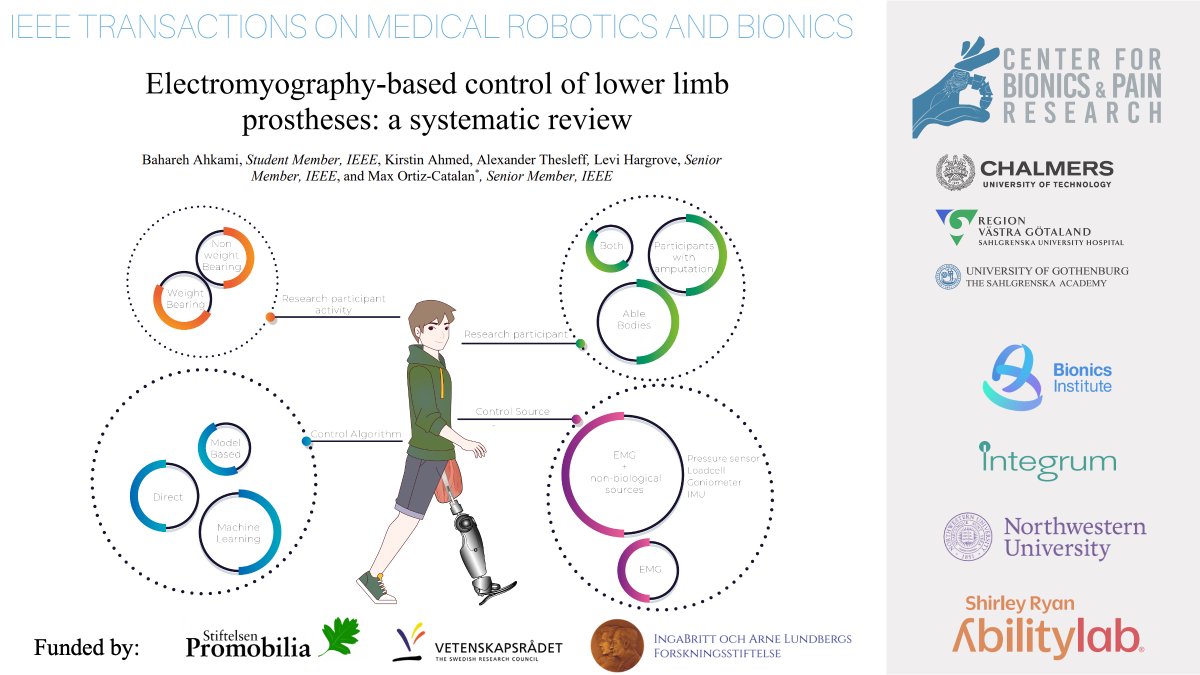
Our review on the use of electromyography (EMG) signals for the control of lower limbs prostheses that was recently published at IEEE Transactions on Medical Robotics and Bionics: https://t.co/7V1X50FFIP.
Happy to announce two new papers out in Nature today! One is on octopus sleep, where Neuropixels recordings shows a wake-like stage of 'active sleep' accompanied by rapidly changing skin patterns that match those of waking behavior https://t.co/wbtWcFHvYM
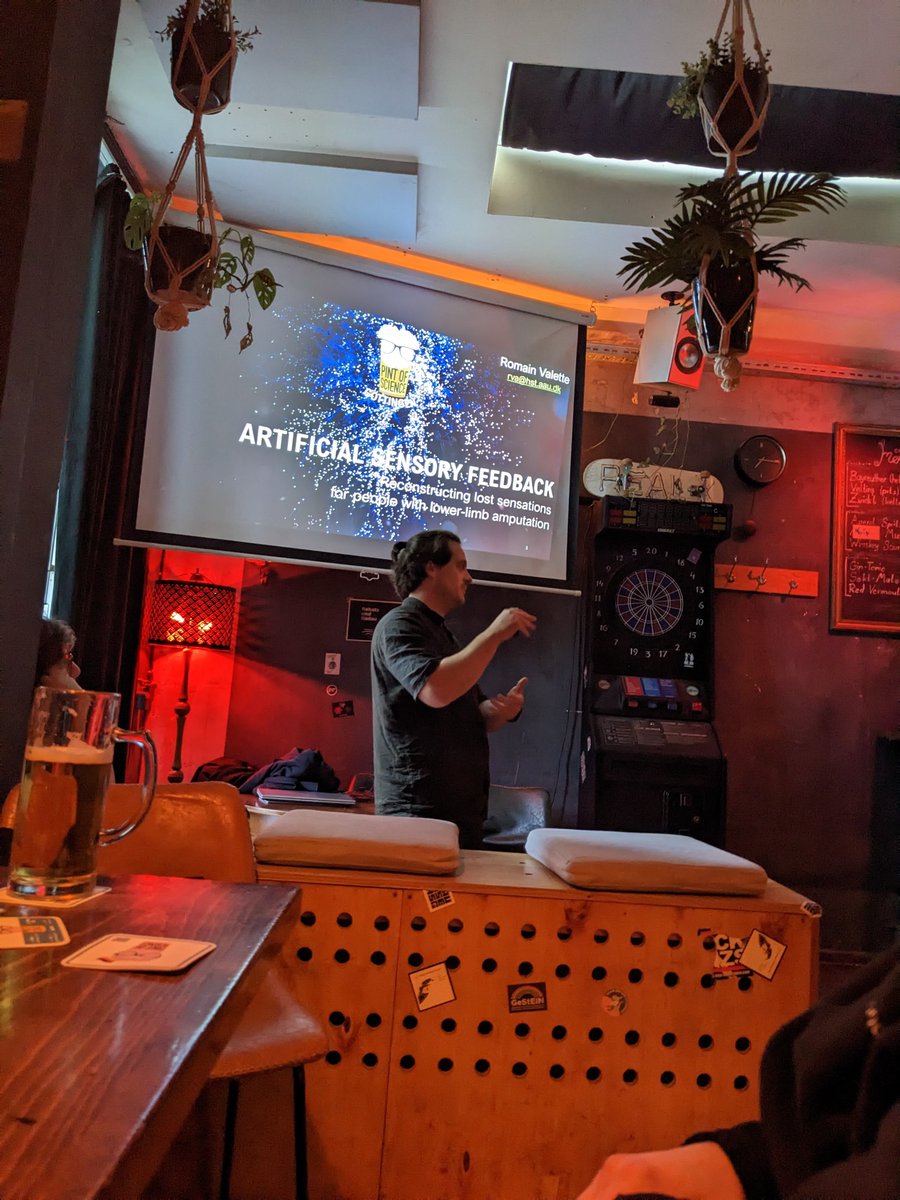
What a great experience to share #SimBionics research with fellow scientists at @pintofscienceDE in Goettingen! Thanks to the organizers for three nights of #science.
🥳 @akaijsa & @pranavm42 et al introduce task-driven modelling of the proprioceptive system, now out in @eLife!
Our work combines deep learning & biomechanics to test theories of💪sensory representations
https://t.co/3AuKKCvhNx
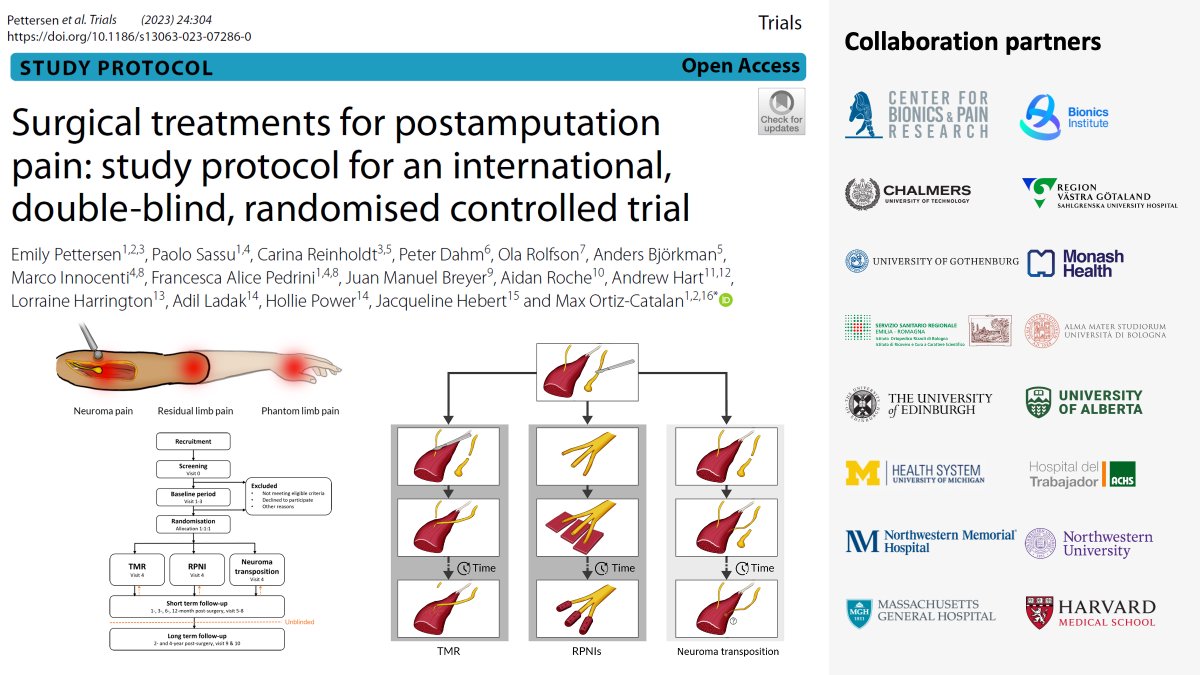
We are excited to present the study protocol for the largest international randomized controlled clinical trial (RCT) ever conducted on surgical procedures for post-amputation pain. You can read the full article at https://t.co/Ty6mRcJ1wv
One big #CEBRA moment for us was seeing the impressive video decoding results:
🐭🧠+🎥->🦓=
- high perf. >95% accuracy at frame prediction 🔥
- highly similar latents across Neuropixels & 2-photon data ✅
- differences in performance across the visual system of 🐭
Interesting systematic review of the needs of lower-limb prosthesis users.
"The review included 56 articles in which a need (desire, wish) was reported explicitly by the recruited people with lower limb amputation (N = 8149)"
#biomechanics#prosthetics
https://t.co/FdFsJiRngL
I packed-up a full-text paper scraper, vector database, and LLM into a CLI to answer questions from only highly-cited peer-reviewed papers. Feels unreal to be able instantly get answers by an LLM "reading" dozens of papers. 1/2