Out of all the candidates running for office this year, Saritha is the one I’m most excited about. She’s competent, sharp as a tack, understands the role of the job, and far from a political hack who might abuse the office the way we’re seeing under Tish James.
I think you’re confusing the ultimate destination with the journey. AI transformation is a continuum and also a journey, not binary. Setting such an absolutist bar discounts meaningful progress. Also it seems like you are really focused on architectural sophistication. Shouldn’t outcomes and value generated be the way you measure success?
There are seven main steps for your company to go from tool adoption to agentic org.
Most companies sit on step one, shopping for step seven technology. They need step four discipline.
Step one: tool adoption. AI tools exist across the org, humans run each one. Developer closes the lid, automations die. Somebody goes on vacation, the workflow goes with them.
Step two: context layer. Knowledge graphs per department, each behind its own API gateway. Sales queries engineering through an API. Separated domains keep agents from hallucinating across departmental boundaries.
Step three: harness engineering. Build evaluation criteria, routing logic, and quality gates before you pick a model. The LLM comes in last. Your harness is your IP and your capex. The model underneath is a commodity you swap when something better ships. If changing the LLM breaks your system, you built a dependency, not a platform.
Step four: go headless. Host every automation outside a laptop. It fires on schedule, on conditions, without a human logging in at 9 AM. Companies stall here because nobody forces the migration from “script on my desktop” to “service that runs on its own.”
Step five: governance. RBAC on every knowledge structure from day one. TTL on every agent. Dead agents are tech debt with active API keys. Past 100 tools, you need lifecycle management. Retire anything that hasn’t run in 90 days. Deprecate anything whose eval scores drop below threshold.
Step six: agent-to-agent. Stitch headless instances together within a value chain. Agent A finishes, hands off to Agent B. An LLM sits between them as a quality gate, judging every handoff before it passes through.
Step seven: step functions. Orchestrated, semi or fully automated workflows. Agents handle volume. Humans handle exceptions. The org runs on agent output.
We walked a VP of Engineering through all seven.
Told him: “You’re on step one. But over a hundred tools means step four is closer than you think.”
Dear @AWS: We want to give you more money! We are building our company on AWS. But we've had some issues getting access to certain models, etc. Can you connect us with someone who can help expedite a few requests?
I see AI agents fail inside big companies in two ways.
The first is obvious. The person who built it leaves, and the agent goes with them because it only ever ran on their laptop. Nobody hosted it because the company never decided where agents should run.
The second is easier to miss. The agent gets hosted and runs for months without anyone checking it. The model updates or a system it reads from changes, but it keeps answering just as confidently.
Before a company ships its second agent, I want these written down:
> Where every agent runs. One runtime for the whole company
> Who registers new agents
> Who owns each one, by name
> Which tools and data it can access, and who approved that access
> When it gets reviewed, and when it gets retired
None of this is exciting. But if the business is going to rely on an agent next year, someone needs to be responsible for it after the person who built it moves on.
A few months ago, I pitched @fendien from @Work_Bench on the new company we're building.
Work-Bench is one of the best early-stage enterprise investors out there and their community is 🔥.
He stopped me 2 minutes into my presentation.
He'd already invested in something competitive. :-(
Was I bummed? Absolutely.
But I have enormous respect for the integrity Jonathan showed by being so transparent.
Hope our paths cross again.
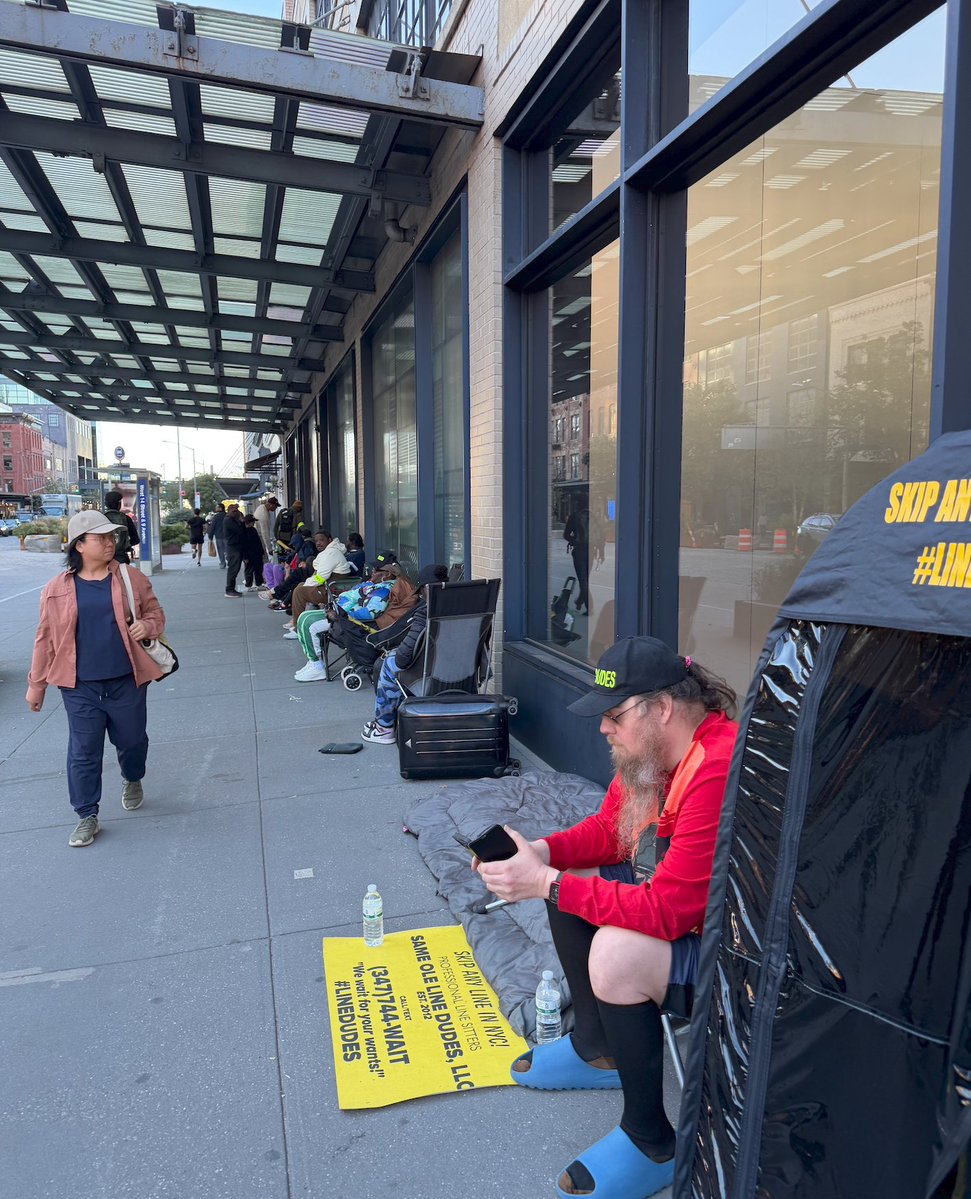
When I heard Apple was making a foldable screen phone, I thought it was lame. I was SUPER SUPER wrong. Looks like it might be...a banger. Line started forming outside the Meatpacking store several days early. Like old times.
Dear Friends: We are hiring! We will be ramping up fast serving our customers in the coming months. Hiring Developers (Python+AI Dev Tools), FDEs and AEs. We are moving extremely fast. DM me. NO RECRUITERS. Also, no anonymous x accounts. Must be US time zone or BST.
As a founder, you have two choices:
Option #1: Build an open culture where anyone can ask tough questions and challenge leadership. Harder in the short term. Much stronger in the long term.
Option #2: Build a closed culture where tough questions get punished and leaders can't take feedback. Easier in the short term. Long term, you're usually f--cked.
We're building #1. :-)
One of the best entrepreneurial stories I’ve ever seen, twice over.
Incredible case study of how a SaaS company can transform into an AI native company.
I popped into a coffee shop to grab a cappuccino and the barista recognized me and told me why he’s supporting me. I have interactions like this every day and I am deeply touched by it every time.