Presented by RMIT, GBIC is a series of research-driven events showcasing the latest technology and innovation predicted to
propel the future of business.
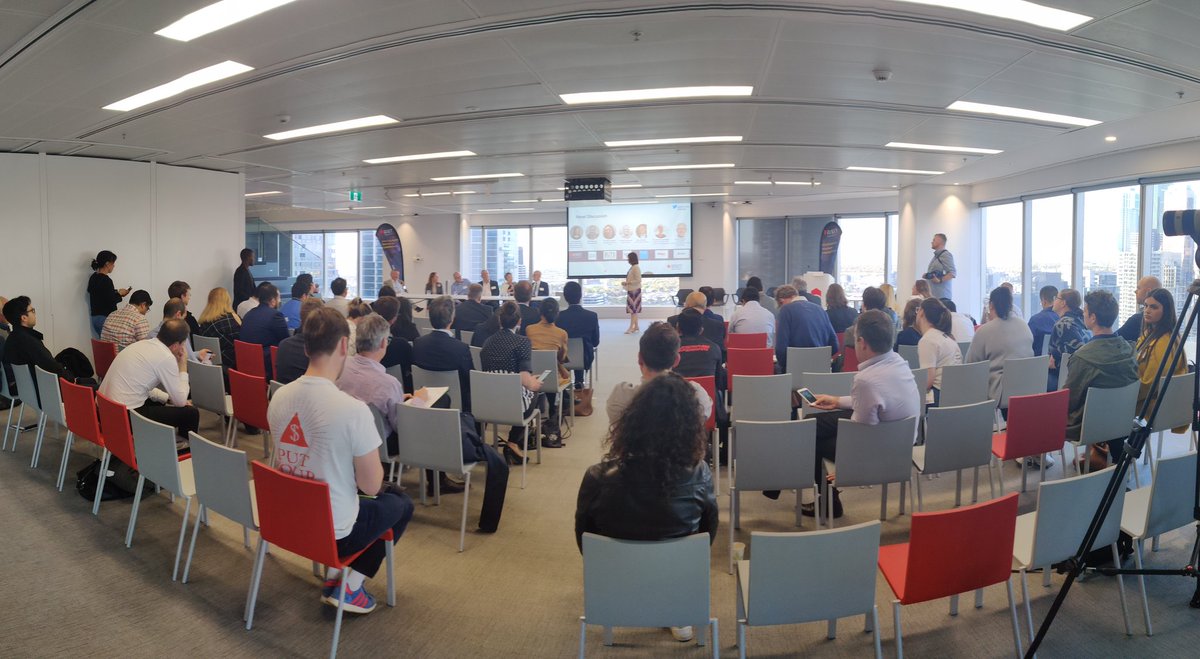
A big thank you for all who attended the launch of two RMIT white papers on the adoption and diffusion of disruptive technologies: the case of 3D Printing in the medical device industry! #3DPMD
"Australian patients, Australian manufacturing, Australian jobs and engineers. I could not think of a better place to startup a MedTech company than here." - Mick Shaddock from OMX Solutions. #3DPMD
"How do you regulate AI integration with 3D printed medical device manufacturing? It is something we really need to start looking at." - Dr Jasamine Coles-Black of @3dmedLab#3DPMD
"There seems to be pockets of excellence and success with 3D printed implants that is driven by Australian surgeon's. But people are secretive about it and nobody shares their solution." -Dominic Parsonson from @Titomic_Limited#3DPMD
Mick Shaddock answers stating TMJ implants are highly specialised to the patient and require full customisation.
Dr Katrina Skellern states it is up to the surgeon's discretion to see what would benefit the patient on a case-by-case scenario. #3DPMD
Dr Katrina Skellern from the University of Technology Sydney investigates the health economic factors that affect all stakeholders in Australia's 3D printed medical device industry. #3dpmd
George Faithfull of Stryker South Pacific talks about the challenges of regulating 3D Printed medical devices. "The TGA are looking to regulate the template of the medical device which is then customised to a certain patient under manufactuing quality control standards. " #3DPMD
Dr Stan Goldstein, representing @BupaAustralia, states randomised controlled trials are not the only type of clinical evidence considered by health insurers. #3DPMD
Dominic Parsonson from @Titomic_Limited highlights the value added by utilising 3D printing technologies and emphasises the need for collaboration. #3dpmd