READ IT TO BELIEVE IT 🚨 TESLA TRANSPORT PROTOCOL: THE GAME CHANGER THAT BREAKS THE TCP/IP SPEED LIMIT ⚡️
While the broader internet relies on TCP/IP, the universal standard that governs global data traffic, Tesla has architected a bespoke solution to meet the unique demands of AI training.
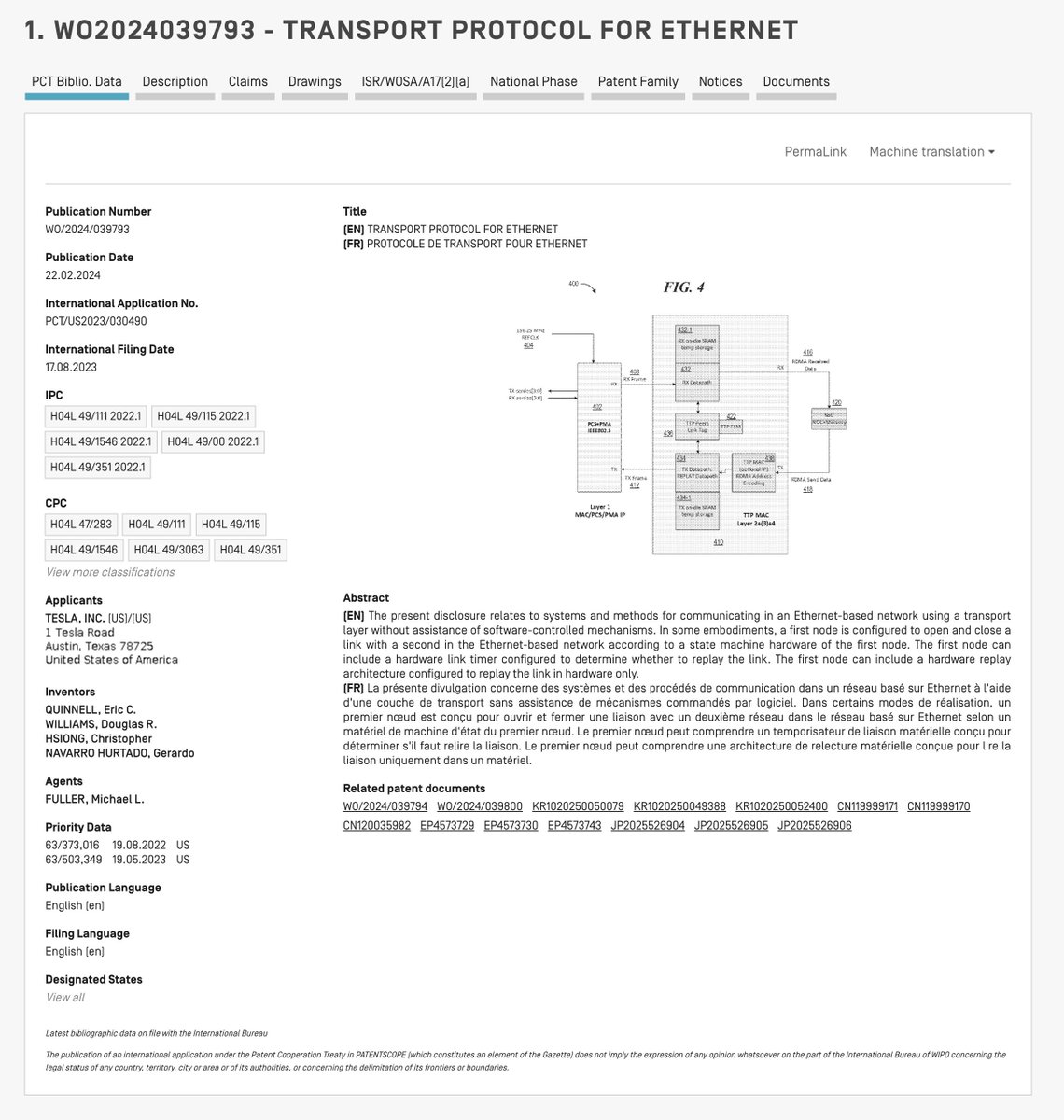
With the publication of patent WO 2024/039793 A1, and underscored by the recent June 2025 continuation filing EP 4573730 A1, we gain insight into the custom networking stack driving Tesla's autonomy ambitions.
The patent details the Tesla Transport Protocol (TTP). This is a hardware-native approach that bypasses the operating system entirely.
By eliminating the software abstraction layer, TTP transforms a distributed network of thousands of GPU tiles into a cohesive, low-latency compute fabric.
This architecture unlocks the single-digit microsecond latency required to train Full Self-Driving models at speeds that conventional networking stacks simply cannot match.
To understand why this invention is necessary, we must first look at the invisible wall hitting current supercomputers.
⚖️ The engineering bottleneck: Software-defined latency
In High-Performance Computing (HPC), the throughput of the entire cluster is often limited not by raw compute power, but by interconnect latency. For decades, the industry has defaulted to TCP/IP (Transmission Control Protocol/Internet Protocol).
To the non-technical observer, TCP/IP acts as the rigorous "traffic rules" of the digital world. Designed for reliability above all else, it ensures data integrity by treating every packet like a registered letter. The system must open, inspect, and acknowledge receipt before processing the next.
While this reliability is critical for the public internet, it introduces unacceptable overhead in a supercomputing environment. The protocol is software-heavy. It forces the Central Processing Unit (CPU) to constantly interrupt computational tasks to manage network traffic.
This introduces latency, a digital reaction delay. While a few milliseconds is negligible for web browsing, it is an eternity for an AI training cluster processing billions of parameters per second.
🏗️ The architectural solution: Tesla Transport Protocol (TTP)
To shatter this bottleneck, Tesla realized they couldn't just optimize the software. They had to delete it. They developed a proprietary flow control system: Tesla Transport Protocol.
The core architectural shift involves offloading network management from the OS kernel directly to silicon.
To understand why this matters, think of the OS kernel as a busy office manager who has to approve every single document that comes in or out of a company. Even if the manager is fast, they are also juggling a thousand other tasks, such as scheduling meetings, managing payroll, and answering phones.
In a supercomputer, this "manager" (the software) becomes overwhelmed by the billions of data packets arriving every second. This causes a traffic jam.
By implementing the Transport Layer directly into the Network Interface Card (NIC), Tesla effectively fires the manager. They build a pneumatic tube system that shoots documents directly to the recipient's desk. The Transport Layer is the logic responsible for ensuring data actually arrives at the right destination.
This "hardware-offload" approach allows the system to manage connection lifecycles and data transfer autonomously. It effectively replaces the stop-and-go nature of software interrupt handling with the continuous, high-speed throughput of dedicated circuitry. Instead of a manager pausing to sign for every package, the packages flow on a conveyor belt that never stops moving.
🧩 Integration: The "Trojan Horse" header strategy
However, creating a new protocol usually creates a new problem: incompatibility with existing cables and switches. Tesla avoided this with a clever disguise. The patent describes a packet header structure that maintains compatibility with existing hardware.
To visualize this, imagine sending a top-secret document through the regular postal service using a specialized "Trojan Horse" envelope. Tesla wraps their data in a standard outer shell where the first 16 bytes mirror a standard Layer 2 Ethernet header.
This allows standard networking equipment, such as off-the-shelf Ethernet switches from Cisco or Arista, to read the "address" and route the packet without realizing it carries anything unusual. This saves Tesla from building expensive, custom-made routing hardware.
Yet, stamped on this standard envelope is a specific code called the EtherType (0x0AC6). This acts like a subtle "VIP" stamp. When a regular computer receives mail, it sends it to the mailroom (the OS software) to be slowly sorted.
But when a Tesla NIC sees this specific stamp, it pulls the packet off the line immediately. It bypasses the mailroom entirely and sends the data directly to the high-speed sorting machine.
This strategy allows Tesla to tunnel a Formula 1-grade protocol through standard, affordable network pipes. It combines the low cost of commodity hardware with the high performance of a supercomputer.
⏱️ Throughput: The 4-stage hardware pipeline
Once the data bypasses the standard stack, the focus shifts to raw processing speed. The patent’s claim of single-digit microsecond latency is achieved through a deterministic 4-stage hardware pipeline.
To understand why this is revolutionary, compare a standard software process to a single chef in a kitchen. The chef grabs an order, chops vegetables, and cooks the meat sequentially. If a phone rings (an interrupt), they stop working to answer it, creating unpredictable delays.
Tesla’s hardware pipeline functions more like a bucket brigade or a factory assembly line. Every single time the chip’s internal clock ticks, work is passed instantly to the next station.
In the first stage (Q0), the logic acts as traffic control, instantly picking the single most urgent stream to process. It immediately passes this to the second stage (Q1), which pulls the file on that connection, reading the status tag to verify the link is healthy.
The third stage (Q2) acts as the brain, executing decision logic in a nanosecond to determine if a packet needs a replay or is safe to send. Finally, the fourth stage (Q3) commits the move by updating the internal memory pointers, readying the system for the next cycle.
This pipeline creates a continuous "conveyor belt" of packet processing. It eliminates jitter, the tiny, unpredictable stutters that happen when software gets distracted. In this system, data moves with the relentless, metronomic precision of a Swiss watch.
🤖 State Management: The hardware Finite State Machine
But raw speed is only half the equation. The system also needs to manage the lifecycle of these high-speed connections without clogging the system. Efficient connection management is handled by a hardware Finite State Machine (FSM).
To understand this, think of a logic circuit like a rigid turnstile that can only be in one specific position at a time, such as locked, unlocking, or open, based on strict physical triggers. There is no ambiguity and no thinking involved, just immediate reaction to input.
Crucially, this system solves one of the biggest inefficiencies in standard networking known as the "zombie connection" problem. In the traditional TCP world, closing a connection is like a painfully long goodbye at a doorway.
Even after both sides agree to disconnect, the system enters a TIME_WAIT state. It keeps the memory slot reserved for several minutes, just in case a lost packet shows up late. In a supercomputer running millions of connections, these "ghosts" clog up valuable memory resources.
TTP eliminates this lingering entirely. It introduces a ruthless "Intermediate Close" state. The moment an acknowledgement of closure is received, the hardware instantly kills the link. It doesn't wait for stragglers.
It effectively flips the "Vacant" sign immediately, allowing the system to instantly recycle that memory slot for a new connection. This ensures that the expensive high-speed memory is always working, never waiting.
🔄 Error Correction: The "lossy" replay mechanism
While efficient connection management keeps the highway clear, the system must also decide how to handle the inevitable accidents: lost data. Most internet protocols operate on a "lossless" philosophy, meaning they are obsessed with perfection.
If a single packet of data is dropped, the entire operation grinds to a halt until that packet is recovered. While this ensures accuracy, it is a massive drag on speed. TTP operates on a "lossy" philosophy, acknowledging that in a hyperscale environment processing exabytes of data, dropping a few packets is inevitable and shouldn't stop the show.
Think of the difference between downloading a critical file versus streaming a live video. When downloading a file, you need every single bit perfect, so you wait. When streaming video, if a few pixels are missing in one frame, the video keeps playing because speed is more important than absolute perfection in that microsecond.
Tesla applies a similar logic to supercomputing but adds a high-speed safety net to catch the critical pieces.
Rather than stalling the entire pipeline to ensure perfect order, the protocol keeps blasting data forward. If a receiving node detects a gap, such as a missing page in a book, it sends a Negative Acknowledgement (NACK) back to the sender. This signal essentially says, "I missed page 45, keep going, but send me a copy of 45 when you can."
To fulfill this request instantly, the transmitting hardware maintains a linked-list in its high-speed memory. This acts like a library index card system, allowing the hardware to instantly locate the exact memory address of the missing packet.
It then "replays" just that specific chunk of data without ever stopping the main transmission stream. This allows Tesla to maintain blistering speeds while still patching up errors on the fly.
🧠 Congestion Control: Physical backpressure
Beyond handling errors, the system faces an even more fundamental physical challenge: preventing data floods. Flow control is the essential mechanism that prevents a fast sender from flooding a slow receiver and crashing the system.
In standard networking, this acts like a complex bureaucracy where computers constantly negotiate "window sizes," trying to mathematically predict how much data they can handle next. TTP replaces this predictive negotiation with a simple, immutable mechanic: Physical Backpressure.
To visualize the difference, imagine a warehouse loading dock that has exactly 10 parking bays. The traditional TCP/IP approach operates like a warehouse manager spending all day on the phone with trucking companies. They are constantly estimating unloading speeds and scheduling arrivals to prevent the lot from overflowing. This process is administrative, slow, and prone to miscalculation.
Tesla, by contrast, essentially installs a mechanical boom gate at the entrance. If all 10 bays are full, the gate physically locks. There is no phone call, no math, and no prediction involved. The system operates on a rigorous "one-in, one-out" basis. The moment a truck leaves a bay (an acknowledgement is received), the gate automatically unlocks to admit exactly one new vehicle.
This system relies on the on-chip SRAM (Static Random Access Memory), which is limited in size but incredibly fast. By binding transmission speeds directly to the physical availability of empty slots in memory, Tesla prevents data jams instantly and mechanically. This ensures that zero processor cycles are wasted on bureaucracy.
⏲️ Synchronization: The global hardware link timer
With traffic flowing smoothly, the final challenge lies in policing the grid for idle connections without wasting energy. Monitoring timeouts—the limit on how long a computer waits for a response before giving up—for thousands of connections usually requires thousands of software timers. Managing this many timers is a massive drain on processing power.
Tesla addresses this with a global hardware link timer that decouples timekeeping from individual connections. To visualize this, imagine a parking enforcement officer monitoring a long street of parked cars.
The traditional method would be akin to hiring a separate officer with a stopwatch for every single car, staring at it to see if it stays too long. This is incredibly expensive and wasteful. Tesla’s solution functions like the "chalking tires" method.
The system utilizes a round-robin scanner, which acts as a single digital officer walking down the line of cars in a continuous loop. It employs a "Timer Bit" strategy, which acts like the chalk mark on a tire.
As the scanner passes a connection, it places a digital mark by setting the bit to 1. If the connection is active and sending data, it essentially "drives away" and returns, rubbing off the chalk mark by clearing the bit back to 0.
When the scanner returns to that spot on its next loop, it checks the tire. If the chalk mark is still there, it knows the car hasn't moved for the entire duration of the loop. The connection is declared "timed out" and closed.
This approach creates O(1) complexity, a computer science term meaning the effort required doesn't explode as you add more work. Whether there are 10 cars or 10,000, the officer just keeps walking the same efficient loop, allowing a single physical circuit to police thousands of links with negligible processing overhead.
🆚 Architectural Comparison: TCP/IP vs. TTP
When we view these mechanisms together, the fundamental difference between the old world and the new becomes stark. The divergence between TCP/IP and TTP represents a shift from a "one-size-fits-all" public utility to a highly specialized racing machine.
TCP/IP was architected for the internet, functioning much like a chaotic public highway system. It is designed to handle everything from mopeds to semi-trucks, but this versatility comes at a steep price. It requires traffic lights, stop signs, and police officers to manage the flow.
Every time a packet arrives, the CPU must pause its work to act as a traffic cop. It has to check the "driver's license" and direct the vehicle.
Conversely, TTP is purpose-built for the controlled environment of a data center, functioning like a private high-speed rail line. It treats network packets not as mail to be sorted, but as raw electrical signals to be processed by dedicated circuitry. There are no traffic lights, no other cars, and the tracks are welded together for a single purpose: speed.
This structural difference exposes a massive efficiency gap caused by "context switching." In a TCP environment, every time the CPU has to handle network traffic, it must pause its main calculation work, save its progress, switch to "traffic cop" mode, and then switch back.
Imagine a mathematician trying to solve a complex equation but being interrupted by a phone call every few seconds. The time spent putting down the pencil, answering the phone, and trying to remember where they left off represents this context switching tax. It introduces millisecond-level delays that accumulate into significant wasted time.
TTP erases this waiting time entirely. By enforcing flow control through physical memory constraints and utilizing hardware state machines, it removes the "mathematician's phone" from the equation.
This allows the compute cores to focus 100% on the math while the data flows automatically in the background. It achieves latencies effectively limited only by the speed of light through the fiber.
🚀 The future is bright: AI5 chip and the revival of Dojo 3
This patent is not just a legacy document for the original D1 chip. It is the strategic unlock for Tesla's renewed 2026 roadmap. Following the completion of the AI5 processor design, Tesla has officially restarted work on the massive Dojo 3 supercomputer. TTP is the invisible nervous system that makes this scaling possible.
While the original Dojo proved the concept, Dojo 3 aims for a scale that is orders of magnitude larger. It requires connecting millions of AI5 cores to function as a single training brain. TTP allows this massive distributed system to operate without the crushing "chatter" of standard networking protocols.
The immediate impact is on the rollout of Unsupervised FSD. While existing cars run on AI4, training the next-generation "end-to-end" neural networks requires crunching exabytes of video data. TTP enables Dojo 3 to ingest this fleet data at wire speed. This allows engineers to solve the rare "long tail" edge cases that still prevent full autonomy.
Beyond cars, this architecture is the backbone for Optimus. The humanoid robot requires a fusion of vision, language, and complex physics simulations. This multimodal training demands even higher bandwidth than driving. TTP ensures that the Dojo clusters can handle this dense data flow without bottlenecks.
Finally, this technology secures Tesla's strategic independence. By controlling the entire stack, from the TTP transport layer to the AI5 silicon, Tesla decouples itself from the supply chain constraints of third-party GPU vendors like NVIDIA. This allows them to scale their compute capacity on their own terms, potentially aiming for future frontiers like space-based AI inference clusters.
Anichess; the magical chess game powered by $CHECK just leveled up big time:
<> $CHECK listed on HTX recently
<> Massive token burns
<> Rewards via Void Protocol (100 Ethernals locked, 13M $CHECK loaded)
<> Esports partnership with @teamsecret for NFT passes + $CHECK payments/prizes
<> Hype building for mass onboarding
<> New gaming drops
Checkmate incoming @AnichessGame
I have dramatically lost interest in Twitter since it became an ongoing experiment, & it's not just crypto - been thru dead markets.
Updates have slowly eroded the magic. I would not have joined what this has become.
Not an angry or defeated post - I do hope things get better.
THORChain's $10.8M loss from its Asgard vault is a massive red flag for the MPC narrative. @Ledger CTO Charles Guillemet is pointing at flaws in the GG20 protocol, which basically means the math we use to hide keys across different nodes might be fundamentally broken.
If threshold signatures are failing, the whole cross-chain model is in trouble. RUNE took a 12% hit, but the real worry is hackers using AI to find obscure bugs faster than devs can patch them. We keep calling these systems secure, but THORChain has become a $10.8M lesson in why multi-party computation is not a silver bullet. The tech needs to catch up to the threats or cross-chain liquidity is just going to keep getting drained.
https://t.co/zn4OfgPXLa
Ever wished you could get a real sense of a place before showing up? 👀
Powered by Amap’s proprietary world model, Flying Street View has been introduced on the platform, providing virtual 3D previews that feel closer to “being there.”
Exploring spaces, layouts, and even local landmarks is getting way more intuitive!
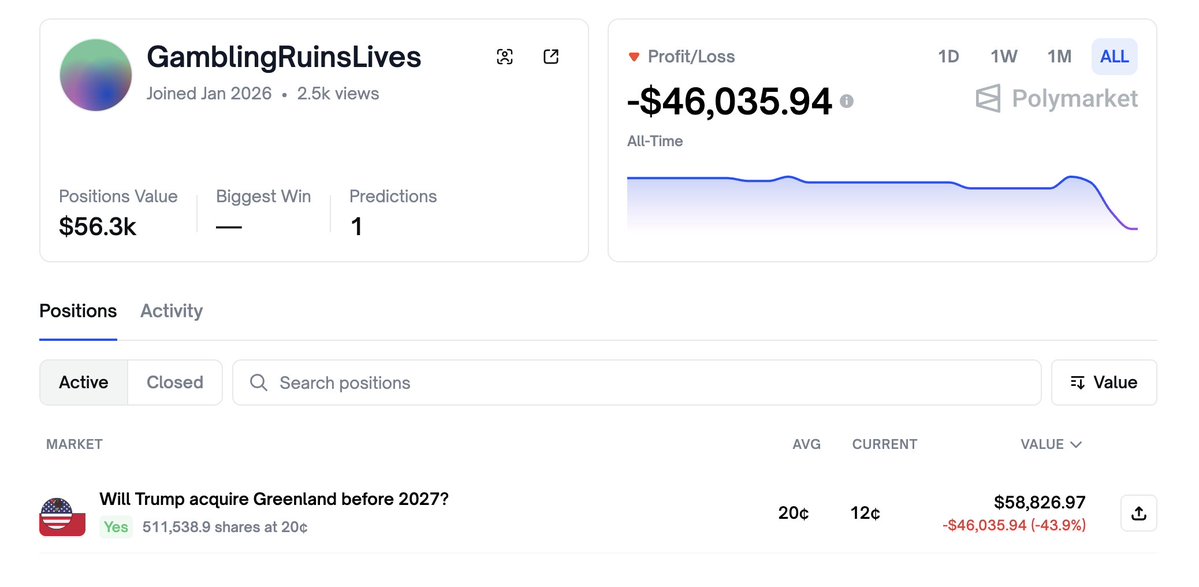
The odds of "Trump will acquire Greenland before 2027" have dropped to 12%.
The newly created account, GamblingRuinsLives, placed a $105K bet on "Trump will acquire Greenland before 2027" and is now down $46K.
Looks like he's just gambling — just like his name suggests.
https://t.co/2wPuCg0hKI
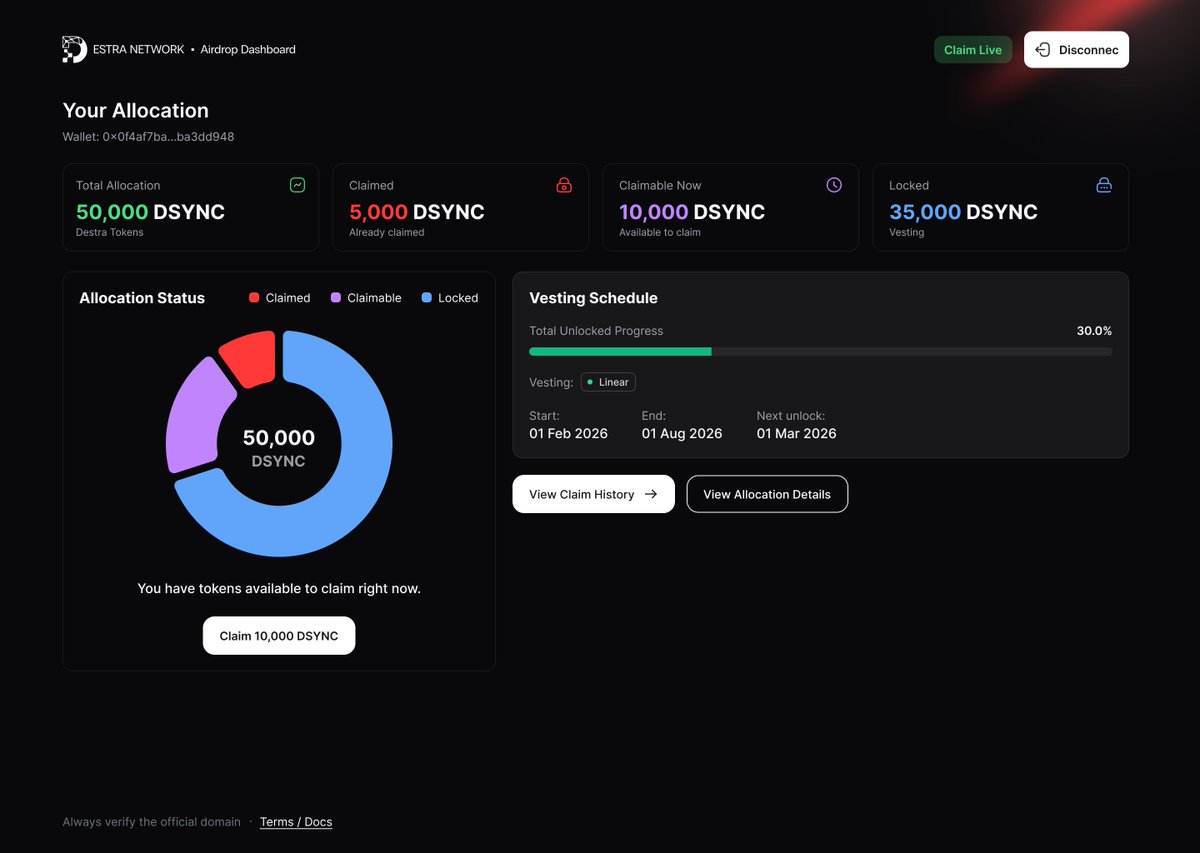
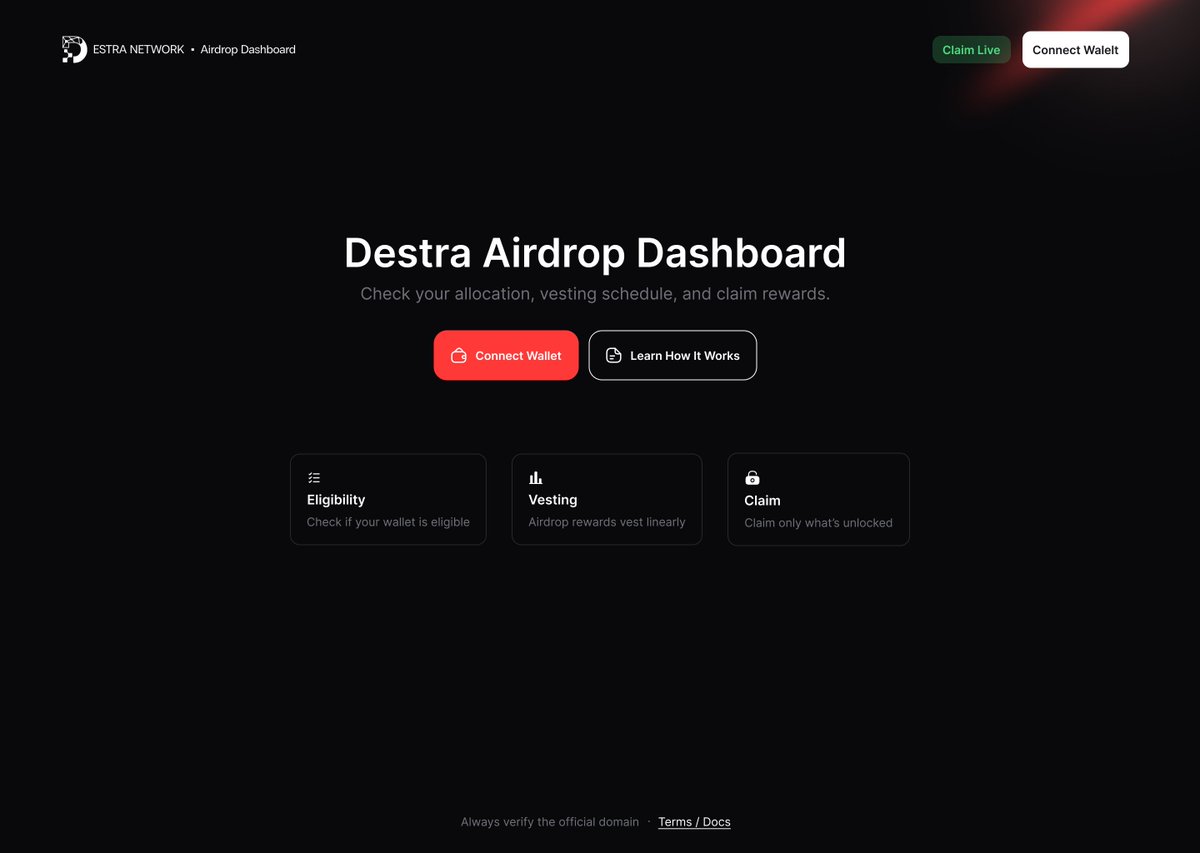
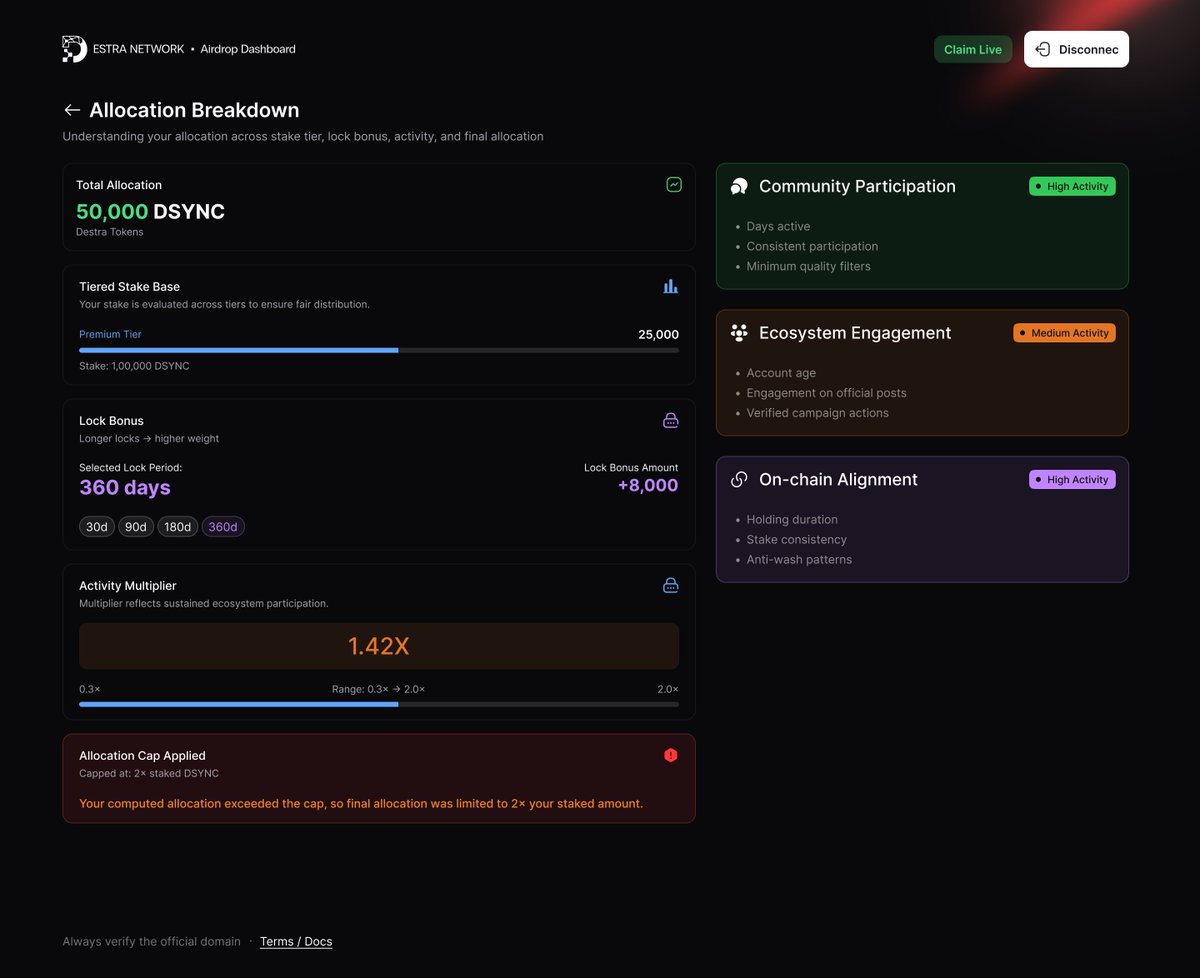
Destra Airdrop| $DSYNC Dashboard Preview (Mock-ups)
As part of the ongoing Destra airdrop campaign, we’re sharing an early look at the dashboard experience participants will use to track their allocation, activity, and vesting.
This airdrop is intended as a deliberate return of value to the community — a way of sharing what the network has already earned with the people who have supported, contributed to, and aligned with Destra’s long-term vision.
These rewards are sourced from protocol buybacks and distributed from a fixed pool, with vesting in place to ensure sustainability and fairness over time.
The dashboard is designed to make this process clear and transparent. Through it, participants will be able to:
-View their airdrop allocation and vesting schedule
-Track qualifying activity linked to the campaign
-Monitor reward unlocks as distribution phases progress
-Clearly understand how participation translates into long-term alignment
These mockups are an early preview of that experience and will continue to evolve as the campaign progresses.
From betting on headlines to betting on your favourite NBA players, prediction markets keeps evolving.
@bsktballdotfun is what happens when AMMs meet NBA X. You open packs, pull five random players, and immediately step into a market where every take, highlight, and headline moves liquidity.
It’s prediction markets on steroids, but with memecoin mechanics. Can't wait to try it out.
Teamed up with https://t.co/uiEJVj4gZM for this one, cuz it's time to my favourite sport exciting again.
This was last night at the memorial for the Bondi victims.
Snipers and high powered surveillance cameras perched on top of Sydney Opera House, the most iconic location in Australia.
Isn’t it heartbreaking that we’ve reached a point where this is necessary — right on top of our national icon — because politicians refuse to address the spread of radical Islamic terror?
Australia shouldn't have to live like this.