$700 in a bear market can become $700,000 in a bull run!
But, 80% of people lack funds to buy their favorite projects at a much-discounted price.
Here are 7 crypto websites that can make you $10,000 ( #USDT ) per month in this bear market:
[ Bookmark to use later 🧵]
1. @CryptoJobs
They are a community-driven Web3 employment platform.
They emphasize freedom, versatility, and transformation.
They offer 100s of daily jobs according to your convenience.
It is founded by @carlmoon
🔗 https://t.co/Ovt4tLeark
A project that will make CEXs obsolete?😱
@RocketXexchange allows you to swap tokens on CEXs directly from your wallet👀
$RVF is the most advanced hybrid CEX and DEX cross-chain aggregator.
Thread why you should keep an eye on this undervalued gem🧵💎
Un énorme danger menace actuellement la DeFi ? 😰💥
On vous parle partout d'un risque : si le CRV chute en dessous de 0,37 dollars, environ 250 millions de dollars pourraient être liquidés...
Mais que se passe-t-il réellement ? Je vous explique la situation👇
[THREAD] 🧵
A cheat code I wish I knew at 18...
The 4 Types of Luck:
In 1978, a neurologist named Dr. James Austin published a book entitled Chase, Chance, & Creativity: The Lucky Art of Novelty.
In it, he proposed that there are 4 types of luck:
(1) Blind Luck
(2) Luck from Motion
(3) Luck from Awareness
(4) Luck from Uniqueness
Here's what they are:
Type 1: Blind Luck
Completely out of your control:
• Where you are born
• Who you are born to
• Base circumstances of your life
• "Acts of God"
These are the truly random occurrences of the universe.
Type 2: Luck from Motion
You’re creating motion and collisions through hustle and energy that you are inserting into an ecosystem.
You increase your luck surface area through simple movement.
The increase in collisions opens you up to more lucky events.
Type 3: Luck from Awareness
Depth of understanding within a given arena allows you to become very good at positioning yourself for lucky breaks.
Naval says: "You become very good at spotting luck."
You can “spot luck” from a mile away because of your knowledge and experience.
Type 4: Luck from Uniqueness
Your unique set of attributes attracts specific luck to you.
“[This type] favors those with distinctive, if not eccentric hobbies, personal lifestyles, and motor behaviors.” - Dr. James Austin
Type 4 Luck actually seeks you out.
The Stages of Luck
I personally think of Types 1-3 as coming in stages as you grow up:
• Type 1 dictates your early years
• Type 2 as you hustle in your 20
• Type 3 as you gain experience in your 30s+
Type 4 is unique—it’s dislocated from age.
Always remember the Luck Razor:
When choosing between two paths, choose the path that has a larger LUCK SURFACE AREA.
Your actions put you in a position where luck is more likely to strike.
It’s hard to get lucky watching TV at home—it’s easy to get lucky when you’re engaging and learning.
There are lots of simple ways to increase your luck surface area:
• Talk to more new people
• Send more cold emails
• Write/share in public
• Participate in digital communities
• Spend time in rooms where you feel like the dumb one
To recap the 4 types of luck:
• Type 1: Blind Luck
• Type 2: Luck from Motion
• Type 3: Luck from Awareness
• Type 4: Luck from Uniqueness
If you enjoyed this and learned something new, follow me @SahilBloom for more in the future!
The Nation State Bitcoin prisoners dilemma game began in 2020.🚨
For the first time in Bitcoin's life, we're seeing coins leave exchanges, with supply on exchanges at a 5-year low.📉
🧵Time for a thread explaining why this trend suggests this cycle could be different.👇
1/
#Binance published their State of Crypto report.
It's a monthly report highlighting the most important events in the industry.
8 Insights you need to know🧵👇
You see a coin that has increased in value by 600% plus and is surrounded by a lot of hype.
It's tempting to buy into it, but you're not sure if you're too late to the party.
Use this playbook to determine if it's still a good R/R for your investment🧵👇
Elon Musk fired 6,500 employees at Twitter.
A little birdie told me it's down to:
- 2 designers
- 6 iOS developers
- 20 web developers
- Around 1,400 sales and operations people
How is it possible that we are still using this website?
Two words:
Parkinson's Law.
Have you ever wondered why seemingly simple tech companies have tens of thousands of employees?
Sometimes, it's because they have huge sales forces or tech support/operations people.
But often it's also due to Parkinson's Law.
Parkinson's law is like lighter fluid for bureaucracy.
It's a business tapeworm that slowly eats away at companies, making them less and less efficient and innovative over time.
Parkinson's Law is the idea that the work will generally expand to the amount of time, budget, and number of people allocated to it, and no matter how many people you allocate to it, those people will feel busy.
They'll feel busy because, due to the excess time/slack in the system, they'll start focusing on less and less important tasks.
Here's how it manifests on an individual level:
Let's say you have a report due in a week.
The report might only take you around five hours to finish if you really focus and work efficiently. However, because you know you have a week to complete it, you might find yourself spending a lot more time on it than you need to.
You'll be more prone to distractions, take longer breaks, or perhaps decide to add more details, tables, graphs, and so forth.
Essentially, the task becomes more complex and time-consuming purely because you have more time in which to do it.
And here's how it manifests across organizations:
Imagine a big tech company. A social media company with various departments. Each department has tasks that it must complete to contribute to the overall productivity of the company.
Now, suppose each department is given a budget and a set amount of time to complete its tasks for the year.
According to Parkinson's Law, each department will use its entire budget and the entire allotted time, even if the tasks could have been completed more efficiently.
This is because as resources and time increase, departments tend to become more complex and less efficient.
For example, a department might add more steps to its procedures, requiring more approvals and creating more paperwork, which slows down the process.
Or it might use the full budget on additional personnel or equipment that doesn't necessarily improve productivity.
The department might also use the full budget to justify the same or larger budget for the next year, since budgets in many organizations are often determined based on the previous year's spending.
This is a phenomenon known as "budget padding" or "spend it or lose it" mentality.
Inefficiencies can also develop in staff allocation. If a department expands, it might add managerial positions that aren't strictly necessary.
More employees are hired to manage, creating layers of bureaucracy that may not contribute to productivity and can even slow decision-making.
I have seen this occur over and over again in my career. The larger the team, the larger the budget, the longer the timeline, the less gets accomplished.
I'm very curious to see how many more tech companies come to this realization.
So often, good times + revenue growth = Parkinson's Law.
I am certain #Bitcoin will reach 26K.
Not only from the liquidity standpoint, but also from the ECONOMICAL standpoint.
Read this thread and understand..
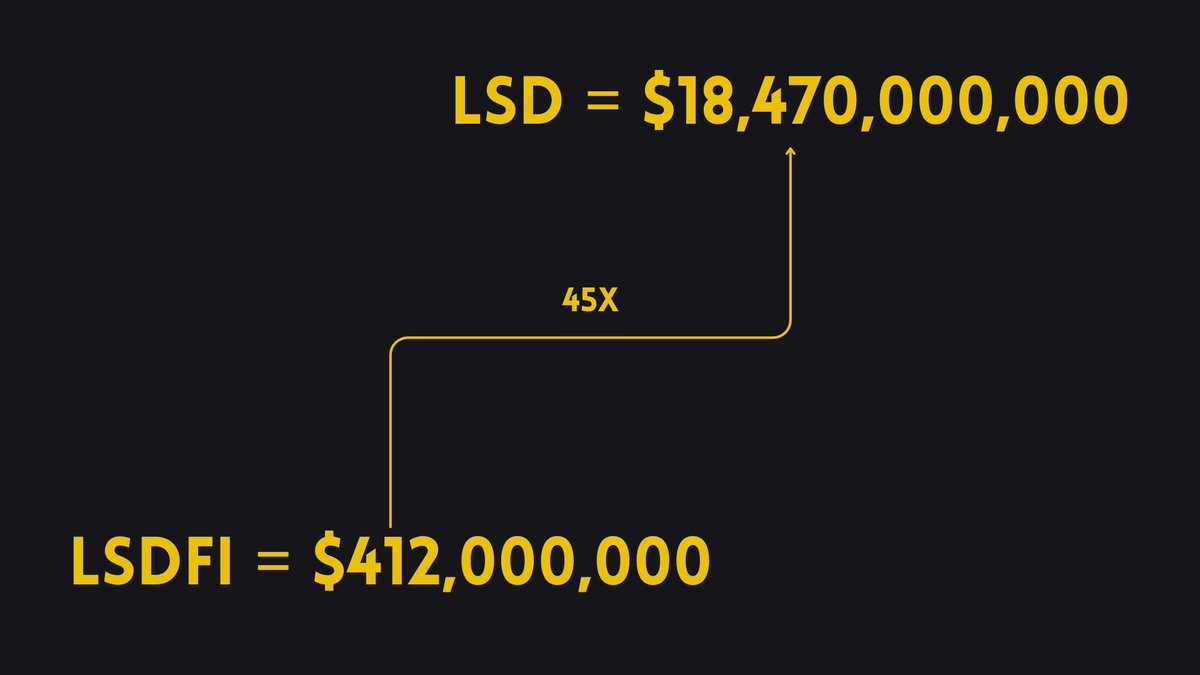
LSDfi is where the next money will flow.
#Binance has just released their LSDfi Report.
10 Insights you need to know (+ list of most promising projects)
A Comprehensive Thread🧵👇
1/12
Ok, one last bullish BlackRock tweet to round out the weekend.
People don't realize that BlackRock really made the gold market as we know it today.
Pre-BlackRock it was a $1T market.
Now it's about $13T.
So how did they do it?
Find 30-60 minutes a day to practice on replay mode.
During a brief time window such as that, you will get the highest quality practice.
You will be:
Focused
Well composed
Not complacent
Then you can truly be better every day, which will ultimately result in mastery.
1) The 𝗺𝗼𝘀𝘁 𝘀𝗶𝗺𝗽𝗹𝗲 guide on 𝘁𝗼𝗸𝗲𝗻𝗼𝗺𝗶𝗰𝘀 you will ever see.
Find out how the tokenomics of a 𝟭𝟬𝟬𝘅 𝗽𝗿𝗼𝗷𝗲𝗰𝘁 looks like.
Here's how and what others 𝗱𝗼𝗻'𝘁 𝘁𝗲𝗹𝗹 you 🧵👇
In a move known as the “Privatization Project”, the Saudi Arabian Government through the “Public Investment Fund (PIF) bought 75% of Saudi Arabia’s Top 4 Clubs.
Meaning the Saudi State controls the 4 top clubs in the Saudi Pro League and these clubs includes, Cristiano Ronaldo’s Al’Nassr, Al’Ittihad, Al Ahli and Al Hilal, the Asian Champions League winners in 2019 and 2021.
Average R:R | Winrate to be profitable
1 | 50%
2 | 33%
3 | 25%
4 | 20%
5 | 17%
6 | 14%
7 | 13%
This is not including fees, those are subject to your broker.
A professional approach will easily help you conquer profitability.