You can learn everything about Obsidian by spending 36 mins with this video.
Most people fail with Obsidian for one reason:
They spend more time building the perfect system than actually learning.
Key takeaways:
• Obsidian is a thinking tool, not a note-taking app
• Simplicity beats plugin overload
• Write notes in your own words to improve retention
• Connect ideas instead of burying them in folders
• Build a network of knowledge that compounds over time
• Your notes become a personal writing assistant
The biggest insight:
A second brain isn't about collecting information.
It's about creating connections that help you generate new ideas.
The people getting the most out of AI aren't using better prompts.
They're building better knowledge systems.
Follow me @damidefi for more AI workflows, knowledge management systems, and productivity tools.
QUANTMIND JUST AUTOMATED THE SIX FIGURE JOB HEDGE FUNDS PAY ANALYSTS TO DO MANUALLY.
Every paper.
Every news article.
Every SEC filing.
Every blog post in quant finance.
All of it turned into a queryable knowledge graph automatically.
The analyst who spent 60 hours a week reading, tagging, and connecting financial research just got replaced by a system that does it in real time.
Hedge funds pay six figures for this.
QuantMind just made it available to anyone.
I tried letting AI do my research for me.
Here's what happened 👇
Fed it one topic.
It generated one or more research proposals.
Planned the study. Designed the experiment.
All by itself.
No PhD needed. No research team.
Just — Lemma.
This is FARS by @AnalemmaAI
The world's first fully automated research system.
From idea → proposal → full research paper.
All automated. 24/7.
100 papers in 10 days. Zero human input.
This is what "Vibe Research" looks like 🔬
🔗 https://t.co/8ECDOqzPHS
#AI #Research #MachineLearning
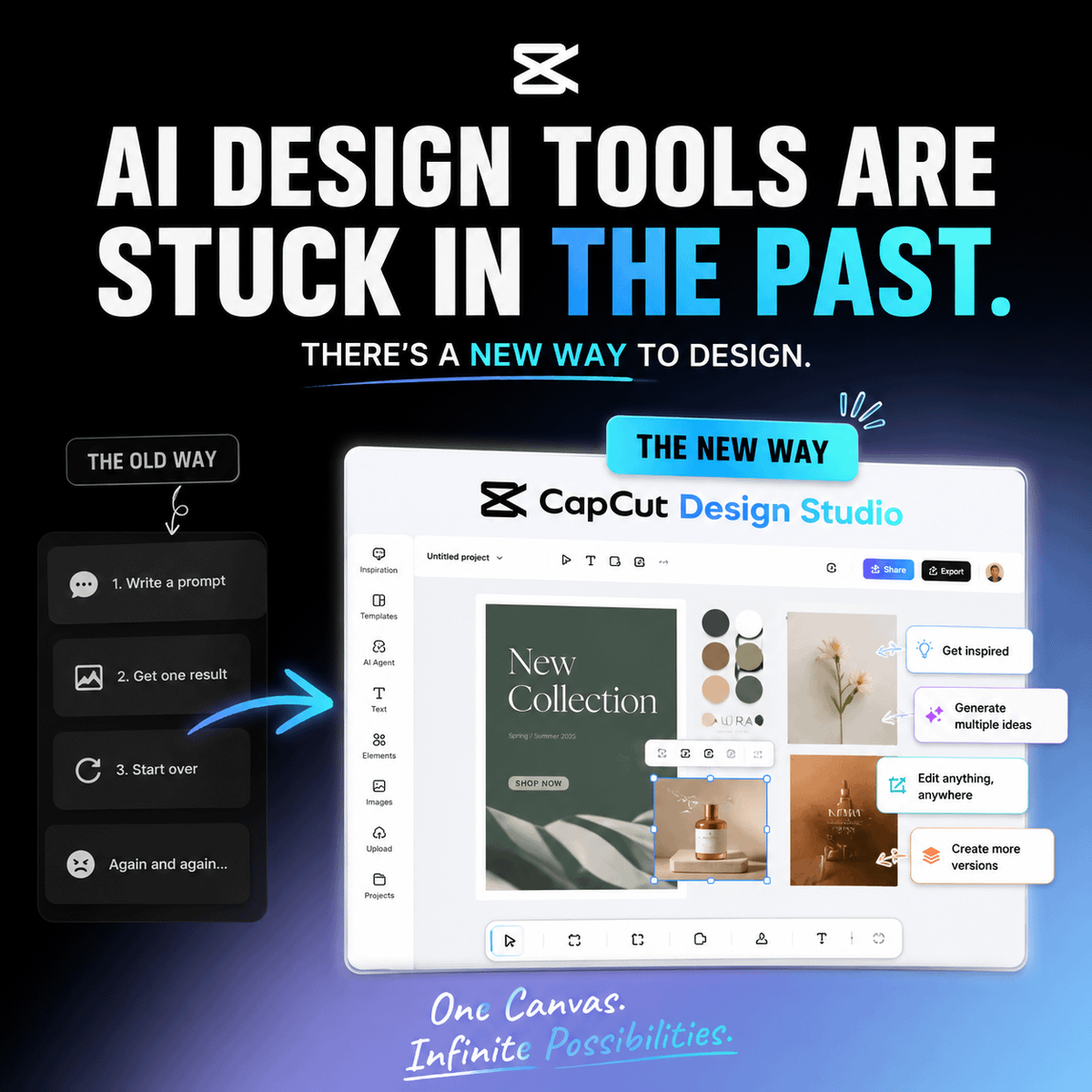
Most AI design tools still work like this:
Prompt in.
Image out.
Start over.
But real design isn't a one-shot process.
I tested CapCut Design Studio, and it feels less like an AI image generator...
and more like a creative workspace where ideas evolve.👇
🚨BREAKING: A cognitive scientist from MIT has mathematically proven that evolution guarantees we see zero percent of true reality, that most consciousness in the universe exists without a body, and that non-human intelligences with a wider window on reality than ours can reach in and manipulate it the way a programmer manipulates a video game.
Donald Hoffman (@donalddhoffman) is a cognitive scientist at UC Irvine who has spent 40 years building a mathematical theory of the observer. His work was cited by John Wheeler in the "It From Bit" paper. He studied under Marvin Minsky at MIT, spent two decades secretly meeting with Francis Crick to study consciousness, and has nine specific mathematical conjectures on the table that would derive general relativity, quantum field theory and the Big Bang from a single framework. The top high-energy physicists in the world, Nima Arkani-Hamed and Nobel laureate David Gross, are already saying spacetime is doomed. Hoffman thinks he knows what replaces it.
This interview is the first time he has publicly laid out what his mathematical model explains about alien life, embodiment and the structure of reality.
It already derives time dilation and quantum wave functions directly from differences in observer window size. Physics has spent a century failing to solve the measurement problem because it has been looking in the wrong place. The observer has to come first, and no physicalist framework can get you there.
A consciousness with a larger observer window has access to the underlying structure of our reality in ways we can't perceive or counter. A craft going Mach 40 instantaneously in our headset could be a leisurely maneuver in theirs.
The implications for UAP and alien life are immense.
Embodiment, being locked into a body with fingers and toes as your only interface with the world, is a probability zero anomaly in the full space of possible minds. He also says current large language models are dumber than cucumbers. His new framework, the recursive trace logic, is a completely different architecture, and some of the biggest names in frontier AI have already come to him about it.
The framework has no ceiling, and the implication is a single unified consciousness exploring itself through an unbounded number of perspectives, each one capable of waking up.
Death, in this framework, is just the closing of an icon on the desktop.
Full conversation is live now.
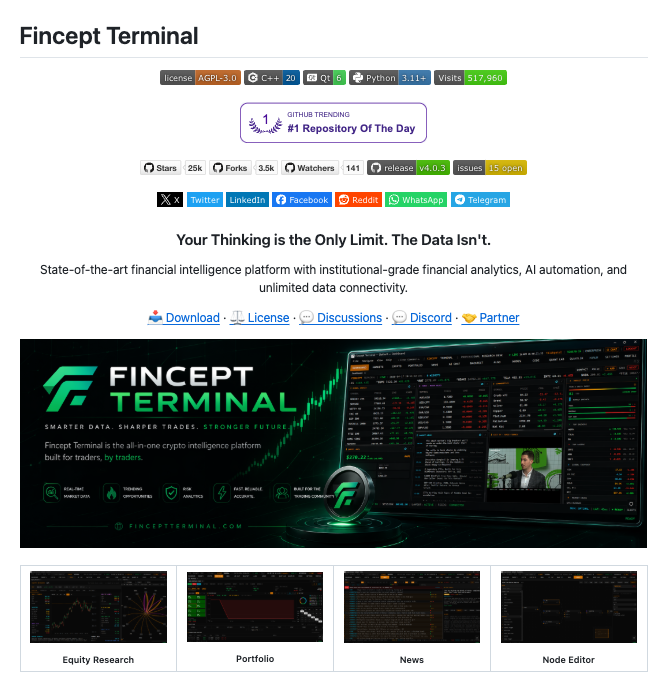
10 OPEN-SOURCE AI TRADING AND FINANCE REPOS THAT SHOULDN'T BE FREE
Bookmark every one. Hedge funds pay six figures a year for what these give away for $0.
1. https://t.co/fZ4AXhfnY2
A Bloomberg Terminal costs $24,000 a year per seat. OpenBB gives you equities, options, crypto, macro, and fundamentals pulled from dozens of data vendors into one workspace, with an AI copilot on top.
2. https://t.co/JV8Te5qWZ9
The other Bloomberg killer, rebuilt as a native C++ desktop app for speed. 37 AI agents covering value investing to geopolitics, full QuantLib integration, and direct trading through 16 brokers including Interactive Brokers.
3. https://t.co/dJjCB0tpbA
A full hedge fund team made of 18 AI agents. Buffett, Munger, Burry, Cathie Wood, and Druckenmiller each analyze the same stock from their own philosophy, then a portfolio manager makes the call. Backtesting built in.
4. https://t.co/cNZ4y7nvIm
An autonomous hedge fund in Python. Four agents run back to back: a Director writes the thesis, a Quant validates it, a Risk Manager sizes the position and can block the trade, and an Execution agent places the order only after everything clears.
5. https://t.co/W3YMOLYbue
A DAG-based multi-agent quant system where specialists debate and hand off while you watch the reasoning stream live. 64 finance skills, 29 swarm presets, cross-market backtesting. Ichimoku, Elliott Wave, Black-Scholes, Black-Litterman, full Greeks.
6. https://t.co/lvpe1hcyV2
Bloomberg spent millions training BloombergGPT and kept it locked inside the terminal. FinGPT is the open answer: financial language models you can fine-tune yourself for sentiment, forecasting, and analysis.
7. https://t.co/5Es2esXFPd
The first open framework for training deep reinforcement learning agents to trade. Funds pay quant teams to build pipelines like this from scratch.
8. https://t.co/8jn9ts4qmI
Microsoft's own AI quant platform. The full research pipeline funds build internally: data handling, alpha modeling, backtesting, and portfolio optimization, with supervised learning and RL baked in.
9. https://t.co/Odwbyp4Ayd
The backtesting engine retail traders pay TradingView and others monthly subscriptions to access. Backtrader runs strategies against years of historical data on your own machine, with live trading support for multiple brokers.
10. https://t.co/nIKh2w60jj
A full portfolio analytics tearsheet, Sharpe, Sortino, drawdown, rolling stats, the same risk report a fund's analytics desk produces. One line of Python turns your returns into an institutional-grade report.
A $24,000 Bloomberg seat. Or a Docker command. Your call.
Meet "Tawan" (ตะวัน means “The sun” 🌞)
20-min Demo
AI Animated Film experiment (full feature is 90 mins)
With a $500 budget and 1.5 months of work, this story is based on my original idea from 2010... and today, the technology is finally ready to bring it to life.
AI showed me that solo creators can now manage an entire animation workflow. No need to pitch to big studios—you can fund yourself and bring your own stories to life. Without AI, this would still be stuck in my head.
(Of course, the quality is still far from high-budget films from big studios that have 300-600 people behind them, but I think the gap will close step by step in the future.)
This animated created by Seedance 2.0 on @dreamina_ai and @kinovi_ai and opening scene by @midjourney - thank you for watching.
NVIDIA just unveiled RTX Spark — and it could be the biggest shake-up in PC hardware in years.
• ARM-based processor
• RTX 5070-class GPU performance
• ~100 FPS at 1440p in modern games
• No major performance drop on battery
• Long battery life
• Built for both laptops and desktops
• High-end AI acceleration
• Demoed running 007 First Light and Forza Horizon 6 on stage
If NVIDIA delivers in Fall 2026, x86 laptops may finally have real competition.
They only just started. Apple Silicon remains excellent. It may remain ahead in efficiency, battery life, macOS integration and normal-user polish for some time. But NVIDIA just entered the one territory Apple investors thought was structurally Apple’s: integrated Arm personal computing with unified memory and local AI. And Nvidia brings something Apple does not have: CUDA as the default language of serious AI development.
https://t.co/TJhhu7s8dh
Paul Tudor made $100M in one day, Stan Druckenmiller made 1 trade that broke the Bank of England
on one RobinHood stage two $10B+ hedge fund CEOs gave a 30-minute trading masterclass
completely free - two of the greatest traders in history will show you the most important rules of trading
bookmark & watch - this is better than any paid course from fake traders
A Stanford neuroscientist warns high cortisol wrecks memory, enlarges your fear center, and make your brain feel broken.
If I wanted to fix it naturally, I'd do these 8 things every day:
1. Walk barefoot on grass for 5–7 minutes.
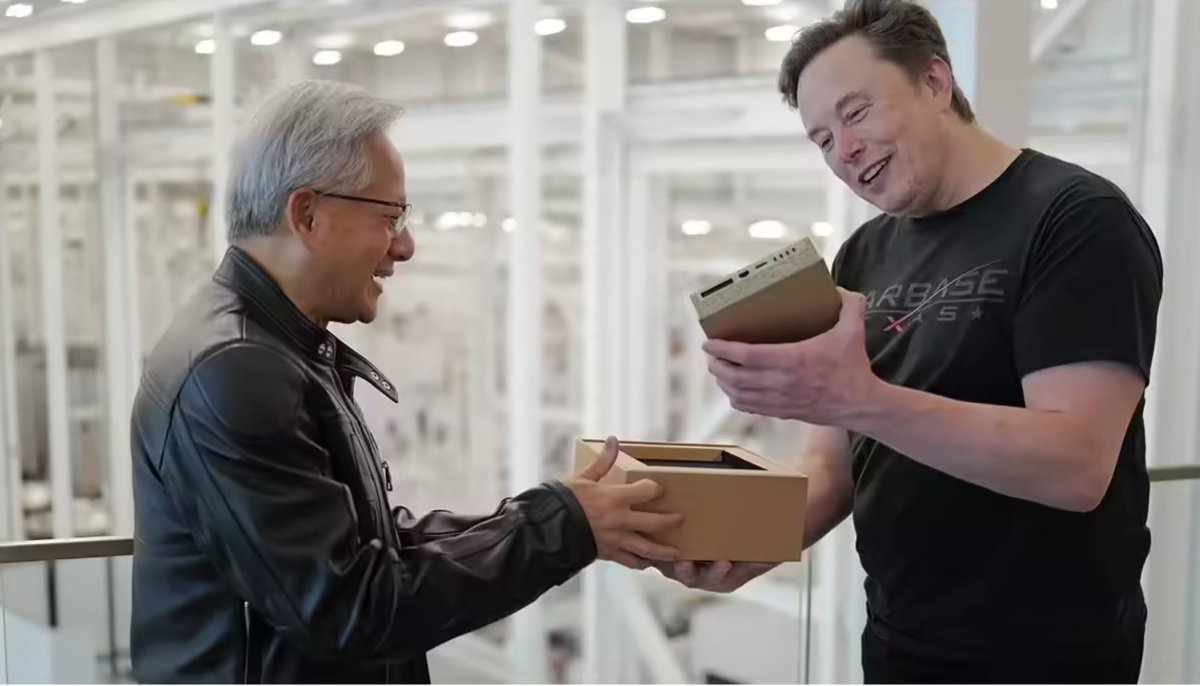
🚨Michael Burry just said Elon Musk and Nvidia's deal is built on fake numbers.
Burry published a detailed breakdown calling the entire structure "Fugazi", his word for fake.
He is alleging that billions of dollars in Nvidia chips are being hidden off balance sheets, and that American retirees are unknowingly funding the whole thing.
Nvidia, the world's largest AI chip company sold $5.4 billion worth of its most advanced GPUs, the GB200, to a company called Valor.
Valor is not a real operating business. It is a special purpose vehicle, a shell company created specifically to hold these chips and nothing else. Nvidia also invested $1.9 billion of its own money directly into Valor on top of the sale.
Those 100,000+ chips are now physically inside xAI's data center. xAI is Elon Musk's artificial intelligence company, the one that builds Grok. xAI is using every single one of those chips right now to run its AI models.
But here is what Burry is flagging.
Neither Nvidia nor xAI owns those chips on paper. Valor, the shell company holds legal title. That means $5.4 billion in GPU assets do not show up on Nvidia's balance sheet as inventory.
They do not show up on xAI's balance sheet as assets. They are legally invisible to both companies.
Nvidia gets to book the $5.4 billion as a completed sale and record it as revenue. xAI gets full use of the chips without owning them. And the risk disappears into a shell company in the middle.
Now here is where American retirees enter the picture.
Valor needed $3.5 billion in debt to fund this structure. Apollo provided it. Apollo is one of the largest asset managers on earth with $1.03 trillion under management and $834 billion specifically in private credit.
Apollo raised the $3.5 billion, packaged it into debt securities, and sold those securities to Athene.
Athene is Apollo's own insurance company. It sells fixed and indexed annuities, retirement savings products, to ordinary Americans.
When a retiree buys an Athene annuity, they believe their money is sitting in safe, stable investments. That money is now inside a structure funding Elon Musk's AI data center.
The numbers inside Athene are most alarming.
Athene holds $74.2 billion in reserves. It has moved $217 billion in assets into a captive insurer based in Bermuda, meaning those assets sit outside normal US insurance regulation and oversight.
Of the entire portfolio, 34.7%, equal to $103 billion, is classified as Level 3 assets.
Level 3 is an accounting classification that means there is no observable market price for these assets. No outside party can independently verify what they are actually worth.
The leverage sitting on top of those unpriced assets is 16 times.
Burry's says:
Every step of this structure is technically legal and publicly disclosed. But the entire thing was deliberately engineered across 8 to 12 steps to move credit risk off balance sheets and away from any market pricing.
- Nvidia books the revenue.
- Apollo collects the fees.
- xAI gets the computing power.
- And retirees sitting at the bottom of a 16x leveraged Bermuda insurance structure, holding $103 billion in assets with no market price carry the risk without knowing it exists.
🏃♂️ I've gamified my own run so I can race my own ghost with the Meta Ray-Ban Display.
I built a web app for the glasses, loaded a previous GPX from Strava, and dropped game mechanics on top.
Pick up coins when you keep pace, sprint zones reward extra points if you push, and a mini leaderboard on the lens shows how you're tracking against your past self in real time.
Best part: it actually works. Seeing your ghost 20 m ahead is a way stronger nudge than any number on a watch. 😅