4/ Preprint: https://t.co/Wj0plCEnma
Code: https://t.co/WjBODb0COE
A huge thanks to my co-authors @JoYatesResearch, @MinaXu7 and @val_boeva for the collaboration and guidance throughout!
1/ New preprint: GRASS-MIL, a tool for discovering which tumor architectures matter.
From spatial single-cell data it maps the tissue neighborhoods tied to a clinical outcome, gives each an exact, signed contribution, and groups them into recurring niches. 🧵
3/ It works from cell types alone, so one model runs across platforms (we train across CosMx, Xenium and MERFISH). In ovarian cancer and two independent lung cancer cohorts it recovered known biology and surfaced structures that cell abundance alone would have missed.
Meet our lightweight (looped) tabular foundation model for bulk transcriptomics data!
Amazing work by @TheusResearch, Michael Bohl, and David Wissel.
We benchmark our GeneICL model on 80 classification, regression and survival prediction tasks and demonstrate its accuracy and efficiency!
Thanks to our amazing team for their participation at #ECCB2026 Comp Biol conference in Geneva! And thanks to @ISBSIB for organizing! It was the best ECCB I have even attended ;-)
Thanks for highlighting our work with Michel Tarnow and @val_boeva!
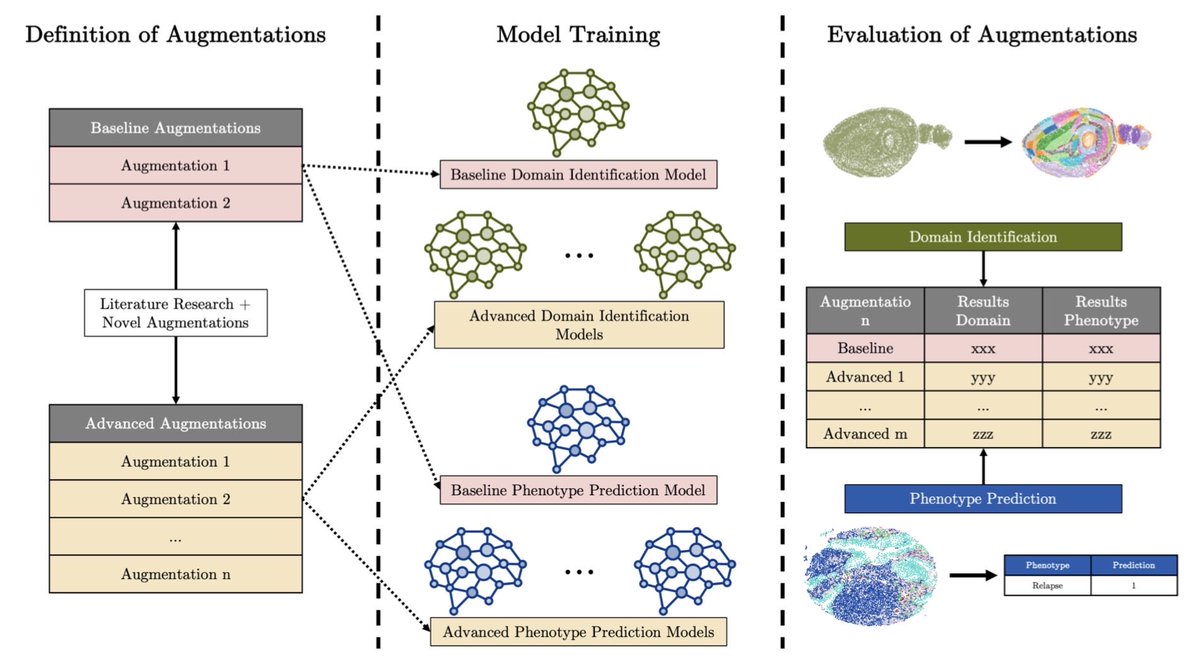
Training GNNs on spatial omics data? Don’t just copy augmentations applied to social networks. Tissue graphs need their own treatment - we show what works and offer new biologically motivated augmentations!
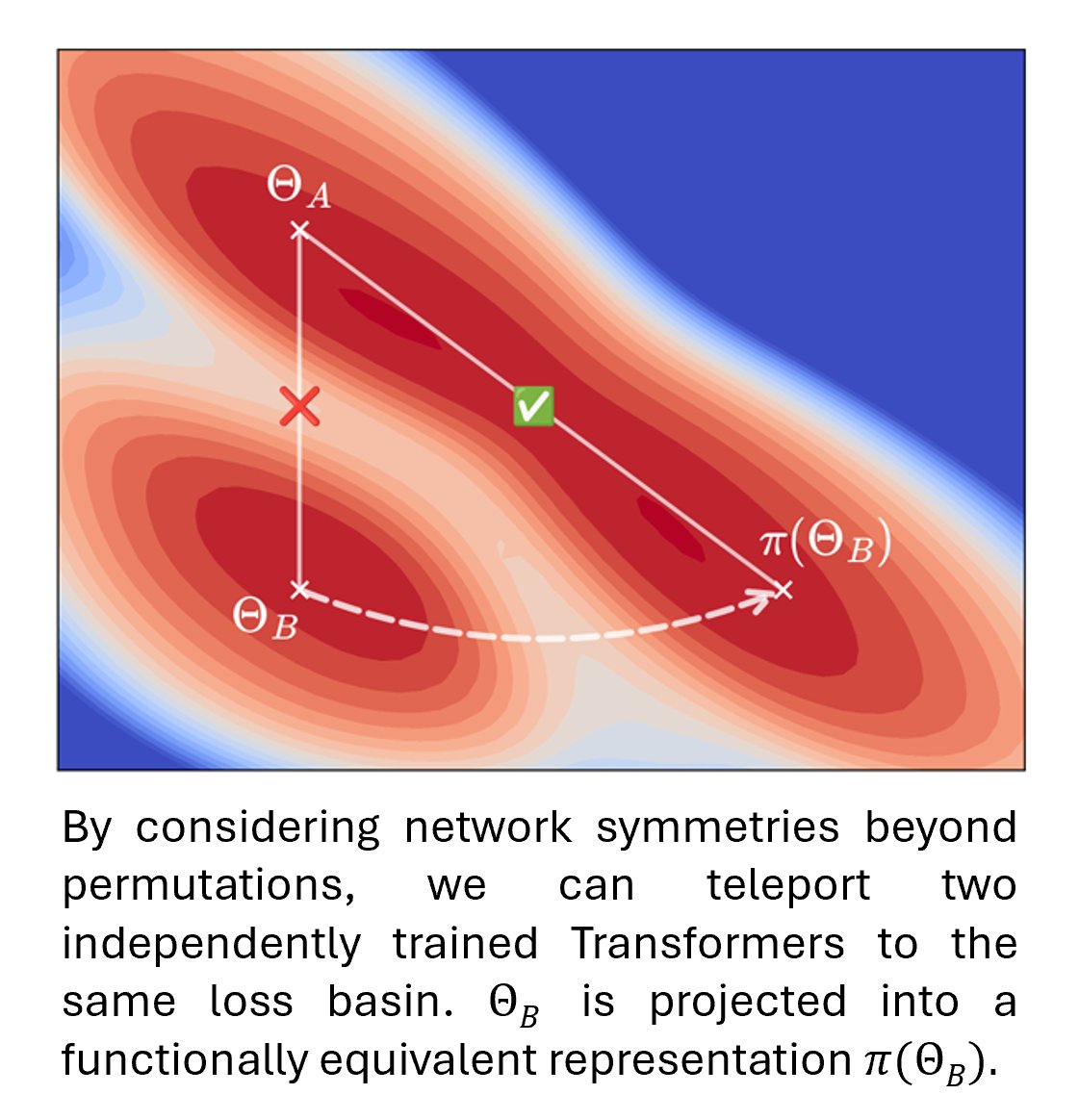
🔥A very cool piece from Alexander Theus and team is finally on arXiv: https://t.co/gv1PZFBm5U
Ever wondered if you can linearly interpolate between transformers and still get a working model? Now you'll know how. A breakthrough! 🚀
📅Are you attending #NeurIPS2024 and curious about the latest in self-supervised learning (SSL) for biology? - Stop by our poster on applying SSL on single-cell data: SSL workshop on Saturday! Work by amazing team of @o_ovcharenko, P. Toma, @ImantDaunhawer, @vogt_je, @flobarkmann
🚀 New preprint from our lab, @ekrym2 and @fabian_theis : UniversalEPI, an attention-based method to predict enhancer-promoter interactions from DNA sequence and ATAC-seq🌟
🔬 Key Highlights:
- Predicts chromatin interactions across unseen cell types with no retraining.
- Outperforms state-of-the-art models like C.Origami and ChromaFold with Spearman’s Rho > 0.92 in unseen cell types.
- Tracks chromatin dynamics in processes like macrophage reprogramming and cancer transcriptional states.
- Scalable for both bulk and single-cell chromatin accessibility data.
🧬UseUniversalEPI for in-silico 3D chromatin modeling in your favorite model! Examples of applications: studies on genetic diseases, cell differentiation, and the regulatory impacts of non-coding variants.
📄 Read the full preprint: https://t.co/vT1FvxAnQV by @AayushGrover8@ekrym2@ilibarra@fabian_theis et al.
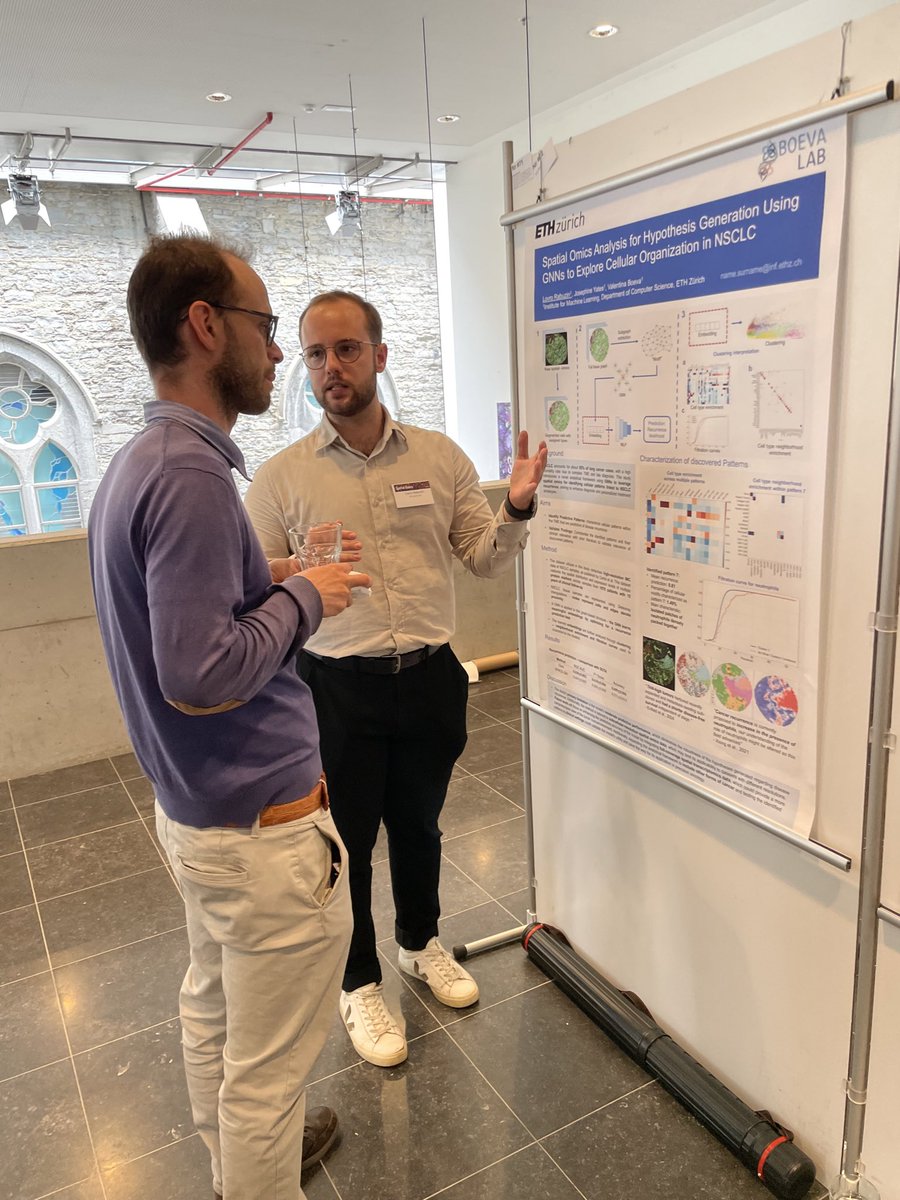
@Rabuzin_L presenting at the #SpatialOmics24 poster session today! « Spatial Omics Analysis for Hypothesis Generation using GNNs to Explore Cellular Organization in NSCLC » 🔥