Your identity is valuable.
Radix Personas are on-ledger identities that give you control over your data in the Web3 world.
They're separate from your token-holding accounts, protecting your privacy and security.
If you provide a service and rely on regular subscription payments from customers, then check out https://t.co/dMHLA2S0fR.
Setup yourself up as a merchant, then payers can create mandates to pay you on an agreed schedule.
@dankrad Interesting topic. Disagree with this point...
"A mobile phone’s or laptop’s secure enclave does not have an independent display, so there is no way to implement clear signing"
And Web3 native on ledger passkey solutions exist
https://t.co/JzakIXK8pH
It's why I'm always bullish on @radixdlt. This was the problem it has focused on since 2013.
Hyperscale (building off the peer-reviewed work of Cerberus) adds shards to scale linearly with demand, the way the internet scales, while keeping the network atomically composable.
Les Seiyu, nos homologues Japonais sont entendus par le Ministère de la Justice et "sont unanimement contre la génération par IA non autorisée" 🔥 Espérons que nous trouverons en France des solutions à la hauteur...
Hi @eastdakota
I just listened to your Bankless podcast, we need to chat.
NET Dollar for the agentic web needs settlement that linearly scales whilst maintaining atomic commitments. Every L1/L2 currently in market either scales OR preserves cross-shard atomic composability. None do both at the throughput you've described.
Radix's Cerberus consensus is the exception.
Linear scaling means the ceiling is hardware, not architecture. 100M+ TPS is an engineering question, not a research one.
https://t.co/NZ6KDecSbC
Introducing BARDIX – a mini crafting game where you can buy drinks and ingredients as NFTs.
Try to discover cocktail recipes by shaking the ingredients of your choice. Earn unique gold, silver, and bronze NFTs.
Links below 👇
Need access to Olympia-era transaction history or records?
The Olympia Explorer has been temporarily restored and is now available again at https://t.co/DKVSJUFFGP. The service is currently expected to remain online until May 30, 2026.
More details:
https://t.co/7JYu3pQ1yZ
Introducing @Caper_Network:
Launch a DAO for your business, charity, or project in one transaction. Every token swap funds the treasury and supports the founder.
🔗 https://t.co/bNZCiSAZ6Q
💬 https://t.co/GO82UhzyGu
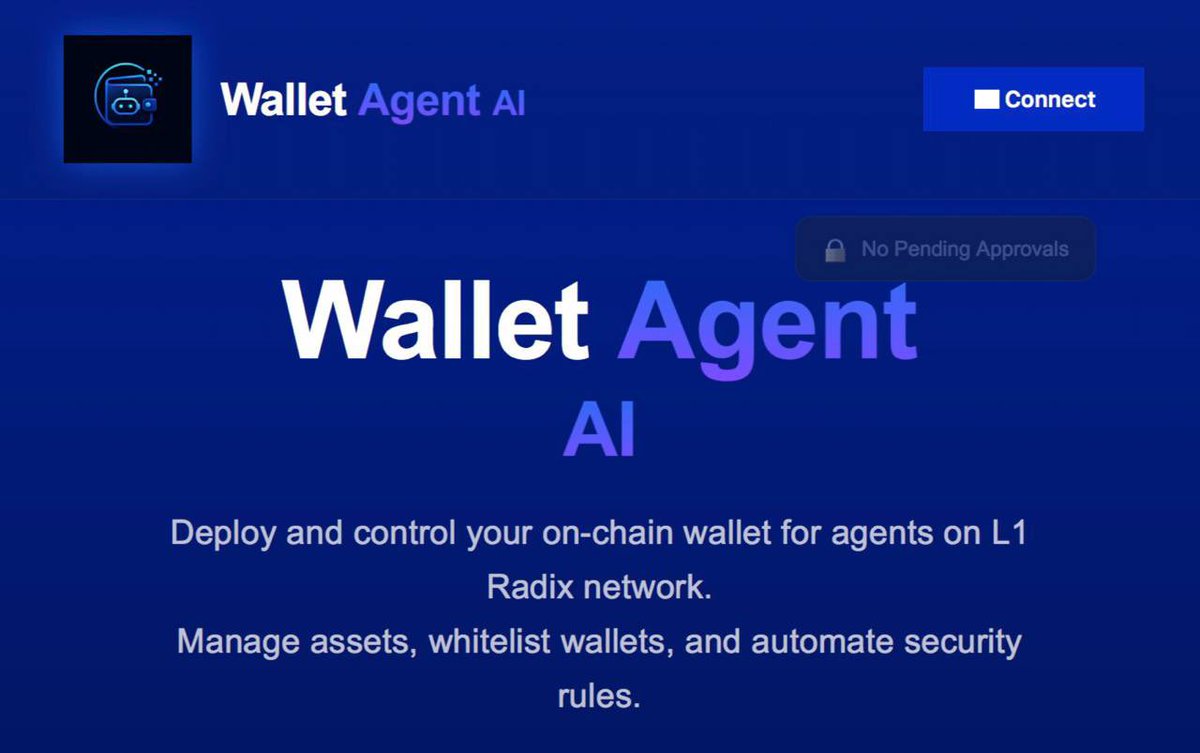
🤖 Deploy and control your on-chain wallet for agents on L1 Radix network. Manage assets, whitelist wallets, and automate security rules.
💬 https://t.co/4P8QxG6TfD
The most underrated feature in all of crypto is "human-readable transactions".
you see what moves
where it goes
what the minimum return is
before you sign a single thing
That's called transaction manifests and it's on Radix.
For DeFi to reach billions of users, networks must scale without sacrificing composability.
That’s exactly what Cerberus is designed to achieve through linear scalability.
More nodes = More TPS 🧵
On @Ethereum tokens are entries on a balance list inside a smart contract.
One bug in that contract --> millions drained
Radix Engine treats tokens as physical objects.
- They are held in vaults
- Moved between them
- Governed by a finite state machine the platform enforces
No developer writes this logic, it is guaranteed by the engine itself.
Interesting conversation with @mcagney which touches on common Tradfi issue with front end UX and seed phrases. @ 8 mins
These issues have been largely solved though with Networks like @radixdlt building network level primitives that remove the need for seed phrases and introduce social and enterprise recovery akin to what Fin techs currently have.
There’s a misconception that enterprise chains are the “practical” path, while decentralized networks are idealistic.
In reality, the biggest markets; finance, assets, liquidity require openness to reach their full potential.
Radix isn’t choosing decentralization as an ideology, but as a necessity for building a global financial system.