Cost basis is the greatest illusion in trading.
The market does not care where you entered.
Unrealized gains are still capital.
Unrealized losses should not override judgment.
Only the market matters.
The ability to reset your mind is the dividing line.
Big news: Hunterbrook Media is acquiring The Bear Cave, one of the most influential investigative newsletters in finance.
Over the last six years, @StockJabber has produced a remarkable amount of truth-to-power reporting — and he's done it as a one-man shop.
But in the golden age of grift and graft, more stories need to be written; wrongdoing needs to be exposed, and digging needs to be done. That’s why we’re partnering.
It’s a good day to subscribe to @BearCaveEmail — and a bad day for bad actors, wherever they may hide.
Either the market is now completely fixated on the assumed hawkish Fed and has abandoned any thinking about the broader paradigm.
Or it is testing Warsh —
seeing how he would interpret such expectations.
Markets are trading a hawkish shift in the Fed's reaction function. There's an internal contradiction to this. Oil prices have tumbled, which is pulling down break-even inflation. So a more hawkish Fed means much higher real rates. This makes no sense...
https://t.co/qc9mdTqN5j
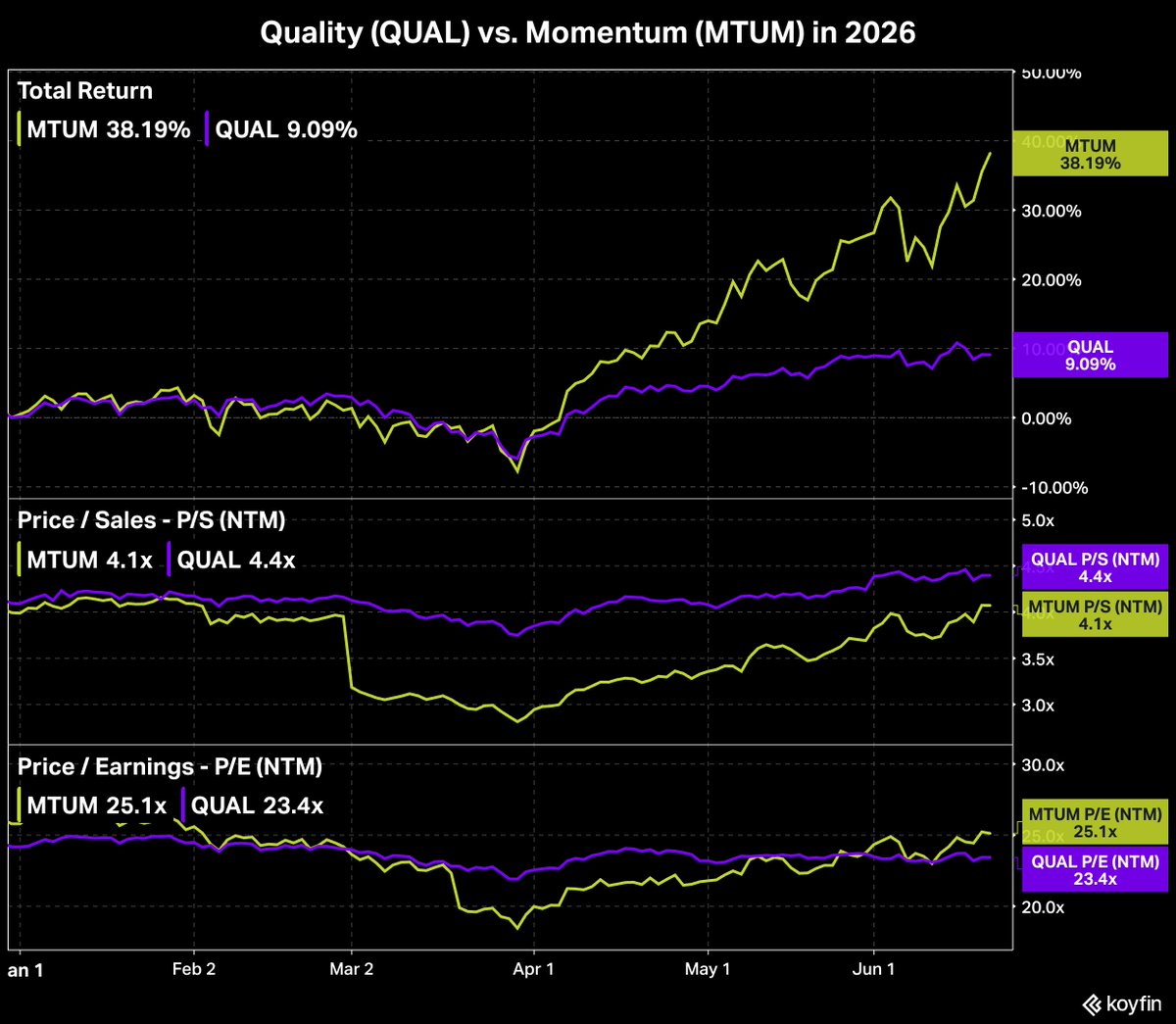
Quality vs. Momentum shows a strong bifurcating in returns from April onwards, where Momentum is now +38% in 2026 compared to Quality's +9%.
The forward P/E multiple of the Momentum basket has now overtaken that of Quality too.
$MTUM $QUAL
Vol often collapses faster on the bounce than it rose on the sell-off
In a downtrend where everyone's selling calls, the spot-vol relationship is not symmetric, and it catches people out.
Watch the path. As the market sells off, vol ticks up, but only on a shallow gradient. It doesn't really catch a proper bid even on a decent drop. Then the market bounces, and vol gets slammed down a much steeper path than it rose. The appetite to sell calls into a rally is ferocious, so the bounce hollows the vol out far faster than the sell-off built it.
The practical problem is for anyone holding long vol or a put structure into that. The trade can look fine on the way down and then get gutted the moment the market bounces, because the surface re-prices against you faster than you'd expect.
For me, the lesson is in a heavy call-selling regime you have to monetize these structures pretty quick. The surface doesn't really wait for you.
$BTC is a clear example of this in recent weeks, look at the difference in slope on the way up in vol vs the way down...
$MU long dated vol and skew is something to behold. the Dec'28 2290(!) call, nearly double the stock price, has a delta of 63 and a bid of $465.
the interaction between delta and implied vol is not a "front page Greek" like gamma and vega. but it's pretty important for a hedger. to get the implied vol wrong is to get your delta wrong as well.
very high levels of implied vol on OTM, long dated calls lead to almost inconceivably high call deltas.
Two trades for those long the stock....
1. if you are long MU, you could do the Dec'28 420-2290 one by two call spread for zero. Buy the 420 call and sell 2x the 2290 call.
if you are long the stock, you double up your exposure - AT EXPIRATION ONLY - from 420 up to 2290. your break-even on this trade versus doing nothing is that the stock needs to go to 4160. that is correct. you are better off having done this trade anywhere from an MU price from zero to 4160 (again, at expiration only). MU market cap would be nearly 5 Trillion at this price.
2. if you are long the stock, you could buy a Dec'28 expiry put struck at 90% of today's price and sell a call that is struck at 180% of today's price for zero cost. tremendous asymmetry.
I am convinced that today's pricing of long dated options on stocks (most all of them in chips/memory) that have already risen a massive amount will go down as one of the most incredible times ever for risk reducing (collar) or return enhancing (1x2 call spread) overlay trades.
A split is emerging in the HBM race: #Samsung is leaning into aggressive #HBM4 expansion, while #SKhynix shifts toward a more measured, profitability-driven approach.
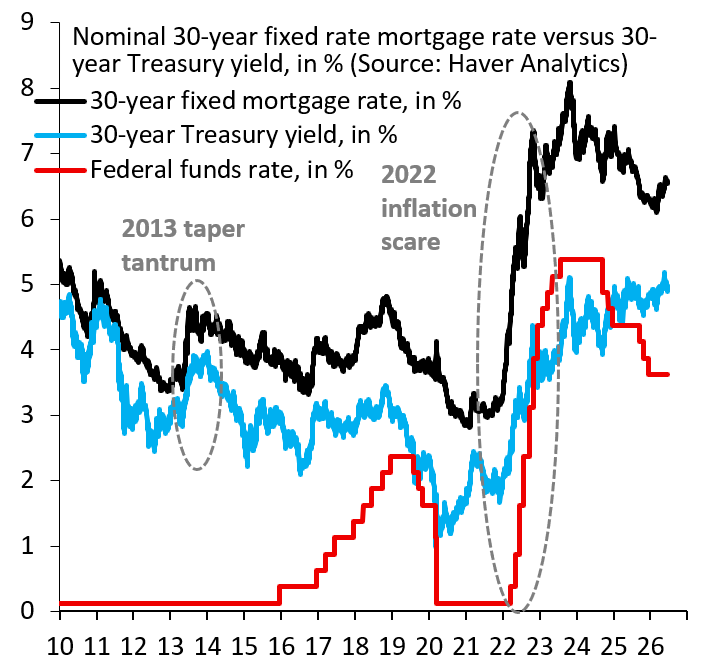
The one thing Kevin Warsh said last week that gives a hint at future policy is that financial conditions are too tight for the housing market and too loose for equities. That's clearly true. The issue is whether there's anything the Fed can do to fix this.
https://t.co/XGBfn4sPoe
Warsh-led Fed scenario:
Long-term inflation expectations anchored, front end on hold, but term premium stays high.
Expression:
TLT Jan 2027 85/75 put spread
Buy 85P / sell 75P
$NOK insiders bought 70,000 shares at $15.34 and another 44,682 at $15.60.
Stock is at $13.49.
The best-informed people in the building are bagged.
Incredible. 😆
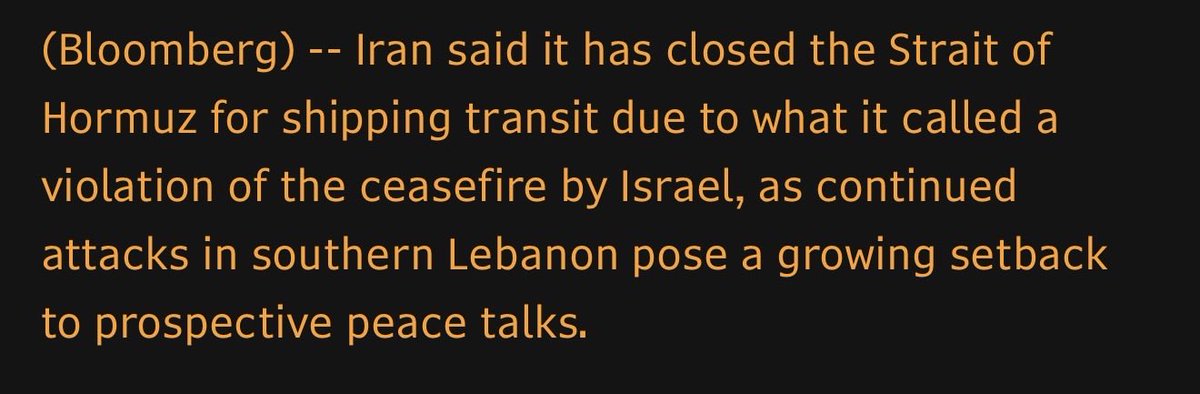
Here is the SAR satellite imagery of the SoH dated June 20th. Zoom in and those white specks are your hulls. The traditional transit lanes are zero traffic. Every single ship on the tape is currently hugging the Iranian corridor.
#oott#iran
Agreed.
In a sense, markets are already defining the task force’s outcome before it even speaks.
But this is really a regime update, not a simple hawk-vs-dove read.
You can’t expect Warsh to come out and say: “Yes, we’re going to ease.”
Kevin Warsh refused to give any kind of forward guidance on Wednesday, so - in the absence of any guidance - markets did the predictable thing and priced a much more hawkish Fed (orange). I don't think that's right and this Q&A on Warsh highlights why...
https://t.co/XGBfn4sPoe