Ten years after Einstein’s death, physics laureate Roger Penrose demonstrated that black holes can form and described their properties. Penrose’s ground-breaking article is still regarded as the most important contribution to the general theory of relativity since Einstein.
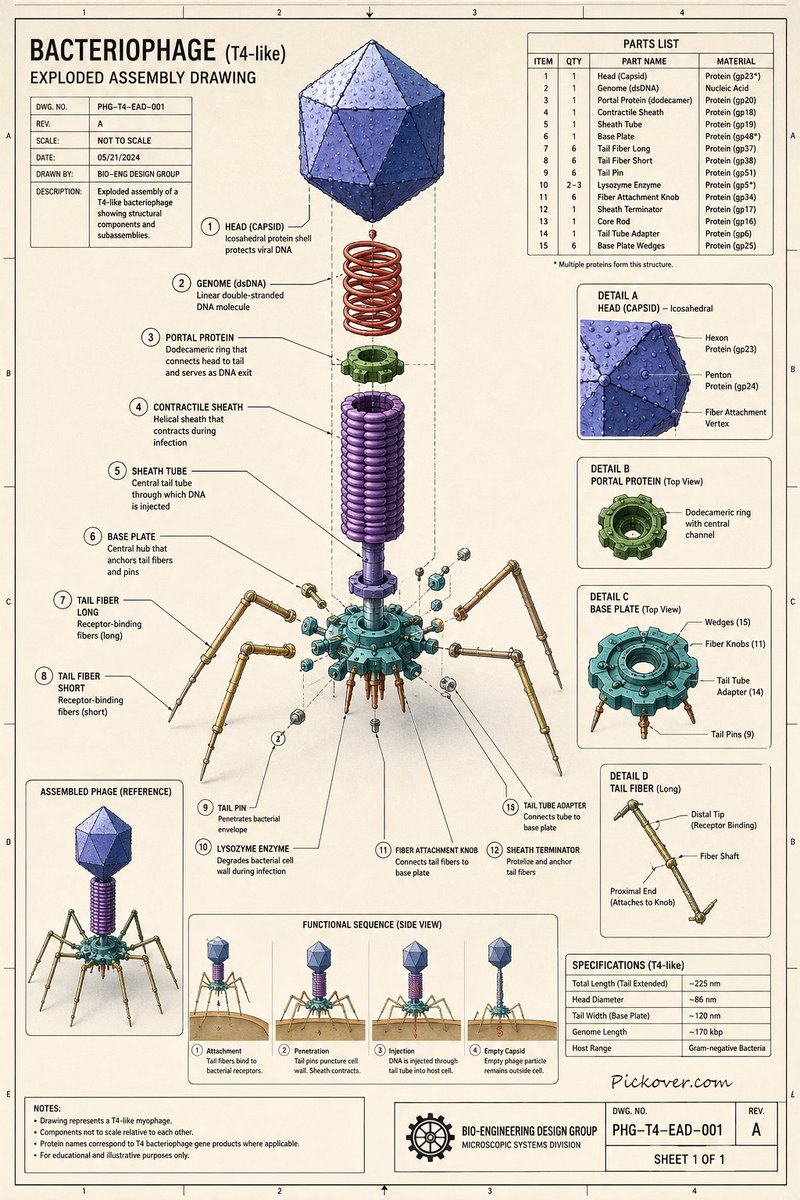
Behold the Bacteriophage virus. It's amazing to realize that this naturally appeared, after billions of years, from the quark-gluon plasma of the Big Bang. The universe somehow taught matter to build nanoscale war machines.
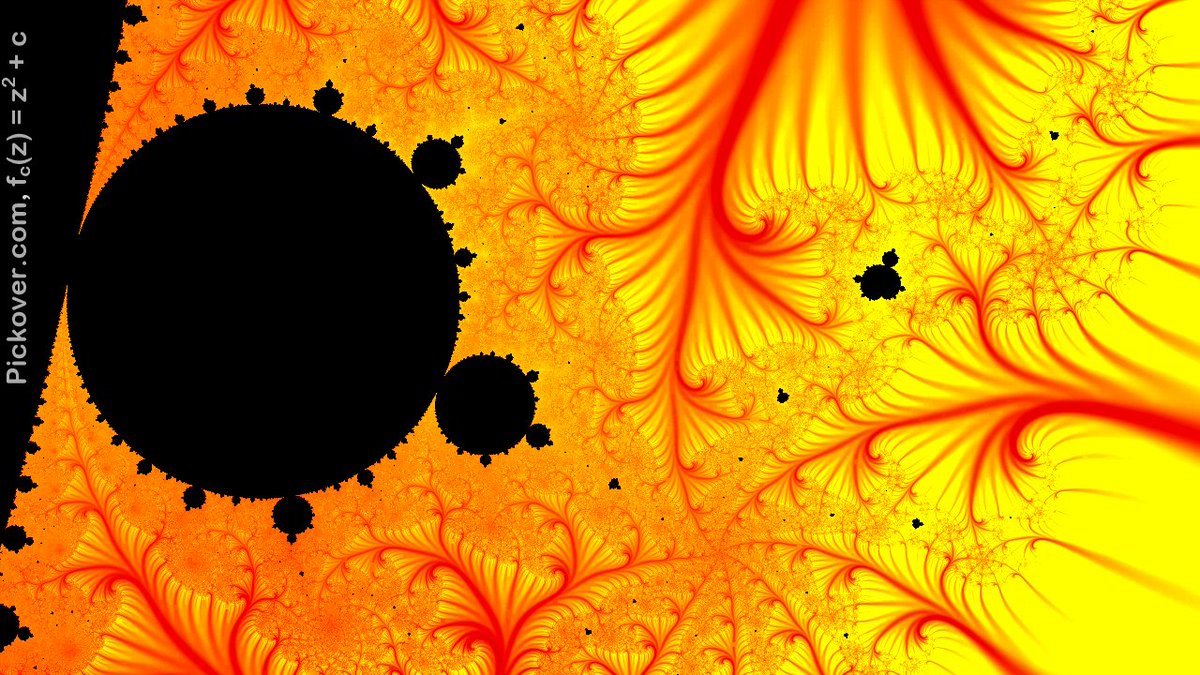
“I love mathematics not only for its technical applications, but principally because it is beautiful; because man has breathed his spirit of play into it, and because it has given him his greatest game—the encompassing of the infinite.”
- Rozsa Peter, Playing with Infinity,1957
30,000 hours of footage, equivalent to 3 years and 7 months, were filmed to capture the blooming of 77 types of flowers, and the result is spectacular.
This door in Westminster Abbey predates many modern nation-states. Crafted from English oak in the 1050s, it is the only surviving Anglo-Saxon door in Britain.
Westminster Abbey is a historic Gothic church in London that has stood at the center of British religious and royal life for more than a millennium. Founded in the 10th century and rebuilt in its present Gothic form during the 13th century, it has hosted every English and British coronation since 1066, along with major royal events such as the wedding of Prince William and Catherine Middleton.
Beyond its role in royal ceremonies, the abbey is also one of Britain’s most important burial and memorial sites, honoring monarchs, scientists, writers, and political figures. Its famous Poets’ Corner commemorates literary icons such as William Shakespeare and Charles Dickens, making Westminster Abbey both a place of worship and a lasting symbol of British history and culture.
'Can't Understand Einstein.'
Headline of a 1919 New York Times article echoing the Times of London editors' inability to grapple with Albert Einstein's general theory of relativity.
@Rainmaker1973 The timeline is off. Late 80s kids had the sweet spot - old enough to remember growing up with analog tech and transitioned into digital. Their first computer in adolescence and dial up internet when downloading a picture would take as long as showering and having lunch.
@pickover Nothing is impossible doesn’t necessarily mean everything is possible. Inportant distinction to bear in mind before making/believing claims without evidence.
@BuckyBarnes1776@kelly54708895@EndWokeness Your kindness is so selective that it does not extend to the women of Iran forced to veil or the victims of honour killings? You’re siding with theocrats who call misogyny empowerment!
@archeohistories My grandfather from rural Bangladesh (then British India during his youth) always drank his tea from a saucer just like this. He was mocked by my grandmother for doing this. Great to learn this fascinating piece of history behind it from the Great Depression.
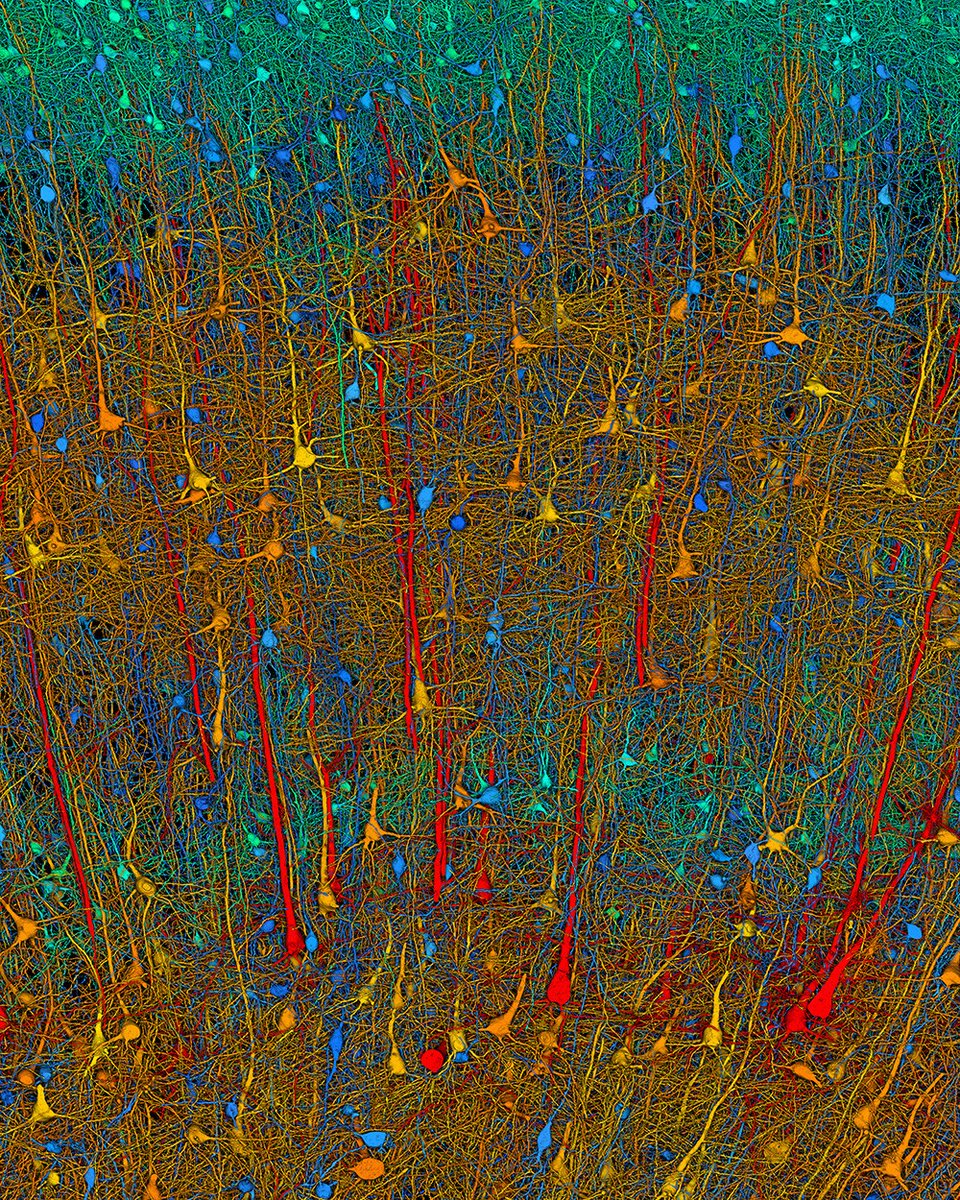
Using more than 1.4 petabytes of electron microscopy (EM) imaging data, researchers generated a nanoscale-resolution reconstruction of a millimeter-scale fragment of human cerebral cortex, providing an unprecedented view into the structural organization of brain tissue at the supracellular, cellular, and subcellular levels.
The human brain is a vastly complex organ and, to date, little is known about its cellular microstructure, including the synaptic and neural circuits it supports. Disruption of these circuits is known to play a role in myriad brain disorders. Yet studying human brain samples in such great detail comes with a host of challenges, ranging from technological limitations to the availability and preservation of tissue samples from healthy individuals.
In a 2024 Science study, researchers performed a high-resolution EM reconstruction of the ultrastructure of a cubic millimeter of human temporal cortex. According to the authors, the reconstruction contains roughly 57,000 cells, about 230 millimeters of blood vessels, and nearly 150 million synapses, comprising 1400 terabytes of data. The authors generated a three-dimensional reconstruction of nearly every cell and process in the cubic millimeter sample and developed a freely available tool for visualizing and analyzing the vast dataset.
Learn more on #WorldBrainDay: https://t.co/ye8JncNkrJ
The James Webb Space Telescope has done it again: revealing a breathtaking structure now dubbed the “Cosmic Vine”: a string of 20 galaxies stretching across a staggering 13 million light-years!
What makes this discovery so shocking? This colossal formation dates back nearly 11 billion years, forming just 3 billion years after the Big Bang, a time when galaxies were thought to still be forming in isolated clumps. Instead, JWST captured a massive, organized structure linking galaxies together much earlier than expected.
[image: artist's impression]
Every person living in a western nation needs to listen to every word of this
Katherine Berbalsingh went to the University of Oxford and is Headmaster at Michaela Community School in London, UK
She PERFECTLY explains the mass indoctrination into the narrative of oppressor and oppressed, and of hating White People
I will write only some of this out because it’s very important, however you should listen to it so you can hear the passion:
“The culture shift comes from what children learn at school and online. Ask any young person what history they learned at school, and they’ll tell you, Hitler. Ask them what else? Slavery. Ask them what else? American civil rights.
In fact, what little they know of history will be all about Black and brown people fighting for equality against the white man, women fighting men for the vote, gay and trans people fighting for various rights. Our young people have been taught that history is simply one long story about various groups struggling under the oppressive dead white man.
— History is taught through an oppressor lens. The triangular slave trade, white men held the power. What about Britain ending the slave trade? More than a quick mention, if at all? Mm, no.
What of the Arab slave trade that lasted 3 times as long as the triangular slave trade? Mm, no.
Okay, so GCSE history in Britain is often taught as migration through time, so the idea that Britain has always been a land of immigrants is embedded in our children’s heads. Most schools would prefer to concentrate learning about the tiny number of Black people who existed in Tudor England over a thorough analysis of England’s break from Rome.
— Not to mention weeks on King Mansa Musa of Mali because he was a Black Muslim. His bearing on British institutions, laws, and faith is nonexistent. And the fact that he is said to have been the richest man in history, thanks in part to his massive slave-owning society, is a detail somehow that teachers rarely ever teach.
But it isn’t just our schools. It’s our general culture too. Take your kids to a museum or an art gallery in any Western country, and you’ll find the same narrative.
As an example, when learning about aviation in London’s Science Museum and the extraordinary feat that is man making massive machines move in the sky, a write-up on the wall explains that women and Black people were historically barred from aviation schools and the military. Similarly, James Watt, the man who invented the steam engine and is considered the founder of the Industrial Revolution, has a write-up on the wall explaining that his early career involved slave trafficking, with a bonus analysis of the whole of Britain’s complicity in the slave trade.
They flatten the entire human story and all of its complexities into the narrative of oppressor and oppressed, leaving young people unable to see the world in any other terms.”
We have to end the mass indoctrination
Richard Feynman stood at a Cornell blackboard in 1964 and explained the problem every AI lab is fighting in 2026. The BBC filmed it. Almost nobody watches it.
The lecture is about why nature only answers in mathematics. Every team forcing language models to reason is hitting the wall he mapped 62 years ago.
He was 46. The Nobel Prize came 11 months later. The footage survived on film reels and now sits free on YouTube with fewer views than a keyboard unboxing.
Watch the blackboard section near the middle. He takes 1 of Kepler's laws and rebuilds it from nothing, with notation a 12-year-old can follow.
No slides. No jargon. 1 piece of chalk.
An ML engineer I know paused it 4 times and made his whole team watch it before standup.
You're 62 years late. The lecture is still free.









![Rainmaker1973's tweet photo. The James Webb Space Telescope has done it again: revealing a breathtaking structure now dubbed the “Cosmic Vine”: a string of 20 galaxies stretching across a staggering 13 million light-years!
What makes this discovery so shocking? This colossal formation dates back nearly 11 billion years, forming just 3 billion years after the Big Bang, a time when galaxies were thought to still be forming in isolated clumps. Instead, JWST captured a massive, organized structure linking galaxies together much earlier than expected.
[image: artist's impression]](https://pbs.twimg.com/media/HN0j2srWIAAsjf7.jpg)


