1/ Our NEW @CircAHA study, simultaneously published with #ESCCongress
🚨 We develop and validate the NEW #DOAC Score
➡️ A bleeding risk score for patients with #afib on DOACs
✅ We find our DOAC Score outperforms prior risk scores, including the HAS-BLED
https://t.co/erPUvbA3Cy
Endpoint adjudication involves significant cost, complexity, and delay.
Local AI could help make trials faster, cheaper, and more scalable, while preserving privacy, security, and institutional data governance.
Incredible team effort across MIT, Harvard, and Mount Sinai
Can AI transform clinical trials?
Published in @CircAHA, our team tested whether locally deployed, open-source LLMs could adjudicate heart failure hospitalizations.
The result: 96.8% accuracy
https://t.co/CmtnBKfras
Importantly:
The model’s agreement with cardiologists was similar to the agreement between two board-certified cardiologists.
No cloud API.
No external data transfer.
No patient data leaving the hospital’s servers.
Excited to share our new @JACCJournals paper!
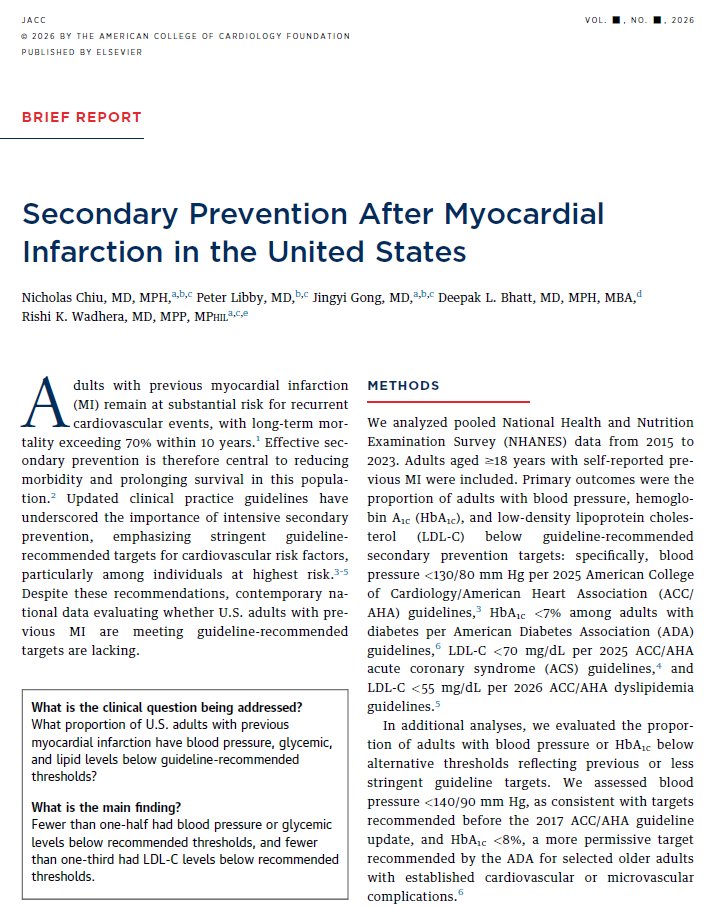
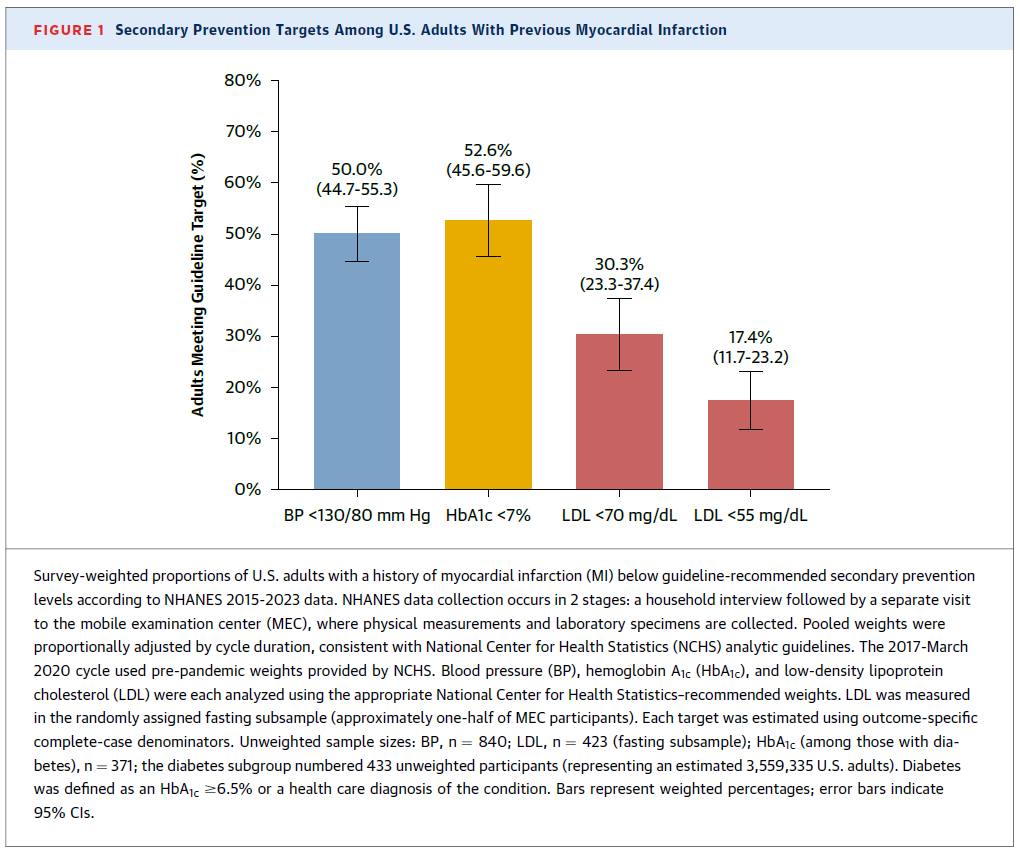
Among 8.4M US adults with prior MI, we found major secondary prevention gaps : ~1/2 met BP or A1c targets, <1/3 met LDL-C <70, and ~1/6 met LDL-C <55.
⭐team: #PeterLibby@Gong2Jingyi@DLBHATTMD@rkwadhera 🔗https://t.co/TjcJU1Fkpd
🧵1/ Our new study on AI and physician reasoning just came out in @ScienceMagazine. As co-senior author, I'm excited about our findings, and I do think AI will reshape medicine. But after seeing some of the discussions, I'm also worried about how our findings may be misinterpreted.
Our study of AMIE at @BIDMC_Medicine is out! You can read about what we did in posts from my co-authors (including the Google post below).
But I wanted to talk about some background for this study, and what I think are most interesting findings. 🧵⬇️
https://t.co/H8nQBdF18R
Delighted to share: Prospective Study of Conversational Diagnostic AI in Ambulatory Primary Care @GoogleDeepMind@GoogleResearch@BIDMChealth – https://t.co/WIBiU8cz6M
https://t.co/hXY9ybXzpm
Like real medical training, we @GoogleDeepMind took a series of milestones on the way to performing these real-world clinical encounters: from passing medical licensing-style exams (https://t.co/gEuFWavD9A) to mirroring PCP skills in simulated consultation OSCEs (https://t.co/XPGYIx14M0).
Now, in partnership with @BIDMChealth, 100 patients engaged in a text-chat with our AI (AMIE) up to 5 days before their in-person PCP visit. AMIE took a comprehensive history and drafted a summary & differential diagnosis (DDx) for the PCP. It was carefully monitored by a physician ready to intervene based on strict safety criteria.
7/ Bottom line: AI has the potential to reshape every stage of clinical trials — from design to conduct.
If deployed responsibly, it could accelerate discovery, lower costs, and bring therapies to patients faster.
💭 What do YOU see as the biggest barrier to AI adoption in clinical trials?
Full review 🔗 https://t.co/A1CDL0s65d
#ClinicalTrials #DigitalHealth #HealthTech #AI
1/7 🧬Artificial intelligence could transform the clinical trial enterprise.
Trials remain the gold standard of evidence generation — yet they are slow, costly & operationally complex.
New review w/ @DLBhattMD in @EJCI_News examines how AI can reshape the trial lifecycle 🧵👇
🔗 https://t.co/A1CDL0sDUL
#ClinicalTrials #AIinMedicine
6/7 ⚖️ Ethics & Governance are central.
AI in trials must include:
• Human-in-the-loop oversight
• Transparent audit trails & version control
• Continuous validation & drift monitoring
• Equity-focused evaluation
• Clear regulatory pathways (e.g., MDDT, ISTAND)
AI is a tool — not a replacement for clinical judgment.
New guest essay in the @nytimes: patients (and doctors) need to be open with each other about our AI use. It's here, it's useful (with drawbacks). If we put our heads in the sand, we get the dyadic "AI doctor" that cuts human relationships out of medicine
https://t.co/e2eB3kC0vf
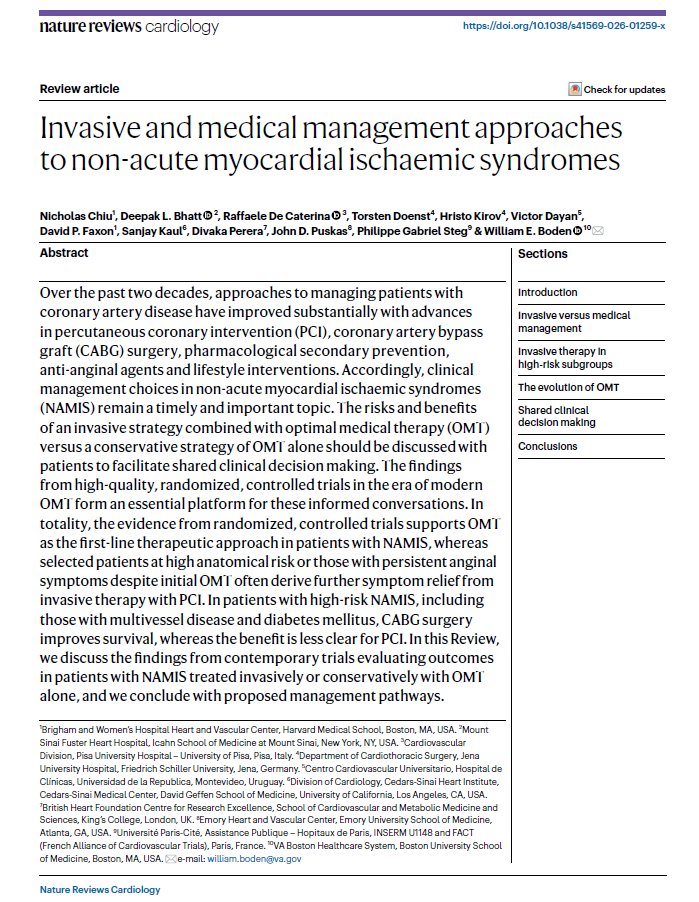
Excited to share our new piece just published in @NatureRevCards 🫀
A 2-year effort with a fantastic group of international experts across cardiology, interventional cardiology, and cardiac surgery.
🔗 https://t.co/VjxAuHcHGJ
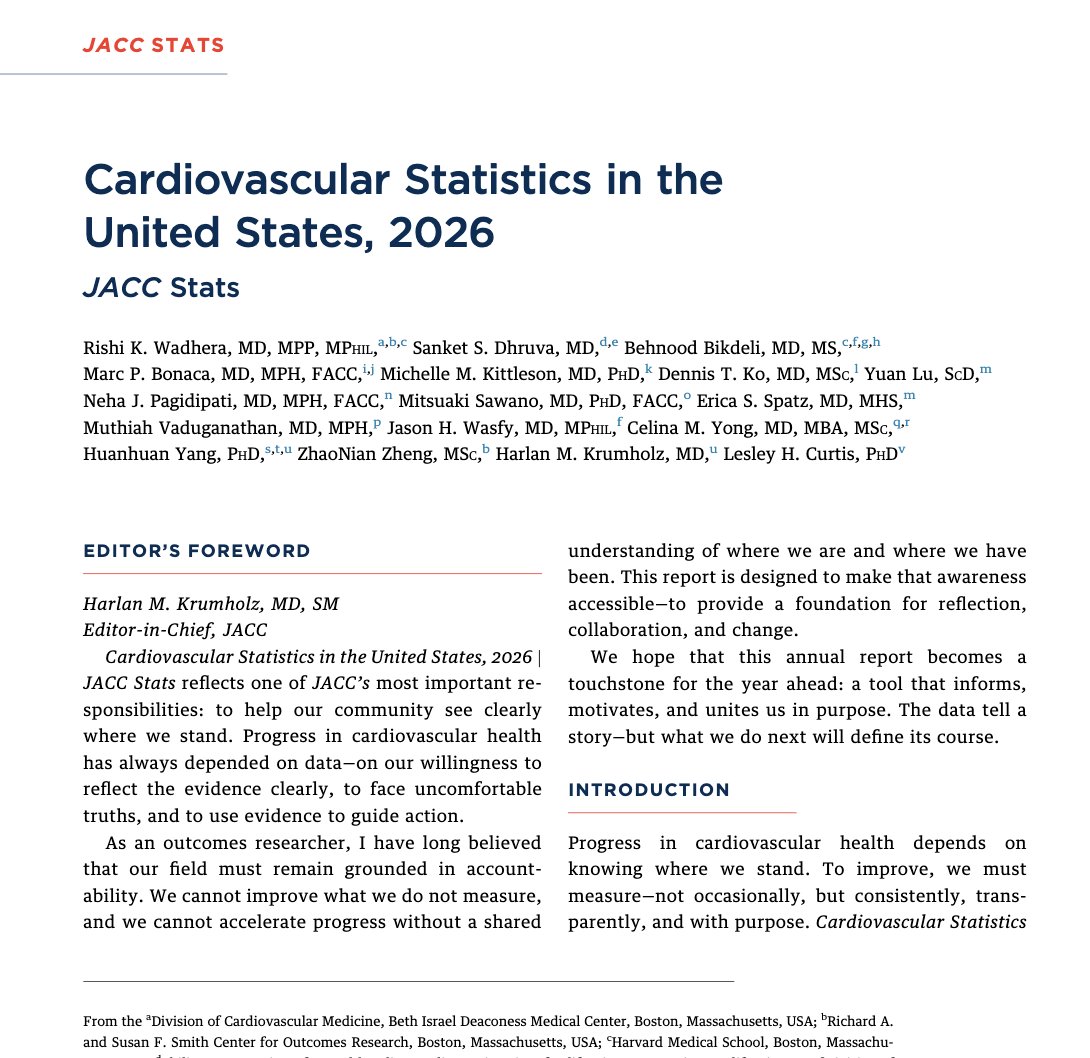
Our new @JACCJournals Cardiovascular Statistics annual report provides a clear-eyed understanding of cardiovascular health in the United States.
Where we stand. Where we've made gains. And where we're falling behind. #JACCStats
https://t.co/ghr90uvqjA