we must retvrn to an era of naming companies like “American Computing Corporation” or “US Semiconductor” the days of cute & silly startup names are over. no longer is it sufficient to just drop a vowel from a word and call it a day, we must build serious companies w serious names
the reason why people abandon so many “almost done” things is because the last 20% of anything is friction, detail, & accountability.
that last 20% of the work doesn’t feel like 20% at all, it feels like the whole damn thing & then some.
this is especially true in an ai era where you can go from zero to something so quickly.
anthropic employees should use twitter slightly more, openai employees should use twitter slightly less, xai employees should use twitter slightly differently
Damn it worked! Genie 3 world --> inpaint UI --> 4x topaz AI upscale --> train 3d gaussian splat
You can step inside a painting of Socrates from 1787. Better than any image-to-3d model I've seen.
I think Google has stumbled upon the killer app for VR -- the literal holodeck.
Ridiculous that OpenAI claimed 74.9% on SWE-Bench just to prove they were above Opus 4.1’s 74.5%…
By running it on 477 problems instead of the full 500.
Their system card only says 74% too.
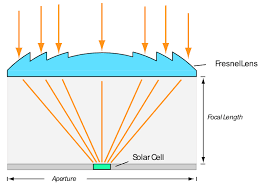
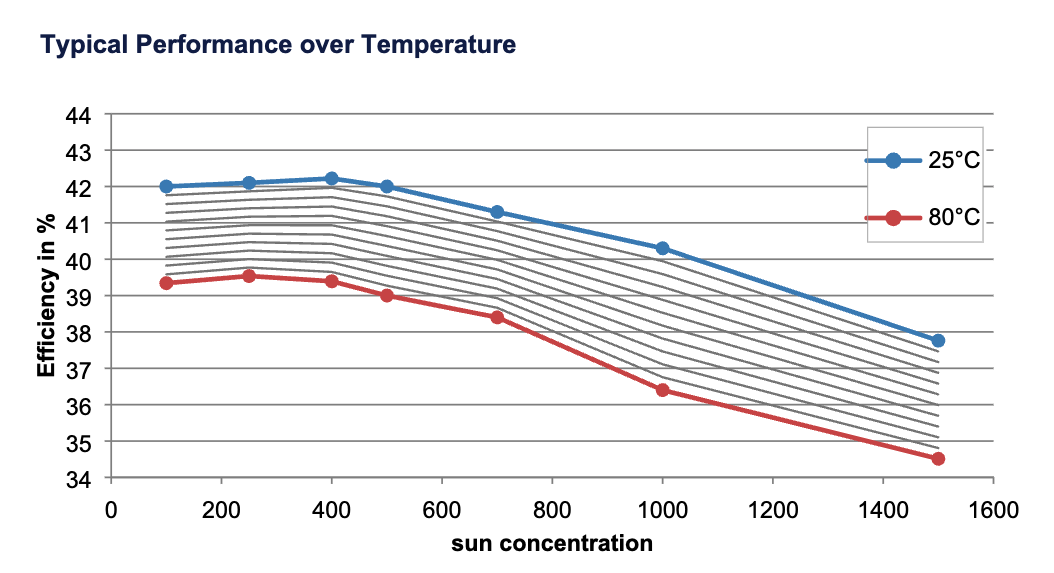
Solar panels can double their efficiency (20% to 40%+) if you concentrate enough light onto them, so companies make these tiny panels designed for a light concentration of ~400-1000 suns
You haven’t addressed the core issue of User Agent Identity.
Key excerpt:
“When Perplexity fetches a webpage, it’s because you asked a specific question requiring current information.”
Yes—but who is “you”? What is the identity of the user on whose behalf the agent is acting? And equally important—what is the identity of the agent itself?
This lack of clarity around who is acting and on whose behalf isn’t a technical footnote—it’s a foundational gap at the center of growing concerns about LLM-based tools and AI agents.
The Web has long been built around identity (e.g., WebIDs, tokens, cookies, logins). Concepts like authenticity, traceability, and consent are not optional—they are essential.
Without a verifiable and transparent link between:
1. the user,
2. the agent acting on their behalf, and
3. the systems or services being queried,
we risk creating a brittle and unaccountable ecosystem—especially in contexts involving personal data, intellectual property, or sensitive transactions.
In short: identity authenticity and agent transparency must be part of the architecture. Fortunately, the Web already provides the infrastructure to support this properly—we just need to use it.
/cc @AravSrinivas@eastdakota
Introducing Genie 3, the most advanced world simulator ever created, enabled by numerous research breakthroughs. 🤯
Featuring high fidelity visuals, 20-24 fps, prompting on the go, world memory, and more.
Scaling up RL is all the rage right now, I had a chat with a friend about it yesterday. I'm fairly certain RL will continue to yield more intermediate gains, but I also don't expect it to be the full story. RL is basically "hey this happened to go well (/poorly), let me slightly increase (/decrease) the probability of every action I took for the future". You get a lot more leverage from verifier functions than explicit supervision, this is great. But first, it looks suspicious asymptotically - once the tasks grow to be minutes/hours of interaction long, you're really going to do all that work just to learn a single scalar outcome at the very end, to directly weight the gradient? Beyond asymptotics and second, this doesn't feel like the human mechanism of improvement for majority of intelligence tasks. There's significantly more bits of supervision we extract per rollout via a review/reflect stage along the lines of "what went well? what didn't go so well? what should I try next time?" etc. and the lessons from this stage feel explicit, like a new string to be added to the system prompt for the future, optionally to be distilled into weights (/intuition) later a bit like sleep. In English, we say something becomes "second nature" via this process, and we're missing learning paradigms like this. The new Memory feature is maybe a primordial version of this in ChatGPT, though it is only used for customization not problem solving. Notice that there is no equivalent of this for e.g. Atari RL because there are no LLMs and no in-context learning in those domains.
Example algorithm: given a task, do a few rollouts, stuff them all into one context window (along with the reward in each case), use a meta-prompt to review/reflect on what went well or not to obtain string "lesson", to be added to system prompt (or more generally modify the current lessons database). Many blanks to fill in, many tweaks possible, not obvious.
Example of lesson: we know LLMs can't super easily see letters due to tokenization and can't super easily count inside the residual stream, hence 'r' in 'strawberry' being famously difficult. Claude system prompt had a "quick fix" patch - a string was added along the lines of "If the user asks you to count letters, first separate them by commas and increment an explicit counter each time and do the task like that". This string is the "lesson", explicitly instructing the model how to complete the counting task, except the question is how this might fall out from agentic practice, instead of it being hard-coded by an engineer, how can this be generalized, and how lessons can be distilled over time to not bloat context windows indefinitely.
TLDR: RL will lead to more gains because when done well, it is a lot more leveraged, bitter-lesson-pilled, and superior to SFT. It doesn't feel like the full story, especially as rollout lengths continue to expand. There are more S curves to find beyond, possibly specific to LLMs and without analogues in game/robotics-like environments, which is exciting.
I spend a good amount of time in hotels and agree that there seems to be a large target audience that is not "us". Us being some combination of digital-first and wellness-friendly. The things I care about:
- Fast check-in. There should be no need to talk to human, I already entered all the needed information when I booked the room and I'd like to go directly to it.
- Very fast wifi, prominently displayed password, table I can put my laptop on.
- Large, well-equipped gym open 24/7.
- Express check-out - drop off the keys, bill through email.
These are some of the top things that most top hotels don't do. I've probably stayed in >100 hotels but I have yet to stay in one that checks all the boxes.