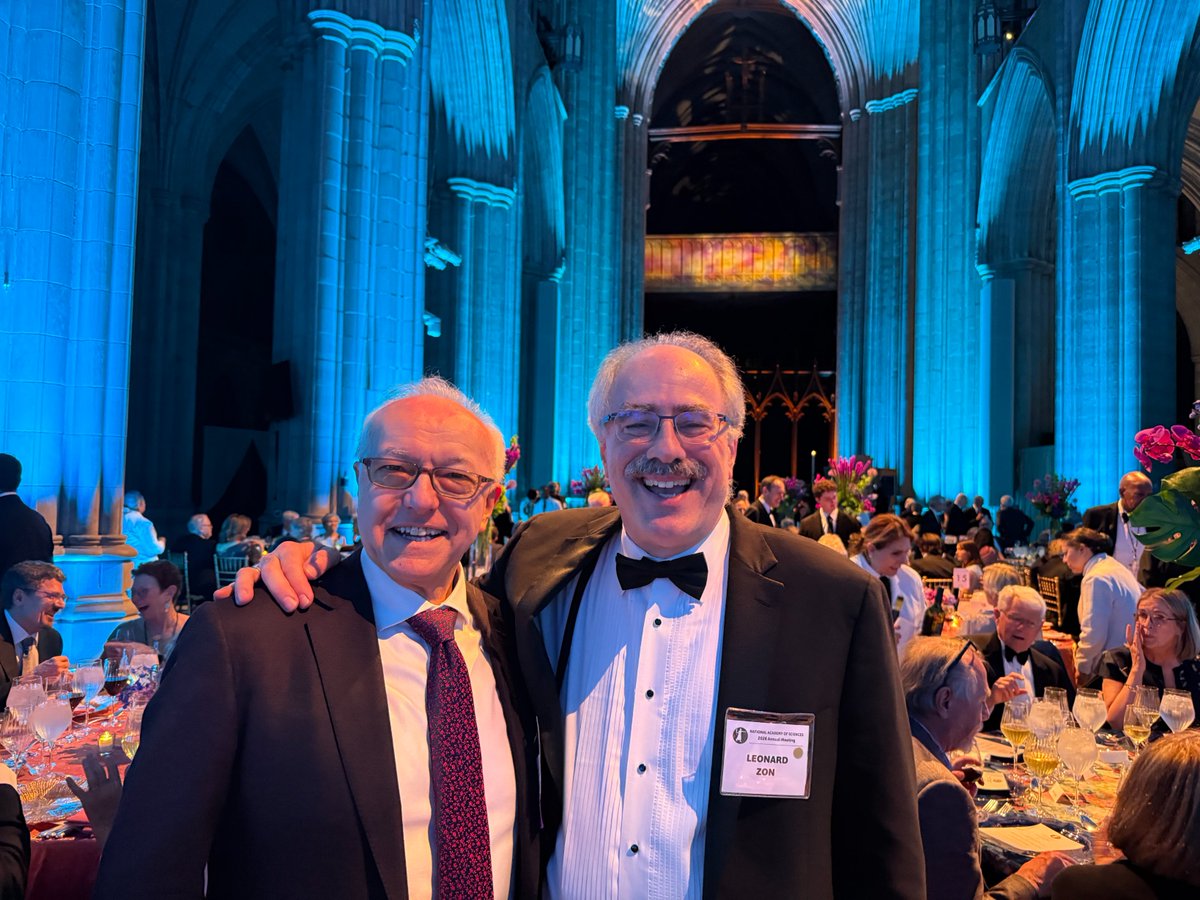
Award on RNA modification and erythropoiesis work!
Fortunate to have a great team and mentors!😇
My work shows RNA ribostasis is controlled by key stress granule genes that impact blood development and regeneration, might be crucial in SCD, thalassemia.
Today in @NatureNano, we report an all-RNA lipid nanoparticle (LNP) system for efficient in vivo prime editing (PE). We identify bottlenecks in transient prime editor delivery, develop a workflow for LNP optimization, and use it to rescue a mouse model of phenylketonuria.
https://t.co/WAH8LHAb9z
1/12
Exciting breakthrough technology from the lab, now live in @CellCellPress ! Instead of cutting the genome where proteins bind (e.g., Cut&Tag), D&D-seq scars the DNA with a deaminase, allowing single cell genome mapping of TFs and chromatin remodellers!
Excited to share the second paper from our lab!
We found that intercellular crosstalk in TME amplifies IL-1β signaling to drive chemoresistance in metastatic ovarian cancer.
Should IL-1β pathway antagonists be considered as part of neoadjuvant therapy?
https://t.co/sQuIu36Cjp
My second piece in The Hindu ( @the_hindu) is up online today. Here is a link (https://t.co/B32SRGUeV0). The piece is meant to convey that the possibilities for creating current and new products, cells, and organisms through synthetic biology are growing rapidly. We need to imagine what this future direction will be like, and an incremental linear extrapolation from the present will not capture this future.
Imaging ppl!🚨
Funding for "Scientific Instrumentation for Sensing and Imaging"
"NSF is seeking X-Labs to build the next generation of scientific instruments, drawing on quantum sensing, artificial intelligence-driven computational imaging and entirely new chemical modalities."
Antonio Garcia Bellido was one of the greatest biologists in the period from the 1950s to the present, and one who used genetics to understand animal development, and who revealed key principles in the roles genes, cells, and their interactions play patterning the body. His leadership made Spain—even in the very difficult Franco period—a powerhouse of Drosophila genetics, and a fountain of ideas. A generation of fiercely argumentative scientists, full of generosity shared thoughts had major impact in the transmission of new ideas in cell and developmental biology. The tradition he established continues today., He first visited India in 1979 @TIFRScience@TIFR_Bio to a meeting organised by Obaid Siddiqi, Padmanabhan Babu, Linda Hall and Jeffrey Hall. Also attending the meeting were large number of visitors who all become leaders in their fields and young students, who had an unimaginable intellectual feast. It was only a few years earlier, in 1975, in a conference on cell-patterning that Garcia Bellido had put out the audacious idea of ‘compartments’ in patterning sheets of cells. That very year, Francis Crick and Peter Lawrence wrote an article in Science (Compartments and Polyclones in Insect Development) which begins with a declaration that their article’s principal purpose was to make Garcia Bellido’s ideas more widely known! Garcia Bellido was a geneticist and an embryologist in the classical use of the term. Today, there is a resurgence in developmental biology and there are many new ways to address questions about how we, and other animals, are made from a fertilised egg. To the scientists in this area, Garcia Bellido will always inspire us to think and develop ideas that can be tested, and explanations fiercely argued. Thanks to @MarcoMilanIRB for a thoughtful obit.
I’ve started a series in The Hindu (@the_hindu ) called the Examined World, a “contemplative series exploring what the sciences reveal about us”. Here is a link (https://t.co/eDcTV1NTpr) to the first piece l which Is about how ideas can have a long reach and impact, and how impact and application can stimulate such ideas. The title of the piece and the picture in the article is a bit of a ‘click-bait’ into the GMO debate, but that is not the principal thrust—just a very important example. The principal question is really that if ideas and consequential directions can steer biotech in new ways; what is the crucible that can generate such ideas how can their consequences be regulated? Here are excerpts that summarise the thesis. Feedback and critiques much appreciated.
Attend these upcoming ISEH events to learn the latest research, connect with hiring faculty, experience hands on learning, and present your work to the ISEH community. Explore upcoming events at https://t.co/CaPgYUJssu
We are excited to announce the full Mini Symposium program featuring the short talks selected from submitted abstracts! Don't miss the chance to view groundbreaking research and choose the top short talk. View the full program and register ➡️ https://t.co/MqtELa0abR
The results are in 🗳️ Congratulations to our incoming 2026-2027 Board of Directors who will start their terms at the conclusion of #ISEH2026 in August! 👏
Happy to share another story by @AnneshaGhosh14. Here, we show that inhibition of the mRNA cap methyltransferase CMTR-1 activates a protective immune response via the GATA transcription factor ELT-2. @DBS_IISERM
https://t.co/fGC1xRlTmG
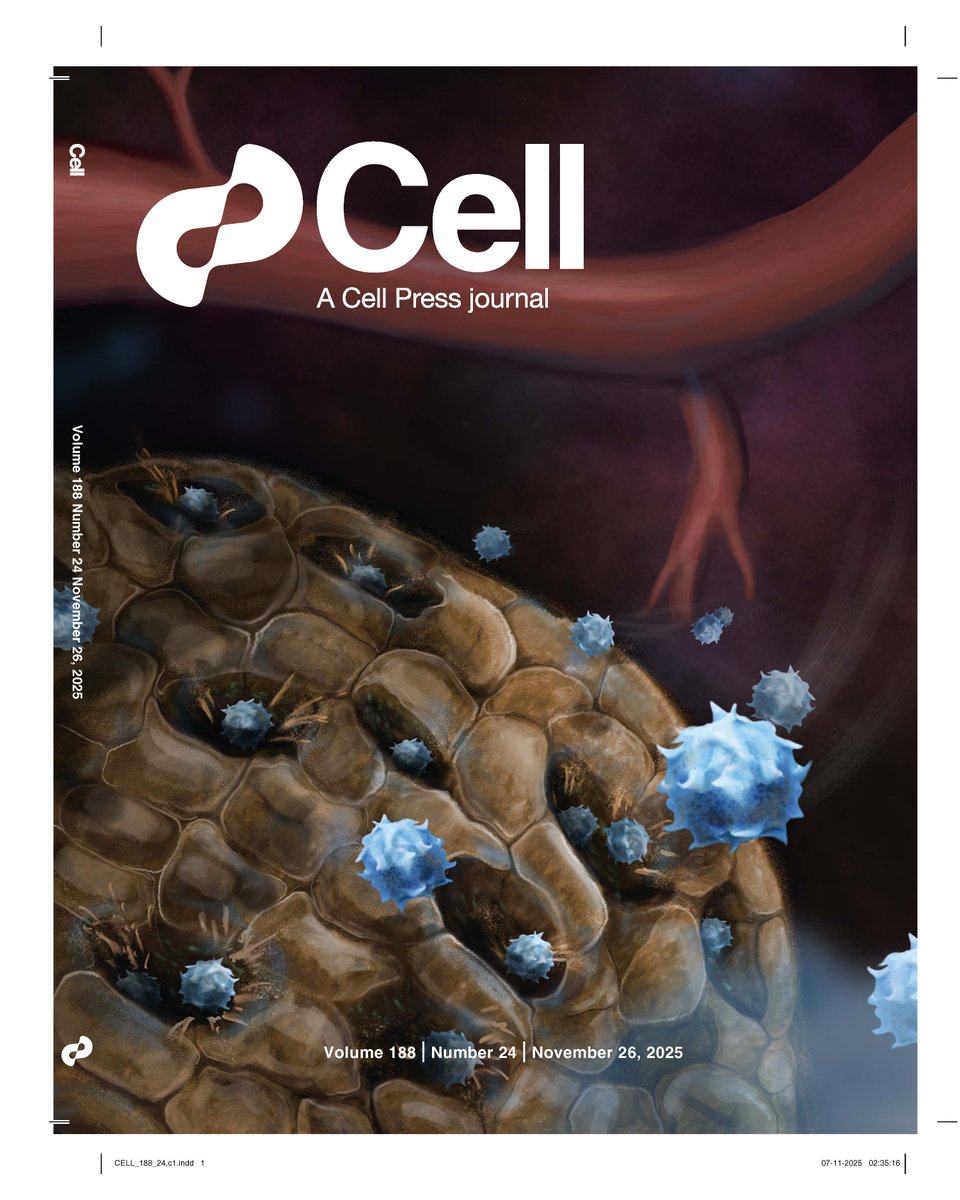
We have the cover of Cell today. Craters on the surface of melanoma serve as an immune hub for CD8+ T cells. A timely highlight as we roll into Thanksgiving.
Excited to present the first major work after starting our lab at Stanford and the Arc this year: CRISPR-All, a unified genetic perturbation language for programming any major type of genetic perturbation simultaneously, in any combination, at genome scale, in human cells.
Broad has launched the Biology of Adversity Project, led by @JD_Buenrostro a 2023 @macfound fellow, to uncover how adverse life experiences can inflict molecular “scars” in the genome and body and increase risk of heart disease and other disorders. https://t.co/aFBfujraUT
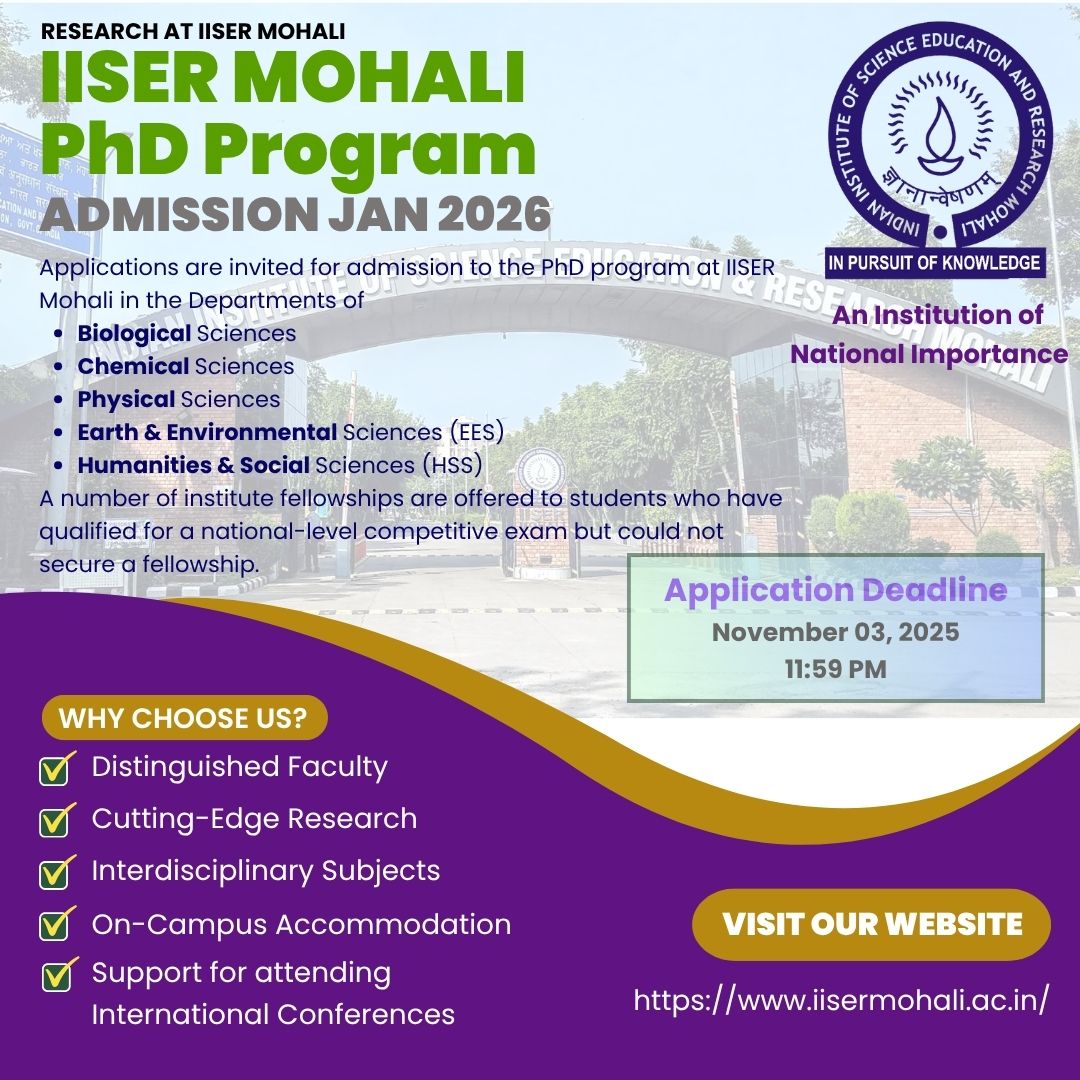
Applications are open for the IISER Mohali PhD program till November 03, 2025. Interested candidates may apply: https://t.co/TQIzKvD1gp
@IiserMohali@DBS_IISERM@pdfiisermohali