Sweden just confirmed it.
Immigrants were the decisive factor in the Left’s election win; exactly what I laid out in this video.
Native voters can keep shifting right, but it won’t matter. If you don’t reverse replacement-level migration with remigration, it’s over. Democracy is a numbers game and the Left imported its voters.
If the right wants to win in Europe, advocating and implementing Remigration the only way.
An invite-only scheme and $6 million of your money to the PMs neighbours - the Marrickville Golf Course. Finally a Senate inquiry into home-owning revelations that I aired on my programme last Thursday night.
In response to the clip going around with the African lady saying 'WHAT WHITE CULTURE!?!'
Because I can explain it in more detail than anyone else... here are the main things that create western civilisation.
The principle, the law of nature that is an adaptation to and what operation it creates in our civilisation.
THE WESTERN CIVILISATION STACK
Western civilisation can be understood as a set of adaptations to the laws of nature that allow millions of people to cooperate, solve problems and innovate together.
1. SOVEREIGNTY — Let people act.
Law of nature: Knowledge and ability are distributed among individuals.
No ruler or institution can know everything everyone knows. Sovereignty gives people freedom to choose, experiment and solve problems for themselves. That creates millions of independent problem-solvers instead of waiting for one authority to find the answer.
2. RECIPROCITY — Don’t impose your costs on others.
Law of nature: Cooperation survives when it benefits both sides.
Freedom cannot mean freedom to steal, defraud, injure or force others to carry your costs. Reciprocity means pursuing your interests while respecting the same right in others. It turns conflict into cooperation and makes peaceful life among strangers possible.
3. RESPONSIBILITY — Make people accountable for consequences.
Law of nature: Every action produces consequences.
Freedom works when the person making a decision also bears responsibility for its results. When people can keep the benefits of their choices while forcing the costs onto others, cooperation breaks down. Responsibility reconnects choice with consequence.
4. PROPERTY — Make control and consequences clear.
Law of nature: Resources are scarce and cannot satisfy every competing use at once.
Property establishes who controls something, who may use or exchange it, and who bears the consequences of those decisions. That reduces conflict, encourages people to improve what they possess, and makes investment and long-term planning possible.
5. TRUTH — Correct error faster than reality punishes you for it.
Law of nature: Reality does not change because we believe something false.
Truthful testimony, open criticism and evidence allow people to discover mistakes before those mistakes become catastrophes. A civilisation that can criticize and correct itself can learn faster than one that protects comforting falsehoods.
6. CONTRACT — Make cooperation possible across time.
Law of nature: Cooperation requires predictable future behaviour.
Promises backed by reputation and law allow strangers to trust one another enough to cooperate. Contract lets one person invest today because another can credibly promise performance tomorrow. That makes enormous networks of specialization, trade and investment possible.
7. RULE OF LAW — Replace arbitrary power with predictable rules.
Law of nature: People have conflicting interests, and power creates opportunities for predation.
Law provides a common procedure for resolving disputes without violence or personal rule. When rulers and citizens are both constrained by known rules, people can cooperate, invest and experiment without constantly fearing arbitrary interference.
8. DUE PROCESS — Test accusations instead of trusting authority.
Law of nature: Human beings are biased, mistaken and sometimes dishonest.
An accusation is not proof. Evidence, defense, confrontation, impartial judgment and appeal create an adversarial process for discovering error. Due process protects both society from wrongdoing and individuals from arbitrary punishment.
9. DECENTRALISATION — Let many solutions compete.
Law of nature: No one knows in advance which adaptation will work best.
Families, firms, towns, institutions and governments can try different solutions to different problems. Failures can remain local while successful solutions spread. Decentralisation therefore turns society itself into a continuous experiment.
10. MARKETS — Let reality select among competing solutions.
Law of nature: Evolution advances through variation, selection and retention.
Markets allow people to try different products, services and ways of organising resources. People select among them through voluntary choice. Successful solutions attract resources; unsuccessful ones disappear or improve. Markets turn millions of choices into continuous social learning.
11. SPECIALISATION — Let differences become advantages.
Law of nature: People differ in knowledge, ability, resources and circumstances.
Instead of everyone doing everything badly, specialization lets people become exceptionally good at different things and exchange the results. Cooperation converts human differences from a source of conflict into a source of increasing productivity.
12. SCIENCE — Institutionalise error correction.
Law of nature: A false model eventually fails when tested against reality.
Science turns doubt into a productive institution: observe, propose, test, criticize, replicate and correct. Knowledge therefore does not have to depend upon authority or tradition. Every generation can discover where the previous generation was wrong and build upon what it got right.
13. CAPITAL — Preserve successful adaptations.
Law of nature: Progress compounds only when successful adaptations survive.
Tools, businesses, infrastructure, institutions and knowledge allow yesterday’s successful experiments to become tomorrow’s starting point. Each generation does not begin again from zero. It inherits accumulated solutions and adds another layer.
14. EDUCATION — Transfer accumulated knowledge between generations.
Law of nature: Individuals die; knowledge does not have to.
Writing, schools, apprenticeships and universities allow discoveries to survive their discoverers. Instead of every generation rediscovering mathematics, engineering, medicine and law, it begins with thousands of years of accumulated learning.
15. COMMONS — Build things that make everyone more capable.
Law of nature: Cooperation can produce benefits no individual could produce alone.
Courts, roads, standards, security, scientific knowledge, infrastructure and trustworthy institutions multiply everyone's ability to act. A successful civilisation does more than protect private interests: it continually creates shared capital that makes future cooperation cheaper and more productive.
THE RESULT
These principles form a system:
Sovereignty creates experimentation.
Reciprocity makes it peaceful.
Responsibility makes it sustainable.
Property makes interests clear.
Truth corrects error.
Contract creates trust across time.
Law suppresses predation.
Decentralisation preserves alternatives.
Markets select successful solutions.
Specialisation multiplies productivity.
Science accelerates discovery.
Capital preserves what works.
Education transmits it.
Commons multiply everyone's capabilities.
That is the deeper logic of the Western stack:
Stable rules + distributed freedom + relentless error correction = cooperation at scale and accelerating innovation.
Teach Us Consent received a $3.5 million Albanese government grant in 2023–24 for consent-education content. That grant became most of its revenue. The same organisation later ran Fix Our Feeds, pushing for algorithmic feeds to be opt-in (off by default).
The government’s “My Feed, My Way” draft is close but not the same: platforms must offer a choice between an algorithmic feed and a following-only feed. It does not make the non-algorithmic version the default, which advocates wanted.
Albanese has criticised social-media algorithms since at least 2018 — echo chambers, polarisation, platforms ducking responsibility. The later under-16 ban and this duty-of-care package sit on that same line.
The Grubberment calls it bottom-up, led by parents and advocates. Critics call it astroturfing: fund an aligned group, then treat its campaign as independent public demand.
The original grant was for consent resources, not a study commissioned to prove algorithms are harmful and write this exact policy.
“Confirmation funding” describes a real habit of governments preferring & intentionally funding friendly organisations that align with their Agenda.
This pattern…fund aligned NGOs, then cite them. The live questions are grant transparency, whether dissenting work got similar support, and whether the proposed “choice” actually works once platforms implement it.
Albanese is up to his neck in corruption.
It was just revealed that he owns a multimillion dollar investment property a few doors down from Marrickville Golf Club.
The Club had a sewage issue, and the smell was upsetting house prices in the area. Albanese's included.
Albanese handed the Club, that he is a member, over $6 million dollars, no questions asked.
He then lied about it. And continues to do so.
Don't expect accountability as the speaker of the house, Milton Dick, just ruled the question about this out of order.
THE ONLINE SAFETY (DIGITAL DUTY OF CARE) BILL 2026 — WHAT THE DRAFT ACTUALLY SAYS 🧵
( @FSUofAustralia - can you criticise the following points - my focus is on the free speech concern)
It's an exposure draft, not law. Public feedback is open until 12pm, Tuesday 22 September 2026, by email to [email protected], capped at 5 pages. Section numbers below are from the draft - verify every point yourself. ( https://t.co/lTWPA9nwi6 )
What the draft bill does:
1. It creates a "digital duty of care." Online services must ensure a "safe online environment" so far as is reasonably practicable (s 26). It's a systemic duty on companies - not a list of banned posts.
2. It reaches far beyond social media - search engines, hosting, app stores, internet carriage, messaging, websites, certain equipment providers, and AI services that let users generate and share content (s 25A). Many gatekeepers, not just the big platforms.
3. It covers adults, not just under-16s. The duty protects "persons in Australia" generally from "seriously harmful material and conduct," with extra protections for children (s 25B). A major step beyond the under-16 social media rules.
4. Companies must act on foreseeable risk, not proven harm. They must run written risk assessments identifying "all reasonably foreseeable risks," pinpoint the content and features causing them, and take "effective measures" - before any harm is established (ss 26, 26A).
5. The "seriously harmful" list is broad. It includes the uncontroversial (child sexual abuse, terrorism, extreme violence) but also "encourages, promotes, incites or provides instruction for the commission of a criminal offence" and "illicit drug use" (s 25C). How far those stretch depends on how broad the underlying offences are.
6. There's a separate "harmful to children" list - pornography and disordered-eating content, but also material that "glorifies crime" or "encourages or promotes hostile attitudes towards women or gender equality" (s 25D). Terms that need interpreting.
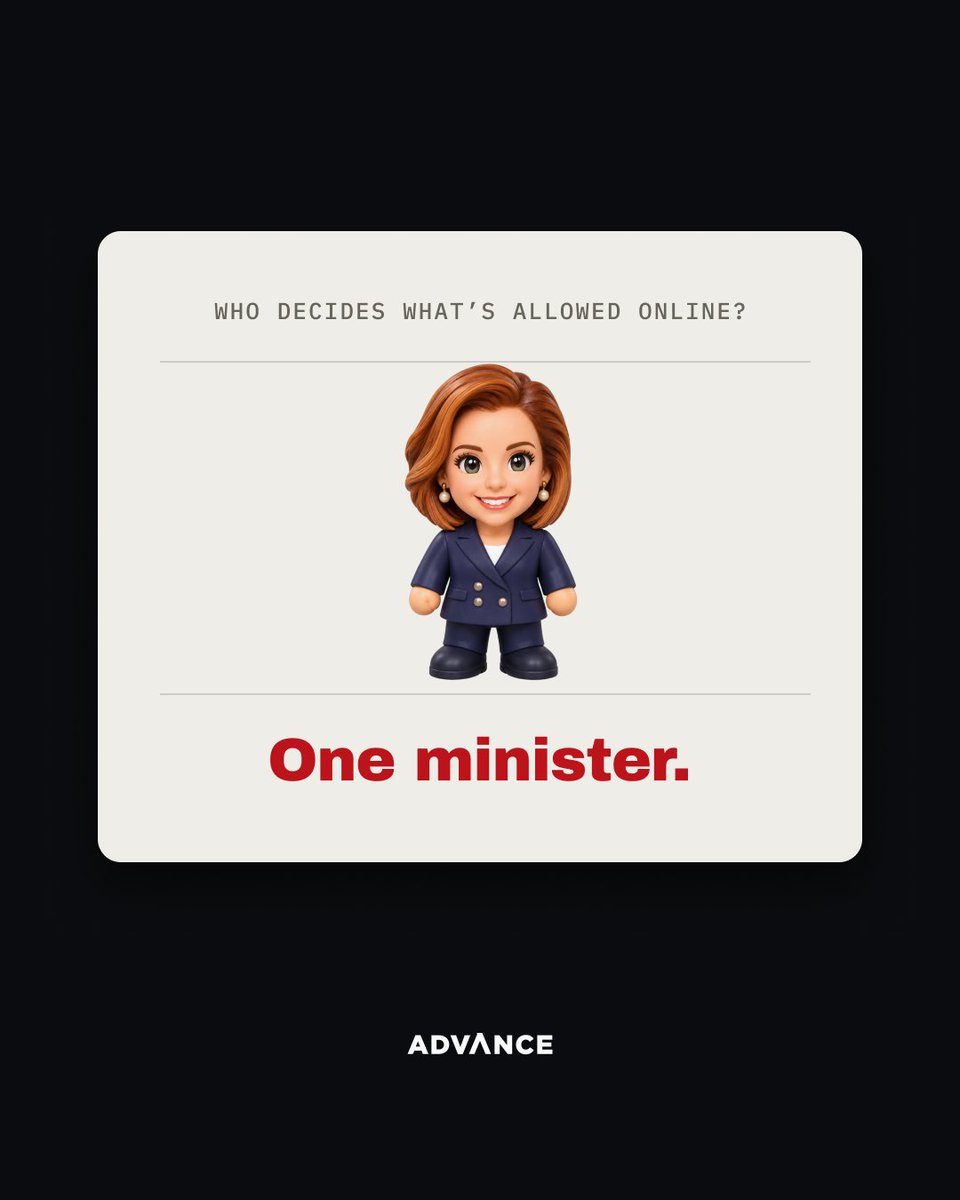
7. A Minister can add new categories later, by legislative instrument - to both the adult and children's lists, on being "satisfied" material "may cause serious harm" (ss 25C(1)(m), 25D(1)(f)(ii)). No fresh Act of Parliament required. The machinery outlasts today's categories.
8. Penalties are large. Breaching the duty carries a maximum of 60,000 penalty units - about $21.8m for an individual, and widely reported as nearly $110 million for a company (s 26B).
9. There is no carve-out for satire, journalism, art, fiction or political commentary. The only express exception is for lawful communications occurring in private solely between consenting adults (s 26(7)). Public expression gets no general protection on the face of the draft. https://t.co/3fkJk5xIhh
10. External review targets the regulator's decisions, not a platform's private ones. Platforms must run complaint processes (s 26F), and you can seek tribunal review of certain eSafety Commissioner decisions - but if a company quietly throttles your reach under its own risk policy, there's no equivalent route, and you often can't tell why it happened.
The core concern (this is an argument about incentives - not a quote from the Bill):
11. The structure rewards caution. Wrongly leaving harmful content up is visible: people complain, regulators act, fines follow. Wrongly suppressing lawful content is invisible: no one knows the post, creator or idea existed, and it costs the company nothing. Critics argue that asymmetry pushes platforms to over-remove lawful, borderline speech - and government never has to order anyone silenced for it to happen.
12. Suppression can be invisible. "Restriction" needs no formal ban. Content can simply stop being recommended, drop out of search, lose reach or lose hosting. A site can still exist while becoming practically undiscoverable - and if several services independently take the cautious option, an idea can quietly disappear from Australian discourse.
/1
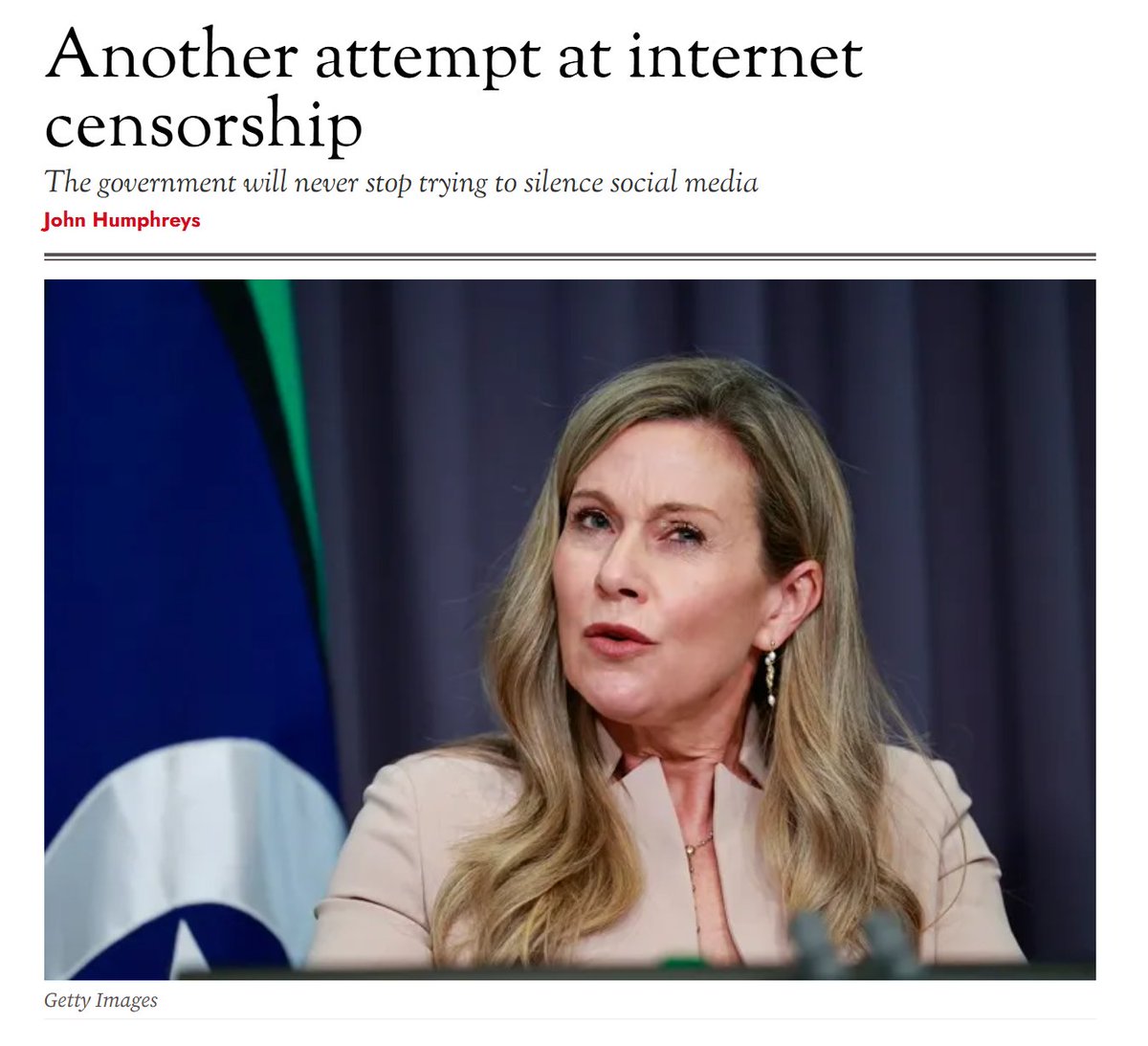
If only Anthony Albanese was as determined to make our country prosperous and reduce cost of living, as he is determined to censor us. His Govt just keeps trying to control our freedom to access information that he doesn’t like.
Social media scares the government - why else do they keep tabling legislation to silence it?
Their latest attempt is the 'Digital Duty of Care' - another bill named to imply 'safety' rather than silence.
Article | https://t.co/67Z85QLHLf
'New evidence has exposed Anthony Albanese personally announcing $6m for his local golf course before the grants programme was established, despite him denying any involvement'
Remember when an undeclared bottle of wine brought down a Premier....
https://t.co/1v3i7soQbY
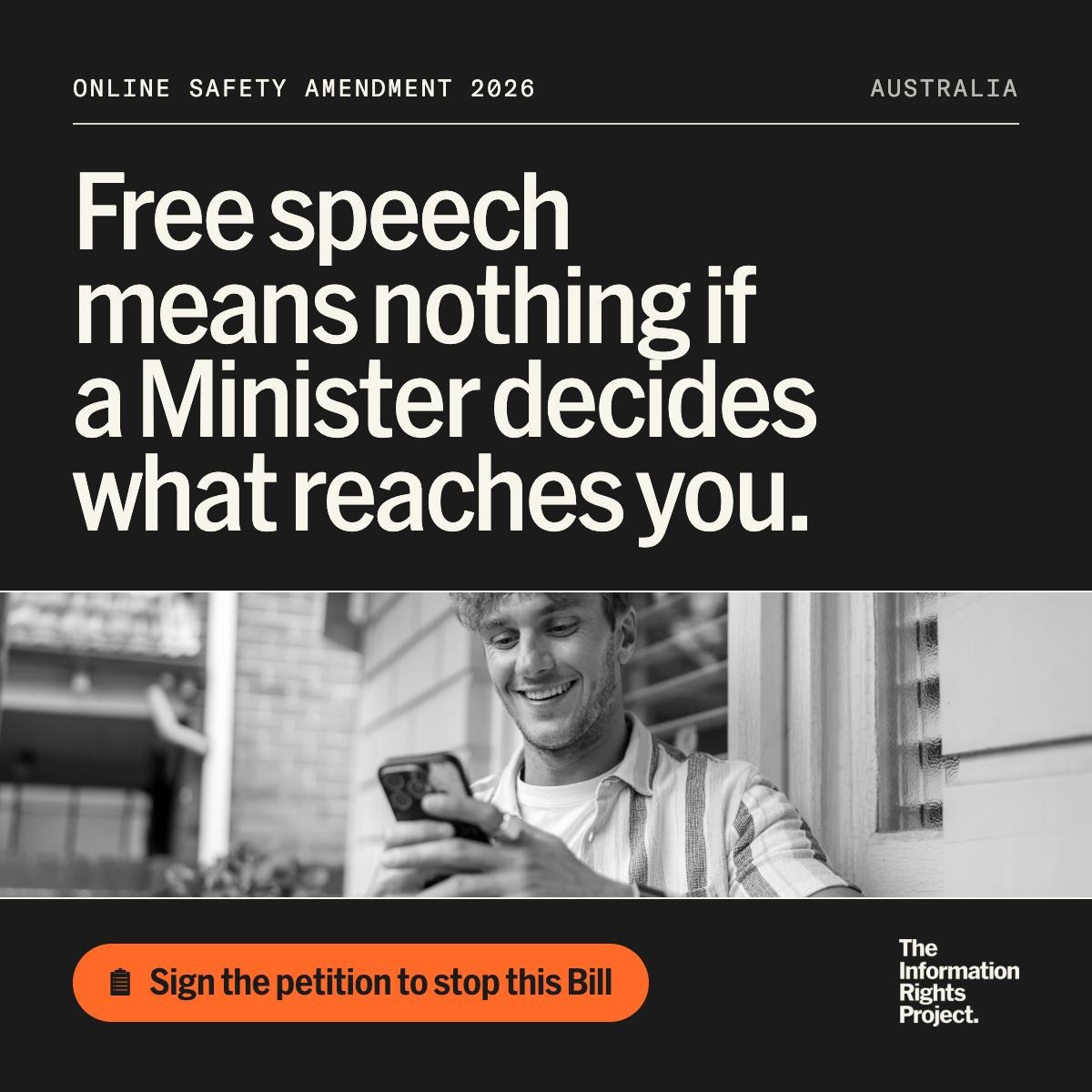
Free speech means nothing if a Minister decides what reaches you.
The government wants that decision. Australians should keep it.
Sign the petition to stop this Bill.
Free speech means nothing if a Minister decides what reaches you.
The government wants that decision. Australians should keep it.
Sign the petition to stop this Bill.
For the second time, Anthony Albanese and Penny Wong have voted against biological reality.
A woman is a woman. A man is a man.
They can keep denying common sense.
But Australians are watching and they'll get their say at the ballot box
This was an issue way back when I was an English Lit undergraduate in 1972 at Sydney University. And in 1990s I gave a guest lecture on the Christian worldview to Drama students at QUT in a course on Background to Drama.
About 20 years ago, Camille Paglia told me that she had to waste time in her art courses teaching basic Biblical literacy to her students, so they could understand the pictures. She sd the only students who had any clue were her black ones.
About 20 years ago, Camille Paglia told me that she had to waste time in her art courses teaching basic Biblical literacy to her students, so they could understand the pictures. She sd the only students who had any clue were her black ones.
People are speaking up.
Albanese’s Grandparents had the social house first, then his Mum was born there.
But her Dad owned a printing company?
The family had the house across three generations, over 70 years
His Mum holidayed in Europe for months, and now we hear Albanese was travelling extensively after school even taking a Contiki Tour while living in social housing. Is this what people in social housing do?
Albanese went to a private primary and secondary school, then started travelling. He had a fantastic early life
1984: At 21, first trip on a plane
1986: First overseas trip, Vanuatu with friend
1987: South East Asia including
-UN meeting in Bangkok
-Anzac Day dawn service at the Kanchanaburi War Cemetery (Thailand) with Liberal senator John Carrick
-A tour of Cambodia with Ingrid Hayden (daughter of then foreign minister Bill Hayden)
1988: At 25 Albanese had a big year of travel:
-Southern Africa: Zimbabwe, Zambia, Botswana
-Western Europe: on a Contiki tour
-Eastern Europe and Scandinavia as a backpacker
So, besides looking at an entitled little shit who grew up in a family culture that treats public money as a private inheritance.
It looks like by 24 he was already involved with the UN cult.
In 1984 he was also involved in student groups such as People for Nuclear Disarmament and Students Against Racism, which overlapped with broader left networks that supported the ANC (anti-apartheid work that tracked UN Special Committee Against Apartheid resolutions and campaigns) and nuclear-disarmament advocacy.
His 1988 “frontline states” - Zimbabwe, Zambia, Botswana, hosted liberation-movement offices and featured in UN General Assembly and Security Council debates on apartheid and regional destabilisation at the time.
Later he was a founding member and secretary of the Parliamentary Friends of Palestine, after a visit to Israel, the Palestinian Authority, Egypt and Jordan that included a meeting with Arafat, an Egyptian figure who led the PLO, a violent terror organisation that was behind the Munich 1972 attacks, hijacked buses and executed the passengers, stormed a school and held schoolchildren hostage with demands to release terrorists held in Israeli prisons and shot children, and the man behind the First Intifada, which murdered hundreds of Israelis.
There is more. But it's time to go to sleep.
'Houso Gate' is being used as a distraction from 'Golf Club Gate' but it simply reinforced the life time of grifting and lying narrative - the Albanese Pit of Lies is turning in to a sinkhole for Australian Labor
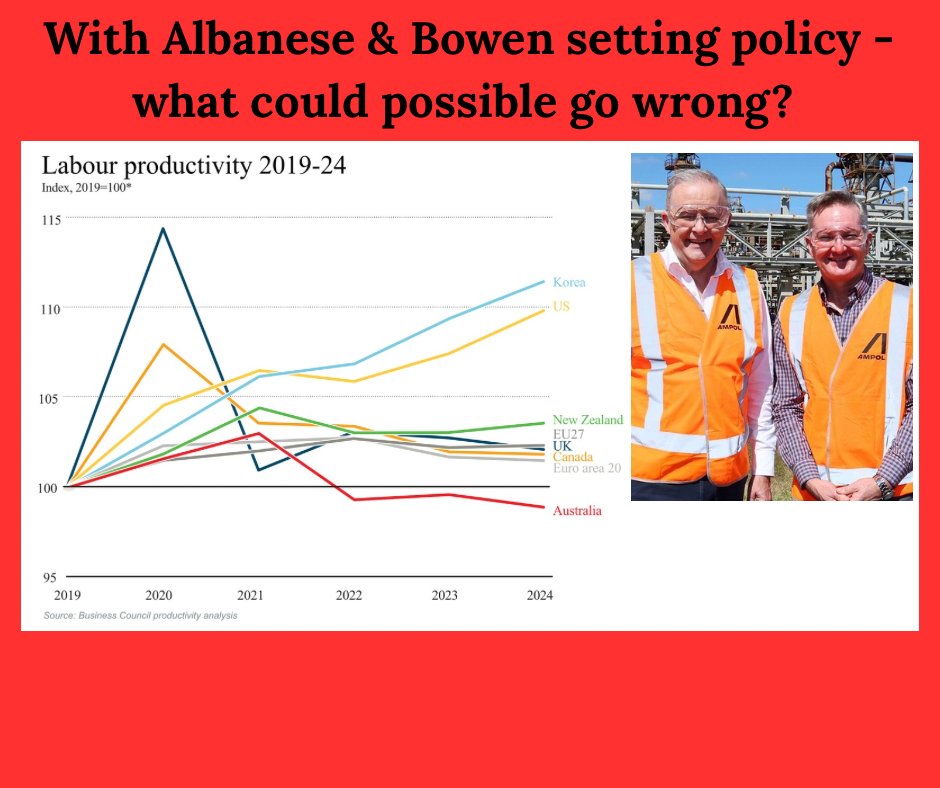
Chris Bowen has backflipped telling ABC 7.30 he "never quite bought all the hype on green hydrogen."
Labor has already poured more than $9 billion into it.
Australia holds more than one third of the world’s known uranium resources. Geoscience Australia ranks our economic uranium resources first globally. We are the fourth-largest producer.
We export the fuel. We ban the power.
Section 140A of the Environment Protection and Biodiversity Conservation Act 1999 and the matching prohibition in the Australian Radiation Protection and Nuclear Safety Act 1998 make it unlawful to approve a nuclear power plant. State bans sit on top of that.
The physics is settled. The operating technology is mature and, on the evidence, among the safer large-scale sources. Land use and emissions are low. Cost is not guaranteed for a first Australian plant, but the ban is not a cost finding, it is a statute that stops the country testing the option while selling the fuel and buying nuclear propulsion.
One Nation has now put a concrete alternative on the table: lift the ban, build nuclear capacity on the east coast, and keep existing gas/coal plants running while firm generation is built. That is how a country that still has industry keeps the lights on. You do not shut the last dispatchable plant and hope the weather cooperates.
CSIRO GenCost is cited as proof that nuclear is the expensive pathway. First-of-a-kind premiums are said to double costs. Construction is said to take too long for 2030 targets. Renewables plus batteries are sold as the cheapest route. Those claims treat a plant as an isolated line item and treat weather-dependent generation as if system cost, land, firming, and transmission do not exist.
Intermittent power generation from “renewables” requires overbuild, backup gas, and thousands of kilometres of new transmission wires, that are far from free, and consumes farmland and habitat at scale. Wholesale prices can fall on a windy afternoon while household bills and network charges stay high because the system still has to be rebuilt around plants that only work when the weather allows.
Nuclear is dispatchable. It occupies a small footprint. More than 400 commercial reactors already operate in other countries. France has run a majority-nuclear grid for decades. Dozens of countries are adding or examining nuclear because baseload is not an ideology. It is a requirement for local manufacturing and industry that create jobs in the private sector, generating real wealth.
The hypocrisy is ridiculous. Uranium is safe enough to mine, export, and put in a submarine, yet is apparently not safe enough to generate electricity in the country that owns the resource. Modelling that ignores reliability and land use is then used to keep the prohibition in place. Energy scarcity is treated as virtue and anyone who notices is called extreme.
What should happen is simple and lawful.
- Repeal the federal civil nuclear prohibitions so a plant can be assessed and licensed like any other major project.
- Repeal or amend the state bans that make even the assessment illegal.
- Keep operating coal and gas available until replacement firm capacity is actually on the grid, not until a target date on a slide.
- Assess proven large reactors against published international builds, not against a scare campaign.
- Use Australian uranium for Australian baseload before it is treated as a diplomatic export.
- Cut the approval theatre that turns every energy project into a decade of process.
A nation that exports the fuel and imports the blackouts has chosen decline. Lift the ban. Build firm power. Put Australian industry and households ahead of a modelling exercise that cannot keep a smelter running.
Should a country with the world’s largest uranium endowment remain the developed country that banned itself from using it?
Share this. Write to your MP. Demand the prohibition be repealed.
#NuclearForAustralia #EnergySovereignty #AustraliaFirst #SaveAustralia #LiftTheBan