I hope Linda Brakel's article "The Freudian Unconscious: Evolutionary Adaptation or a Mere Epiphenomenon?" will rekindle attempts to put psychoanalysis on a scientific foundation? Article linked below but send her a note to get a copy. [email protected]
https://t.co/rw6TqwDrcV
New on Nessays: "Why depression is difficult to explain." It is because most of our questions have no answers of the sort we seek. New questions reveal normal low mood to be a cloud of overlapping responses shaped by many different situations. See replies.
Martin Daly has shared a video of his wonderful recent talk about the early history of the Human Behavior and Evolution Society. It is full of nuggets about the people and ideas that gave birth to the field. I learned a lot and loved seeing the photos!
https://t.co/OLVB4IuGhG
This Nov. 6 Symposium in London will be a milestone for evolutionary psychiatry. My title is: "Why all psychiatry is not based on evolutionary biology...yet". But I don't yet know how to explain why evolutionary biology is missing from psychiatry. https://t.co/EjWY4SiBVF
@ClarkRo00735040@psychgeist52@JRBneuropsiq These are the resources organisms strive to get. Alas, effort to get one is often at the expense of efforts to get others. Life problems are inevitable.
In preparing my keynote address for this week's NIH NIDDK meeting, I am inspired by Robert Chevalier's articles on evolutionary nephrology. I look forward to talking with attendees about how evolutionary medicine can advance research. @isemph @NIDDKgov
https://t.co/ZdEEtnhoqJ
On my way to Atlanta to give a @EmoryUniversity Grand Rounds on Evolutionary Psychiatry and see old friends including Peter Ash and Mel Konner. It will be so satisfying to talk with people IRL about their research and practice and what an evolutionary framework offers and how hard it is to do it right.
This Prize helps to let everyone know about the best work in evolutionary medicine. Nomination takes only a minute. The chances of winning are greater than for any other prize of this size. https://t.co/q4rBFv2PaF
@TriCEM_NC@evmedasu@UmEhap@eseb_org@sse_evolution
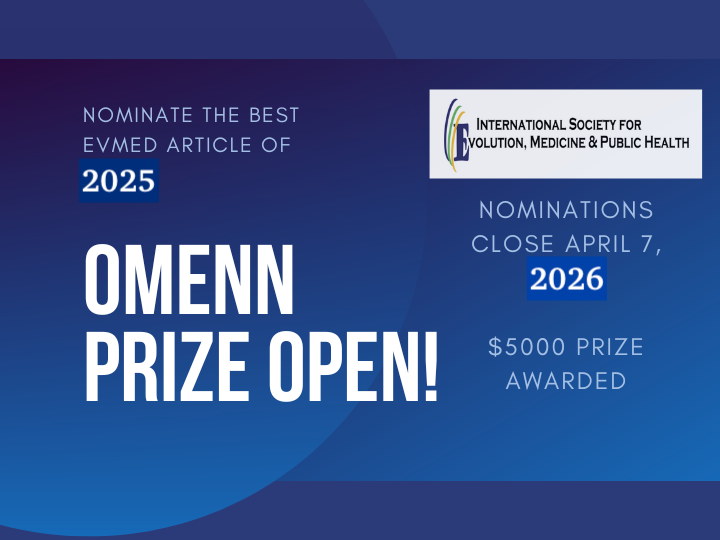
Nominate an article on evolution and medicine for the Omenn Prize of $5000 and a trip to the annual meeting of the International Society for Evolution, Medicine, and Public Health. Self-nominations are welcome. Details at https://t.co/g8N7i4t6fu
Only 3 more days to get a 20% discount on ISEMPH membership! Use code "EB2026" at checkout. Membership pays for itself if you come to even one meeting in 3 years. Register for the July meeting also, refund is easy if you can't make it after all. https://t.co/Z1REsT50IJ
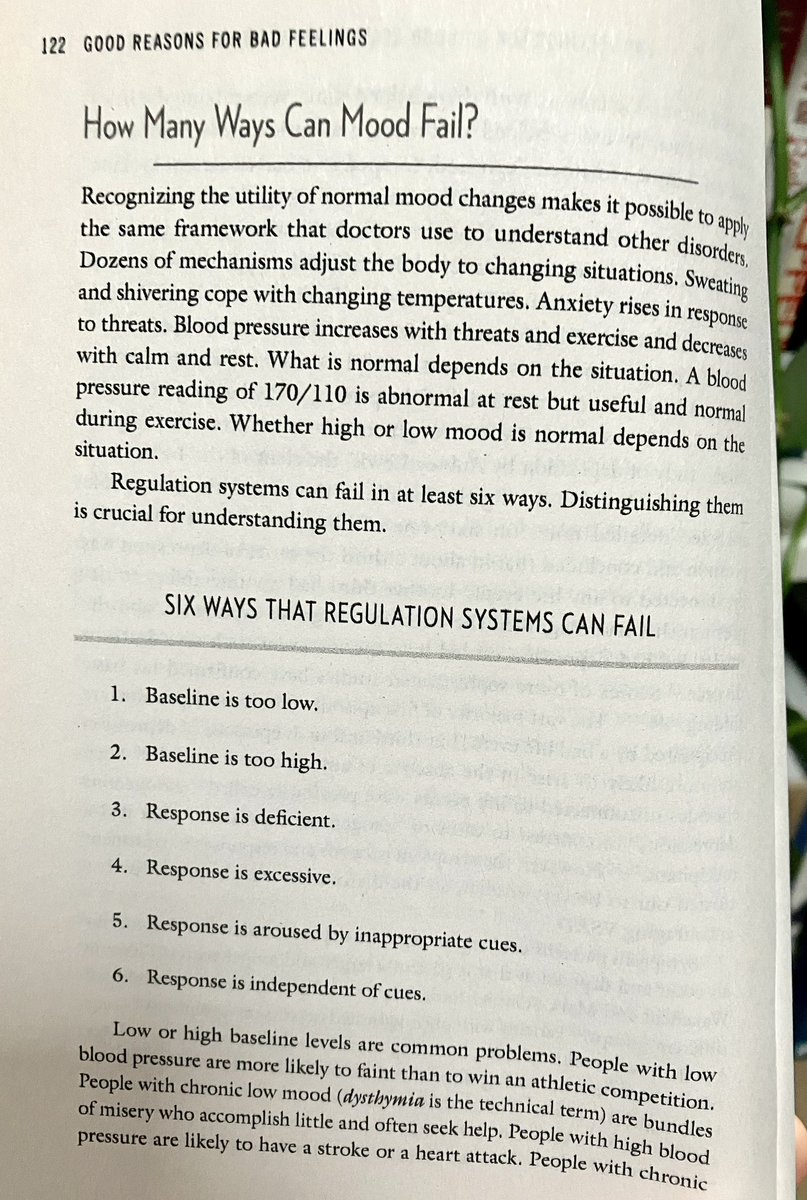
Viewing depression as a consistent condition with specific causes & functions is an understandable but serious mistake. The various aspects of low mood evolved to cope with the adaptive challenges in diverse related situations, and the control systems can fail for many reasons.
@ericweinstein Mood disorders such as depression, involve the problem of dimensionality —complex interactions of biology, conditioned life experience, environment.
It’s a shifting landscape of baselines and responses…
I’ve found the work or @RandyNesse helpful in exploring this