So you want to learn the proper ways to analyze charts?
Forget the modern books
Go back to the originals on classical charting to find out the rules on how charts should be interpreted
Schabacker's 1934 book - in hard cover
And Edwards & Magee (1948) - 6th edition OR OLDER ONLY. All editions newer than the 6th edition have been altered. The newer editions are simply spoofs - they have been altered irreparably
Order Schabacker here
https://t.co/GhY4hLGmrI
Sauna is one of the most effective health protocols I've done. Here is everything I've learned; it's the most robust characterization ever produced.
Results:
1) Fifteen sessions of sauna dramatically reduced environmental toxins in my body:
+ 65% drop in 2,4-D
+ 100% drop in MEP
+ 15% drop in MBP
+ 100% drop in MEHP (undetectable post sauna)
+ 56% drop in NAPR
+ 56% drop in HEMA
+ 100% drop in Perchlorate (undetectable post sauna)
2. Sauna eliminated 85% of microplastics from my ejaculate.
Nov 2024:
165 particles/mL
July 2025: 20 particles/mL
Nearly identical drop in my blood same time period:
Oct 2024: 70 particles/mL
May 2025: 10 particles/mL
3. Sauna, without ice on the boys, devastated my fertility markers.
Total Motile Count: –56%
Concentration: –30%
Motility: –50%
Morphology: –48%
Count: –9%
4. Sauna coincided with my fertility markers being at an all-time high. I have more total and motile sperm than 99.6% of men of any age, including men under 25.
+ total count: 600 M
+ concentration: 162 M
+ motility: 55%
+ total motile count: 330M
+ morphology (normal): 10%
We do not know what to make of these improvements. Was it the sauna? Sauna + ice? Ice only? We don't know but we did not identify any other protocols or lifestyle changes during this interval that would plausibly account for the change.
5. My vascular function improved by a ten year reduction in age. Now I have the vascular age of an elite 18-early 20s.
+ Central Systolic Blood Pressure: 96 mmHg
+ Central Pulse Pressure: 20 mmHg
+ Pulse Pressure Amplification: 160%
+ SEVR: 227%
+ Augmentation Pressure: 1 mmHg
+ Augmentation Index Wave: 3%
+ Traditional blood pressure: 107/75 mmHg
6. What type of sauna?
Use a dry sauna with high temperatures between 80-100°C (176 to 212°F) and 5-20% relative air humidity. Aim for the lower end of this spectrum, especially as a beginner. Higher temperatures closer to the boiling point can cause side effects like headaches and severely dried nose and eyes.
Note: Steam baths, hot tubs, and infrared saunas fail to replicate the same effects because they do not allow you to safely reach the required high temperatures and do not induce the same level of sweating, the necessary inverted (skin-to-core) temperature gradient, and the massive re-direction of blood to the skin with resulting vasodilation.
Dry sauna is unique, and very likely superior to wet (steam bath) and infrared saunas. By heating up your skin way faster than your core, dry hot sauna flips your core skin temperature gradient, eliciting the following hormetic benefits:
+ enhanced blood flow: the heart pumps up to 70% more blood, similar to intense aerobic exercise (zone 2-+ increased sweating for detoxification: to maintain a stable core temperature, the skin produces 0.6-1 liter of sweat per hour, facilitating significant detoxification.
+ improved heat tolerance: the body becomes better at handling heat, leading to a lower core body temperature (offering metabolic advantages)
+ safe activation of heat shock proteins: the skin experiences substantial heat shock protein activation, while a modest 1°C increase in core temperature is sufficient to activate these proteins without the risk of hyperthermia.
+ extended Exposure at higher temperatures: dry saunas are more tolerable for longer durations and at higher temperatures, maximizing the benefits.
7. Sauna protocol and frequency
Type: hot dry sauna
Temperature: 176–212°F ( I do 200°F)
Relative air humidity: very low, 5-20%
Duration: 20 min
Frequency: 4–7x a week
8. Heat Protection
If you'd like, you can protect your head from the heat by wearing a sauna hat or wrapping it with a towel (use only cotton or other 100% natural material). You can breathe through a towel or cloth if needed to protect your nose. I am personally fine not doing this.
Most importantly, ice the balls.
Icing the testicles is absolutely required to prevent heat from damaging fertility markers.
+ Ice the testes during the sauna session.
+ Use a non-toxic, reusable ice pack material.
+ Wear cotton boxers and shorts.
+ Place ice packs in between the boxers and shorts.
+ Keep them in place for the entire session.
Men should care about preserving fertility markers even when they are not trying to conceive. Sperm quality is tightly coupled to testicular function, which governs testosterone production, metabolic health, and long term endocrine stability. When fertility parameters decline, the same upstream dysfunction often drives lower testosterone, higher inflammation, and increased cardiometabolic risk.
9. Hydration
Dry sauna induces sweating as part of its beneficial mechanism. Be sure to hydrate properly. In general, you might need to rehydrate with up to 16–32 oz (0.5–1 L) of fluid after a sauna session. Be sure to add electrolytes.
If you want to be precise, measure your sweat amount and electrolytes (saltiness) using a patch (e.g., from Gatorade) to quantify your liquid and electrolyte loss, and rehydrate accordingly. Some people have saltier sweat than others and must ensure they replenish electrolytes as well as water.
My results: my body sweats 18 oz during a 20 min sauna at 200 °F, with a sodium concentration of 25-39 mg/oz. A single sauna session flushes 450–700 mg of sodium out of my body.
#
I wish you all the best in life my friend. A new era or being human is here. One where existence is the highest virtue. Prioritize sleep, daily exercise and eat well and you'll be in a strong position. Try to avoid the bad stuff. Anything that takes away your agency.
Be a warrior and caretaker of existence. Don't Die.
For Anyone Looking for a Little Hopium…
Here’s something worth noticing, on the stablecoin dominance chart (left), we’re now testing the same zone that rejected twice before and both of those rejections aligned with major Bitcoin pivots.
First rejection → BTC rallied from $49K to $108k
Second rejection → BTC rallied from $74K to $124k
Now dominance is tapping that zone again.
Could it push slightly higher into the upper bound? Sure. But historically, this area has been where capital rotates out of stables and into risk.
And when you overlay that behavior on Bitcoin’s price action… Price has consistently outperformed whenever dominance rejected from here.
So if the “powers that be” want to take Bitcoin higher, the positioning is already favorable. Dominance is stretched into a zone that has previously fueled upside expansion.
Naturally, the only thing you don’t want to see here is a clean break of structure to the upside on dominance.
If dominance starts breaking above this zone with strength, it shifts from “potential reversal” into “risk-off continuation.”
This isn’t prediction, just a reminder that the structure here is much more bullish than most people realize when viewed from this angle.
Sometimes hopium is delusion. Other times hopium is simply seeing what the chart is actually showing you.
First off, I want to say that a lot of the things I'll share soon are things I am currently learning a lot more about from some pretty talented people in finance that I've been lucky enough to meet. So in saying that, they deserve the credit. Especially in helping me construct my investing (not trading) portfolio. I am a student currently. Just sharing, what I'm learning, and not by any means an expert in.
This will cover a multi-strategy portfolio. There is the core position, or the alpha engine. A yield anchor, convex diversifiers, orthogonal bets, and sizing discipline. The portfolio is "engineered" based on correlation architecture.
Most people only have beta, or believe that owning 5 different cryptos or 5 different stocks is diversifying when it's really all the same trade, if the market goes down it tends to all go down and vice versa. So we'll go into that as well.
But for this, this is my largest tranche of money now. It CAN underperform to the upside, but it greatly limits the downside, and overall it gives extremely smooth consistent returns, with low volatility. Will use this post as a start point
Credit Cycle Blow-Off: The Boom Before the Bust:
ALL OF THE PLAYBOOKS ARE LINKED BELOW AND FREE:
- Credit Cycle Playbook
- Path Dependent Framework For Capital Flows
- The S&P 500 Macro Regime Playbook
- The Bitcoin Macro Regime Playbook
- Interest Rate Trading Playbook
- Macro Thesis Development Playbook
- Consumer Macroeconomic Playbook
Shortcut to separate the wheat from the chaff:
- many charlatans will try to attract attention with impressive performance numbers, 30% CAGR, 40% CAGR.
The only metric that matters is the Calmar ratio
- CAGR/MaximumDrawdown
Any Calmar much lower than 1 is bad.
So a 30% CAGR with 50% MaXDD is worse than a 15% CAGR with 20% MaxDD (0.6 Calmar vs. 0.75 Calmar).
Dont let the CAGR fools you.
Anyone can get a high CAGR with enough leverage, but leverage works both ways and it will show up in the drawdowns.
Good Calmar(s) are from 0.8 upward.
Calmar above 1 starts to be excellent and worth your time and attention.
Believing that you KNOW what will happen is a major flaw
Play your EDGE, follow your plan, & happily live w/ the results
“A probabilistic mind-set pertaining to trading consists of five fundamental truths.
1. Anything can happen.
2. You don’t need to know what is going to happen next in order to make money.
3. There is a random distribution between wins and losses for any given set of variables that define an edge.
4. An edge is nothing more than an indication of a higher probability of one thing happening over another.
5. Every moment in the market is unique."
Immerse yourself in Benjamin Bardou's groundbreaking "Memories of an Exhibition," a captivating 500-piece AI-generated art collection available now on BrainDrops (https://t.co/TpHm27IVwv).
About the Artist:
Bardou is a renowned French visual artist, filmmaker, and visionary in the world of point clouds and volumetric video. His striking work, often exploring themes of cities, memories, and dreams, has led to collaborations with industry giants like Apple, Microsoft, and Ridley Scott.
About "Memories of an Exhibition":
In "Memories of an Exhibition," viewers are transported into a dreamlike state, drifting through Bardou's imagined memories inspired by history's master painters. Colors dance and swirl in mesmerizing displays, hinting at familiar artworks yet presenting them in a fresh, evocative way.
Each video piece is accompanied by a captivating soundtrack, further enhancing the immersive experience. While the titles are fictional, they subtly allude to the inspiration behind each work. Bardou's experimentation with AI reflects his own artistic techniques, revealing a parallel between memory and latent space – both shaped by collective experiences.
The Creative Process:
Thousands of images form the basis of each piece, meticulously transformed into point clouds. Depth of field and camera tracking are masterfully employed, while specific rendering techniques evoke traditional mediums like oil paints and pastels.
Learn More:
To explore @benjaminbardou's extensive body of work and past projects, be sure to visit his website.
This is a great summary of concepts from Thinking Fast and Slow. Which arguably is one of the best books that I recommend to people when they ask me what to read before stepping into markets.🔥
The Strategy from Saylor and $MSTR is truly brilliant.
Here is a run down based on his most recent interview :
- Saylor's approach involves selling the 100 vol asset (shares) and purchasing the 75 vol asset (Bitcoin).
- This creates a volatile balance sheet, resulting in a volatile stock, which generates demand in the options market.
- The options market allows opportunities to borrow money at under 1% interest for 6 years to reinvest in Bitcoin.
- The strategy leverages the 75 vol asset to emulate a 100 vol asset, perpetuating the cycle of stock swings.
- His recent interview highlights the brilliance of this approach. Consider revisiting the interview to appreciate the strategy's depth.
Check it out here
The Overlap of Crypto/AI:
[Part 1/2]
What is Decentralized AI?
In the swiftly evolving digital era, the emergence of decentralized AI represents a groundbreaking shift towards a more equitable, secure, and innovative technological future. This paradigm shift seeks to address the centralization concerns prevalent in the current AI landscape, characterized by a few dominant entities controlling vast amounts of data and computational resources. decentralized AI, by leveraging blockchain technology and decentralized networks, promises a new era where innovation, privacy, and access are democratized.
The last decade has witnessed unprecedented advancements in AI, propelled by breakthroughs in machine learning, particularly deep learning technologies. Entities like OpenAI and Google have been at the forefront, developing models that have significantly pushed the boundaries of what AI can achieve. Despite the success, this rapid advancement has led to a concentration of power and control, raising concerns over privacy, bias, and accessibility.
In response to these challenges, the concept of decentralized AI has gained momentum. decentralized AI aims to distribute the development and deployment of AI across numerous independent participants. This approach is not just a technical necessity but a philosophical stance against the monopolistic tendencies seen in the technology sector, especially within AI.
The Necessity of Decentralized AI
The integration of blockchain technology into AI frameworks introduces a layer of transparency, security, and integrity previously unattainable in centralized systems. By recording data exchanges and model interactions on a blockchain, decentralized AI ensures that AI operations are verifiable and tamper-proof, fostering trust among users and developers alike.
One of the cornerstone challenges decentralized AI addresses is data management. In a decentralized AI ecosystem, data ownership remains with the individuals, who can choose to contribute their data for AI training in a secure, anonymous manner. This not only enhances privacy but also encourages the development of more diverse and unbiased AI models.
Decentralized AI proposes a novel approach to computational resource allocation, where individuals can contribute their computing power to AI model training processes. This peer-to-peer network model ensures a more equitable distribution of computational resources, making AI development accessible to a broader audience. To motivate participation in the AI network, tokenization mechanisms are employed - this isn’t possible in the walled gardens of centralized AI incumbents. Before we dig deeper, here is a market map of the decentralized AI landscape, courtesy of Galaxy:
Contributors of data and computational resources are rewarded with tokens, which can be used within the ecosystem or traded, creating an economy around AI development and deployment. While decentralized AI presents a promising solution to many of the current AI ecosystem's flaws, it is not without challenges. Issues such as network scalability, consensus mechanisms for model training, and ensuring the quality of data in a distributed system are critical areas requiring further progress.
Despite these challenges, the potential of blockchain-enabled AI for fostering continued success and inclusivity is quite high. By lowering the barriers to entry for AI development and ensuring a more diverse data pool, decentralized AI could lead to the creation of more robust, ethical, and innovative AI solutions.
As AI continues to evolve, it will also necessitate a reevaluation of current policies and regulations surrounding AI and data privacy. A distributed landscape offers a unique set of challenges and opportunities for lawmakers, necessitating a balanced approach that fosters innovation whilst protecting individual rights. The future of AI is not just about technological advancement but also about reimagining the governance and economic models underpinning AI development. As we move forward, the focus will increasingly shift towards ensuring that AI serves the broader interests of society, promoting fairness, transparency, and inclusivity.
The journey towards a decentralized AI ecosystem is fraught with technical, ethical, and regulatory challenges. The promise of a more equitable, secure, and innovative future makes this a worthy endeavor. As we stand at the precipice of this new era in AI, it is crucial for stakeholders across the spectrum to collaborate, innovate, and navigate the complexities of decentralized AI, ensuring that the future of AI is democratized, and beneficial for all.
Verification Mechanisms
One of the major benefits of decentralized AI involves the confirmation of outputs. When users typically interact with closed source LLMs, they aren’t able to properly verify the model they’re said to be using is actually that model. With decentralized AI, there are various approaches being taken to help eliminate this issue. Some believe optimistic fraud proofs (optimistic ML) are superior, while others believe in zero-knowledge proofs (zkML) - there isn’t a correct answer to this question yet.
Blockchains are designed to be immutable, cryptographically verifiable ledgers for peer-to-peer payments - the integration of blockchain technology into artificial intelligence systems is a massive opportunity for two growing industries to complement each other in a mutually beneficial way. If you’re of the belief that blockchains are here to stay and will integrate with traditional financial systems for the better, why not advocate for blockchains extending their utility into machine learning as well?
Optimistic machine learning involves verification but on the pretense of trust. All inferences made are assumed to be accurate, similar to optimistic rollups on Ethereum that trust a blockchain’s state is accurate unless proven otherwise. Various approaches are being taken by projects to implement this technology but most utilize a system with watchers and verifiers, where malicious outputs are spotted by watchers after verifiers have correctly proven the outputs to be correct. Optimistic machine learning is a favorable approach as in theory, it can work as long as a single watcher is being honest - but a single individual or actor can’t correctly check every output, and while the optimistic approach is cheaper than zero-knowledge proofs, the costs unfortunately scale linearly.
Zero-knowledge proofs are more efficient, as proof sizes do not scale linearly with model size. The mathematics behind zero-knowledge proving is quite complex, though has become more accessible thanks to projects like Starknet, zkSync, RiscZero and Axiom developing rollups and middleware technology to extend the benefits of zero-knowledge proving to blockchain technology. Given the nature of zero-knowledge proofs, they are essentially a flawless choice for verifying outputs - you cannot cheat the math behind them. Unfortunately for decentralized AI, using this technology at scale with large models is extremely expensive and not currently feasible. Despite this reality, many projects are building out infrastructure for the gradual integration of zero-knowledge technology and are making positive strides in this sector.
Data and Infrastructure
LLMs are trained on immense amounts of data. There is a great deal of work that’s done between pre-training a model and getting it production ready for general use. The pre-training stage is one that involves gathering data from wherever available, tokenizing it to feed into a model and finally curating it to make sure the model learns from its now vast knowledge base. In the context of decentralized AI, blockchains are almost a perfect fit given the immutable catalogs of data available on-chain, in an unadjustable format. While this is true, blockchains are not yet capable of computing over that much data. Even the most performant blockchains in the space can do no more than 100 transactions per second, with more than that out of the equation for the foreseeable future.
There are numerous decentralized AI projects that reward users for their submission of data, with the aforementioned verification process being applied afterwards to ensure quality submissions. Integrating crypto economic reward mechanisms enables users to take part in the creation of large, open source models that can potentially one day compete with the centralized alternatives dominating the market. As it stands, very few teams have accumulated the scale of data available to centralized models - though this is alright, given just how nascent the sector of decentralized AI is.
In the context of decentralized AI there isn’t a standardized mission for all of these protocols, as they’re all targeting different approaches and competing as more protocols begin to launch and fight over compute. Teams are still deciding how to best incentivize their users, but also exploring what types of data will be most useful for them. Blockchains have so much data it would be quite tedious to sift through all of it, and many teams are building structured products and applications for non-AI crypto projects to more easily integrate. There are also a few projects that are aiming to corner the market on data or shape it into incredibly useful, streamlined products for end users - more on this in a later section. Regardless of its immediate applicability, there is a war for data occurring in the traditional world of machine learning and decentralized AI is no different.
Platforms for collaboration of AI and Crypto
While still quite early into its lifecycle, decentralized AI is already seeing platforms develop for entire decentralized AI ecosystems and product suites built with the future in mind. OpenAI is the best real world example of a successful AI lab that’s been able to develop additional products on top of brilliant models. In crypto there is still a large gap between innovation and usage, even outside of decentralized AI.
Teams building within the decentralized AI space are taking various approaches to platform building. Some are focusing on consumer platforms that utilize models and appealing UX, others are working on infrastructure for autonomous agents and others are building large networks with subnetworks for other models operating underneath. There isn’t an example of a winning approach or what will work in the long run, so different strategies are unfolding as more developers enter the space.
These will be looked at in the next sections, though we will first make a few distinctions. The idea of decentralized platforms is a little ambiguous - most of these protocols do have bold enough visions that their ideas might be misconstrued as platforms. For the sake of simplicity, we’ll define a decentralized AI platform as any product that’s built to stand on its own with an eventual ecosystem of additional apps built atop it. There are numerous GPU marketplaces being built in the decentralized AI sector, and while technically these are platforms, they are limited in scope and are usually built with different goals than the protocols we will discuss.
A closer look at the decentralized AI ecosystem
With that context, we can take a look at a handful of the most promising protocols across these various subsectors. There are many more that could be analyzed, though we chose a more curated list to try and provide as diverse of an example base as possible. For more information on decentralized AI, there are a few excellent reports written here and here.
Ritual, Ora, Truebit and Modulus
Starting with @ritualnet, this is a very unique protocol that’s been seeing significant interest from nearly every corner of the crypto industry. Founded by a team of experienced builders in the crypto and AI space, Ritual is envisioned as an open, modular, and sovereign execution layer for AI.
The core of Ritual is Infernet, a decentralized oracle network (DON) optimized for AI that is already live and operational. Infernet allows existing protocols and applications to seamlessly integrate AI models without friction, by exposing powerful interfaces for smart contracts to access these models for inference. This enables a wide range of use cases, from advanced analytics and predictions to generative AI applications running on-chain.
Beyond Infernet, Ritual is also building its own sovereign blockchain with a custom VM to service more advanced AI-native applications. This chain will leverage cutting-edge cryptography like zero-knowledge proofs to ensure scalability and provide strong guarantees around computational integrity, privacy, and censorship resistance - issues that plague the current centralized AI infrastructure. Ritual's grand vision is to become the "schelling point" for AI in the crypto space, allowing every protocol and application to leverage its powerful AI capabilities as a co-processor.
Ora is a crypto project that is pioneering the integration of artificial intelligence directly onto the Ethereum blockchain. Ora's central offering is the Onchain AI Oracle (OAO), which enables developers, protocols, and dApps to leverage powerful AI models like LlaMA2, Grok, and Stable Diffusion right on the Ethereum mainnet.
Ora's innovation lies in its use of optimistic machine learning to create verifiable proofs for complex ML computations that can be feasibly verified on-chain. This unlocks a new frontier of "trustless AI" - AI models and inferences that can be trustlessly integrated into blockchain applications, with robust cryptographic guarantees.Beyond just inference, Ora envisions a wide range of use cases for on-chain AI, from predictive analytics and asset pricing to advanced simulations, credit/risk analysis, and even AI-powered trading bots and governance systems.
The project has also introduced the "opp/ai" framework, which combines the benefits of opML and zero-knowledge ML (zkML) to provide both efficiency and privacy for on-chain AI use cases.Ora is building an open ecosystem around its Onchain AI Oracle, inviting developers to integrate their own AI models and experiment with the myriad possibilities of trustless AI on Ethereum. With its strong technical foundations and ambitious vision, Ora is poised to be a key player in the emerging intersection of crypto and artificial intelligence.
Truebit is a groundbreaking platform that aims to change the way developers build and deploy decentralized applications. Truebit offers a verified computing infrastructure, enabling the creation of certified, interoperable applications that can seamlessly integrate with any data source, interact across multiple blockchains, and execute complex off-chain computations.
The key innovation behind Truebit is its focus on "transparent computation". Rather than relying solely on on-chain execution, Truebit leverages a decentralized network of nodes to perform complex computations off-chain, while providing cryptographic proofs of their correctness. This approach allows developers to unlock the full potential of Web3 by offloading the majority of their application logic to the Truebit platform, without sacrificing the trustless guarantees and auditability that blockchain-based systems provide.
The Truebit Verification Game is the central mechanism that ensures the integrity of off-chain computations. Multiple Truebit nodes execute each task in parallel, and if they don't agree on the output, the Verification Game forces them to prove their work at the machine code level. Financial incentives and penalties are used to gamify the process, incentivizing correct behavior and penalizing malicious actors.
This transparency and verification process is the key to Truebit's ability to securely integrate decentralized applications with off-chain data sources and services, such as AI models, APIs, and serverless functions. By providing "transcripts" that document the complete execution of a computation task, Truebit ensures that the output can be verified and trusted, even when it originates from centralized web services.
Truebit's architecture includes a "Hub" that oversees the Verification Game, while also being policed by the decentralized nodes. This two-way accountability, inspired by techniques from the DARPA Red Balloon Challenge, helps to resist censorship and further strengthen the trustless guarantees of the platform.
Modulus provides a trusted off-chain compute platform that addresses a critical challenge faced by blockchain-based systems - the limitations of on-chain computation. Modulus utilizes a specialized zk prover that’s extendable to other projects across the industry, with Modulus having partnered with Worldcoin, Ion Protocol, UpShot and more. Modulus also offers its very own API on top of other machine learning APIs, letting them horizontally scale as the industry grows and begins to adopt more AI processes into existing applications.
By leveraging cutting-edge cryptographic techniques, Modulus enables developers to seamlessly integrate complex off-chain computations, such as machine learning models, APIs, and other resource-intensive tasks, into their dApps. This is achieved through Modulus' decentralized network of nodes that execute these computations in a verifiable and trustless manner, providing the necessary cryptographic proofs to ensure the integrity of the results.
With Modulus, developers can focus on building innovative dApps without worrying about the complexities and constraints of on-chain execution. The platform's seamless integration with popular blockchain networks, such as Ethereum, and its support for a wide range of programming languages and computational tasks, make it a powerful tool for building the next generation of decentralized applications.
Grass, Ocean and Giza
Grass is a revolutionary decentralized network that is redefining the foundations of artificial intelligence development. At its core, Grass serves as the "data layer" for the AI ecosystem, providing a crucial infrastructure for accessing and preparing the vast troves of data necessary to train cutting-edge AI models.
The key feature driving Grass to data acceleration is its decentralized network of nodes, where users can contribute their unused internet bandwidth to enable the gathering of data from the public web. This data, which would otherwise be inaccessible or prohibitively expensive for many AI labs to obtain, is then made available to researchers and developers through Grass's platform. By incentivizing ordinary people to participate in the network, Grass is democratizing access to one of the most essential raw materials of AI - data!
Beyond just data acquisition, Grass is also expanding its capabilities to address the critical task of data preparation. Grass wishes to become the definitive data layer, not only for crypto, but eventually for all of AI. It’s difficult to imagine a world where a blockchain project uproots an entire industry, though traditional finance is already slowly becoming more interested in the idea of immutable blockchain tech - why not the AI industry as well? Grass might be able to cut down on costs and incentivize users to become the premier marketplace for data, not just the premier crypto marketplace for data.
Through its in-house vertical, Socrates, Grass is developing automated tools to structure and clean the unstructured data gathered from the web, making it AI-ready. This end-to-end data provisioning service is a game-changer, as data preparation is often the most time-consuming and labor-intensive aspect of building AI models.
The decentralized nature of Grass is particularly important in the context of AI development. Many large tech companies and websites have a vested interest in controlling and restricting access to their data, often blocking the IP addresses of known data centers. Grass's distributed network circumvents these barriers, ensuring that the public web remains accessible and its data available for training the next generation of AI models.
Ocean Protocol is a pioneering decentralized data exchange protocol that is attempting to disrupt the way artificial intelligence and data are accessed and monetized. At the heart of Ocean's mission is a fundamental goal - to level the playing field and empower individuals, businesses, and researchers to unlock the value of their data and AI models, while preserving privacy and control.
The core of Ocean's technology stack is centered around two key features - Data NFTs and Datatokens, and Compute-to-Data. Data NFTs and Datatokens enable token-gated access control, allowing data owners to create and monetize their data assets through the use of decentralized data wallets, data DAOs, and more. This infrastructure provides a seamless on-ramp and off-ramp for data assets into the world of decentralized finance.
Complementing this is Ocean's Compute-to-Data technology, which enables the secure buying and selling of private data while preserving the data owner's privacy. By allowing computations to be performed directly on the data premises, without the data ever leaving its source, Compute-to-Data addresses a critical challenge in the data economy - how to monetize sensitive data without compromising user privacy.
Ocean has cultivated a thriving ecosystem of builders, data scientists, OCEAN token holders, and ambassadors. This lively community is actively exploring the myriad use cases for Ocean's technology, from building token-gated AI applications and decentralized data marketplaces to participating in data challenges and leveraging Ocean's tools for their data-driven research and predictions.
By empowering individuals and organizations to take control of their data and monetize their AI models, Ocean is paving the way for a more equitable and decentralized future in the realm of artificial intelligence and data-driven progress.
Giza is on a mission to revolutionize the integration of machine learning (ML) with blockchain technology. Leading the way for Giza is its Actions SDK, a powerful Python-based toolkit designed to streamline the process of embedding verifiable ML capabilities into crypto workflows.
The technology powering the Actions SDK is the recognition of the significant challenges that have traditionally hindered the seamless fusion of AI and crypto. Giza's team identified key barriers, such as the lack of ML expertise within the blockchain ecosystem, the fragmentation and quality issues of data access in crypto and the reluctance of protocols to undergo extensive changes to accommodate ML solutions.
The Actions SDK addresses these challenges head-on, providing developers with a user-friendly and versatile platform to create and manage "Actions" – the fundamental units of functionality within the Giza ecosystem. These Actions serve as the orchestrators, coordinating the various tasks and model interactions required to build trust-minimized and scalable ML solutions for crypto protocols.
At the core of the Actions SDK are the modular "Tasks," which allow developers to break down complex operations into smaller, manageable segments. By structuring workflows through these discrete Tasks, the SDK ensures clarity, flexibility, and efficiency in the development process. Additionally, the SDK's "Models" component simplifies the deployment and execution of verifiable ML models, making the integration of cutting-edge AI capabilities accessible to a wide range of crypto applications.
Morpheus, MyShell and Autonolas
Morpheus represents a significant advancement in the field of artificial intelligence, specifically tailored for the crypto environment. Launched on September 2nd, 2023, Morpheus introduces an innovative framework for deploying personal general-purpose AI agents, known as Smart Agents, across a peer-to-peer network. The primary objective of Morpheus is to facilitate the interaction of users with decentralized applications , digital wallets, and Smart Contracts, thereby making the technology more accessible to a broader audience. The project's Yellow Paper provides a comprehensive technical overview, highlighting its ambition to bridge the gap between complex crypto technologies and everyday users through an open-source approach.
Central to Morpheus's architecture is its incorporation of several key technologies: a crypto native wallet for secure key management and transaction signing, a large language model trained on extensive data (including blockchains, wallets, DApps, DAOs and Smart Contracts), and a SmartContractRank algorithm designed to evaluate and recommend the most suitable Smart Contracts to users. Additionally, Morpheus leverages a sophisticated storage solution for the long-term retention of user data and connected applications, ensuring that Smart Agents can draw upon a comprehensive context for their operations.
Most investors have never traded through a period of rising global conflict, so these discrete instances provide useful perspective on how such events impact global markets.
It also highlights that most investors are poorly prepared, with a huge bet on peace. Stocks down:
What other portfolio options have the potential to work in this post-Moderation era? In my view, equities of course, plus some bonds, but also hard assets like gold, Bitcoin, and commodities, plus high yield corporates and TIPS. Plus, with bonds no longer providing a port in the storm, there’s a strong case to be made for alts, i.e., uncorrelated assets like managed futures, equity long/short, and absolute return.
Today’s diversification is not what most of us are used to. Welcome to the “alt-60/40” era.
Time to study risk management:
If you enter the market with 25% exposure, let's say five 5% positions using 8% stop loss and you get stopped on every single trade, you lose 2%.
Do the same thing 2 more times, your total loss is 5,88%.
And that is if you lose 15 trades in a row betting the same size.
This is a quote by Mark Minervini, and it has stuck with me forever since.
Since I never ape everything into every bet, I will never make astronomically gains on the upside.
But this also prevents me from huge drawdowns.
Psychology Write up
In this write up I will be covering my views on the topic & aiming to pass some of my experience from my time as a trader
Psychology is often outlooked & over simplified but is the area traders should focus on the most. Lack of understanding self is the Achilles heel for us, trader or not
Why do we all fail to tackle this topic? It's painful to look inward & view self in an honest light
If you can accept responsibly & come out the other side of things, you will end up a better person
Mindfulness/Introspection
Learn to look inward & see self for what you really are, accepting your strengths & most importantly weakness. We all develop tunnel vision focusing on what's next, but learn to live in the moment & self reflect
When you know who you are, what others think matters not. From this we can forge mental toughness, which is key for traders. If you are not mentally strong, how will you be able to handle your mistakes?
Emotions
I believe it to be a mistake to attempt to shutout or dampen our emotions as traders. Emotion is one of the aspects that make us human. Why would you want to work to give up that which makes you human?
Instead practice introspection and observe self as you experience your own emotional highs & lows. Through mindfulness we can learn to accept our emotions & let them flow through us. Note your reaction to your emotions & over time you can have a better response
You can't control your emotions, only how you respond to them
Learn to view your emotional spectrum as a distribution curve
When you are at your emotional extremes, instead of trying to force yourself back to the mean, just accept that it is what it is
Life's a lot better when you just say "it is what it is"
"Key to success for many is having some degree of optimism. Learning to not take everything so seriously & joke around. It's good for you mental health & increases your ability to survive by avoiding burn out"
Process Over Outcome
Ending up motivated by the outcome of things is a common pitfall. If you can focus on the process, the results you want are more likely to come. Highlight the steps to success over success itself
Process > Outcome
Systemization & Experience
It's a freeing experience when you learn to trust yourself & system. This occurred for me at some point during the constant reiterations of my own framework. Reaching this point comes from experience in the market.
Screen time >
Achieving this state reduces pressure/stress imposed upon ones self. If you know you have edge, the losses & mistakes are more easily pushed aside & forgotten
"The methodology has to be ‘I don't want it too bad’ because self-imposed pressure is the biggest catalyst to paralyze your ability to maximize your talent" - Paul Annacone
Complacency
The death of progress. When a trader does well, it's easy to fall into a rhythm & feel like you can coast forward. The reality is if you do not continue to put in work, you will end up getting outpaced by others that want it more than you do. The goal is to get to the front of the pack & continue pushing forward in order to maintain lead over others. If you do not continue pushing, you will lose your ability to compete
Balance
Strive to find a balanced life in all aspects
-Trading/Working
-Relationships
-Health
-In ones mind
Balance is the key
Closing thoughts
If you are not seeking self awareness you might as well give up now. Practice introspection to find who you are & never be afraid of self reflection. You don't need to share with anyone other than yourself
Do not fear the unknown, accept it. We know nothing
Do not aim to control emotions, accept & allow them to flow through you. You only have control over how you react
Process over Outcome
Too much or too little confidence will be the death of you. Too much & you wont be able to keep any of the money you've made. Too little & you wont be able to make it in the first place
Balance ego & humility. Balance above all else
Thank you for reading this, I hope you found it helpful
I could write a book on this topic but I will leave it here for now
More to come


![reflexivityres's tweet photo. The Overlap of Crypto/AI:
[Part 1/2]
What is Decentralized AI?
In the swiftly evolving digital era, the emergence of decentralized AI represents a groundbreaking shift towards a more equitable, secure, and innovative technological future. This paradigm shift seeks to address the centralization concerns prevalent in the current AI landscape, characterized by a few dominant entities controlling vast amounts of data and computational resources. decentralized AI, by leveraging blockchain technology and decentralized networks, promises a new era where innovation, privacy, and access are democratized.
The last decade has witnessed unprecedented advancements in AI, propelled by breakthroughs in machine learning, particularly deep learning technologies. Entities like OpenAI and Google have been at the forefront, developing models that have significantly pushed the boundaries of what AI can achieve. Despite the success, this rapid advancement has led to a concentration of power and control, raising concerns over privacy, bias, and accessibility.
In response to these challenges, the concept of decentralized AI has gained momentum. decentralized AI aims to distribute the development and deployment of AI across numerous independent participants. This approach is not just a technical necessity but a philosophical stance against the monopolistic tendencies seen in the technology sector, especially within AI.
The Necessity of Decentralized AI
The integration of blockchain technology into AI frameworks introduces a layer of transparency, security, and integrity previously unattainable in centralized systems. By recording data exchanges and model interactions on a blockchain, decentralized AI ensures that AI operations are verifiable and tamper-proof, fostering trust among users and developers alike.
One of the cornerstone challenges decentralized AI addresses is data management. In a decentralized AI ecosystem, data ownership remains with the individuals, who can choose to contribute their data for AI training in a secure, anonymous manner. This not only enhances privacy but also encourages the development of more diverse and unbiased AI models.
Decentralized AI proposes a novel approach to computational resource allocation, where individuals can contribute their computing power to AI model training processes. This peer-to-peer network model ensures a more equitable distribution of computational resources, making AI development accessible to a broader audience. To motivate participation in the AI network, tokenization mechanisms are employed - this isn’t possible in the walled gardens of centralized AI incumbents. Before we dig deeper, here is a market map of the decentralized AI landscape, courtesy of Galaxy:
Contributors of data and computational resources are rewarded with tokens, which can be used within the ecosystem or traded, creating an economy around AI development and deployment. While decentralized AI presents a promising solution to many of the current AI ecosystem's flaws, it is not without challenges. Issues such as network scalability, consensus mechanisms for model training, and ensuring the quality of data in a distributed system are critical areas requiring further progress.
Despite these challenges, the potential of blockchain-enabled AI for fostering continued success and inclusivity is quite high. By lowering the barriers to entry for AI development and ensuring a more diverse data pool, decentralized AI could lead to the creation of more robust, ethical, and innovative AI solutions.
As AI continues to evolve, it will also necessitate a reevaluation of current policies and regulations surrounding AI and data privacy. A distributed landscape offers a unique set of challenges and opportunities for lawmakers, necessitating a balanced approach that fosters innovation whilst protecting individual rights. The future of AI is not just about technological advancement but also about reimagining the governance and economic models underpinning AI development. As we move forward, the focus will increasingly shift towards ensuring that AI serves the broader interests of society, promoting fairness, transparency, and inclusivity.
The journey towards a decentralized AI ecosystem is fraught with technical, ethical, and regulatory challenges. The promise of a more equitable, secure, and innovative future makes this a worthy endeavor. As we stand at the precipice of this new era in AI, it is crucial for stakeholders across the spectrum to collaborate, innovate, and navigate the complexities of decentralized AI, ensuring that the future of AI is democratized, and beneficial for all.
Verification Mechanisms
One of the major benefits of decentralized AI involves the confirmation of outputs. When users typically interact with closed source LLMs, they aren’t able to properly verify the model they’re said to be using is actually that model. With decentralized AI, there are various approaches being taken to help eliminate this issue. Some believe optimistic fraud proofs (optimistic ML) are superior, while others believe in zero-knowledge proofs (zkML) - there isn’t a correct answer to this question yet.
Blockchains are designed to be immutable, cryptographically verifiable ledgers for peer-to-peer payments - the integration of blockchain technology into artificial intelligence systems is a massive opportunity for two growing industries to complement each other in a mutually beneficial way. If you’re of the belief that blockchains are here to stay and will integrate with traditional financial systems for the better, why not advocate for blockchains extending their utility into machine learning as well?
Optimistic machine learning involves verification but on the pretense of trust. All inferences made are assumed to be accurate, similar to optimistic rollups on Ethereum that trust a blockchain’s state is accurate unless proven otherwise. Various approaches are being taken by projects to implement this technology but most utilize a system with watchers and verifiers, where malicious outputs are spotted by watchers after verifiers have correctly proven the outputs to be correct. Optimistic machine learning is a favorable approach as in theory, it can work as long as a single watcher is being honest - but a single individual or actor can’t correctly check every output, and while the optimistic approach is cheaper than zero-knowledge proofs, the costs unfortunately scale linearly.
Zero-knowledge proofs are more efficient, as proof sizes do not scale linearly with model size. The mathematics behind zero-knowledge proving is quite complex, though has become more accessible thanks to projects like Starknet, zkSync, RiscZero and Axiom developing rollups and middleware technology to extend the benefits of zero-knowledge proving to blockchain technology. Given the nature of zero-knowledge proofs, they are essentially a flawless choice for verifying outputs - you cannot cheat the math behind them. Unfortunately for decentralized AI, using this technology at scale with large models is extremely expensive and not currently feasible. Despite this reality, many projects are building out infrastructure for the gradual integration of zero-knowledge technology and are making positive strides in this sector.
Data and Infrastructure
LLMs are trained on immense amounts of data. There is a great deal of work that’s done between pre-training a model and getting it production ready for general use. The pre-training stage is one that involves gathering data from wherever available, tokenizing it to feed into a model and finally curating it to make sure the model learns from its now vast knowledge base. In the context of decentralized AI, blockchains are almost a perfect fit given the immutable catalogs of data available on-chain, in an unadjustable format. While this is true, blockchains are not yet capable of computing over that much data. Even the most performant blockchains in the space can do no more than 100 transactions per second, with more than that out of the equation for the foreseeable future.
There are numerous decentralized AI projects that reward users for their submission of data, with the aforementioned verification process being applied afterwards to ensure quality submissions. Integrating crypto economic reward mechanisms enables users to take part in the creation of large, open source models that can potentially one day compete with the centralized alternatives dominating the market. As it stands, very few teams have accumulated the scale of data available to centralized models - though this is alright, given just how nascent the sector of decentralized AI is.
In the context of decentralized AI there isn’t a standardized mission for all of these protocols, as they’re all targeting different approaches and competing as more protocols begin to launch and fight over compute. Teams are still deciding how to best incentivize their users, but also exploring what types of data will be most useful for them. Blockchains have so much data it would be quite tedious to sift through all of it, and many teams are building structured products and applications for non-AI crypto projects to more easily integrate. There are also a few projects that are aiming to corner the market on data or shape it into incredibly useful, streamlined products for end users - more on this in a later section. Regardless of its immediate applicability, there is a war for data occurring in the traditional world of machine learning and decentralized AI is no different.
Platforms for collaboration of AI and Crypto
While still quite early into its lifecycle, decentralized AI is already seeing platforms develop for entire decentralized AI ecosystems and product suites built with the future in mind. OpenAI is the best real world example of a successful AI lab that’s been able to develop additional products on top of brilliant models. In crypto there is still a large gap between innovation and usage, even outside of decentralized AI.
Teams building within the decentralized AI space are taking various approaches to platform building. Some are focusing on consumer platforms that utilize models and appealing UX, others are working on infrastructure for autonomous agents and others are building large networks with subnetworks for other models operating underneath. There isn’t an example of a winning approach or what will work in the long run, so different strategies are unfolding as more developers enter the space.
These will be looked at in the next sections, though we will first make a few distinctions. The idea of decentralized platforms is a little ambiguous - most of these protocols do have bold enough visions that their ideas might be misconstrued as platforms. For the sake of simplicity, we’ll define a decentralized AI platform as any product that’s built to stand on its own with an eventual ecosystem of additional apps built atop it. There are numerous GPU marketplaces being built in the decentralized AI sector, and while technically these are platforms, they are limited in scope and are usually built with different goals than the protocols we will discuss.
A closer look at the decentralized AI ecosystem
With that context, we can take a look at a handful of the most promising protocols across these various subsectors. There are many more that could be analyzed, though we chose a more curated list to try and provide as diverse of an example base as possible. For more information on decentralized AI, there are a few excellent reports written here and here.
Ritual, Ora, Truebit and Modulus
Starting with @ritualnet, this is a very unique protocol that’s been seeing significant interest from nearly every corner of the crypto industry. Founded by a team of experienced builders in the crypto and AI space, Ritual is envisioned as an open, modular, and sovereign execution layer for AI.
The core of Ritual is Infernet, a decentralized oracle network (DON) optimized for AI that is already live and operational. Infernet allows existing protocols and applications to seamlessly integrate AI models without friction, by exposing powerful interfaces for smart contracts to access these models for inference. This enables a wide range of use cases, from advanced analytics and predictions to generative AI applications running on-chain.
Beyond Infernet, Ritual is also building its own sovereign blockchain with a custom VM to service more advanced AI-native applications. This chain will leverage cutting-edge cryptography like zero-knowledge proofs to ensure scalability and provide strong guarantees around computational integrity, privacy, and censorship resistance - issues that plague the current centralized AI infrastructure. Ritual's grand vision is to become the "schelling point" for AI in the crypto space, allowing every protocol and application to leverage its powerful AI capabilities as a co-processor.
Ora is a crypto project that is pioneering the integration of artificial intelligence directly onto the Ethereum blockchain. Ora's central offering is the Onchain AI Oracle (OAO), which enables developers, protocols, and dApps to leverage powerful AI models like LlaMA2, Grok, and Stable Diffusion right on the Ethereum mainnet.
Ora's innovation lies in its use of optimistic machine learning to create verifiable proofs for complex ML computations that can be feasibly verified on-chain. This unlocks a new frontier of "trustless AI" - AI models and inferences that can be trustlessly integrated into blockchain applications, with robust cryptographic guarantees.Beyond just inference, Ora envisions a wide range of use cases for on-chain AI, from predictive analytics and asset pricing to advanced simulations, credit/risk analysis, and even AI-powered trading bots and governance systems.
The project has also introduced the "opp/ai" framework, which combines the benefits of opML and zero-knowledge ML (zkML) to provide both efficiency and privacy for on-chain AI use cases.Ora is building an open ecosystem around its Onchain AI Oracle, inviting developers to integrate their own AI models and experiment with the myriad possibilities of trustless AI on Ethereum. With its strong technical foundations and ambitious vision, Ora is poised to be a key player in the emerging intersection of crypto and artificial intelligence.
Truebit is a groundbreaking platform that aims to change the way developers build and deploy decentralized applications. Truebit offers a verified computing infrastructure, enabling the creation of certified, interoperable applications that can seamlessly integrate with any data source, interact across multiple blockchains, and execute complex off-chain computations.
The key innovation behind Truebit is its focus on "transparent computation". Rather than relying solely on on-chain execution, Truebit leverages a decentralized network of nodes to perform complex computations off-chain, while providing cryptographic proofs of their correctness. This approach allows developers to unlock the full potential of Web3 by offloading the majority of their application logic to the Truebit platform, without sacrificing the trustless guarantees and auditability that blockchain-based systems provide.
The Truebit Verification Game is the central mechanism that ensures the integrity of off-chain computations. Multiple Truebit nodes execute each task in parallel, and if they don't agree on the output, the Verification Game forces them to prove their work at the machine code level. Financial incentives and penalties are used to gamify the process, incentivizing correct behavior and penalizing malicious actors.
This transparency and verification process is the key to Truebit's ability to securely integrate decentralized applications with off-chain data sources and services, such as AI models, APIs, and serverless functions. By providing "transcripts" that document the complete execution of a computation task, Truebit ensures that the output can be verified and trusted, even when it originates from centralized web services.
Truebit's architecture includes a "Hub" that oversees the Verification Game, while also being policed by the decentralized nodes. This two-way accountability, inspired by techniques from the DARPA Red Balloon Challenge, helps to resist censorship and further strengthen the trustless guarantees of the platform.
Modulus provides a trusted off-chain compute platform that addresses a critical challenge faced by blockchain-based systems - the limitations of on-chain computation. Modulus utilizes a specialized zk prover that’s extendable to other projects across the industry, with Modulus having partnered with Worldcoin, Ion Protocol, UpShot and more. Modulus also offers its very own API on top of other machine learning APIs, letting them horizontally scale as the industry grows and begins to adopt more AI processes into existing applications.
By leveraging cutting-edge cryptographic techniques, Modulus enables developers to seamlessly integrate complex off-chain computations, such as machine learning models, APIs, and other resource-intensive tasks, into their dApps. This is achieved through Modulus' decentralized network of nodes that execute these computations in a verifiable and trustless manner, providing the necessary cryptographic proofs to ensure the integrity of the results.
With Modulus, developers can focus on building innovative dApps without worrying about the complexities and constraints of on-chain execution. The platform's seamless integration with popular blockchain networks, such as Ethereum, and its support for a wide range of programming languages and computational tasks, make it a powerful tool for building the next generation of decentralized applications.
Grass, Ocean and Giza
Grass is a revolutionary decentralized network that is redefining the foundations of artificial intelligence development. At its core, Grass serves as the "data layer" for the AI ecosystem, providing a crucial infrastructure for accessing and preparing the vast troves of data necessary to train cutting-edge AI models.
The key feature driving Grass to data acceleration is its decentralized network of nodes, where users can contribute their unused internet bandwidth to enable the gathering of data from the public web. This data, which would otherwise be inaccessible or prohibitively expensive for many AI labs to obtain, is then made available to researchers and developers through Grass's platform. By incentivizing ordinary people to participate in the network, Grass is democratizing access to one of the most essential raw materials of AI - data!
Beyond just data acquisition, Grass is also expanding its capabilities to address the critical task of data preparation. Grass wishes to become the definitive data layer, not only for crypto, but eventually for all of AI. It’s difficult to imagine a world where a blockchain project uproots an entire industry, though traditional finance is already slowly becoming more interested in the idea of immutable blockchain tech - why not the AI industry as well? Grass might be able to cut down on costs and incentivize users to become the premier marketplace for data, not just the premier crypto marketplace for data.
Through its in-house vertical, Socrates, Grass is developing automated tools to structure and clean the unstructured data gathered from the web, making it AI-ready. This end-to-end data provisioning service is a game-changer, as data preparation is often the most time-consuming and labor-intensive aspect of building AI models.
The decentralized nature of Grass is particularly important in the context of AI development. Many large tech companies and websites have a vested interest in controlling and restricting access to their data, often blocking the IP addresses of known data centers. Grass's distributed network circumvents these barriers, ensuring that the public web remains accessible and its data available for training the next generation of AI models.
Ocean Protocol is a pioneering decentralized data exchange protocol that is attempting to disrupt the way artificial intelligence and data are accessed and monetized. At the heart of Ocean's mission is a fundamental goal - to level the playing field and empower individuals, businesses, and researchers to unlock the value of their data and AI models, while preserving privacy and control.
The core of Ocean's technology stack is centered around two key features - Data NFTs and Datatokens, and Compute-to-Data. Data NFTs and Datatokens enable token-gated access control, allowing data owners to create and monetize their data assets through the use of decentralized data wallets, data DAOs, and more. This infrastructure provides a seamless on-ramp and off-ramp for data assets into the world of decentralized finance.
Complementing this is Ocean's Compute-to-Data technology, which enables the secure buying and selling of private data while preserving the data owner's privacy. By allowing computations to be performed directly on the data premises, without the data ever leaving its source, Compute-to-Data addresses a critical challenge in the data economy - how to monetize sensitive data without compromising user privacy.
Ocean has cultivated a thriving ecosystem of builders, data scientists, OCEAN token holders, and ambassadors. This lively community is actively exploring the myriad use cases for Ocean's technology, from building token-gated AI applications and decentralized data marketplaces to participating in data challenges and leveraging Ocean's tools for their data-driven research and predictions.
By empowering individuals and organizations to take control of their data and monetize their AI models, Ocean is paving the way for a more equitable and decentralized future in the realm of artificial intelligence and data-driven progress.
Giza is on a mission to revolutionize the integration of machine learning (ML) with blockchain technology. Leading the way for Giza is its Actions SDK, a powerful Python-based toolkit designed to streamline the process of embedding verifiable ML capabilities into crypto workflows.
The technology powering the Actions SDK is the recognition of the significant challenges that have traditionally hindered the seamless fusion of AI and crypto. Giza's team identified key barriers, such as the lack of ML expertise within the blockchain ecosystem, the fragmentation and quality issues of data access in crypto and the reluctance of protocols to undergo extensive changes to accommodate ML solutions.
The Actions SDK addresses these challenges head-on, providing developers with a user-friendly and versatile platform to create and manage "Actions" – the fundamental units of functionality within the Giza ecosystem. These Actions serve as the orchestrators, coordinating the various tasks and model interactions required to build trust-minimized and scalable ML solutions for crypto protocols.
At the core of the Actions SDK are the modular "Tasks," which allow developers to break down complex operations into smaller, manageable segments. By structuring workflows through these discrete Tasks, the SDK ensures clarity, flexibility, and efficiency in the development process. Additionally, the SDK's "Models" component simplifies the deployment and execution of verifiable ML models, making the integration of cutting-edge AI capabilities accessible to a wide range of crypto applications.
Morpheus, MyShell and Autonolas
Morpheus represents a significant advancement in the field of artificial intelligence, specifically tailored for the crypto environment. Launched on September 2nd, 2023, Morpheus introduces an innovative framework for deploying personal general-purpose AI agents, known as Smart Agents, across a peer-to-peer network. The primary objective of Morpheus is to facilitate the interaction of users with decentralized applications , digital wallets, and Smart Contracts, thereby making the technology more accessible to a broader audience. The project's Yellow Paper provides a comprehensive technical overview, highlighting its ambition to bridge the gap between complex crypto technologies and everyday users through an open-source approach.
Central to Morpheus's architecture is its incorporation of several key technologies: a crypto native wallet for secure key management and transaction signing, a large language model trained on extensive data (including blockchains, wallets, DApps, DAOs and Smart Contracts), and a SmartContractRank algorithm designed to evaluate and recommend the most suitable Smart Contracts to users. Additionally, Morpheus leverages a sophisticated storage solution for the long-term retention of user data and connected applications, ensuring that Smart Agents can draw upon a comprehensive context for their operations.
](https://pbs.twimg.com/media/GK0CgCBXcAAFF_u.jpg)
![reflexivityres's tweet photo. The Overlap of Crypto/AI:
[Part 1/2]
What is Decentralized AI?
In the swiftly evolving digital era, the emergence of decentralized AI represents a groundbreaking shift towards a more equitable, secure, and innovative technological future. This paradigm shift seeks to address the centralization concerns prevalent in the current AI landscape, characterized by a few dominant entities controlling vast amounts of data and computational resources. decentralized AI, by leveraging blockchain technology and decentralized networks, promises a new era where innovation, privacy, and access are democratized.
The last decade has witnessed unprecedented advancements in AI, propelled by breakthroughs in machine learning, particularly deep learning technologies. Entities like OpenAI and Google have been at the forefront, developing models that have significantly pushed the boundaries of what AI can achieve. Despite the success, this rapid advancement has led to a concentration of power and control, raising concerns over privacy, bias, and accessibility.
In response to these challenges, the concept of decentralized AI has gained momentum. decentralized AI aims to distribute the development and deployment of AI across numerous independent participants. This approach is not just a technical necessity but a philosophical stance against the monopolistic tendencies seen in the technology sector, especially within AI.
The Necessity of Decentralized AI
The integration of blockchain technology into AI frameworks introduces a layer of transparency, security, and integrity previously unattainable in centralized systems. By recording data exchanges and model interactions on a blockchain, decentralized AI ensures that AI operations are verifiable and tamper-proof, fostering trust among users and developers alike.
One of the cornerstone challenges decentralized AI addresses is data management. In a decentralized AI ecosystem, data ownership remains with the individuals, who can choose to contribute their data for AI training in a secure, anonymous manner. This not only enhances privacy but also encourages the development of more diverse and unbiased AI models.
Decentralized AI proposes a novel approach to computational resource allocation, where individuals can contribute their computing power to AI model training processes. This peer-to-peer network model ensures a more equitable distribution of computational resources, making AI development accessible to a broader audience. To motivate participation in the AI network, tokenization mechanisms are employed - this isn’t possible in the walled gardens of centralized AI incumbents. Before we dig deeper, here is a market map of the decentralized AI landscape, courtesy of Galaxy:
Contributors of data and computational resources are rewarded with tokens, which can be used within the ecosystem or traded, creating an economy around AI development and deployment. While decentralized AI presents a promising solution to many of the current AI ecosystem's flaws, it is not without challenges. Issues such as network scalability, consensus mechanisms for model training, and ensuring the quality of data in a distributed system are critical areas requiring further progress.
Despite these challenges, the potential of blockchain-enabled AI for fostering continued success and inclusivity is quite high. By lowering the barriers to entry for AI development and ensuring a more diverse data pool, decentralized AI could lead to the creation of more robust, ethical, and innovative AI solutions.
As AI continues to evolve, it will also necessitate a reevaluation of current policies and regulations surrounding AI and data privacy. A distributed landscape offers a unique set of challenges and opportunities for lawmakers, necessitating a balanced approach that fosters innovation whilst protecting individual rights. The future of AI is not just about technological advancement but also about reimagining the governance and economic models underpinning AI development. As we move forward, the focus will increasingly shift towards ensuring that AI serves the broader interests of society, promoting fairness, transparency, and inclusivity.
The journey towards a decentralized AI ecosystem is fraught with technical, ethical, and regulatory challenges. The promise of a more equitable, secure, and innovative future makes this a worthy endeavor. As we stand at the precipice of this new era in AI, it is crucial for stakeholders across the spectrum to collaborate, innovate, and navigate the complexities of decentralized AI, ensuring that the future of AI is democratized, and beneficial for all.
Verification Mechanisms
One of the major benefits of decentralized AI involves the confirmation of outputs. When users typically interact with closed source LLMs, they aren’t able to properly verify the model they’re said to be using is actually that model. With decentralized AI, there are various approaches being taken to help eliminate this issue. Some believe optimistic fraud proofs (optimistic ML) are superior, while others believe in zero-knowledge proofs (zkML) - there isn’t a correct answer to this question yet.
Blockchains are designed to be immutable, cryptographically verifiable ledgers for peer-to-peer payments - the integration of blockchain technology into artificial intelligence systems is a massive opportunity for two growing industries to complement each other in a mutually beneficial way. If you’re of the belief that blockchains are here to stay and will integrate with traditional financial systems for the better, why not advocate for blockchains extending their utility into machine learning as well?
Optimistic machine learning involves verification but on the pretense of trust. All inferences made are assumed to be accurate, similar to optimistic rollups on Ethereum that trust a blockchain’s state is accurate unless proven otherwise. Various approaches are being taken by projects to implement this technology but most utilize a system with watchers and verifiers, where malicious outputs are spotted by watchers after verifiers have correctly proven the outputs to be correct. Optimistic machine learning is a favorable approach as in theory, it can work as long as a single watcher is being honest - but a single individual or actor can’t correctly check every output, and while the optimistic approach is cheaper than zero-knowledge proofs, the costs unfortunately scale linearly.
Zero-knowledge proofs are more efficient, as proof sizes do not scale linearly with model size. The mathematics behind zero-knowledge proving is quite complex, though has become more accessible thanks to projects like Starknet, zkSync, RiscZero and Axiom developing rollups and middleware technology to extend the benefits of zero-knowledge proving to blockchain technology. Given the nature of zero-knowledge proofs, they are essentially a flawless choice for verifying outputs - you cannot cheat the math behind them. Unfortunately for decentralized AI, using this technology at scale with large models is extremely expensive and not currently feasible. Despite this reality, many projects are building out infrastructure for the gradual integration of zero-knowledge technology and are making positive strides in this sector.
Data and Infrastructure
LLMs are trained on immense amounts of data. There is a great deal of work that’s done between pre-training a model and getting it production ready for general use. The pre-training stage is one that involves gathering data from wherever available, tokenizing it to feed into a model and finally curating it to make sure the model learns from its now vast knowledge base. In the context of decentralized AI, blockchains are almost a perfect fit given the immutable catalogs of data available on-chain, in an unadjustable format. While this is true, blockchains are not yet capable of computing over that much data. Even the most performant blockchains in the space can do no more than 100 transactions per second, with more than that out of the equation for the foreseeable future.
There are numerous decentralized AI projects that reward users for their submission of data, with the aforementioned verification process being applied afterwards to ensure quality submissions. Integrating crypto economic reward mechanisms enables users to take part in the creation of large, open source models that can potentially one day compete with the centralized alternatives dominating the market. As it stands, very few teams have accumulated the scale of data available to centralized models - though this is alright, given just how nascent the sector of decentralized AI is.
In the context of decentralized AI there isn’t a standardized mission for all of these protocols, as they’re all targeting different approaches and competing as more protocols begin to launch and fight over compute. Teams are still deciding how to best incentivize their users, but also exploring what types of data will be most useful for them. Blockchains have so much data it would be quite tedious to sift through all of it, and many teams are building structured products and applications for non-AI crypto projects to more easily integrate. There are also a few projects that are aiming to corner the market on data or shape it into incredibly useful, streamlined products for end users - more on this in a later section. Regardless of its immediate applicability, there is a war for data occurring in the traditional world of machine learning and decentralized AI is no different.
Platforms for collaboration of AI and Crypto
While still quite early into its lifecycle, decentralized AI is already seeing platforms develop for entire decentralized AI ecosystems and product suites built with the future in mind. OpenAI is the best real world example of a successful AI lab that’s been able to develop additional products on top of brilliant models. In crypto there is still a large gap between innovation and usage, even outside of decentralized AI.
Teams building within the decentralized AI space are taking various approaches to platform building. Some are focusing on consumer platforms that utilize models and appealing UX, others are working on infrastructure for autonomous agents and others are building large networks with subnetworks for other models operating underneath. There isn’t an example of a winning approach or what will work in the long run, so different strategies are unfolding as more developers enter the space.
These will be looked at in the next sections, though we will first make a few distinctions. The idea of decentralized platforms is a little ambiguous - most of these protocols do have bold enough visions that their ideas might be misconstrued as platforms. For the sake of simplicity, we’ll define a decentralized AI platform as any product that’s built to stand on its own with an eventual ecosystem of additional apps built atop it. There are numerous GPU marketplaces being built in the decentralized AI sector, and while technically these are platforms, they are limited in scope and are usually built with different goals than the protocols we will discuss.
A closer look at the decentralized AI ecosystem
With that context, we can take a look at a handful of the most promising protocols across these various subsectors. There are many more that could be analyzed, though we chose a more curated list to try and provide as diverse of an example base as possible. For more information on decentralized AI, there are a few excellent reports written here and here.
Ritual, Ora, Truebit and Modulus
Starting with @ritualnet, this is a very unique protocol that’s been seeing significant interest from nearly every corner of the crypto industry. Founded by a team of experienced builders in the crypto and AI space, Ritual is envisioned as an open, modular, and sovereign execution layer for AI.
The core of Ritual is Infernet, a decentralized oracle network (DON) optimized for AI that is already live and operational. Infernet allows existing protocols and applications to seamlessly integrate AI models without friction, by exposing powerful interfaces for smart contracts to access these models for inference. This enables a wide range of use cases, from advanced analytics and predictions to generative AI applications running on-chain.
Beyond Infernet, Ritual is also building its own sovereign blockchain with a custom VM to service more advanced AI-native applications. This chain will leverage cutting-edge cryptography like zero-knowledge proofs to ensure scalability and provide strong guarantees around computational integrity, privacy, and censorship resistance - issues that plague the current centralized AI infrastructure. Ritual's grand vision is to become the "schelling point" for AI in the crypto space, allowing every protocol and application to leverage its powerful AI capabilities as a co-processor.
Ora is a crypto project that is pioneering the integration of artificial intelligence directly onto the Ethereum blockchain. Ora's central offering is the Onchain AI Oracle (OAO), which enables developers, protocols, and dApps to leverage powerful AI models like LlaMA2, Grok, and Stable Diffusion right on the Ethereum mainnet.
Ora's innovation lies in its use of optimistic machine learning to create verifiable proofs for complex ML computations that can be feasibly verified on-chain. This unlocks a new frontier of "trustless AI" - AI models and inferences that can be trustlessly integrated into blockchain applications, with robust cryptographic guarantees.Beyond just inference, Ora envisions a wide range of use cases for on-chain AI, from predictive analytics and asset pricing to advanced simulations, credit/risk analysis, and even AI-powered trading bots and governance systems.
The project has also introduced the "opp/ai" framework, which combines the benefits of opML and zero-knowledge ML (zkML) to provide both efficiency and privacy for on-chain AI use cases.Ora is building an open ecosystem around its Onchain AI Oracle, inviting developers to integrate their own AI models and experiment with the myriad possibilities of trustless AI on Ethereum. With its strong technical foundations and ambitious vision, Ora is poised to be a key player in the emerging intersection of crypto and artificial intelligence.
Truebit is a groundbreaking platform that aims to change the way developers build and deploy decentralized applications. Truebit offers a verified computing infrastructure, enabling the creation of certified, interoperable applications that can seamlessly integrate with any data source, interact across multiple blockchains, and execute complex off-chain computations.
The key innovation behind Truebit is its focus on "transparent computation". Rather than relying solely on on-chain execution, Truebit leverages a decentralized network of nodes to perform complex computations off-chain, while providing cryptographic proofs of their correctness. This approach allows developers to unlock the full potential of Web3 by offloading the majority of their application logic to the Truebit platform, without sacrificing the trustless guarantees and auditability that blockchain-based systems provide.
The Truebit Verification Game is the central mechanism that ensures the integrity of off-chain computations. Multiple Truebit nodes execute each task in parallel, and if they don't agree on the output, the Verification Game forces them to prove their work at the machine code level. Financial incentives and penalties are used to gamify the process, incentivizing correct behavior and penalizing malicious actors.
This transparency and verification process is the key to Truebit's ability to securely integrate decentralized applications with off-chain data sources and services, such as AI models, APIs, and serverless functions. By providing "transcripts" that document the complete execution of a computation task, Truebit ensures that the output can be verified and trusted, even when it originates from centralized web services.
Truebit's architecture includes a "Hub" that oversees the Verification Game, while also being policed by the decentralized nodes. This two-way accountability, inspired by techniques from the DARPA Red Balloon Challenge, helps to resist censorship and further strengthen the trustless guarantees of the platform.
Modulus provides a trusted off-chain compute platform that addresses a critical challenge faced by blockchain-based systems - the limitations of on-chain computation. Modulus utilizes a specialized zk prover that’s extendable to other projects across the industry, with Modulus having partnered with Worldcoin, Ion Protocol, UpShot and more. Modulus also offers its very own API on top of other machine learning APIs, letting them horizontally scale as the industry grows and begins to adopt more AI processes into existing applications.
By leveraging cutting-edge cryptographic techniques, Modulus enables developers to seamlessly integrate complex off-chain computations, such as machine learning models, APIs, and other resource-intensive tasks, into their dApps. This is achieved through Modulus' decentralized network of nodes that execute these computations in a verifiable and trustless manner, providing the necessary cryptographic proofs to ensure the integrity of the results.
With Modulus, developers can focus on building innovative dApps without worrying about the complexities and constraints of on-chain execution. The platform's seamless integration with popular blockchain networks, such as Ethereum, and its support for a wide range of programming languages and computational tasks, make it a powerful tool for building the next generation of decentralized applications.
Grass, Ocean and Giza
Grass is a revolutionary decentralized network that is redefining the foundations of artificial intelligence development. At its core, Grass serves as the "data layer" for the AI ecosystem, providing a crucial infrastructure for accessing and preparing the vast troves of data necessary to train cutting-edge AI models.
The key feature driving Grass to data acceleration is its decentralized network of nodes, where users can contribute their unused internet bandwidth to enable the gathering of data from the public web. This data, which would otherwise be inaccessible or prohibitively expensive for many AI labs to obtain, is then made available to researchers and developers through Grass's platform. By incentivizing ordinary people to participate in the network, Grass is democratizing access to one of the most essential raw materials of AI - data!
Beyond just data acquisition, Grass is also expanding its capabilities to address the critical task of data preparation. Grass wishes to become the definitive data layer, not only for crypto, but eventually for all of AI. It’s difficult to imagine a world where a blockchain project uproots an entire industry, though traditional finance is already slowly becoming more interested in the idea of immutable blockchain tech - why not the AI industry as well? Grass might be able to cut down on costs and incentivize users to become the premier marketplace for data, not just the premier crypto marketplace for data.
Through its in-house vertical, Socrates, Grass is developing automated tools to structure and clean the unstructured data gathered from the web, making it AI-ready. This end-to-end data provisioning service is a game-changer, as data preparation is often the most time-consuming and labor-intensive aspect of building AI models.
The decentralized nature of Grass is particularly important in the context of AI development. Many large tech companies and websites have a vested interest in controlling and restricting access to their data, often blocking the IP addresses of known data centers. Grass's distributed network circumvents these barriers, ensuring that the public web remains accessible and its data available for training the next generation of AI models.
Ocean Protocol is a pioneering decentralized data exchange protocol that is attempting to disrupt the way artificial intelligence and data are accessed and monetized. At the heart of Ocean's mission is a fundamental goal - to level the playing field and empower individuals, businesses, and researchers to unlock the value of their data and AI models, while preserving privacy and control.
The core of Ocean's technology stack is centered around two key features - Data NFTs and Datatokens, and Compute-to-Data. Data NFTs and Datatokens enable token-gated access control, allowing data owners to create and monetize their data assets through the use of decentralized data wallets, data DAOs, and more. This infrastructure provides a seamless on-ramp and off-ramp for data assets into the world of decentralized finance.
Complementing this is Ocean's Compute-to-Data technology, which enables the secure buying and selling of private data while preserving the data owner's privacy. By allowing computations to be performed directly on the data premises, without the data ever leaving its source, Compute-to-Data addresses a critical challenge in the data economy - how to monetize sensitive data without compromising user privacy.
Ocean has cultivated a thriving ecosystem of builders, data scientists, OCEAN token holders, and ambassadors. This lively community is actively exploring the myriad use cases for Ocean's technology, from building token-gated AI applications and decentralized data marketplaces to participating in data challenges and leveraging Ocean's tools for their data-driven research and predictions.
By empowering individuals and organizations to take control of their data and monetize their AI models, Ocean is paving the way for a more equitable and decentralized future in the realm of artificial intelligence and data-driven progress.
Giza is on a mission to revolutionize the integration of machine learning (ML) with blockchain technology. Leading the way for Giza is its Actions SDK, a powerful Python-based toolkit designed to streamline the process of embedding verifiable ML capabilities into crypto workflows.
The technology powering the Actions SDK is the recognition of the significant challenges that have traditionally hindered the seamless fusion of AI and crypto. Giza's team identified key barriers, such as the lack of ML expertise within the blockchain ecosystem, the fragmentation and quality issues of data access in crypto and the reluctance of protocols to undergo extensive changes to accommodate ML solutions.
The Actions SDK addresses these challenges head-on, providing developers with a user-friendly and versatile platform to create and manage "Actions" – the fundamental units of functionality within the Giza ecosystem. These Actions serve as the orchestrators, coordinating the various tasks and model interactions required to build trust-minimized and scalable ML solutions for crypto protocols.
At the core of the Actions SDK are the modular "Tasks," which allow developers to break down complex operations into smaller, manageable segments. By structuring workflows through these discrete Tasks, the SDK ensures clarity, flexibility, and efficiency in the development process. Additionally, the SDK's "Models" component simplifies the deployment and execution of verifiable ML models, making the integration of cutting-edge AI capabilities accessible to a wide range of crypto applications.
Morpheus, MyShell and Autonolas
Morpheus represents a significant advancement in the field of artificial intelligence, specifically tailored for the crypto environment. Launched on September 2nd, 2023, Morpheus introduces an innovative framework for deploying personal general-purpose AI agents, known as Smart Agents, across a peer-to-peer network. The primary objective of Morpheus is to facilitate the interaction of users with decentralized applications , digital wallets, and Smart Contracts, thereby making the technology more accessible to a broader audience. The project's Yellow Paper provides a comprehensive technical overview, highlighting its ambition to bridge the gap between complex crypto technologies and everyday users through an open-source approach.
Central to Morpheus's architecture is its incorporation of several key technologies: a crypto native wallet for secure key management and transaction signing, a large language model trained on extensive data (including blockchains, wallets, DApps, DAOs and Smart Contracts), and a SmartContractRank algorithm designed to evaluate and recommend the most suitable Smart Contracts to users. Additionally, Morpheus leverages a sophisticated storage solution for the long-term retention of user data and connected applications, ensuring that Smart Agents can draw upon a comprehensive context for their operations.
](https://pbs.twimg.com/media/GK0CPjZXQAECakt.jpg)
![reflexivityres's tweet photo. The Overlap of Crypto/AI:
[Part 1/2]
What is Decentralized AI?
In the swiftly evolving digital era, the emergence of decentralized AI represents a groundbreaking shift towards a more equitable, secure, and innovative technological future. This paradigm shift seeks to address the centralization concerns prevalent in the current AI landscape, characterized by a few dominant entities controlling vast amounts of data and computational resources. decentralized AI, by leveraging blockchain technology and decentralized networks, promises a new era where innovation, privacy, and access are democratized.
The last decade has witnessed unprecedented advancements in AI, propelled by breakthroughs in machine learning, particularly deep learning technologies. Entities like OpenAI and Google have been at the forefront, developing models that have significantly pushed the boundaries of what AI can achieve. Despite the success, this rapid advancement has led to a concentration of power and control, raising concerns over privacy, bias, and accessibility.
In response to these challenges, the concept of decentralized AI has gained momentum. decentralized AI aims to distribute the development and deployment of AI across numerous independent participants. This approach is not just a technical necessity but a philosophical stance against the monopolistic tendencies seen in the technology sector, especially within AI.
The Necessity of Decentralized AI
The integration of blockchain technology into AI frameworks introduces a layer of transparency, security, and integrity previously unattainable in centralized systems. By recording data exchanges and model interactions on a blockchain, decentralized AI ensures that AI operations are verifiable and tamper-proof, fostering trust among users and developers alike.
One of the cornerstone challenges decentralized AI addresses is data management. In a decentralized AI ecosystem, data ownership remains with the individuals, who can choose to contribute their data for AI training in a secure, anonymous manner. This not only enhances privacy but also encourages the development of more diverse and unbiased AI models.
Decentralized AI proposes a novel approach to computational resource allocation, where individuals can contribute their computing power to AI model training processes. This peer-to-peer network model ensures a more equitable distribution of computational resources, making AI development accessible to a broader audience. To motivate participation in the AI network, tokenization mechanisms are employed - this isn’t possible in the walled gardens of centralized AI incumbents. Before we dig deeper, here is a market map of the decentralized AI landscape, courtesy of Galaxy:
Contributors of data and computational resources are rewarded with tokens, which can be used within the ecosystem or traded, creating an economy around AI development and deployment. While decentralized AI presents a promising solution to many of the current AI ecosystem's flaws, it is not without challenges. Issues such as network scalability, consensus mechanisms for model training, and ensuring the quality of data in a distributed system are critical areas requiring further progress.
Despite these challenges, the potential of blockchain-enabled AI for fostering continued success and inclusivity is quite high. By lowering the barriers to entry for AI development and ensuring a more diverse data pool, decentralized AI could lead to the creation of more robust, ethical, and innovative AI solutions.
As AI continues to evolve, it will also necessitate a reevaluation of current policies and regulations surrounding AI and data privacy. A distributed landscape offers a unique set of challenges and opportunities for lawmakers, necessitating a balanced approach that fosters innovation whilst protecting individual rights. The future of AI is not just about technological advancement but also about reimagining the governance and economic models underpinning AI development. As we move forward, the focus will increasingly shift towards ensuring that AI serves the broader interests of society, promoting fairness, transparency, and inclusivity.
The journey towards a decentralized AI ecosystem is fraught with technical, ethical, and regulatory challenges. The promise of a more equitable, secure, and innovative future makes this a worthy endeavor. As we stand at the precipice of this new era in AI, it is crucial for stakeholders across the spectrum to collaborate, innovate, and navigate the complexities of decentralized AI, ensuring that the future of AI is democratized, and beneficial for all.
Verification Mechanisms
One of the major benefits of decentralized AI involves the confirmation of outputs. When users typically interact with closed source LLMs, they aren’t able to properly verify the model they’re said to be using is actually that model. With decentralized AI, there are various approaches being taken to help eliminate this issue. Some believe optimistic fraud proofs (optimistic ML) are superior, while others believe in zero-knowledge proofs (zkML) - there isn’t a correct answer to this question yet.
Blockchains are designed to be immutable, cryptographically verifiable ledgers for peer-to-peer payments - the integration of blockchain technology into artificial intelligence systems is a massive opportunity for two growing industries to complement each other in a mutually beneficial way. If you’re of the belief that blockchains are here to stay and will integrate with traditional financial systems for the better, why not advocate for blockchains extending their utility into machine learning as well?
Optimistic machine learning involves verification but on the pretense of trust. All inferences made are assumed to be accurate, similar to optimistic rollups on Ethereum that trust a blockchain’s state is accurate unless proven otherwise. Various approaches are being taken by projects to implement this technology but most utilize a system with watchers and verifiers, where malicious outputs are spotted by watchers after verifiers have correctly proven the outputs to be correct. Optimistic machine learning is a favorable approach as in theory, it can work as long as a single watcher is being honest - but a single individual or actor can’t correctly check every output, and while the optimistic approach is cheaper than zero-knowledge proofs, the costs unfortunately scale linearly.
Zero-knowledge proofs are more efficient, as proof sizes do not scale linearly with model size. The mathematics behind zero-knowledge proving is quite complex, though has become more accessible thanks to projects like Starknet, zkSync, RiscZero and Axiom developing rollups and middleware technology to extend the benefits of zero-knowledge proving to blockchain technology. Given the nature of zero-knowledge proofs, they are essentially a flawless choice for verifying outputs - you cannot cheat the math behind them. Unfortunately for decentralized AI, using this technology at scale with large models is extremely expensive and not currently feasible. Despite this reality, many projects are building out infrastructure for the gradual integration of zero-knowledge technology and are making positive strides in this sector.
Data and Infrastructure
LLMs are trained on immense amounts of data. There is a great deal of work that’s done between pre-training a model and getting it production ready for general use. The pre-training stage is one that involves gathering data from wherever available, tokenizing it to feed into a model and finally curating it to make sure the model learns from its now vast knowledge base. In the context of decentralized AI, blockchains are almost a perfect fit given the immutable catalogs of data available on-chain, in an unadjustable format. While this is true, blockchains are not yet capable of computing over that much data. Even the most performant blockchains in the space can do no more than 100 transactions per second, with more than that out of the equation for the foreseeable future.
There are numerous decentralized AI projects that reward users for their submission of data, with the aforementioned verification process being applied afterwards to ensure quality submissions. Integrating crypto economic reward mechanisms enables users to take part in the creation of large, open source models that can potentially one day compete with the centralized alternatives dominating the market. As it stands, very few teams have accumulated the scale of data available to centralized models - though this is alright, given just how nascent the sector of decentralized AI is.
In the context of decentralized AI there isn’t a standardized mission for all of these protocols, as they’re all targeting different approaches and competing as more protocols begin to launch and fight over compute. Teams are still deciding how to best incentivize their users, but also exploring what types of data will be most useful for them. Blockchains have so much data it would be quite tedious to sift through all of it, and many teams are building structured products and applications for non-AI crypto projects to more easily integrate. There are also a few projects that are aiming to corner the market on data or shape it into incredibly useful, streamlined products for end users - more on this in a later section. Regardless of its immediate applicability, there is a war for data occurring in the traditional world of machine learning and decentralized AI is no different.
Platforms for collaboration of AI and Crypto
While still quite early into its lifecycle, decentralized AI is already seeing platforms develop for entire decentralized AI ecosystems and product suites built with the future in mind. OpenAI is the best real world example of a successful AI lab that’s been able to develop additional products on top of brilliant models. In crypto there is still a large gap between innovation and usage, even outside of decentralized AI.
Teams building within the decentralized AI space are taking various approaches to platform building. Some are focusing on consumer platforms that utilize models and appealing UX, others are working on infrastructure for autonomous agents and others are building large networks with subnetworks for other models operating underneath. There isn’t an example of a winning approach or what will work in the long run, so different strategies are unfolding as more developers enter the space.
These will be looked at in the next sections, though we will first make a few distinctions. The idea of decentralized platforms is a little ambiguous - most of these protocols do have bold enough visions that their ideas might be misconstrued as platforms. For the sake of simplicity, we’ll define a decentralized AI platform as any product that’s built to stand on its own with an eventual ecosystem of additional apps built atop it. There are numerous GPU marketplaces being built in the decentralized AI sector, and while technically these are platforms, they are limited in scope and are usually built with different goals than the protocols we will discuss.
A closer look at the decentralized AI ecosystem
With that context, we can take a look at a handful of the most promising protocols across these various subsectors. There are many more that could be analyzed, though we chose a more curated list to try and provide as diverse of an example base as possible. For more information on decentralized AI, there are a few excellent reports written here and here.
Ritual, Ora, Truebit and Modulus
Starting with @ritualnet, this is a very unique protocol that’s been seeing significant interest from nearly every corner of the crypto industry. Founded by a team of experienced builders in the crypto and AI space, Ritual is envisioned as an open, modular, and sovereign execution layer for AI.
The core of Ritual is Infernet, a decentralized oracle network (DON) optimized for AI that is already live and operational. Infernet allows existing protocols and applications to seamlessly integrate AI models without friction, by exposing powerful interfaces for smart contracts to access these models for inference. This enables a wide range of use cases, from advanced analytics and predictions to generative AI applications running on-chain.
Beyond Infernet, Ritual is also building its own sovereign blockchain with a custom VM to service more advanced AI-native applications. This chain will leverage cutting-edge cryptography like zero-knowledge proofs to ensure scalability and provide strong guarantees around computational integrity, privacy, and censorship resistance - issues that plague the current centralized AI infrastructure. Ritual's grand vision is to become the "schelling point" for AI in the crypto space, allowing every protocol and application to leverage its powerful AI capabilities as a co-processor.
Ora is a crypto project that is pioneering the integration of artificial intelligence directly onto the Ethereum blockchain. Ora's central offering is the Onchain AI Oracle (OAO), which enables developers, protocols, and dApps to leverage powerful AI models like LlaMA2, Grok, and Stable Diffusion right on the Ethereum mainnet.
Ora's innovation lies in its use of optimistic machine learning to create verifiable proofs for complex ML computations that can be feasibly verified on-chain. This unlocks a new frontier of "trustless AI" - AI models and inferences that can be trustlessly integrated into blockchain applications, with robust cryptographic guarantees.Beyond just inference, Ora envisions a wide range of use cases for on-chain AI, from predictive analytics and asset pricing to advanced simulations, credit/risk analysis, and even AI-powered trading bots and governance systems.
The project has also introduced the "opp/ai" framework, which combines the benefits of opML and zero-knowledge ML (zkML) to provide both efficiency and privacy for on-chain AI use cases.Ora is building an open ecosystem around its Onchain AI Oracle, inviting developers to integrate their own AI models and experiment with the myriad possibilities of trustless AI on Ethereum. With its strong technical foundations and ambitious vision, Ora is poised to be a key player in the emerging intersection of crypto and artificial intelligence.
Truebit is a groundbreaking platform that aims to change the way developers build and deploy decentralized applications. Truebit offers a verified computing infrastructure, enabling the creation of certified, interoperable applications that can seamlessly integrate with any data source, interact across multiple blockchains, and execute complex off-chain computations.
The key innovation behind Truebit is its focus on "transparent computation". Rather than relying solely on on-chain execution, Truebit leverages a decentralized network of nodes to perform complex computations off-chain, while providing cryptographic proofs of their correctness. This approach allows developers to unlock the full potential of Web3 by offloading the majority of their application logic to the Truebit platform, without sacrificing the trustless guarantees and auditability that blockchain-based systems provide.
The Truebit Verification Game is the central mechanism that ensures the integrity of off-chain computations. Multiple Truebit nodes execute each task in parallel, and if they don't agree on the output, the Verification Game forces them to prove their work at the machine code level. Financial incentives and penalties are used to gamify the process, incentivizing correct behavior and penalizing malicious actors.
This transparency and verification process is the key to Truebit's ability to securely integrate decentralized applications with off-chain data sources and services, such as AI models, APIs, and serverless functions. By providing "transcripts" that document the complete execution of a computation task, Truebit ensures that the output can be verified and trusted, even when it originates from centralized web services.
Truebit's architecture includes a "Hub" that oversees the Verification Game, while also being policed by the decentralized nodes. This two-way accountability, inspired by techniques from the DARPA Red Balloon Challenge, helps to resist censorship and further strengthen the trustless guarantees of the platform.
Modulus provides a trusted off-chain compute platform that addresses a critical challenge faced by blockchain-based systems - the limitations of on-chain computation. Modulus utilizes a specialized zk prover that’s extendable to other projects across the industry, with Modulus having partnered with Worldcoin, Ion Protocol, UpShot and more. Modulus also offers its very own API on top of other machine learning APIs, letting them horizontally scale as the industry grows and begins to adopt more AI processes into existing applications.
By leveraging cutting-edge cryptographic techniques, Modulus enables developers to seamlessly integrate complex off-chain computations, such as machine learning models, APIs, and other resource-intensive tasks, into their dApps. This is achieved through Modulus' decentralized network of nodes that execute these computations in a verifiable and trustless manner, providing the necessary cryptographic proofs to ensure the integrity of the results.
With Modulus, developers can focus on building innovative dApps without worrying about the complexities and constraints of on-chain execution. The platform's seamless integration with popular blockchain networks, such as Ethereum, and its support for a wide range of programming languages and computational tasks, make it a powerful tool for building the next generation of decentralized applications.
Grass, Ocean and Giza
Grass is a revolutionary decentralized network that is redefining the foundations of artificial intelligence development. At its core, Grass serves as the "data layer" for the AI ecosystem, providing a crucial infrastructure for accessing and preparing the vast troves of data necessary to train cutting-edge AI models.
The key feature driving Grass to data acceleration is its decentralized network of nodes, where users can contribute their unused internet bandwidth to enable the gathering of data from the public web. This data, which would otherwise be inaccessible or prohibitively expensive for many AI labs to obtain, is then made available to researchers and developers through Grass's platform. By incentivizing ordinary people to participate in the network, Grass is democratizing access to one of the most essential raw materials of AI - data!
Beyond just data acquisition, Grass is also expanding its capabilities to address the critical task of data preparation. Grass wishes to become the definitive data layer, not only for crypto, but eventually for all of AI. It’s difficult to imagine a world where a blockchain project uproots an entire industry, though traditional finance is already slowly becoming more interested in the idea of immutable blockchain tech - why not the AI industry as well? Grass might be able to cut down on costs and incentivize users to become the premier marketplace for data, not just the premier crypto marketplace for data.
Through its in-house vertical, Socrates, Grass is developing automated tools to structure and clean the unstructured data gathered from the web, making it AI-ready. This end-to-end data provisioning service is a game-changer, as data preparation is often the most time-consuming and labor-intensive aspect of building AI models.
The decentralized nature of Grass is particularly important in the context of AI development. Many large tech companies and websites have a vested interest in controlling and restricting access to their data, often blocking the IP addresses of known data centers. Grass's distributed network circumvents these barriers, ensuring that the public web remains accessible and its data available for training the next generation of AI models.
Ocean Protocol is a pioneering decentralized data exchange protocol that is attempting to disrupt the way artificial intelligence and data are accessed and monetized. At the heart of Ocean's mission is a fundamental goal - to level the playing field and empower individuals, businesses, and researchers to unlock the value of their data and AI models, while preserving privacy and control.
The core of Ocean's technology stack is centered around two key features - Data NFTs and Datatokens, and Compute-to-Data. Data NFTs and Datatokens enable token-gated access control, allowing data owners to create and monetize their data assets through the use of decentralized data wallets, data DAOs, and more. This infrastructure provides a seamless on-ramp and off-ramp for data assets into the world of decentralized finance.
Complementing this is Ocean's Compute-to-Data technology, which enables the secure buying and selling of private data while preserving the data owner's privacy. By allowing computations to be performed directly on the data premises, without the data ever leaving its source, Compute-to-Data addresses a critical challenge in the data economy - how to monetize sensitive data without compromising user privacy.
Ocean has cultivated a thriving ecosystem of builders, data scientists, OCEAN token holders, and ambassadors. This lively community is actively exploring the myriad use cases for Ocean's technology, from building token-gated AI applications and decentralized data marketplaces to participating in data challenges and leveraging Ocean's tools for their data-driven research and predictions.
By empowering individuals and organizations to take control of their data and monetize their AI models, Ocean is paving the way for a more equitable and decentralized future in the realm of artificial intelligence and data-driven progress.
Giza is on a mission to revolutionize the integration of machine learning (ML) with blockchain technology. Leading the way for Giza is its Actions SDK, a powerful Python-based toolkit designed to streamline the process of embedding verifiable ML capabilities into crypto workflows.
The technology powering the Actions SDK is the recognition of the significant challenges that have traditionally hindered the seamless fusion of AI and crypto. Giza's team identified key barriers, such as the lack of ML expertise within the blockchain ecosystem, the fragmentation and quality issues of data access in crypto and the reluctance of protocols to undergo extensive changes to accommodate ML solutions.
The Actions SDK addresses these challenges head-on, providing developers with a user-friendly and versatile platform to create and manage "Actions" – the fundamental units of functionality within the Giza ecosystem. These Actions serve as the orchestrators, coordinating the various tasks and model interactions required to build trust-minimized and scalable ML solutions for crypto protocols.
At the core of the Actions SDK are the modular "Tasks," which allow developers to break down complex operations into smaller, manageable segments. By structuring workflows through these discrete Tasks, the SDK ensures clarity, flexibility, and efficiency in the development process. Additionally, the SDK's "Models" component simplifies the deployment and execution of verifiable ML models, making the integration of cutting-edge AI capabilities accessible to a wide range of crypto applications.
Morpheus, MyShell and Autonolas
Morpheus represents a significant advancement in the field of artificial intelligence, specifically tailored for the crypto environment. Launched on September 2nd, 2023, Morpheus introduces an innovative framework for deploying personal general-purpose AI agents, known as Smart Agents, across a peer-to-peer network. The primary objective of Morpheus is to facilitate the interaction of users with decentralized applications , digital wallets, and Smart Contracts, thereby making the technology more accessible to a broader audience. The project's Yellow Paper provides a comprehensive technical overview, highlighting its ambition to bridge the gap between complex crypto technologies and everyday users through an open-source approach.
Central to Morpheus's architecture is its incorporation of several key technologies: a crypto native wallet for secure key management and transaction signing, a large language model trained on extensive data (including blockchains, wallets, DApps, DAOs and Smart Contracts), and a SmartContractRank algorithm designed to evaluate and recommend the most suitable Smart Contracts to users. Additionally, Morpheus leverages a sophisticated storage solution for the long-term retention of user data and connected applications, ensuring that Smart Agents can draw upon a comprehensive context for their operations.
](https://pbs.twimg.com/media/GK0BtKZXAAAook3.jpg)


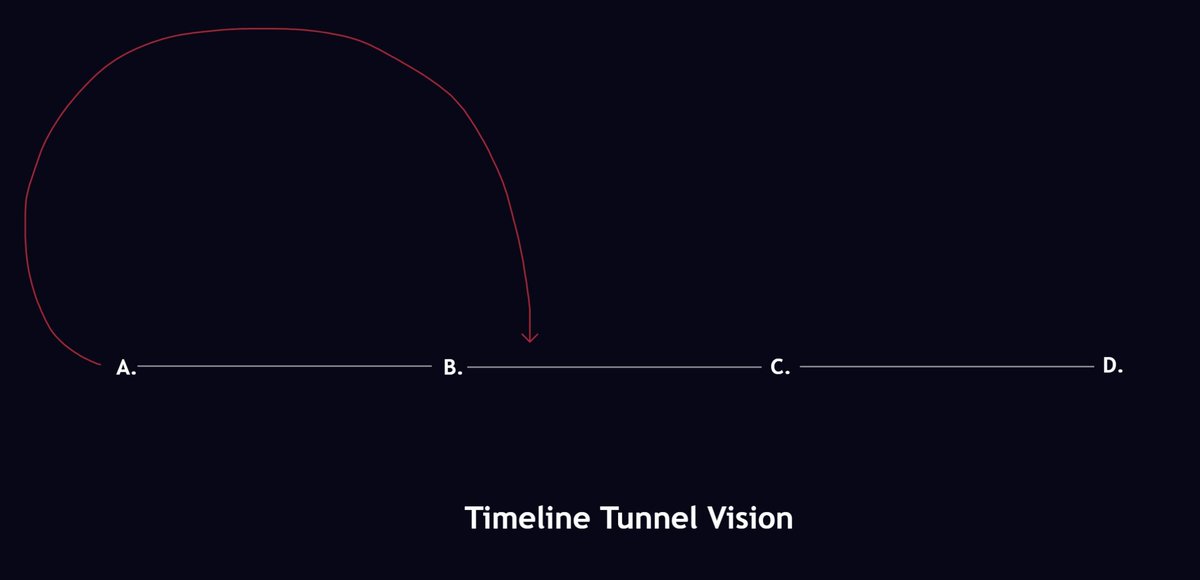



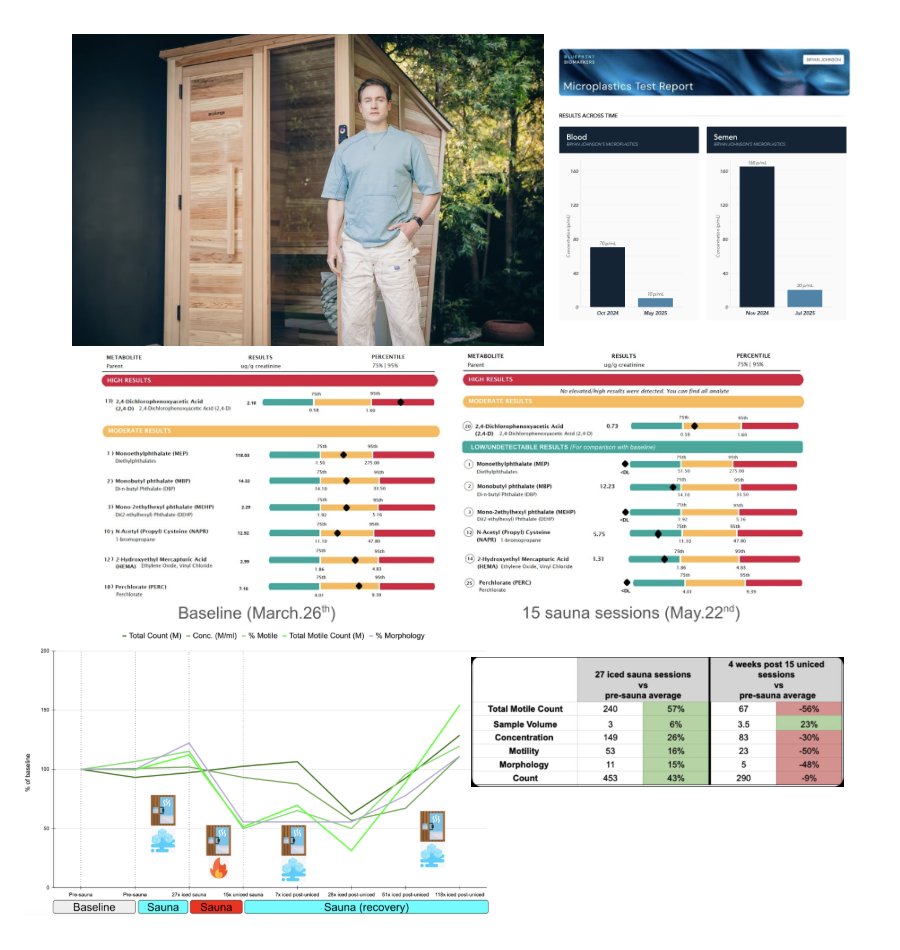

![reflexivityres's tweet photo. The Overlap of Crypto/AI:
[Part 1/2]
What is Decentralized AI?
In the swiftly evolving digital era, the emergence of decentralized AI represents a groundbreaking shift towards a more equitable, secure, and innovative technological future. This paradigm shift seeks to address the centralization concerns prevalent in the current AI landscape, characterized by a few dominant entities controlling vast amounts of data and computational resources. decentralized AI, by leveraging blockchain technology and decentralized networks, promises a new era where innovation, privacy, and access are democratized.
The last decade has witnessed unprecedented advancements in AI, propelled by breakthroughs in machine learning, particularly deep learning technologies. Entities like OpenAI and Google have been at the forefront, developing models that have significantly pushed the boundaries of what AI can achieve. Despite the success, this rapid advancement has led to a concentration of power and control, raising concerns over privacy, bias, and accessibility.
In response to these challenges, the concept of decentralized AI has gained momentum. decentralized AI aims to distribute the development and deployment of AI across numerous independent participants. This approach is not just a technical necessity but a philosophical stance against the monopolistic tendencies seen in the technology sector, especially within AI.
The Necessity of Decentralized AI
The integration of blockchain technology into AI frameworks introduces a layer of transparency, security, and integrity previously unattainable in centralized systems. By recording data exchanges and model interactions on a blockchain, decentralized AI ensures that AI operations are verifiable and tamper-proof, fostering trust among users and developers alike.
One of the cornerstone challenges decentralized AI addresses is data management. In a decentralized AI ecosystem, data ownership remains with the individuals, who can choose to contribute their data for AI training in a secure, anonymous manner. This not only enhances privacy but also encourages the development of more diverse and unbiased AI models.
Decentralized AI proposes a novel approach to computational resource allocation, where individuals can contribute their computing power to AI model training processes. This peer-to-peer network model ensures a more equitable distribution of computational resources, making AI development accessible to a broader audience. To motivate participation in the AI network, tokenization mechanisms are employed - this isn’t possible in the walled gardens of centralized AI incumbents. Before we dig deeper, here is a market map of the decentralized AI landscape, courtesy of Galaxy:
Contributors of data and computational resources are rewarded with tokens, which can be used within the ecosystem or traded, creating an economy around AI development and deployment. While decentralized AI presents a promising solution to many of the current AI ecosystem's flaws, it is not without challenges. Issues such as network scalability, consensus mechanisms for model training, and ensuring the quality of data in a distributed system are critical areas requiring further progress.
Despite these challenges, the potential of blockchain-enabled AI for fostering continued success and inclusivity is quite high. By lowering the barriers to entry for AI development and ensuring a more diverse data pool, decentralized AI could lead to the creation of more robust, ethical, and innovative AI solutions.
As AI continues to evolve, it will also necessitate a reevaluation of current policies and regulations surrounding AI and data privacy. A distributed landscape offers a unique set of challenges and opportunities for lawmakers, necessitating a balanced approach that fosters innovation whilst protecting individual rights. The future of AI is not just about technological advancement but also about reimagining the governance and economic models underpinning AI development. As we move forward, the focus will increasingly shift towards ensuring that AI serves the broader interests of society, promoting fairness, transparency, and inclusivity.
The journey towards a decentralized AI ecosystem is fraught with technical, ethical, and regulatory challenges. The promise of a more equitable, secure, and innovative future makes this a worthy endeavor. As we stand at the precipice of this new era in AI, it is crucial for stakeholders across the spectrum to collaborate, innovate, and navigate the complexities of decentralized AI, ensuring that the future of AI is democratized, and beneficial for all.
Verification Mechanisms
One of the major benefits of decentralized AI involves the confirmation of outputs. When users typically interact with closed source LLMs, they aren’t able to properly verify the model they’re said to be using is actually that model. With decentralized AI, there are various approaches being taken to help eliminate this issue. Some believe optimistic fraud proofs (optimistic ML) are superior, while others believe in zero-knowledge proofs (zkML) - there isn’t a correct answer to this question yet.
Blockchains are designed to be immutable, cryptographically verifiable ledgers for peer-to-peer payments - the integration of blockchain technology into artificial intelligence systems is a massive opportunity for two growing industries to complement each other in a mutually beneficial way. If you’re of the belief that blockchains are here to stay and will integrate with traditional financial systems for the better, why not advocate for blockchains extending their utility into machine learning as well?
Optimistic machine learning involves verification but on the pretense of trust. All inferences made are assumed to be accurate, similar to optimistic rollups on Ethereum that trust a blockchain’s state is accurate unless proven otherwise. Various approaches are being taken by projects to implement this technology but most utilize a system with watchers and verifiers, where malicious outputs are spotted by watchers after verifiers have correctly proven the outputs to be correct. Optimistic machine learning is a favorable approach as in theory, it can work as long as a single watcher is being honest - but a single individual or actor can’t correctly check every output, and while the optimistic approach is cheaper than zero-knowledge proofs, the costs unfortunately scale linearly.
Zero-knowledge proofs are more efficient, as proof sizes do not scale linearly with model size. The mathematics behind zero-knowledge proving is quite complex, though has become more accessible thanks to projects like Starknet, zkSync, RiscZero and Axiom developing rollups and middleware technology to extend the benefits of zero-knowledge proving to blockchain technology. Given the nature of zero-knowledge proofs, they are essentially a flawless choice for verifying outputs - you cannot cheat the math behind them. Unfortunately for decentralized AI, using this technology at scale with large models is extremely expensive and not currently feasible. Despite this reality, many projects are building out infrastructure for the gradual integration of zero-knowledge technology and are making positive strides in this sector.
Data and Infrastructure
LLMs are trained on immense amounts of data. There is a great deal of work that’s done between pre-training a model and getting it production ready for general use. The pre-training stage is one that involves gathering data from wherever available, tokenizing it to feed into a model and finally curating it to make sure the model learns from its now vast knowledge base. In the context of decentralized AI, blockchains are almost a perfect fit given the immutable catalogs of data available on-chain, in an unadjustable format. While this is true, blockchains are not yet capable of computing over that much data. Even the most performant blockchains in the space can do no more than 100 transactions per second, with more than that out of the equation for the foreseeable future.
There are numerous decentralized AI projects that reward users for their submission of data, with the aforementioned verification process being applied afterwards to ensure quality submissions. Integrating crypto economic reward mechanisms enables users to take part in the creation of large, open source models that can potentially one day compete with the centralized alternatives dominating the market. As it stands, very few teams have accumulated the scale of data available to centralized models - though this is alright, given just how nascent the sector of decentralized AI is.
In the context of decentralized AI there isn’t a standardized mission for all of these protocols, as they’re all targeting different approaches and competing as more protocols begin to launch and fight over compute. Teams are still deciding how to best incentivize their users, but also exploring what types of data will be most useful for them. Blockchains have so much data it would be quite tedious to sift through all of it, and many teams are building structured products and applications for non-AI crypto projects to more easily integrate. There are also a few projects that are aiming to corner the market on data or shape it into incredibly useful, streamlined products for end users - more on this in a later section. Regardless of its immediate applicability, there is a war for data occurring in the traditional world of machine learning and decentralized AI is no different.
Platforms for collaboration of AI and Crypto
While still quite early into its lifecycle, decentralized AI is already seeing platforms develop for entire decentralized AI ecosystems and product suites built with the future in mind. OpenAI is the best real world example of a successful AI lab that’s been able to develop additional products on top of brilliant models. In crypto there is still a large gap between innovation and usage, even outside of decentralized AI.
Teams building within the decentralized AI space are taking various approaches to platform building. Some are focusing on consumer platforms that utilize models and appealing UX, others are working on infrastructure for autonomous agents and others are building large networks with subnetworks for other models operating underneath. There isn’t an example of a winning approach or what will work in the long run, so different strategies are unfolding as more developers enter the space.
These will be looked at in the next sections, though we will first make a few distinctions. The idea of decentralized platforms is a little ambiguous - most of these protocols do have bold enough visions that their ideas might be misconstrued as platforms. For the sake of simplicity, we’ll define a decentralized AI platform as any product that’s built to stand on its own with an eventual ecosystem of additional apps built atop it. There are numerous GPU marketplaces being built in the decentralized AI sector, and while technically these are platforms, they are limited in scope and are usually built with different goals than the protocols we will discuss.
A closer look at the decentralized AI ecosystem
With that context, we can take a look at a handful of the most promising protocols across these various subsectors. There are many more that could be analyzed, though we chose a more curated list to try and provide as diverse of an example base as possible. For more information on decentralized AI, there are a few excellent reports written here and here.
Ritual, Ora, Truebit and Modulus
Starting with @ritualnet, this is a very unique protocol that’s been seeing significant interest from nearly every corner of the crypto industry. Founded by a team of experienced builders in the crypto and AI space, Ritual is envisioned as an open, modular, and sovereign execution layer for AI.
The core of Ritual is Infernet, a decentralized oracle network (DON) optimized for AI that is already live and operational. Infernet allows existing protocols and applications to seamlessly integrate AI models without friction, by exposing powerful interfaces for smart contracts to access these models for inference. This enables a wide range of use cases, from advanced analytics and predictions to generative AI applications running on-chain.
Beyond Infernet, Ritual is also building its own sovereign blockchain with a custom VM to service more advanced AI-native applications. This chain will leverage cutting-edge cryptography like zero-knowledge proofs to ensure scalability and provide strong guarantees around computational integrity, privacy, and censorship resistance - issues that plague the current centralized AI infrastructure. Ritual's grand vision is to become the "schelling point" for AI in the crypto space, allowing every protocol and application to leverage its powerful AI capabilities as a co-processor.
Ora is a crypto project that is pioneering the integration of artificial intelligence directly onto the Ethereum blockchain. Ora's central offering is the Onchain AI Oracle (OAO), which enables developers, protocols, and dApps to leverage powerful AI models like LlaMA2, Grok, and Stable Diffusion right on the Ethereum mainnet.
Ora's innovation lies in its use of optimistic machine learning to create verifiable proofs for complex ML computations that can be feasibly verified on-chain. This unlocks a new frontier of "trustless AI" - AI models and inferences that can be trustlessly integrated into blockchain applications, with robust cryptographic guarantees.Beyond just inference, Ora envisions a wide range of use cases for on-chain AI, from predictive analytics and asset pricing to advanced simulations, credit/risk analysis, and even AI-powered trading bots and governance systems.
The project has also introduced the "opp/ai" framework, which combines the benefits of opML and zero-knowledge ML (zkML) to provide both efficiency and privacy for on-chain AI use cases.Ora is building an open ecosystem around its Onchain AI Oracle, inviting developers to integrate their own AI models and experiment with the myriad possibilities of trustless AI on Ethereum. With its strong technical foundations and ambitious vision, Ora is poised to be a key player in the emerging intersection of crypto and artificial intelligence.
Truebit is a groundbreaking platform that aims to change the way developers build and deploy decentralized applications. Truebit offers a verified computing infrastructure, enabling the creation of certified, interoperable applications that can seamlessly integrate with any data source, interact across multiple blockchains, and execute complex off-chain computations.
The key innovation behind Truebit is its focus on "transparent computation". Rather than relying solely on on-chain execution, Truebit leverages a decentralized network of nodes to perform complex computations off-chain, while providing cryptographic proofs of their correctness. This approach allows developers to unlock the full potential of Web3 by offloading the majority of their application logic to the Truebit platform, without sacrificing the trustless guarantees and auditability that blockchain-based systems provide.
The Truebit Verification Game is the central mechanism that ensures the integrity of off-chain computations. Multiple Truebit nodes execute each task in parallel, and if they don't agree on the output, the Verification Game forces them to prove their work at the machine code level. Financial incentives and penalties are used to gamify the process, incentivizing correct behavior and penalizing malicious actors.
This transparency and verification process is the key to Truebit's ability to securely integrate decentralized applications with off-chain data sources and services, such as AI models, APIs, and serverless functions. By providing "transcripts" that document the complete execution of a computation task, Truebit ensures that the output can be verified and trusted, even when it originates from centralized web services.
Truebit's architecture includes a "Hub" that oversees the Verification Game, while also being policed by the decentralized nodes. This two-way accountability, inspired by techniques from the DARPA Red Balloon Challenge, helps to resist censorship and further strengthen the trustless guarantees of the platform.
Modulus provides a trusted off-chain compute platform that addresses a critical challenge faced by blockchain-based systems - the limitations of on-chain computation. Modulus utilizes a specialized zk prover that’s extendable to other projects across the industry, with Modulus having partnered with Worldcoin, Ion Protocol, UpShot and more. Modulus also offers its very own API on top of other machine learning APIs, letting them horizontally scale as the industry grows and begins to adopt more AI processes into existing applications.
By leveraging cutting-edge cryptographic techniques, Modulus enables developers to seamlessly integrate complex off-chain computations, such as machine learning models, APIs, and other resource-intensive tasks, into their dApps. This is achieved through Modulus' decentralized network of nodes that execute these computations in a verifiable and trustless manner, providing the necessary cryptographic proofs to ensure the integrity of the results.
With Modulus, developers can focus on building innovative dApps without worrying about the complexities and constraints of on-chain execution. The platform's seamless integration with popular blockchain networks, such as Ethereum, and its support for a wide range of programming languages and computational tasks, make it a powerful tool for building the next generation of decentralized applications.
Grass, Ocean and Giza
Grass is a revolutionary decentralized network that is redefining the foundations of artificial intelligence development. At its core, Grass serves as the "data layer" for the AI ecosystem, providing a crucial infrastructure for accessing and preparing the vast troves of data necessary to train cutting-edge AI models.
The key feature driving Grass to data acceleration is its decentralized network of nodes, where users can contribute their unused internet bandwidth to enable the gathering of data from the public web. This data, which would otherwise be inaccessible or prohibitively expensive for many AI labs to obtain, is then made available to researchers and developers through Grass's platform. By incentivizing ordinary people to participate in the network, Grass is democratizing access to one of the most essential raw materials of AI - data!
Beyond just data acquisition, Grass is also expanding its capabilities to address the critical task of data preparation. Grass wishes to become the definitive data layer, not only for crypto, but eventually for all of AI. It’s difficult to imagine a world where a blockchain project uproots an entire industry, though traditional finance is already slowly becoming more interested in the idea of immutable blockchain tech - why not the AI industry as well? Grass might be able to cut down on costs and incentivize users to become the premier marketplace for data, not just the premier crypto marketplace for data.
Through its in-house vertical, Socrates, Grass is developing automated tools to structure and clean the unstructured data gathered from the web, making it AI-ready. This end-to-end data provisioning service is a game-changer, as data preparation is often the most time-consuming and labor-intensive aspect of building AI models.
The decentralized nature of Grass is particularly important in the context of AI development. Many large tech companies and websites have a vested interest in controlling and restricting access to their data, often blocking the IP addresses of known data centers. Grass's distributed network circumvents these barriers, ensuring that the public web remains accessible and its data available for training the next generation of AI models.
Ocean Protocol is a pioneering decentralized data exchange protocol that is attempting to disrupt the way artificial intelligence and data are accessed and monetized. At the heart of Ocean's mission is a fundamental goal - to level the playing field and empower individuals, businesses, and researchers to unlock the value of their data and AI models, while preserving privacy and control.
The core of Ocean's technology stack is centered around two key features - Data NFTs and Datatokens, and Compute-to-Data. Data NFTs and Datatokens enable token-gated access control, allowing data owners to create and monetize their data assets through the use of decentralized data wallets, data DAOs, and more. This infrastructure provides a seamless on-ramp and off-ramp for data assets into the world of decentralized finance.
Complementing this is Ocean's Compute-to-Data technology, which enables the secure buying and selling of private data while preserving the data owner's privacy. By allowing computations to be performed directly on the data premises, without the data ever leaving its source, Compute-to-Data addresses a critical challenge in the data economy - how to monetize sensitive data without compromising user privacy.
Ocean has cultivated a thriving ecosystem of builders, data scientists, OCEAN token holders, and ambassadors. This lively community is actively exploring the myriad use cases for Ocean's technology, from building token-gated AI applications and decentralized data marketplaces to participating in data challenges and leveraging Ocean's tools for their data-driven research and predictions.
By empowering individuals and organizations to take control of their data and monetize their AI models, Ocean is paving the way for a more equitable and decentralized future in the realm of artificial intelligence and data-driven progress.
Giza is on a mission to revolutionize the integration of machine learning (ML) with blockchain technology. Leading the way for Giza is its Actions SDK, a powerful Python-based toolkit designed to streamline the process of embedding verifiable ML capabilities into crypto workflows.
The technology powering the Actions SDK is the recognition of the significant challenges that have traditionally hindered the seamless fusion of AI and crypto. Giza's team identified key barriers, such as the lack of ML expertise within the blockchain ecosystem, the fragmentation and quality issues of data access in crypto and the reluctance of protocols to undergo extensive changes to accommodate ML solutions.
The Actions SDK addresses these challenges head-on, providing developers with a user-friendly and versatile platform to create and manage "Actions" – the fundamental units of functionality within the Giza ecosystem. These Actions serve as the orchestrators, coordinating the various tasks and model interactions required to build trust-minimized and scalable ML solutions for crypto protocols.
At the core of the Actions SDK are the modular "Tasks," which allow developers to break down complex operations into smaller, manageable segments. By structuring workflows through these discrete Tasks, the SDK ensures clarity, flexibility, and efficiency in the development process. Additionally, the SDK's "Models" component simplifies the deployment and execution of verifiable ML models, making the integration of cutting-edge AI capabilities accessible to a wide range of crypto applications.
Morpheus, MyShell and Autonolas
Morpheus represents a significant advancement in the field of artificial intelligence, specifically tailored for the crypto environment. Launched on September 2nd, 2023, Morpheus introduces an innovative framework for deploying personal general-purpose AI agents, known as Smart Agents, across a peer-to-peer network. The primary objective of Morpheus is to facilitate the interaction of users with decentralized applications , digital wallets, and Smart Contracts, thereby making the technology more accessible to a broader audience. The project's Yellow Paper provides a comprehensive technical overview, highlighting its ambition to bridge the gap between complex crypto technologies and everyday users through an open-source approach.
Central to Morpheus's architecture is its incorporation of several key technologies: a crypto native wallet for secure key management and transaction signing, a large language model trained on extensive data (including blockchains, wallets, DApps, DAOs and Smart Contracts), and a SmartContractRank algorithm designed to evaluate and recommend the most suitable Smart Contracts to users. Additionally, Morpheus leverages a sophisticated storage solution for the long-term retention of user data and connected applications, ensuring that Smart Agents can draw upon a comprehensive context for their operations.
](https://pbs.twimg.com/media/GK0CqeAW0AAGkj7.jpg)