A man dying of face cancer climbed on a horse and rode 70 miles through a screaming thunderstorm, all night, just to cast a single vote. That vote helped create the United States of America. And you've probably held his picture in your hand without knowing it. Meet Caesar Rodney.
Rodney was born in Delaware in 1728 into a farming family, and he spent his life in public service, militia officer, judge, congressman. But two things made him unforgettable, and the first one is brutal.
He had cancer. A growth on his face that slowly disfigured him, so much so that he often kept a green silk scarf draped over one side of his face to hide it. John Adams, never one to soften a description, called him one of the oddest looking men in the world. The cure, such as it was, existed only across the ocean in England. But going there for treatment would have meant abandoning the revolution and bowing to the very country he was fighting. So Rodney chose. He would stay, keep serving, and let the cancer take its course. He picked his country over his own life, literally.
Now the ride.
July 1, 1776. Independence hangs by a thread. Delaware has three delegates, and they're split. One for, one against. The deciding man, Caesar Rodney, is nearly 80 miles away back in Delaware, dealing with Loyalist trouble. Word reaches him that everything is deadlocked and his vote is the tiebreaker.
So this sick man, wracked by cancer and asthma, gets on a horse in the middle of the night and rides. Through a thunderstorm. Through mud and lightning and dark. Roughly 70 to 80 miles, hour after hour, in his boots and spurs, pushing through weather and pain that would flatten a healthy man.
He clattered into Philadelphia on July 2 just as the vote was being taken, still splattered in mud from the road, and cast his vote for independence. Delaware swung to yes. The colonies moved forward. He made it, barely, in time to help change history.
He went on to serve as Delaware's wartime governor, holding his state together through the hardest years, all while the cancer kept eating away at him. He finally died from it in 1784, at 56.
And here's the kicker most people never realize. That dramatic image of a man galloping on horseback? It's stamped on the Delaware state quarter. Millions of people have held Caesar Rodney in their pocket and never knew the dying man behind the ride.
A man with a death sentence on his own face, who rode through hell for one vote, and helped birth a nation he wouldn't live to see grow old.
Caesar Rodney. The midnight rider who spent his last good years buying our first ones.
Dave Ramsey tells mom her daughter doesn’t get to choose a $30K a year college because she has no money
Caller: “Our oldest daughter is starting college for mechanical engineering, but we have nothing saved for her and two more kids coming up after her. We make just over $200,000, and she chose Iowa State at about $30,000 a year partly because her friends are going there”
“She doesn’t get to choose. She doesn’t have any money. I’m not going to endorse paying more because we drove across a state line. There’s no value added to the quality of her education”
“Otherwise, this kid’s going to end up $150,000 in student loan debt because her friends went there. Nobody gives a crap where her friends went. They won’t even be her friends in a decade”
A gentleman is revealed through his manners, judgment, and treatment of others.
That makes Ways of a Gentleman one of my favorite accounts.
Enjoy this entertaining video and Follow his account for timeless lessons on character, confidence, and how to carry yourself well.
Dear @DukesMayonnaise
Your classic Real Mayonnaise lists soybean oil as the very first ingredient. While I understand it’s been part of the formula for a long time, a growing number of health-conscious consumers are actively avoiding highly processed seed oils (soybean, canola, sunflower, etc.) due to concerns about their high omega-6 content, processing methods and potential inflammatory effects.
Not including sugar in your recipe is great but including seed oils is still a deal-breaker.
Many of us have switched to mayonnaise made with avocado oil, olive oil or other more traditional fats and if you wish appeal to us, you should develop a product that is seed oil free.
There is so much untapped potential in the seed oil free market and many of us look forward to you putting your hat in the ring.
UPDATE: On the girl who made all those viral videos about Georgia Power threatening to take their home with eminent domain to expand for data centers, her family was just forced to sell to avoid eminent domain
Corporations always win. They lost their home but don’t want to leave
“To us, it's theft. It's literally a billion-dollar company stealing land from Smaller people, people who can't fight back. We don't have the money to fight Georgia Power.”
A spokesperson from Georgia Power says faking peoples homes actually benefits everyone
“Eminent domain is always, you know, a last resort for us — I would just say that we see you and we hear you and we want this process to be respectful and transparent, and that is going to ultimately benefit you”
It’s literally insane, Georgia Power is actually saying that stealing your property for data centers “is going to ultimately benefit you”
She won’t be the last there are over 300 homes in this area being targeted for data center power expansion
KMAX Helicopter Crashes While Working On The Gold Mountain Fire In Colorado, Killing One.
The Aircraft went down in the Silver Jack Reservoir.
https://t.co/DjfB5dyjz1
🚨GROUNDED WHILE COLORADO BURNS: The $25 Million Failure Shocking the State🚨
While historic wildfires ravage Colorado—with the Aspen Acres and Ferris fires exploding into the top 10 largest in state history—one of our state’s shiny new $25 million Firehawk helicopters sat grounded on a tarmac in Montrose for nearly SIX DAYS.
You can’t make this up. While out-of-state resources had to fly in to save our communities, a critical piece of state-owned firefighting equipment was left gathering dust. The official excuse from bureaucrats? "Intentional" scheduling and rigid paperwork rules that prevent shifting resources to where they are actually needed. Meanwhile, internal reports reveal tanking morale and crews complaining about a total lack of meaningful work and limited training.
This is a masterclass in government incompetence from the state's Democratic leadership. Millions of taxpayer dollars spent, a crew paid for months before the choppers even arrived, critical maintenance delays in previous seasons, and now bureaucracy grounding vital equipment during an active crisis.
Instead of taking responsibility for this absolute mismanagement, you can already clock the upcoming excuses. They will undoubtedly point fingers at Donald Trump or blame climate change to distract from a catastrophic failure of basic operational competence. Climate challenges require sharp, agile leadership—not multi-million dollar tools sitting idle in a hangar while families lose their homes.
Colorado taxpayers and displaced residents deserve real accountability, not endless excuses and red tape.
https://t.co/xelj0tPwJw
After looking at Flock Cameras in more than 8 states I found ONE!
This was what was crash tested! It doesn't meet their design drawing for stub height but almost meets the USDOT standard. This is what we should be seeing.
I am a farmer and the outright owner of a $400,000 John Deere combine, and this morning a sensor decided I am not allowed to drive it.
The sensor was working perfectly. That was the problem. An emissions reading drifted, the machine did what the manual calls a derate and everyone out here calls limp mode, and now I have a full tank, a full engine, and 3 miles an hour. It is October. The forecast is rain Thursday. The corn does not care about the settlement.
I did everything you are supposed to do. I bought it outright. I did not lease. I have the title, the manual, the torque specs, and 40 years of knowing which bolt is which. I can rebuild the engine on a tailgate. What I cannot do is tell the engine it is allowed to run.
Because the thing that stopped it is not a part. It is a permission. The reset lives in software, the software lives with the dealer, and the dealer is 90 minutes away and booked through Friday.
So I called. I always call. That is the instruction, and I follow the instruction.
They said someone could come Monday. I said the crop will be down by Monday. They said they understood. I have learned that when a company says it understands you, it means it has written down that you were told.
Yesterday the FTC announced I won. Right to repair. 10 years of it. I read the whole thing at the kitchen table with the combine sitting dead in the field I can see from the window.
Here is what I learned about winning. The settlement says I get the same software the dealer gets, eventually, on a schedule they report every 60 days. It does not say the software arrives before the rain. It does not say the machine will listen to me tomorrow. It says that someday, carefully, I will be allowed to ask it the same way the dealer asks it.
I own the steel. I always did.
I just found out I have been renting the word go, and the lease has 10 years left, and the corn is still in the field.
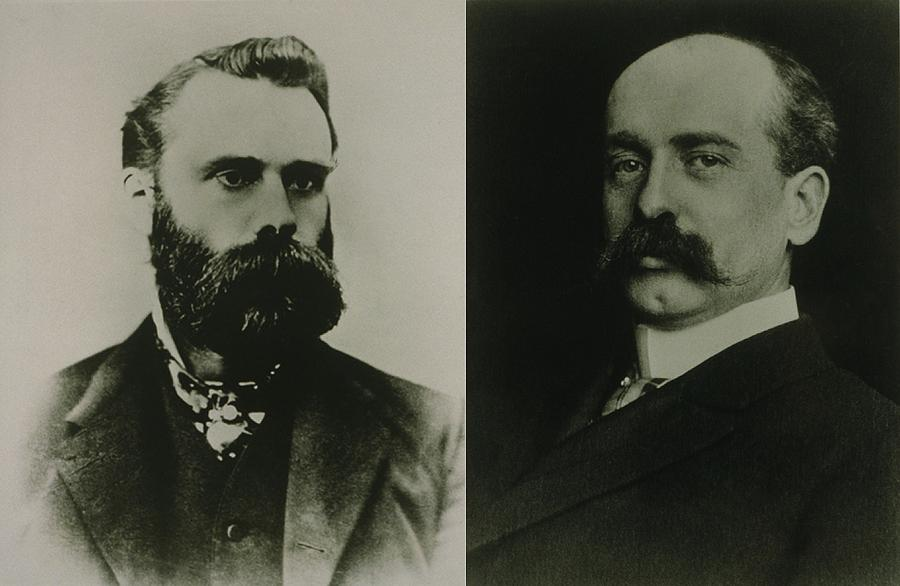
July 8, 1889. Two financial reporters named Charles Dow and Edward Jones put out the very first issue of the Wall Street Journal. It was a thin little afternoon paper and it cost 2 cents.
For years these guys had been running around lower Manhattan hand delivering stock tips and gossip to traders on flimsy slips of paper. They finally decided to bundle it all into a real newspaper with their names on the door.
Seven years later Dow put together an average of a dozen big industrial stocks so regular people could tell at a glance whether the market was up or down. That became the Dow Jones Industrial Average, the exact number your uncle still quotes at dinner.
Two reporters, a 2 cent paper, and a couple of last names that somehow ended up glued to the American economy forever. Not bad for a side hustle.
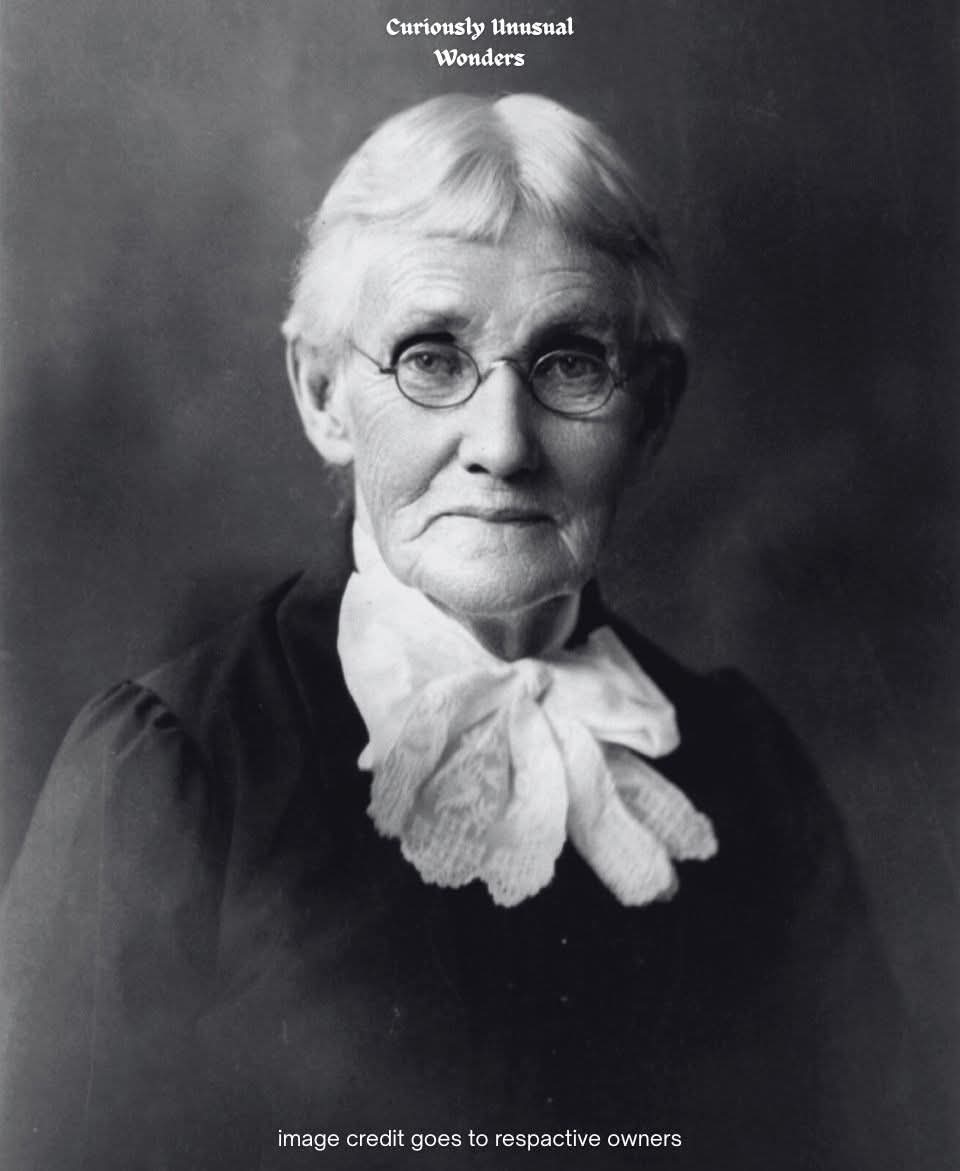
A Union Army surgeon once tried to have Mary Ann Bickerdyke thrown out of camp.
The complaint reached General William Tecumseh Sherman.
His answer became famous.
“She outranks me. I can’t do a thing in the world.”
Mary Ann Bickerdyke held no military rank.
She was not a doctor.
She had no official command.
But by the middle of the Civil War, thousands of Union soldiers knew exactly who she was.
They called her Mother Bickerdyke.
In 1861, she was a forty-four-year-old widow in Galesburg, Illinois, raising two sons and supporting herself through practical nursing and herbal medicine. Her life was ordinary, far from battlefields and generals.
Then her pastor read a letter in church.
A young doctor from their town had written from Cairo, Illinois, describing Union soldiers dying in miserable conditions. Not only from wounds, but from dirt, disease, hunger, and neglect.
The congregation raised money and supplies.
Someone had to deliver them.
Mary Ann volunteered.
She expected to go and return home.
Instead, she stayed for four years.
What she found in Cairo horrified her.
Men lay on filthy straw.
Food was poor.
Water was dirty.
Hospital floors were coated with blood and waste.
Supplies existed, but were badly managed or locked away.
Mary Ann did not ask permission.
She started cleaning.
She scrubbed floors.
Washed bedding.
Organized kitchens.
Cooked nourishing meals.
Created laundries.
Comforted dying soldiers.
Wrote letters home for men too weak to hold a pen.
When supplies were locked away while soldiers suffered, she broke the locks.
When careless surgeons endangered patients, she fought to have them removed.
When officers questioned her authority, she answered with fearless bluntness.
“I have received my authority from the Lord God Almighty. Have you anything that outranks that?”
Most did not know how to reply.
Soldiers trusted her because she cared more about survival than procedure. She moved through camps and battlefields with a lantern, searching for wounded men left behind after the fighting stopped.
Her reputation reached the top of the Union Army.
Ulysses S. Grant supported her.
Sherman defended her.
He called her one of his best generals because she did what many officers failed to do: she got results.
Mary Ann served through nineteen major battles, including Shiloh, Vicksburg, Chattanooga, and Sherman’s March to the Sea. More than 300 field hospitals were organized under her influence.
When the war ended, she kept serving.
She helped veterans obtain pensions, supported disabled soldiers, assisted settlers in Kansas, and worked with charitable organizations for decades.
Mary Ann Bickerdyke died in 1901 at age eighty-four.
She had no rank.
No degree.
No uniform authority.
But when soldiers were hungry, wounded, forgotten, or dying, she stepped in and acted.
That was why generals listened.
Mary Ann Bickerdyke did not wait to be allowed to help.
She saw suffering.
And did what needed to be done.
Follow us You should see this
Continental Congressman Joseph Hewes writes that in declaring independence, many of the delegates, including himself, worked 23 hours each day, hardly eating, and that this is a great detriment to the general health of Congress.
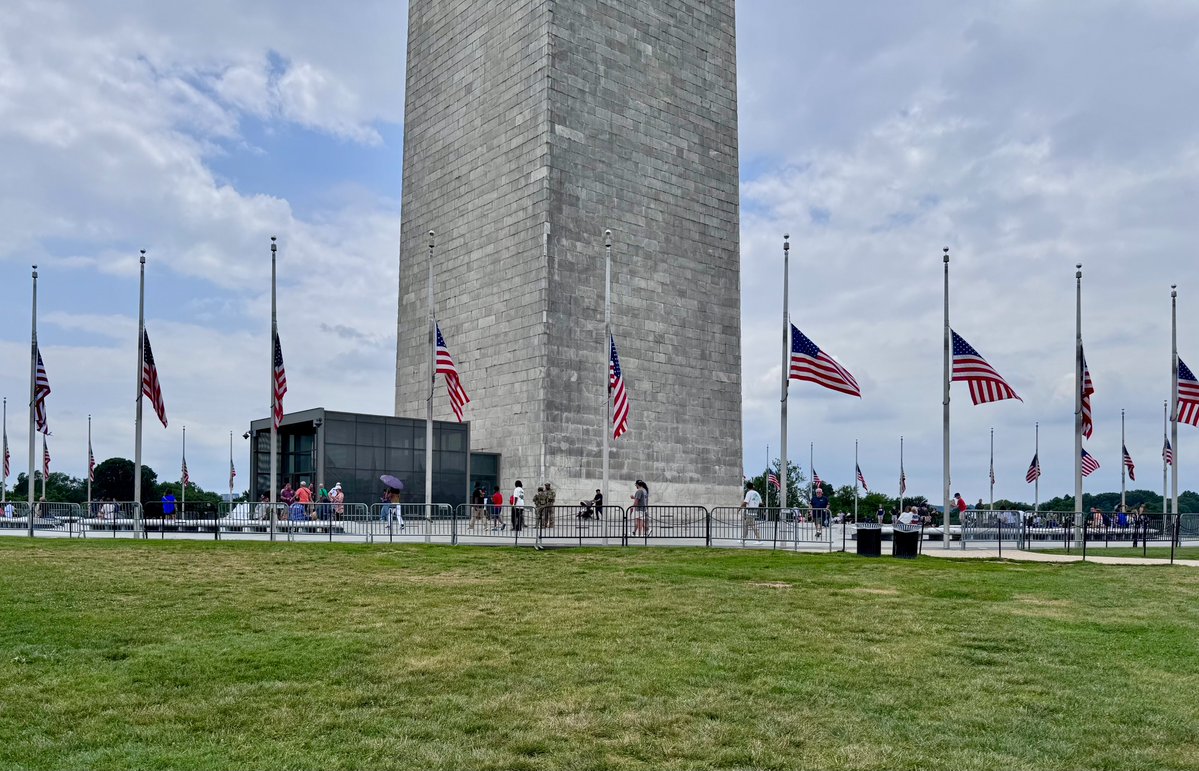
Flags at all @Interior facilities are flying at half-staff through July 11 in honor of wildland firefighters Sydney Watson, Emily Barker, and Nick Hutcherson, who lost their lives in the line of duty.
We honor their courage and commitment to protecting others. Please keep their families, friends, and fellow firefighters in your thoughts and prayers.
Their sacrifice will never be forgotten.
The first public reading of the Declaration of Independence takes place in Philadelphia, summoned by the ringing of the Liberty Bell.
John Nixon conducts the reading.