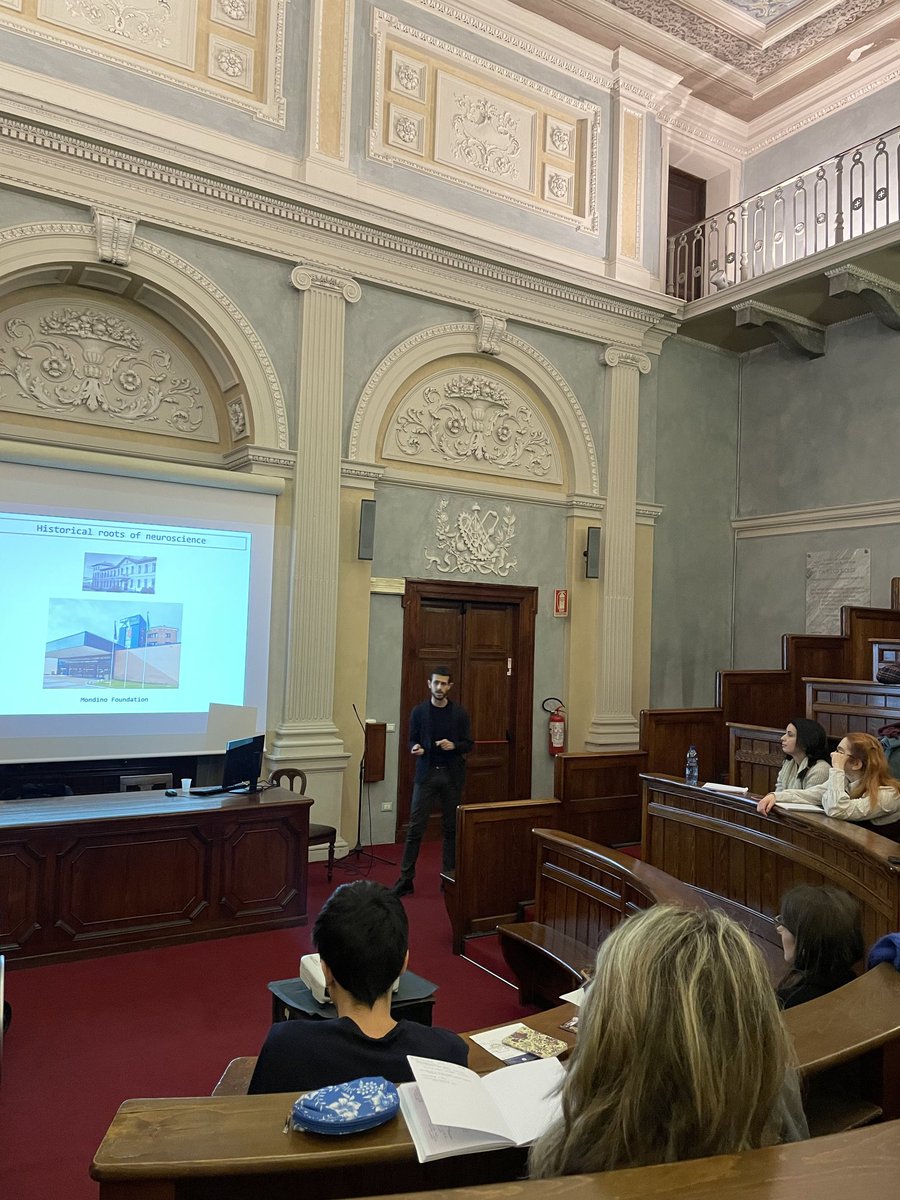
Excited to announce that our lab just received a new EEG system! This will open up new possibilities for studying cognitive maps and the brain's spatial/lingustic processing 🧠 @ERC_Research
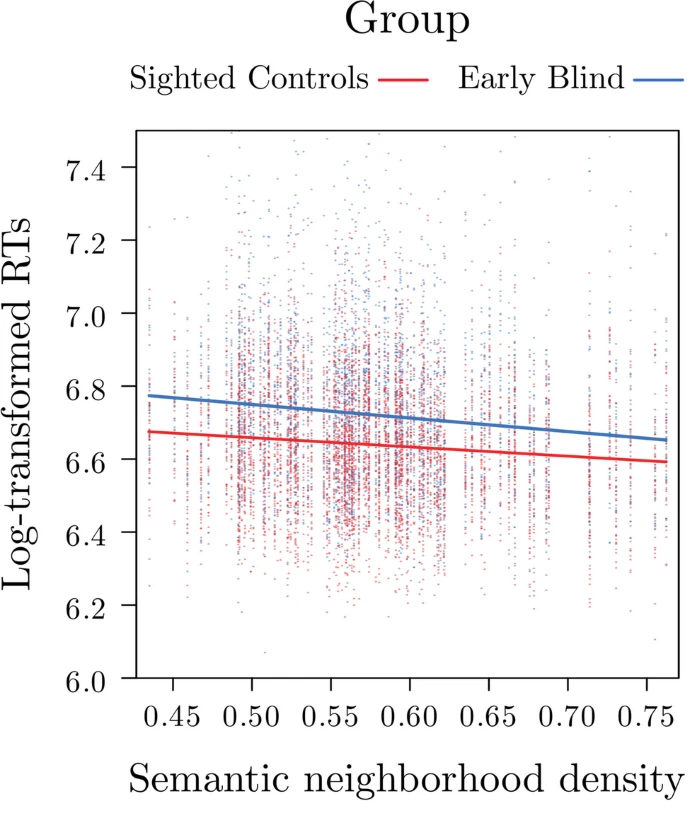
Results showed that blind individuals are more sensitive to this semantic index. This means that individuals lacking visual perceptual input exhibit an enhanced reliance on linguistic experiential priors.
👀🧠Does vision (and the absence thereof) shape humans’ reliance on linguistic experience in the organization of semantic knowledge? In short... it does! New study published in PBR offers intriguing insights. With @MarelliMar @Daniele__Gatti
https://t.co/fH1rXgQOYk
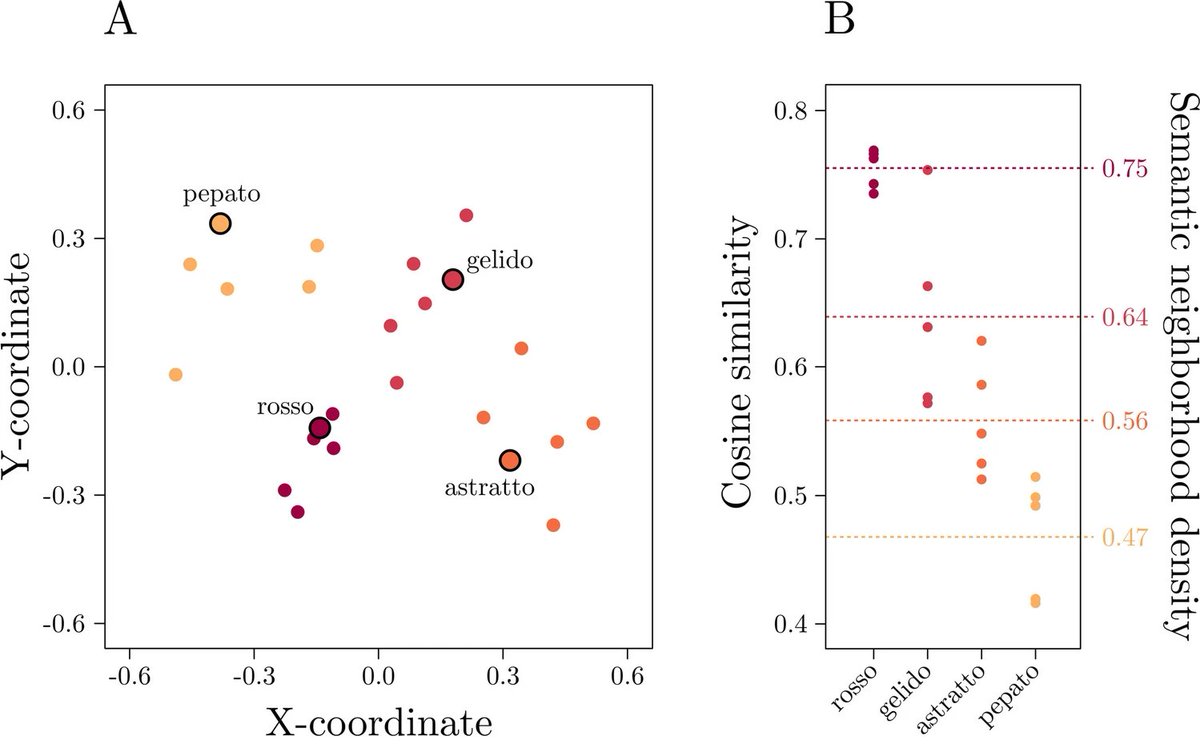
We exploited DSMs to assess whether blind and sighted participants’ performance in a lexical decision task differently relied on semantic neighborhood density—a measure tackling the semantic density of a word with respect to neighbors’ words in its semantic space.
"On humans' (explicit) intuitions about the meaning of novel words"
📢New paper from: @dgatti_23, Francesca Rodio, @Lucarinaldi86, & @MarelliMar
https://t.co/AIHL3wLPiR
🧵👇(1/5)
Enjoying the #WoProc in Belgrade! Loving the workshops by @MarcoCiapparelli on minicons/LLMs and @aggieerin on the project management for scientific software📃
📢 Exciting opportunity! 2 postdoc positions funded by @ERC_Research at the ReMap Lab🌟
1️⃣ A first on eye-tracking/behavior (details: https://t.co/e33I9Lm0pT)
2️⃣ A second on TMS/EEG (details: https://t.co/4udPCDuStS)
Join us to advance cognitive map research!
Apply now! 🚀🔬
🧠🌍New research in collaboration with @MarelliMar showing that temporal and linguistic distances can accurately reflect geographical distances. Interestingly, only linguistic information influences how we judge distances between cities! Full article here: https://t.co/tocZK9t2KQ
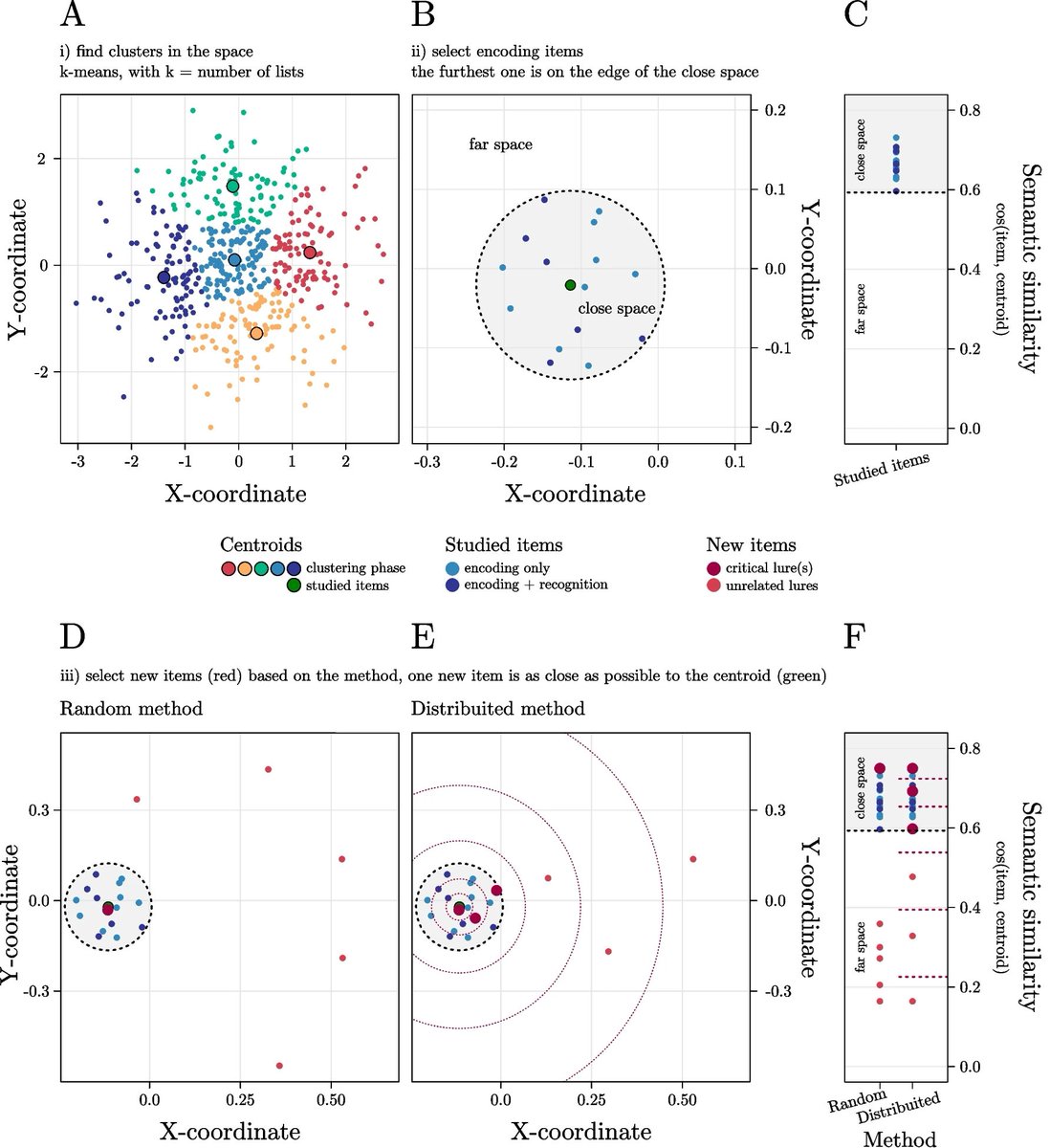
FMG utilizes data-driven computational approaches (but it is flexible enough to also use human-produced ratings) to establish item relationships by leveraging on the similarity between their representations populating a vector space 📐📏
🌟Introducing the False Memory Generator (FMG): an innovative tool that transcends traditional limitations of the DRM paradigm. 🚀 From semantic processes to beyond, FMG opens doors to the study of false memories. With @PetilliMarco1 and @MarelliMar
https://t.co/NpSjRs6ga6
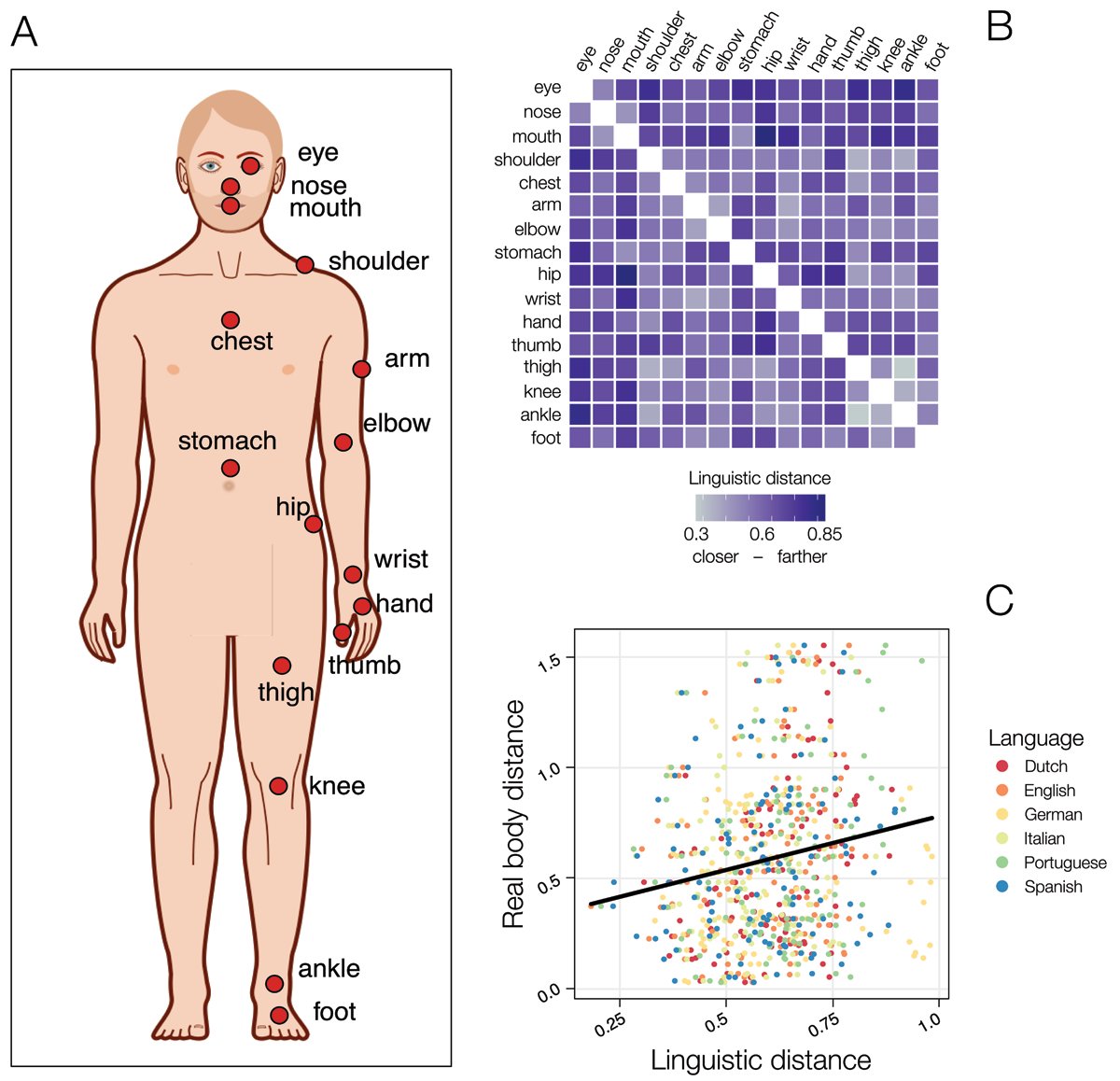
🧐 Check this out! Despite the common belief that our mental representations of the body strongly originate from visual experience, we present evidence for a vision-independent body map extracted from natural language 👂👃🦵🦶✋
https://t.co/gDNWnE6wRH
This nicely complements our previous findings on how surface-level language statistics capture the representational size of body parts (https://t.co/XsY2pjU3yn) and our work on geographical maps (https://t.co/qP5PrKYa2M)