2026 World Scientific Ranking of ÁGORA Scientific Services, LLC; Centennial (1890-1990) PhD Alumnus in Biochemistry, Molecular Biology & Genetics of Cancer from #UNT 🦅 at Denton. Top numbers of Bibliographic Citations & H Number in 72 years at UNT. https://t.co/ko3rKgG9gs
This is the official team photo of the players, coaching staff, and management for the 2026 FIFA World Cup.
United by the pride of representing our country.
#SomosMéxico 🇲🇽
Scientists have developed dielectric elastomer actuators, or artificial “muscles,” that can operate at low voltages while still producing high output to drive untethered, soft robotic fish movements.
Learn more in @SciRobotics: https://t.co/AWV9CuncBp
In 1974 Harald zur Hausen suggested that human papilloma virus, HPV, could give rise to cervical cancer.
His idea challenged the common wisdom of the time, as most researchers thought cervical cancer was caused by the herpes simplex virus. However, despite the doubts of his peers, zur Hausen worked patiently for 10 years trying to prove his hypothesis.
His discovery showed that two types of HPV virus were responsible for most cervical cancer cases, and led to the development of a vaccine against cervical cancer.
Learn more about Harald zur Hausen who was born #OTD 1936: https://t.co/rJ082p9QRC
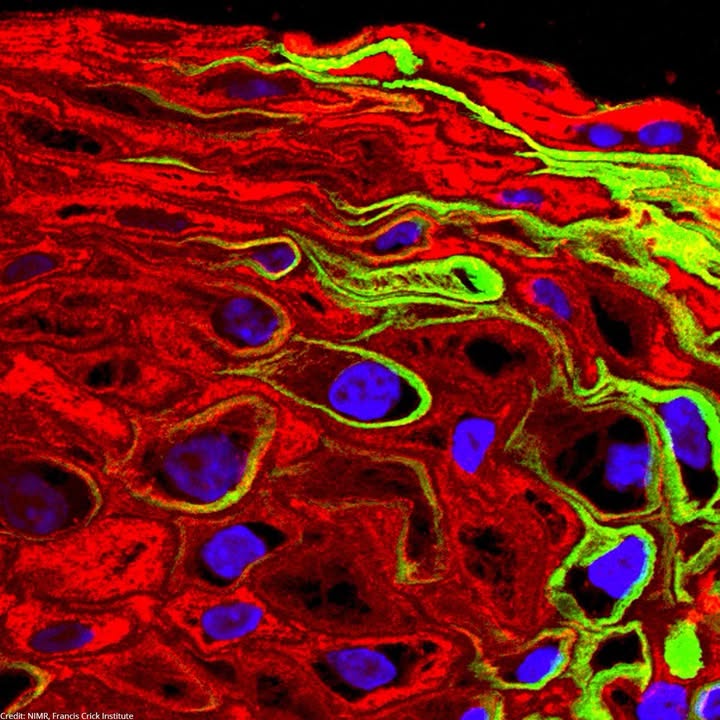
Image: Cervical epithelium infected with human papilloma virus (HPV16). Early viral proteins are shown in green.
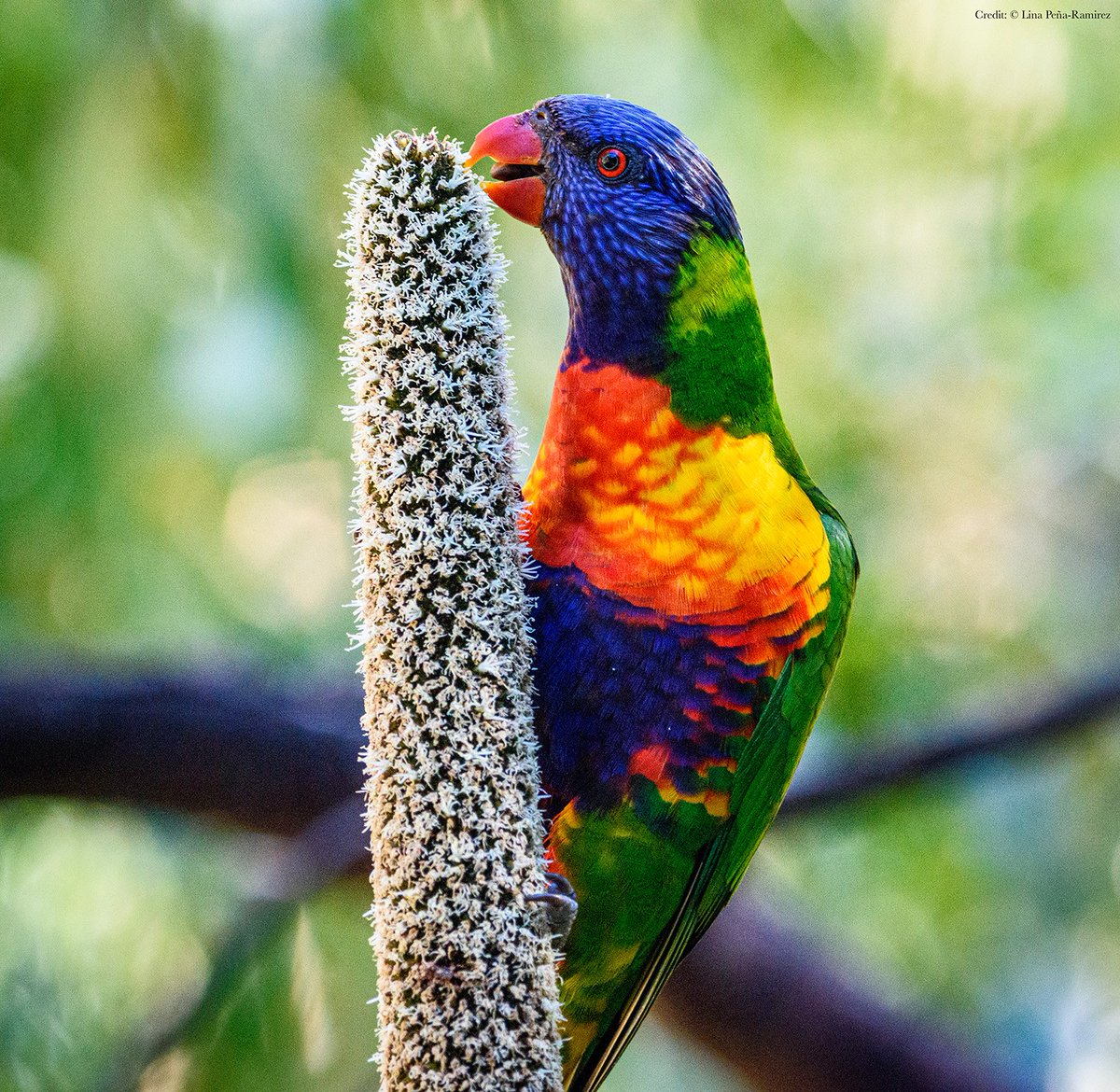
While high-sugar diets can trigger significant health issues for humans, some birds have independently evolved to flourish on sugar-rich nectar and fruit without ill effect.
In a new Science study, researchers find that these bird species share convergent evolutionary changes in key physiological traits and metabolic genes that enable their high-sugar diets. https://t.co/qin8WjV2EZ
Where do you find inspiration?
Han Kang explains that she does not actively pursue moments of inspiration; rather, she embraces life in its entirety.
Kang was awarded the 2024 Nobel Prize in Literature for her intense poetic prose that confronts historical traumas and exposes the fragility of human life.
#InternationalWomensDay
Bumble bees may look clumsy and goofy hovering above a flower, but don’t be deceived: They’re among the hot rods of the insect world and able to fly 22 kilometers per hour. Even while hovering, their powerful wing muscles generate a lot of heat. Like any high-performance vehicle, the bees have ways to keep their motors cool—and a new study shows just how effective one of these methods can be.
As a bumble bee hovers in place, the breeze it generates can lower the insect’s body temperature by 5°C, researchers report.
Learn more: https://t.co/kA7fSVFdD7
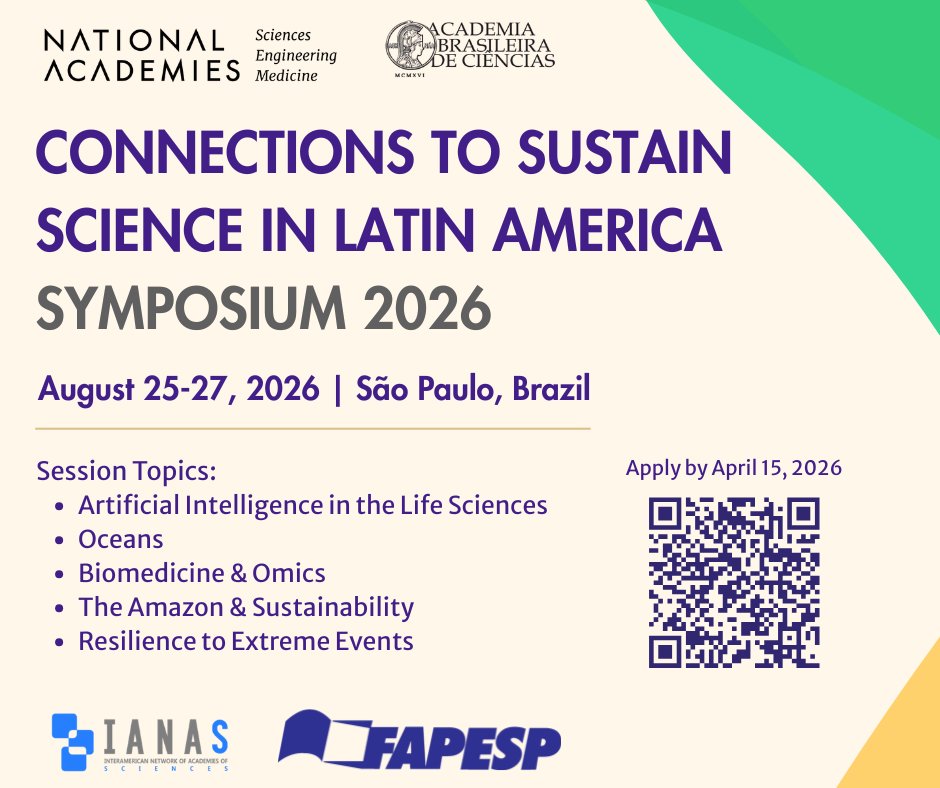
Apply now: Connections to Sustain Science in Latin America Symposium 2026 in São Paulo (Aug 25–27).
For early/mid-career researchers across the Americas. Travel fully funded.
Apply by Apr 15: https://t.co/uJofsnlcMW
#NASEMCapacity#LatinAmerica#LAConnections
In a new Science study, researchers report on transcriptional adaptation, a dual feedback and feedforward mechanism that uses genetic redundancy to compensate for mutations in protein-coding genes.
📄: https://t.co/g0O3HQsXhN
#SciencePerspective: https://t.co/V3hf83YgDc
Through the development of metal–organic frameworks, 2025 chemistry laureates Susumu Kitagawa, Richard Robson and Omar Yaghi have provided chemists with new opportunities for solving some of the challenges we face.
Following the laureates’ groundbreaking discoveries, researchers have created numerous different and functional metal–organic frameworks (MOF). So far, in most cases, the materials have only been used on a small scale. To harness the benefits of MOF materials for humanity, many companies are now investing in their mass production and commercialisation. Some have succeeded. For example, the electronics industry can now use MOF materials to contain some of the toxic gases required to produce semiconductors. Another MOF can instead break down harmful gases, including some that can be used as chemical weapons. Numerous companies are also testing materials that can capture carbon dioxide from factories and power stations, to reduce greenhouse gas emissions.
Some researchers believe that metal–organic frameworks have such huge potential that they will be the material of the twenty-first century.
#NobelPrize
BREAKING NEWS
The Royal Swedish Academy of Sciences has decided to award the 2025 #NobelPrize in Physics to John Clarke, Michel H. Devoret and John M. Martinis “for the discovery of macroscopic quantum mechanical tunnelling and energy quantisation in an electric circuit.”