Creator of Reading Explorers, Top Class Comprehension and Reading Rocketeers.
Reading consultant, specialising in Guided Reading & Reading Intervention.
Want a READING INTERVENTION series that is easy to use and achieves results? Then take a look at my brand new series Reading Rocketeers. FREE LESSONS to try out: https://t.co/OGUNSBixUv
Just click on each book to preview. 📕🚀
Supported with high quality CPD. ⭐️⭐️⭐️⭐️⭐️
The BGA staff enjoyed their 2 days of INSET completing a range of training including a day working with John Murray @ReadingExplorer to develop their new approach to writing. John’s session helped pedagogical development, all whilst being fuelled by sweets & @dominos! @FCATrust
A man at my dad's company retired after 41 years.
Quiet guy.
Never missed a day.
Nobody really knew him.
During his retirement speech he pulled out a folded piece of paper and said:
"I've carried this in my wallet since 1987."
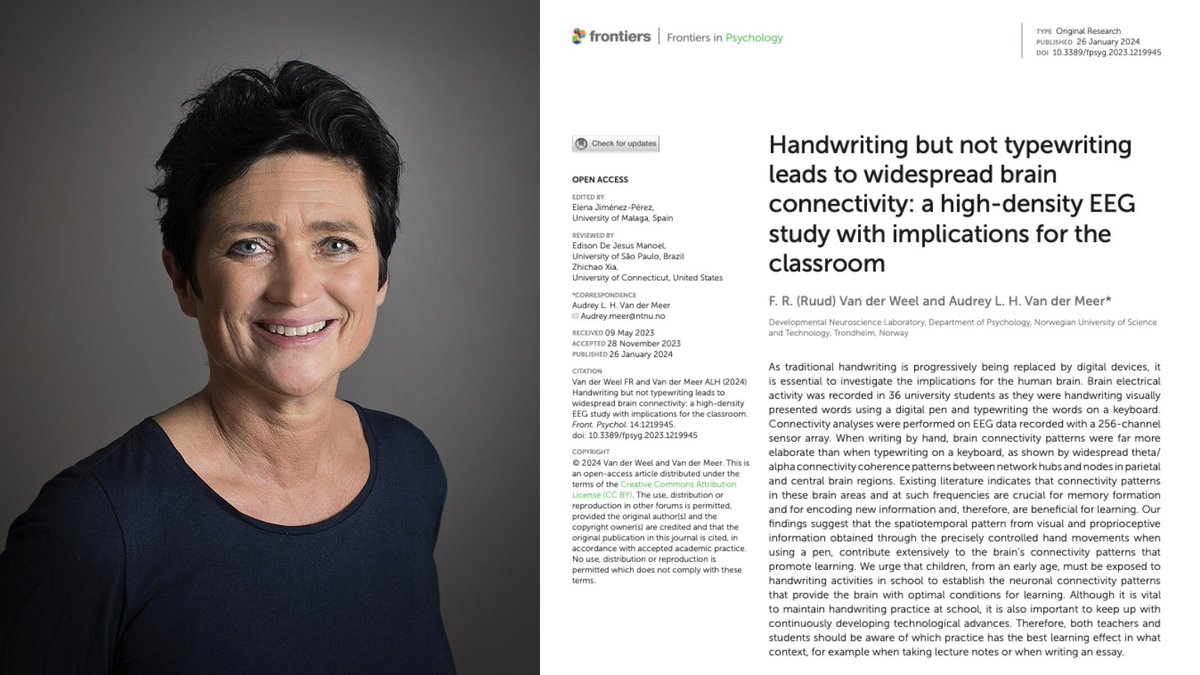
A Norwegian neuroscientist spent 20 years proving that the act of writing by hand changes the human brain in ways typing physically cannot, and almost nobody outside her field has read the paper.
Her name is Audrey van der Meer.
She runs a brain research lab in Trondheim, and the paper that closed the argument was published in 2024 in a journal called Frontiers in Psychology. The finding is brutal enough that it should have changed every classroom on Earth.
The experiment was simple. She recruited 36 university students and put each one in a cap with 256 sensors pressed against their scalp to record brain activity. Words flashed on a screen one at a time.
Sometimes the students wrote the word by hand on a touchscreen using a digital pen, and sometimes they typed the same word on a keyboard. Every neural response was recorded for the full five seconds the word stayed on screen.
Then her team looked at the part of the data most researchers had ignored for years, which is how different parts of the brain were communicating with each other during the task.
When the students wrote by hand, the brain lit up everywhere at once.
The regions responsible for memory, sensory integration, and the encoding of new information were all firing together in a coordinated pattern that spread across the entire cortex. The whole network was awake and connected.
When the same students typed the same word, that pattern collapsed almost completely.
Most of the brain went quiet, and the connections between regions that had been alive seconds earlier were nowhere to be found on the EEG.
Same word, same brain, same person, and two completely different neurological events.
The reason turned out to be something nobody had really paid attention to before her work. Writing by hand is not one motion but a sequence of thousands of tiny micro-movements coordinated with your eyes in real time, where each letter is a different shape that requires the brain to solve a slightly different spatial problem.
Your fingers, wrist, vision, and the parts of your brain that track position in space are all working together to produce one letter, then the next, then the next.
Typing throws all of that away. Every key on a keyboard requires the exact same finger motion regardless of which letter you are pressing, which means the brain has almost nothing to integrate and almost no problem to solve.
Van der Meer said it plainly in her interviews.
Pressing the same key with the same finger over and over does not stimulate the brain in any meaningful way, and she pointed out something that should scare every parent who handed their kid an iPad.
Children who learn to read and write on tablets often cannot tell letters like b and d apart, because they have never physically felt with their bodies what it takes to actually produce those letters on a page.
A decade before her, two researchers at Princeton ran the same fight using a completely different method and ended up at the same answer. Pam Mueller and Daniel Oppenheimer tested 327 students across three experiments, where half took notes on laptops with the internet disabled and half took notes by hand, before testing everyone on what they actually understood from the lectures they had watched.
The handwriting group won by a wide margin on every question that required real understanding rather than surface recall.
The reason was hiding in the transcripts of what the two groups had actually written down.
The laptop students typed almost word for word, capturing more total content but processing almost none of it as they went, while the handwriting students physically could not write fast enough to transcribe a lecture in real time, which forced them to listen carefully, decide what actually mattered, and put it in their own words on the page.
That single act of choosing what to keep was the learning itself, and the keyboard had quietly skipped the choosing and skipped the learning along with it.
Two studies. Two countries. Same answer.
Handwriting makes the brain work. Typing lets it coast.
Every note you have ever typed instead of written went into your brain through a thinner pipe. Every meeting, every book highlight, every idea you captured on your phone instead of on paper was processed at half depth.
You did not forget those things because your memory is bad. You forgot them because typing never woke the part of the brain that would have made them stick.
The fix is the thing your grandmother already knew.
Pick up a pen. Write the thing down. The slower road is the faster one.
A MIT professor taught the same lecture every January for 40 years, and every single time it was standing room only.
I watched it at 2am and it completely rewired how I think about communication.
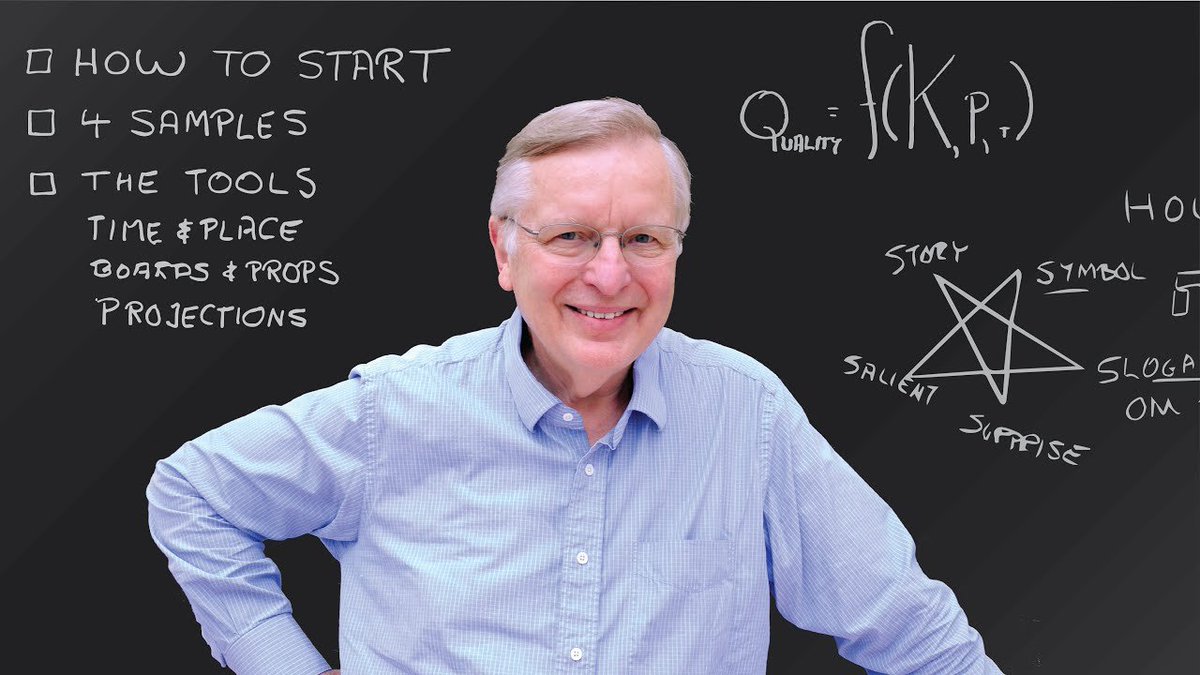
His name was Patrick Winston. The lecture is called "How to Speak."
His opening line hit like a truck: your success in life will be determined largely by your ability to speak, your ability to write, and the quality of your ideas in that order.
Not your GPA. Not your pedigree. Not your IQ. How you speak is what separates people who get heard from people who get ignored.
Here's the framework he drilled into MIT students for four decades.
He said never start with a joke. Start by telling people exactly what they're going to learn. Prime the pump before you pour anything in. He called it the "empowerment promise" give people a reason to stay in their seats within the first 60 seconds.
Then he broke down the 5S rule for making ideas stick: Symbol, Slogan, Surprise, Salient, and Story. Every idea worth remembering hits at least three of these.
The part that floored me was his "near miss" technique. Don't just show what's right show what almost looks right but isn't. That contrast is when the brain actually locks something in permanently.
His final rule before any big talk: end with a contribution, not a summary. Don't recap what you said. Tell people what you gave them that they didn't have before they walked in.
I've used this framework in pitches, interviews, and presentations ever since watching it, and the results are not subtle.
Patrick Winston passed away in 2019, but this lecture is still free on MIT OpenCourseWare. One hour, watched by millions, and it costs absolutely nothing.
The most important class MIT ever put on the internet isn't about code or math. It's about how to make people actually listen to you.
"Trump, the Mar-a-Lago golfer, is the only bull in the world who walks around with his own china shop. When a clown takes over the Palace, he doesn't become King. It's the Palace that becomes a circus"
French senator Claude Malhuret once again nails it. You won't hear a better indictment of Trump and his Gulf war than this. Well worth 5 minutes of your time
My English s/t 👇
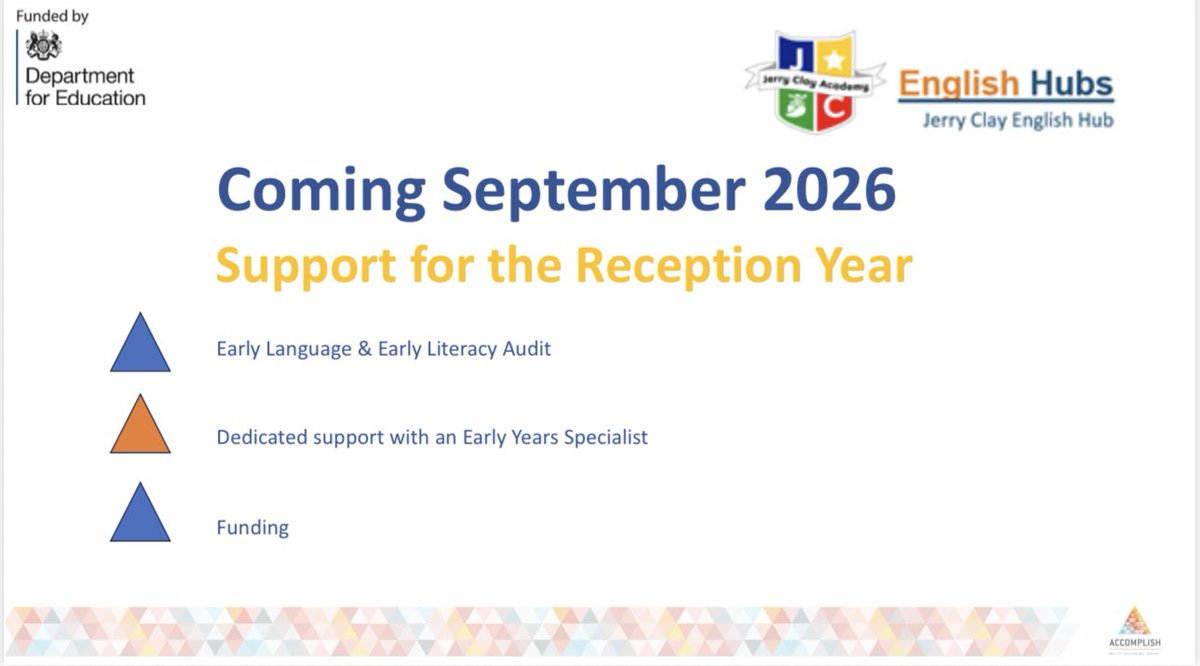
✨ Exciting news! From September 2026, Jerry Clay English Hub will offer support for Reception year as well as KS1, 2 & 3.
Strengthening early literacy from the very start. 📚
Complete the short form to receive further information: https://t.co/o2h9cnOvlS
#EnglishHubs
After Japan’s Yuzuru Hanyu won gold, Canadian skater Keegan Messing noticed the Japanese flag was not raised and stepped in to hold it up himself, a simple act of sportsmanship that turned a medal ceremony into a moment of unity
It's that magical time of year when private jets descend on a Swiss mountain village to discuss climate change and poverty! Anyway, here's my annual reminder. I'll stop posting this when they stop avoiding the real issue: their own massive tax avoidance 💰
If you missed Thursday's online webinar for the launch of the National Year of Reading (with the keynote delivered by @TeresaCremin), you can watch it here. @Literacy_Trust https://t.co/eGwDKPikvr
To celebrate the start of 2026 and The Year of Reading, I've copies of Reading Rocketeers to give away. 📗🚀
For your chance to win one of these 5 books, just **retweet this tweet**
I'll pick the 5 winners at random on Saturday, January 31st. Good luck!
https://t.co/WIPx71cghG
To celebrate the start of 2026 and The Year of Reading, I've copies of Reading Rocketeers to give away. 📗🚀
For your chance to win one of these 5 books, just **retweet this tweet**
I'll pick the 5 winners at random on Saturday, January 31st. Good luck!
https://t.co/WIPx71cghG
Gary Lineker, "I actually think that 80-90% of the country just want to get on with their lives, be friendly with their neighbours"
"They don't look at people of different religions, skin colours, beliefs, traits, and think badly of them"
"I think we're divided deliberately to distract"
Concur on all accounts - most people just want to live and get on with life, if only our politicians created a stable and ambitious enough approach to life so we could do that, without having to call out their repeated and monumental short-failings
China just turned the night sky into a masterpiece of precision and intelligence. 🌌
What struck me most about this is how seamlessly innovation turns into art.
A drone show in Chongqing just broke the Guinness World Record with 11,787 synchronized drones, creating breathtaking 3D animations that looked closer to CGI than real life.
No human pilots.
No delays.
No crashes.
Every movement guided by AI and GPS, choreographed with perfect timing.
To me, this is far more than a light show.
It’s a glimpse into how technology, creativity, and coordination can merge to shape a new era of expression and innovation.
When intelligence takes flight, it doesn’t just illuminate the sky — it redefines what’s possible.
Could this be the moment where technology begins to turn the world itself into its stage?
#AI #Innovation #Technology #Drones #Automation #Creativity #China #Engineering #FutureOfWork #DigitalArt
Credits: longliveai
Dyslexia has travelled a long way from its original meaning. What began as a rare, specific visual-perceptual difficulty has gradually expanded into a broad label for almost any struggle with reading or writing. This piece is a useful reminder that precision matters. When we understand the real cause of a pupil’s difficulty, we can actually help them.





![tech_crafters's tweet photo. Access millions of books for free.📚
I have found 8 of the best websites to legally read and download books.
[Bookmark for later🔖] https://t.co/X1tk5PyHB5](https://pbs.twimg.com/media/G662tqcbkAIKqO2.jpg)