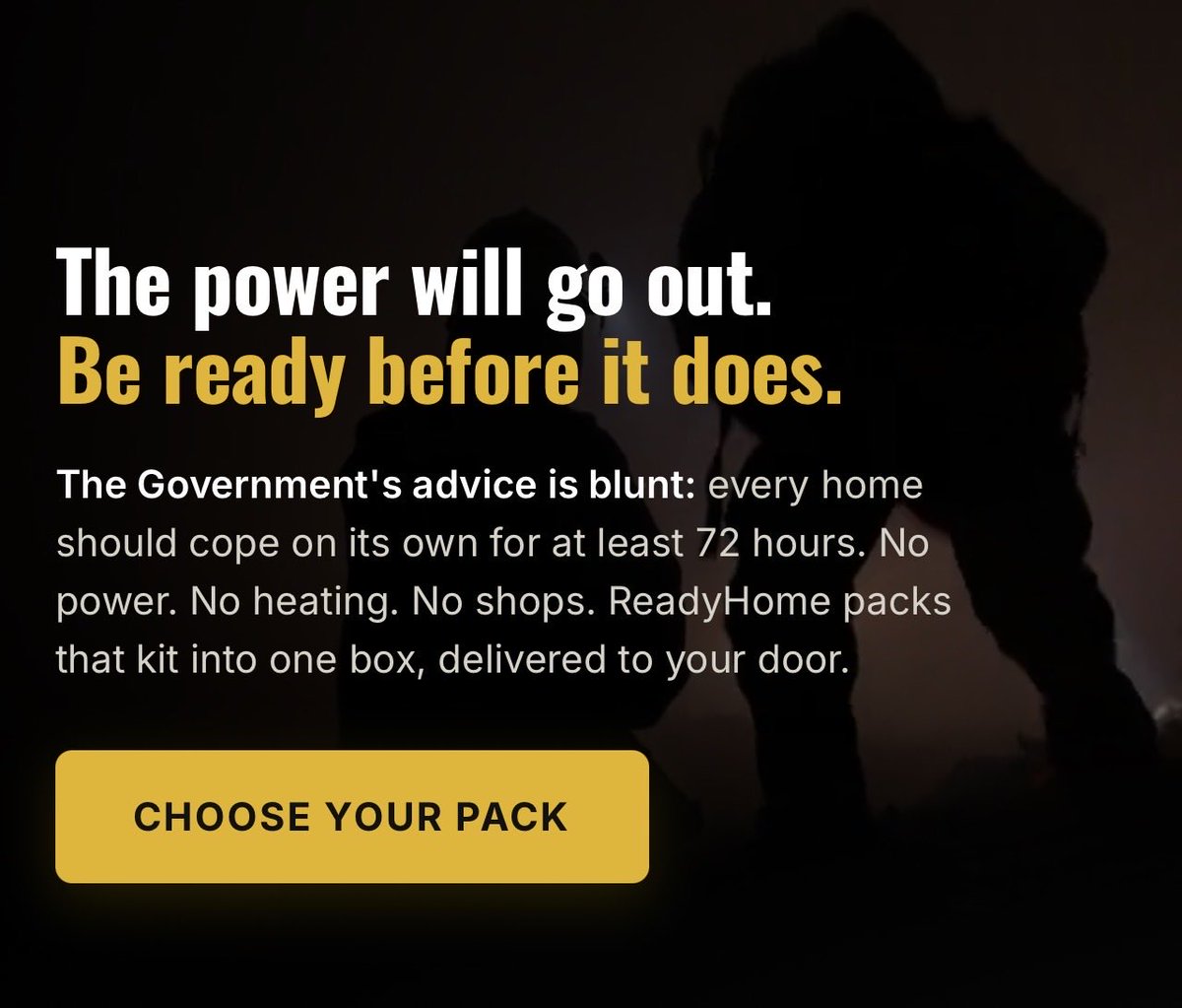
The power will go out.
Be ready before it does.
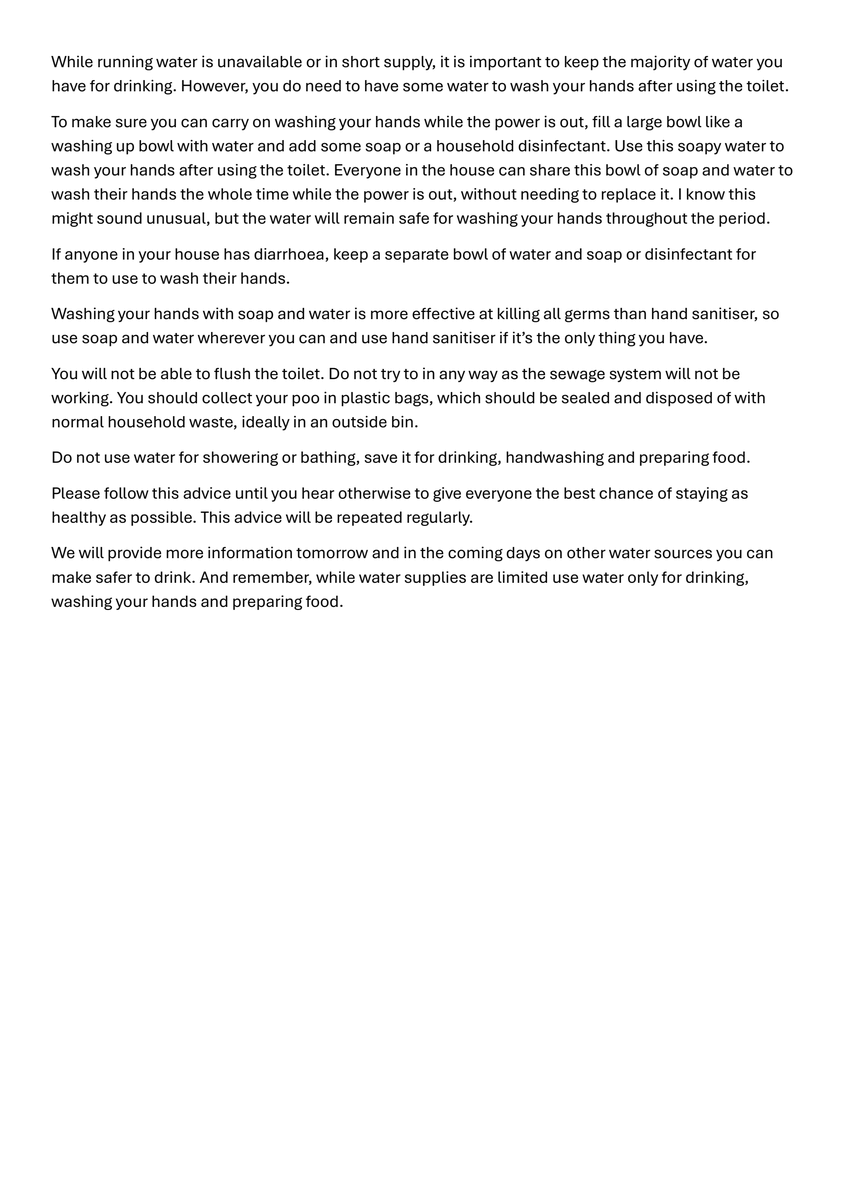
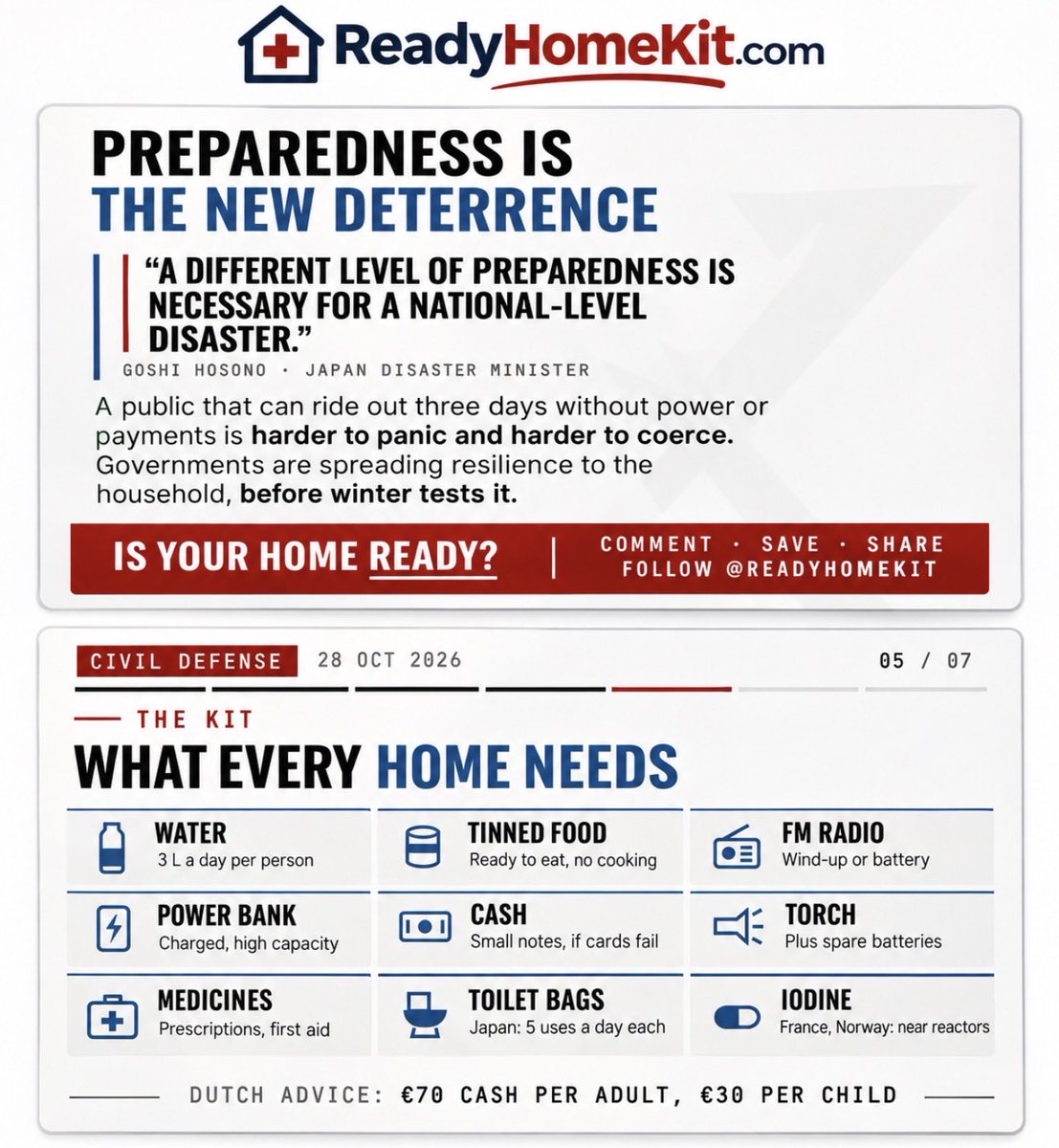
The Government's advice is blunt: every home should cope on its own for at least 72 hours.
No power.
No heating.
No shops.
ReadyHome packs that kit into one box, delivered to your door.
Click the link in our bio above ☝🏽
Power cuts being reported across the UK this evening, with 75 unplanned outages leaving 3,186 customers without electricity as of 20:00 GMT.
https://t.co/vty6YenZXp
The 72-hour guidance is the UK Cabinet Office’s “Be Ready” campaign, launched 22 Oct 2026. It asks households to stock basic supplies for short disruptions to power, water or phones (weather, floods, cyber issues). Security Minister Dan Jarvis stated it is not linked to any specific or imminent threat and brings the UK in line with European peers.
The BBC “Black Sky” plan is a longstanding contingency: ~100 staff would run an independent FM radio studio with 3-day supplies to air pre-agreed government messages if the grid and internet fail. Power restoration is estimated at 2-3 days. Similar emergency broadcasting arrangements have existed for decades.
🚨 THE UK IS PREPARING FOR SOMETHING BIG? 🇬🇧⚠️
First, 72-hour emergency warnings. Now, the BBC’s backup radio studio with 100 staff.
Hey @grok, what are they REALLY preparing for?
Water underpins food, energy, and increasingly industries of the future – creating opportunities for innovation and investment.
Sign up for our newsletter that covers key events, news, and developments on the road to the 2026 UN Water Conference.
🚨 NEW: The Government's "Black Sky" contingency plans for a national water or power blackout
- Around 100 BBC staff would be deployed to run an emergency RM radio studio stocked with enough food, water and fuel to keep it running for 3 days
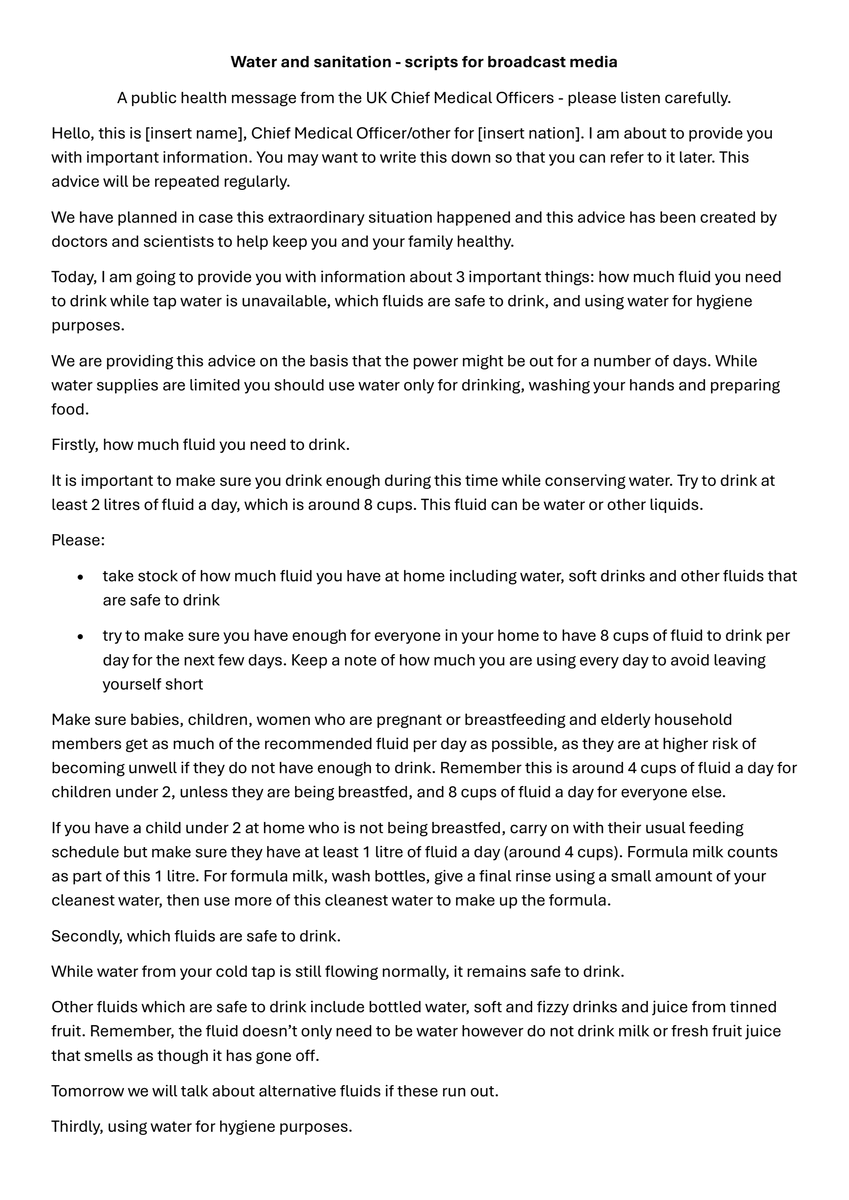
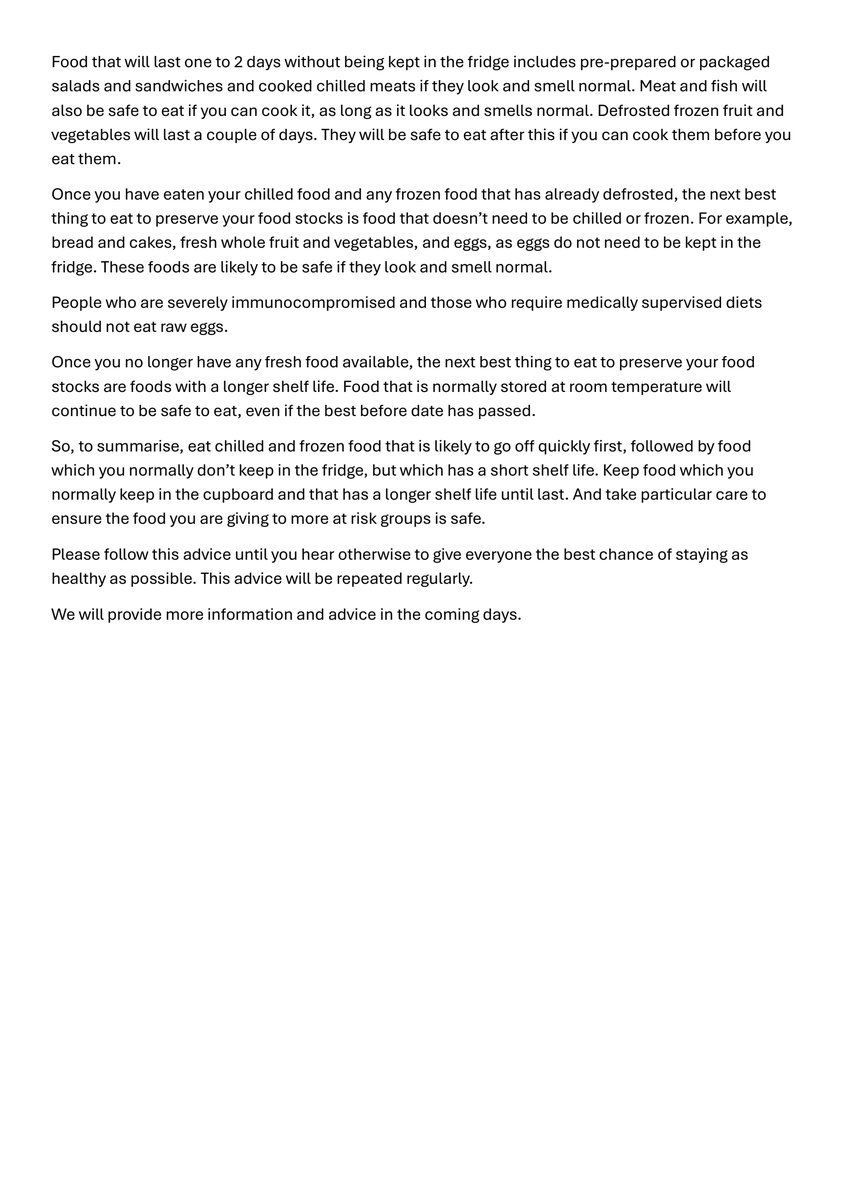
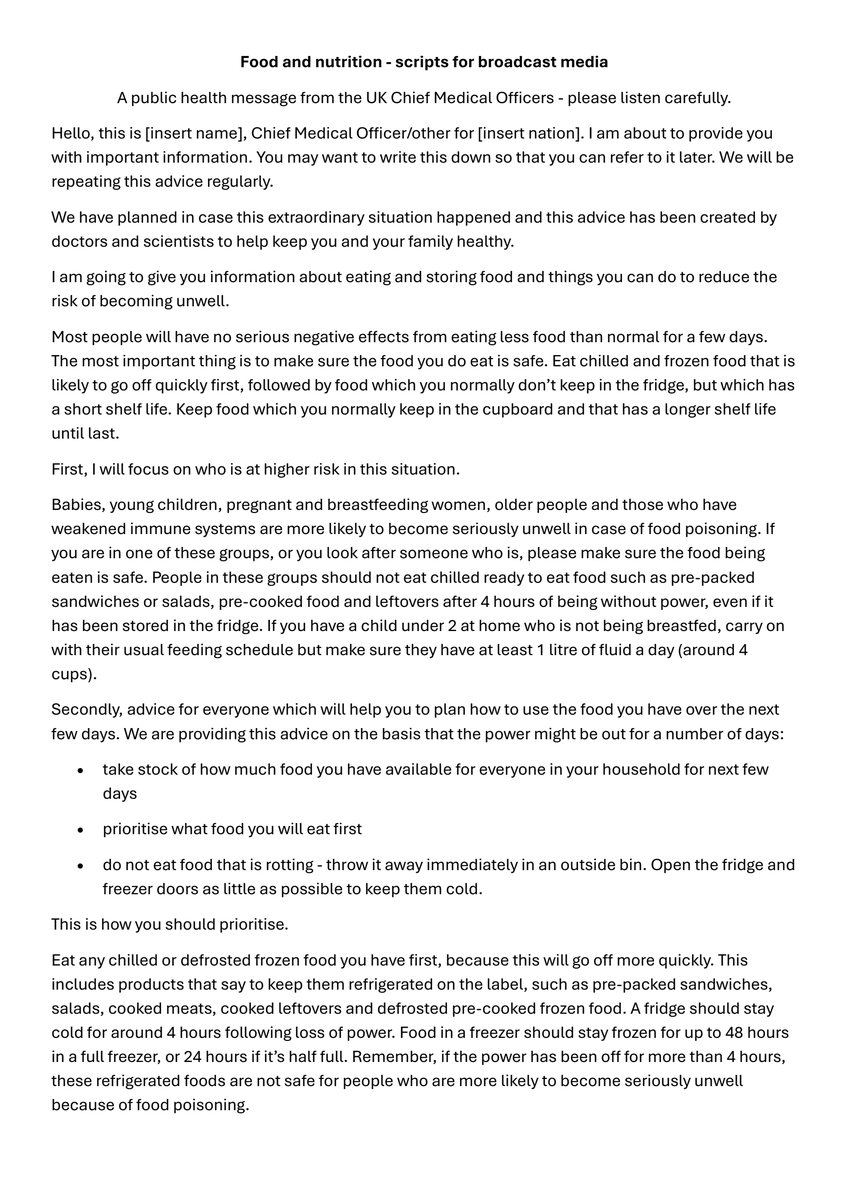
- The BBC would broadcast pre-written Government scripts through the studio, including how to ration water, what to do if toilets stop working and which food to eat first (see scripts below)
- Radio masts would switch to diesel generators to keep broadcasts going for up to 72 hours without electricity
- BBC teams would use satellite phones to stay in contact, with agreed meeting points and backup arrangements if those phones stop working
- They would also report from emergency centres across the UK using satellite-equipped BBC vehicles to help keep information flowing to the public
- Emergency services would have alternative ways to communicate if mobile phone networks stopped working
- The Government is putting £70m towards aircraft that could restore mobile phone and internet coverage across the UK for over a week
🇬🇧 The UK is planning for a "Black Sky" blackout affecting nearly 70 MILLION people.
A Black Sky is when the power goes out for days and takes water, shops and communications with it.
A recent UK resilience summit focused on withstanding one for at least 72 hours, per the BBC.
When floods cut power to 61,500 people in Lancaster in 2015, all of these failed:
1. Lights and heating
2. Some water supplies, which relied on electric pumps
3. The railway station
4. Petrol stations and shops
5. Traffic lights
6. Most cash machines
Which communication systems kept working? Only copper landlines and FM radio.
The issue climbed the agenda after the April 2025 blackout across Spain, Portugal and southwestern France.
The UK's backup plans include:
• About 100 BBC staff ready to run an emergency studio with fuel, food and water for at least three days.
• Emergency broadcast scripts already online, including how to dispose of toilet waste without flushing.
• £70 MILLION of government spending to develop high-altitude aircraft for at least a week of emergency phone and internet.
And on January 31, 2027, the UK switches off its copper landlines.
The government says there is no specific threat to the grid, which has never had a complete outage in 75 years.
Cash, cards or crypto: what would you rely on if the power went out for three days?
Tom Hiddleston, the guy who plays Loki, sat down on a New York subway bench and casually explained why chasing happiness makes you less happy.
Turns out he knows exactly what he's talking about. He has a double first in Classics from Cambridge, where Mary Beard was one of his supervisors, and what he's describing is a 2,300-year-old idea from Aristotle that psychologists have spent the last 20 years backing up.
Aristotle split happiness into two things we usually mash together. Hedone was pleasure, like the sunrise feeling Tom talks about. Eudaimonia, which usually gets translated as flourishing, was something you could only judge across a whole life. His line was that one swallow doesn't make a spring, and one good day doesn't make a person happy.
Psychologist Iris Mauss tested the chasing part in 2011. Her team had some people read a fake newspaper article about how important happiness is, and then everyone watched a feel-good clip of a figure skater winning gold. The people who'd been told happiness matters came out of that clip feeling worse than everybody else. When the clip was a sad one, both groups felt about the same. Mauss thinks wanting happiness raises the bar for every moment, so even a good one can feel like it fell short.
Roy Baumeister went after the lasting part in 2013 with a study of 397 adults. Money and comfort predicted happiness and barely moved meaning at all. Stress and worry actually went along with more meaning, and so did time spent thinking about the past and the future. Raising kids pushed meaning up and happiness down at the same time.
Tom's version was "I'm doing it for my kids. I'm doing it for my mom."
Daniel Kahneman put real numbers on that trade. He had 909 working women walk back through the day before, hour by hour, and rate how each part felt. Taking care of their kids scored 3.86 out of 6, below watching TV, below cooking, and just a hair above housework.
Ask those same women about their lives, though, and they'll tell you their kids are the biggest source of joy they have.
I have two kids, and most mornings I can feel both of those answers before breakfast.
That's what Aristotle was getting at the whole time, a life that can score pretty badly hour by hour and still add up to something great, and Tom just explained it better on a subway bench than most professors manage in a full lecture.
Here are 4 things every UK household should do. 🧵👇
1. SAVE YOUR PHONE BATTERY 📱
Stop repeatedly calling. Try short SMS messages instead. Use battery-saving mode and switch on aeroplane mode when you don’t need a signal.
🇬🇧 Ask your family WhatsApp group one question tonight.
“If the UK lost power and mobile networks tomorrow, where would we meet?”
Most families won’t have an agreed answer
A cyberattack, major power cut or national emergency could leave you unable to call, text or use WhatsApp
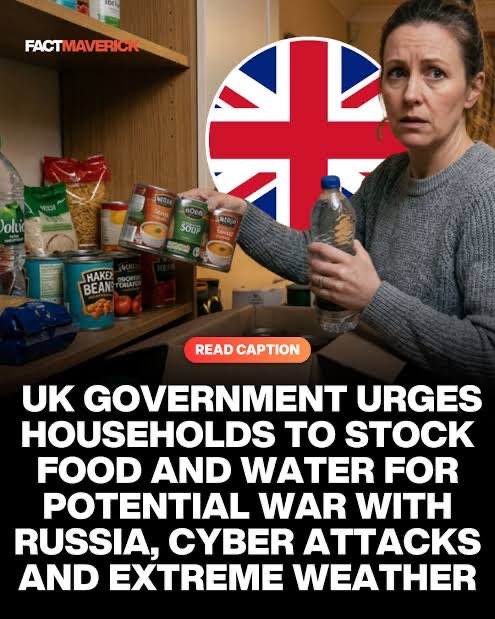
The government has published without fanfare new advice for all households on how to be ready for emergencies, which includes stockpiling enough food and water for three days.
For everything you need simply
Click the link in our bio
Let’s help one another get our home ready
🚨Countries urging households to prepare / stockpile supplies:
• UK — 3 days
• Japan — at least 3 days, preferably a week
• Sweden — 7 days
• Norway — 7 days
• Finland — 3 days
• Denmark — 3 days
• Germany — ~10 days
• Austria — 10–14 days
• France — 72 hours
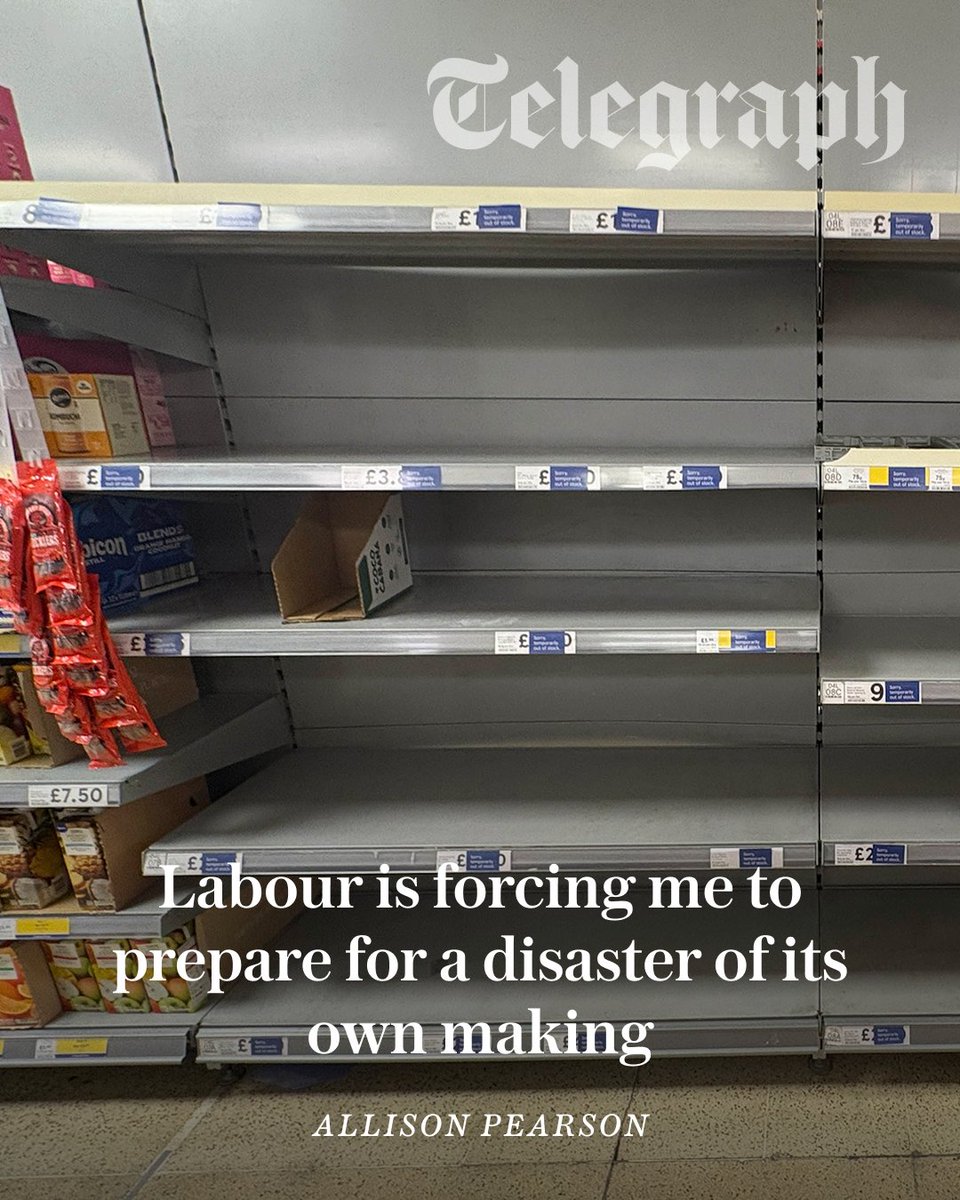
'Blame it on the storms, blame it on climate change, blame it on Trump – blame anyone and anything except the successive British government. Much better to gaslight the British people with a Be Ready campaign, so we can do the prepping instead of them'
@AllisonPearson argues 'like it or not, we are all preppers now, ladies and gentlemen' 👇
https://t.co/QHAGrgr7AV
Toilet roll and water sales soar as prepper panic hits supermarket shelves with suppliers warning against 'pandemic-style' hoarding after government's 'Be Ready' campaign https://t.co/xZtxtexAKW
Brits are being urged to ‘Be Ready’ for an emergency, and making sure they have up to three days' worth of key supplies to see them through in the event of a crisis. The government’s resilience campaign checklist can be found on the https://t.co/4M9xRLY3YS site.
Safest: New Zealand (remote South Pacific, food surplus, low strategic value); Iceland (isolated, top peace ranking, geothermal power); Switzerland (neutrality, nationwide bunkers, Alps); Argentina (vast farmland, distant from northern targets); Chile (Andes/Pacific barriers, resources).
Worst: Washington DC, Moscow, Beijing, New York, London (capitals/military hubs of nuclear powers with dense populations and high strategic value as primary strike targets).
The question isn’t whether you should be prepared. It’s whether you are.
🏠 IS YOUR HOME READY?
Get ready with READY HOME.
Everything you need to prepare your household, made simple.
✅ One click. Everything you need.
🔗 Tap the link in our bio to get ready today.
🚨 Don’t panic. Be ready.
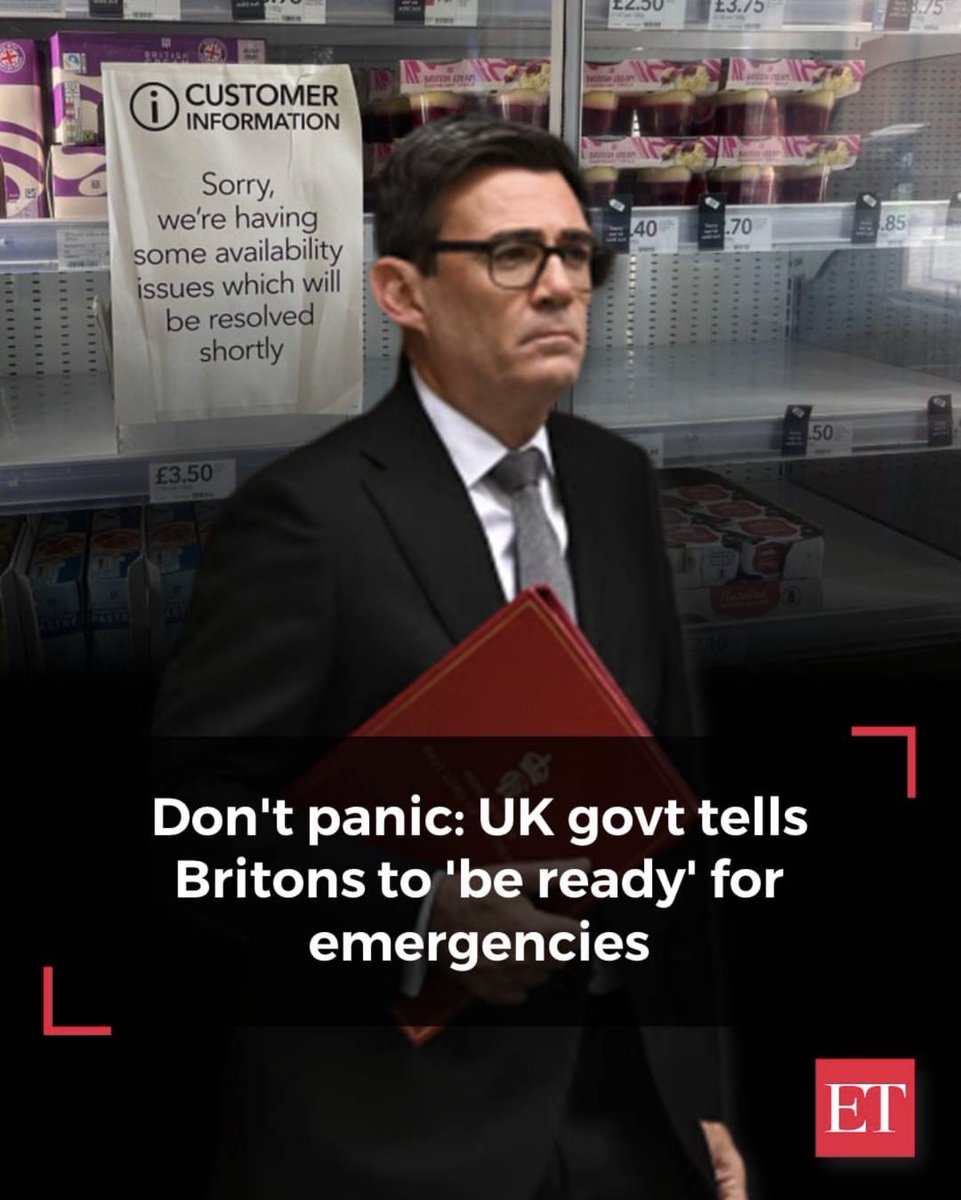
The UK government is urging Britons to prepare for emergencies.
From severe weather and power cuts to cyberattacks and unexpected disruptions, the message is simple: every household should be prepared.
recommends keeping at least three days’ worth of essential supplies at home, including:
💧 Bottled water
🥫 Non-perishable food
🔦 Torches and spare batteries
📻 Battery-powered or wind-up radio
💷 Emergency cash
🛏️ Blankets and sleeping bags
🧴 Essential toiletries