De sector laat weten dat vaste airco’s in woonzorgcentra ‘meer geld’ vergen als de overheid ze zou verplichten. Intussen betalen bewoners zoals mijn schoonmoeder meer dan 2500 euro per maand voor een kamer die bij de eerste hittegolf verandert in een subtropische oven.
Terwijl de dagprijs royaal volstaat voor personeel en organisatie, blijkt klimaatbeheersing plots een onoverkomelijke luxe waarvoor de bewoner of de overheid maar moet bijpassen.
Dit is geen eerlijke discussie over kosten, maar een klassieke poging om de verantwoordelijkheid door te schuiven op de kap van hen die al het meest betalen.
Na de recente, volstrekt vermijdbare sterfgevallen van kwetsbare ouderen in erkende centra is dit antwoord niet alleen teleurstellend, het is onaanvaardbaar.
Ofwel garandeert die torenhoge factuur eindelijk een waardig en veilig verblijf inclusief bescherming tegen hitte ofwel moet de overheid dringend bindende normen opleggen, gefinancierd met gerichte middelen en slimme, duurzame oplossingen.
Genoeg uitstel en excuses.
De rekening is al lang betaald.
For most of human history, women did not experience children as some rare interruptions to adult life. Babies were everywhere, in arms, on hips, asleep in slings, playing under tables while bread was kneaded and laundry was folded. A young girl did not grow up in a world separated from motherhood.
So how can women want babies when they rarely see babies?
A baby changes the atmosphere of a room, people smile more, they speak softer, they are gentler, there is more joy.
Perhaps the desire for children has not disappeared nearly as much as we think. Perhaps many women have simply been separated from the very thing that used to awaken that desire in their hearts.
I was at Target and saw a dad shopping with his two kids.
One of them asked if they could get a toy.
He said no.
The kid asked why.
He said, "Because we're not here for toys. We're here for groceries."
The kid started whining.
And instead of giving in or getting frustrated, he just calmly kept walking.
He didn't yell.
He didn't bribe them with snacks.
He didn't say "maybe next time" just to stop the crying.
He just said no and meant it.
I was genuinely impressed.
Because I've seen so many parents cave the second their kid starts making noise in public.
But this guy just stayed consistent.
Eventually the kid stopped asking.
And they continued shopping like nothing happened.
I don't have kids, so I'm not judging anyone's parenting style.
But watching that interaction made me realize how rare it is to see someone......
to see someone hold a boundary without apologizing for it.
He wasn't mean.
He wasn't harsh.
He just knew what the answer was and didn't second-guess himself.
I walked past them again near the checkout.
The kids were helping him load groceries onto the belt.
No tears.
No tantrum.
Just two kids who learned that no means no.
And a dad who didn't need to explain himself to strangers or his children.
Le déclin de la consommation d’alcool chez les ados.
En tant que médecin, je devrais m’en réjouir.
Et pourtant, je suis plutôt inquiet.
Parce qu’on confond peut-être disparition d’un symptôme et bonne santé d’une génération.
Oui, les adolescents boivent moins.
Mais ils sortent moins.
Ils couchent moins.
Ils prennent moins de risques.
Ils conduisent moins.
Ils vivent moins de rites de passage.
On a l’impression d’avoir « résolu un problème », alors qu’on a aussi progressivement détruit ce qui transformait des adolescents en adultes.
Téléphones.
Vie sociale numérisée.
Anxiété permanente.
Discours catastrophistes sur l’avenir.
Culture de l’évitement du risque.
Parents hyperprotecteurs.
L’adolescence d’avant était parfois brutale, parfois excessive, parfois dangereuse.
Mais elle était aussi profondément formatrice.
On apprenait la honte, le courage, le rejet, la séduction, la hiérarchie sociale, la transgression, la responsabilité.
On apprenait à devenir adulte au contact des autres pas derrière un écran.
Je ne fais pas l’apologie de l’alcool.
Je dis simplement qu’une société qui produit des adolescents parfaitement « safe » mais socialement inhibés, anxieux et isolés devrait peut-être s’interroger.
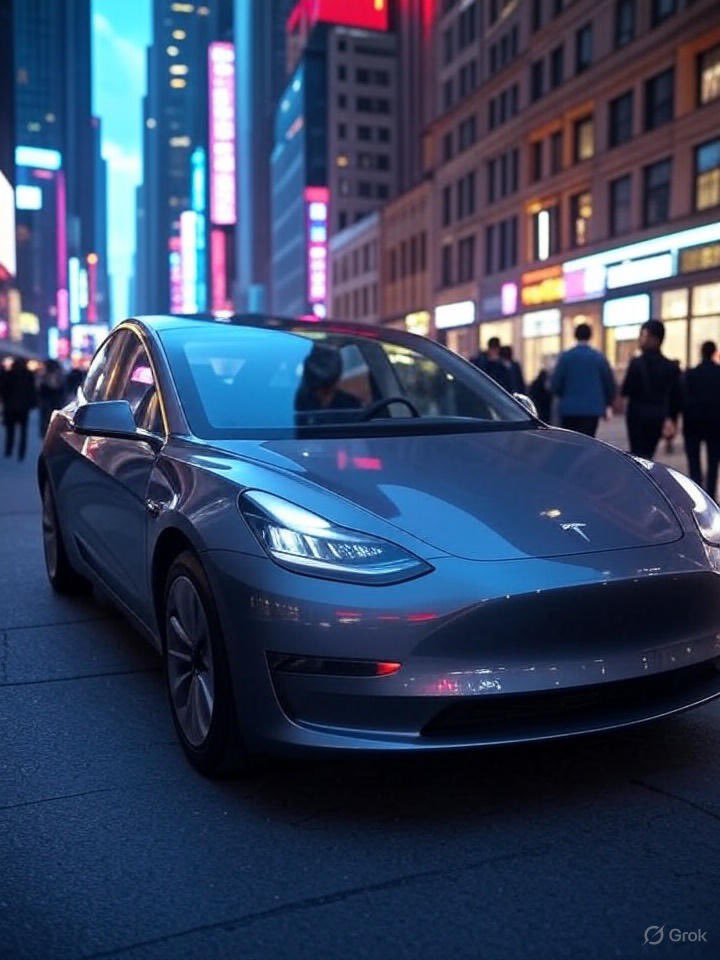
Picked up a pizza order. As I walked out, an elderly couple was getting out of their new Tesla Model Y. I said, “Beautiful car.” He said, “Thank you. It’s the best car I’ve ever owned.”
I said, “Why?”
He said, “You see me—I’m 78 and can barely walk, let alone drive. I’m taking my wife out for date night again after 52 years of marriage. We couldn’t do this with our old car. I didn’t buy this to save the planet. I bought it to save me.” 😢
All choked up, I said, “Thank you for sharing. You two go enjoy your dinner!”
I see and hear this so often from elderly people buying Teslas, but it never gets old. Tesla is freedom🫶🏻
I never wanted to like Tesla.
I spent nearly 25 years at a German OEM, so when the Model S launched in 2012, I thought it was cool but just a gimmick. Then came the Model X. Interesting, sure, but $100k+ vehicles? No way they’d survive.
But when the Model 3 was announced in 2016, something shifted. I started paying attention. Really paying attention. I watched Tesla power through “production hell” during the 2018 Model 3 ramp-up, and I was genuinely impressed by their speed, grit, and ability to pivot.
That’s when I dove deep.
I looked into their software and hardware engineering, vertical integration, materials science, supply chain philosophy, and their velocity-obsessed business model. The more I learned, the more I realized Tesla approaches everything differently—from the way they design products to how they build and deliver them. This isn’t a company adding innovation on top of an old system. They’ve rethought the system itself.
And pretty quickly, it hit me: this isn’t really a car company. It’s something much bigger. A technology company that happens to make vehicles—vehicles that are just one piece of a much larger mission.
And if legacy brands can’t keep up, Tesla will outpace them. Not because they’re trying to crush the competition, but because they’ve completely changed the rules of the game.
Fast forward to 2023. My wife and I bought our first brand-new Tesla: a Model 3 Long Range All-Wheel Drive. It’s the best car I’ve ever owned. And I’ve owned close to 40 vehicles, many of them segment leaders.
Nothing compares to Tesla’s seamless integration of hardware and software. Waking up to find new features in your car? That’s unusual, unexpected, and uniquely Tesla. It’s hard for people to grasp what a Tesla really is. They see a smooth jellybean shape on the road and completely miss that it’s one of the most advanced pieces of consumer technology ever built.
We get to buy that. It protects your family. It even drives itself.
There’s nothing quite like a Tesla.
Over the weekend, I got into a heated argument with someone who claimed Tesla’s in trouble. That nobody wants their cars anymore because of @elonmusk’s political stances. They even insisted Tesla’s losing ground in China.
I pushed back. I pointed out that the Model Y is consistently among the top-selling EVs in China—sometimes the top-selling vehicle overall. Case in point: in June 2025, it was the best-selling car in the entire country. In the first half of 2025 alone, Tesla sold 171,491 Model Ys in China, leading its price segment despite a 17.5% year-over-year decline.
They called me a liar.
But the numbers don’t lie. Just check the sales data.
It’s a shame how much negative media gets piled on Tesla, painting the company as faltering when in reality they’re pushing boundaries, building exceptional products, and driving a culture rooted in a shared sense of mission.
With leadership from @elonmusk, design from @woodhaus2, and engineering oversight from @larsmoravy, Tesla’s teams continue to deliver what others say is impossible.
I’m proud to be along for the ride as a customer and an investor. ❤️
@tesla@Tesla_AI $TSLA
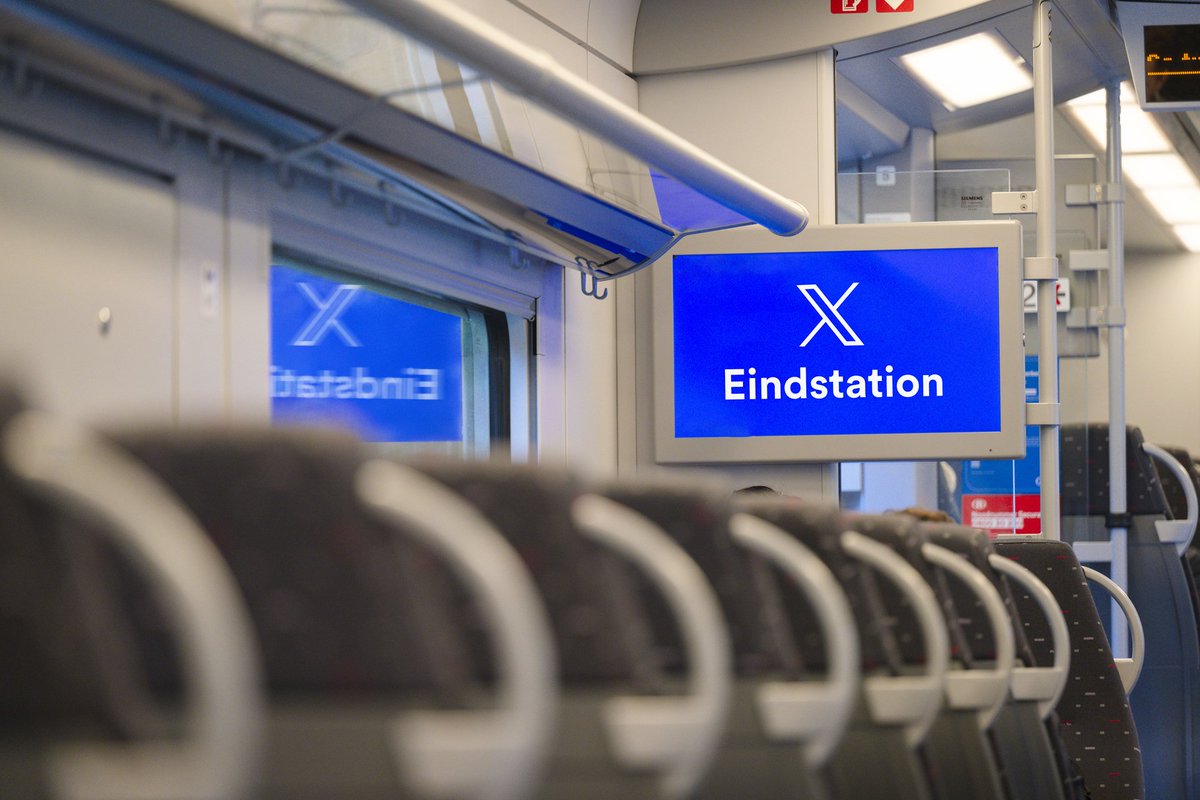
📢 Wij verlaten X. Dit communicatiekanaal ligt niet langer in lijn met de #waarden van #NMBS.
➡️ We nodigen je uit om onze andere kanalen te gebruiken om ons te volgen of om contact op te nemen met onze klantendienst.
Tesla in 2025:
• New Model Y launch
• More affordable models launch in first half of this year, utilizing aspects of Tesla's next-gen platform
• First builds of Tesla Semi at newly built factory
• Pilot production of Optimus. Will include next-generation hand with 22 degrees of freedom (human hand has 27 DOF. Gen-2 Optimus had 11 DOF)
• Cybertruck RWD launch
• Cybercab production lines currently being prepped at Giga Texas
• Launch of FSD (Unsupervised) and initial Robotaxi rides in Austin, TX
• New Megapack factory in Shanghai starts mass production next week, doubling Tesla's global production capacity
• Tesla Lithium Refinery in Texas starts production
• Powerwall 3 production ramp continues. Will launch in additional markets
• 500 kW charging unlocked for Cybertruck, 1.2MW (1,200kW) for Tesla Semi at V4 Superchargers with V4 cabinets
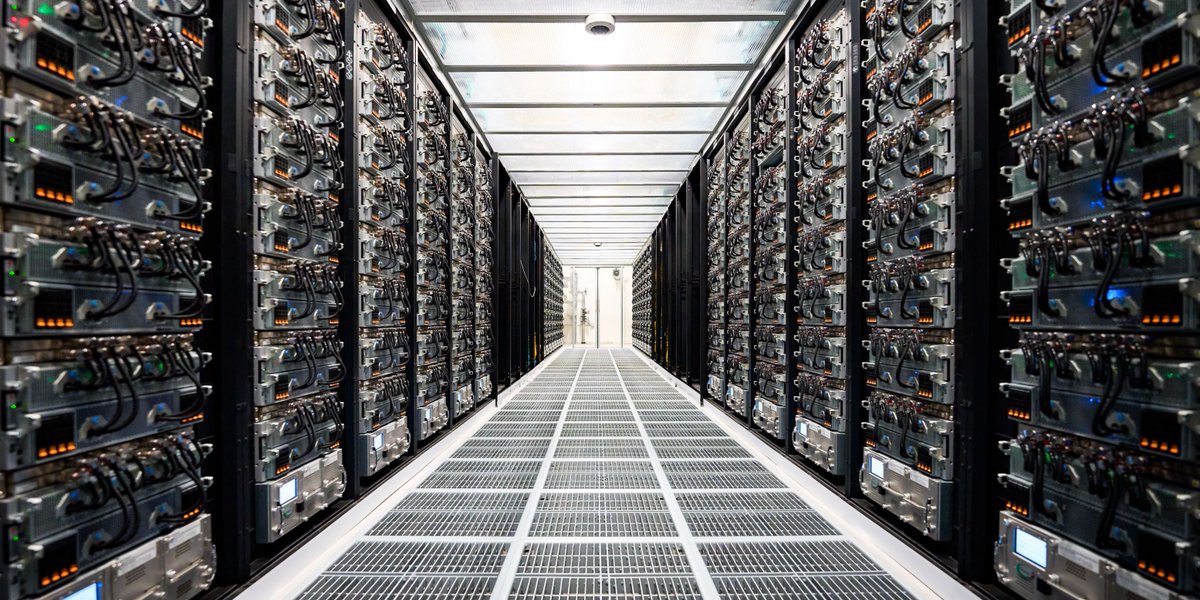
• Expansion of Tesla's "Cortex" Supercomputer GPU training cluster at Giga Texas
• Tesla Dojo 2 in volume production by the end of 2025
What did I miss?
@Teslaconomics What is the right strategy to take profits for your living expenses? I wonder when and how I could change my life and work less or stop working