Today we launched the "ISLB Global Survey: Oncologist Attitudes and Practices on Liquid Biopsy" to collect worldwide data on the use of liquid biopsy in clinical practice!
Help us sharing the survey with all the oncologists you know :)
https://t.co/UfwHSj5Pn3
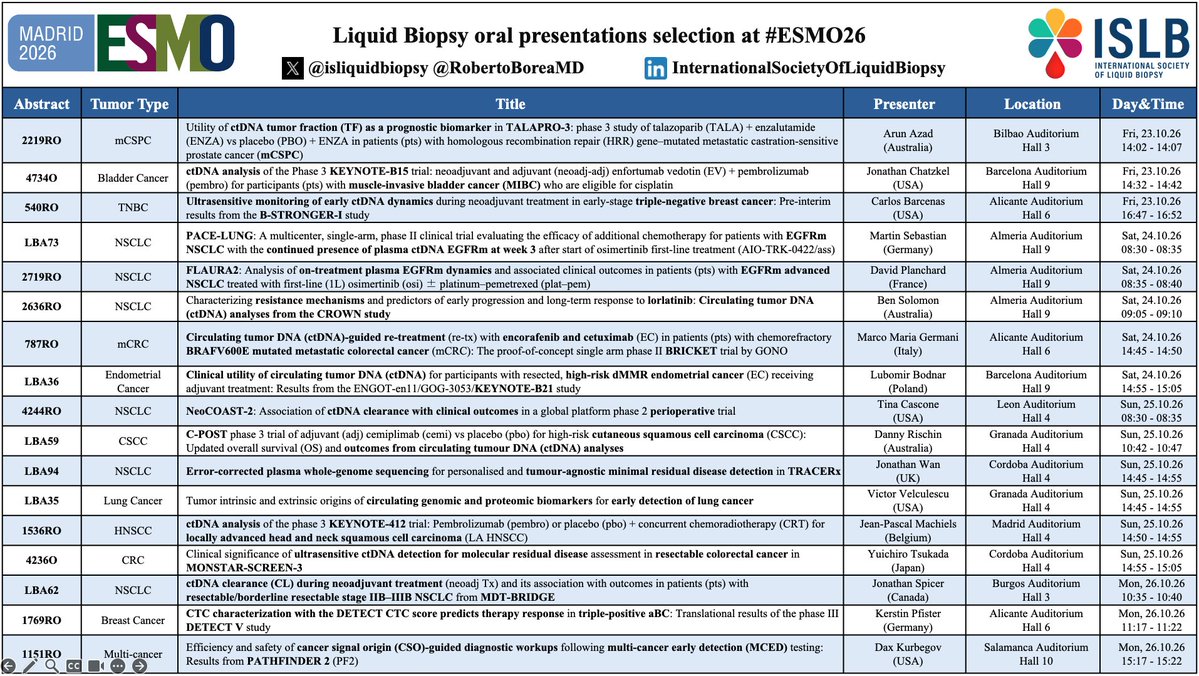
-3 days to #ESMO26! Are you ready? PMAC is heading to Madrid. Our members are eager to exchange ideas on #LiquidBiopsy, #PrecisionOncology and #RealWorldEvidence.
Look out for our members during the meeting or send us a message to connect.
Attending? 🤝 Let’s talk!
Can where a patient lives influence both the biology of their cancer—and whether they receive the latest targeted therapy?
Article📰
https://t.co/Njt1AEifkg
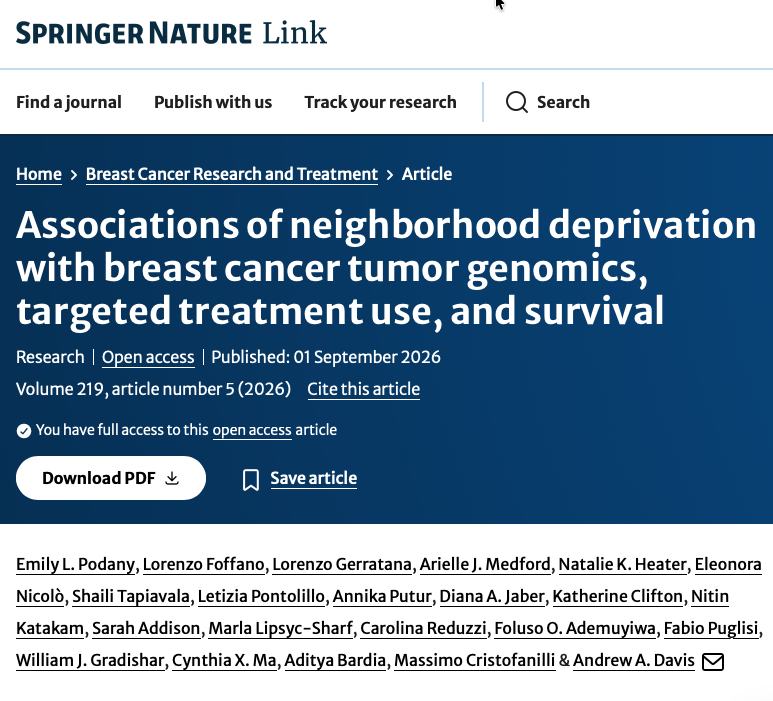
Associations of neighborhood deprivation with breast cancer tumor genomics, targeted treatment use, and survival
This population-based study of 1,127 patients with metastatic #BreastCancer found meaningful differences associated with neighborhood deprivation. Patients in highly deprived areas were more likely to harbor TP53 🧬 mutations, less likely to receive PI3K inhibitors 💊 when eligible, and had shorter survival.
✅ The findings highlight how social and environmental context may intersect with tumor biology, treatment access, and outcomes, reinforcing the need to address structural inequities alongside advances in precision oncology.
@lfoffano97 , @LGerratana , @diana_jaber , @SarahAddisonMD , @MarlaLipsycMD , @ReduzziCarol , @puglisi_fabio , @DrWGradishar , @dradityabardia
SERENA-6 provides prospective evidence that serial #ctDNA monitoring can detect emerging ESR1-mediated resistance and guide an endocrine switch before radiographic progression moving #LiquidBiopsy from detection to intervention.
Join the ISLB 2026 Young Career Session, where the next generation of researchers and clinicians will explore the latest advances shaping precision oncology. Designed to inspire early-career scientists, this session highlights innovation, collaboration, and the future of liquid biopsy research and clinical implementation.
Hear from an outstanding lineup of young leaders:
𝗗𝗿. 𝗥𝗼𝗯𝗲𝗿𝘁𝗼 𝗕𝗼𝗿𝗲𝗮 – Committee Chair for the Young Committee
𝗗𝗿. 𝗗𝗶𝗲𝗴𝗼 𝗱𝗲 𝗠𝗶𝗴𝘂𝗲𝗹 𝗣𝗲𝗿𝗲𝘇 – Summary of ISLB YC 2026 Activities
𝗗𝗿. 𝗕𝗿𝘂𝗻𝗮 𝗣𝗲𝗹𝗹𝗶𝗻𝗶 – Designing Smarter Trials: Integrating Liquid Biopsy into Clinical Study Frameworks
𝗗𝗿. 𝗖𝗹𝗮𝘂𝗱𝗶𝗮 𝗦𝗰𝗶𝗺𝗼𝗻𝗲 – The Evolving Landscape of Next-Generation Sequencing in Liquid Biopsy
𝗗𝗿. 𝗖𝗮𝗿𝗼𝗹𝗶𝗻𝗮 𝗥𝗲𝗱𝘂𝘇𝘇𝗶 – Circulating Tumor Cells: Where Are We Now?
𝗗𝗿. 𝗘𝗻𝗲𝘀 𝗘𝗿𝘂𝗹 – Liquid Biopsy Without Borders: Expanding Access in Middle-Income Countries
Whether your passion is clinical trials, NGS, circulating tumor cells, or expanding global access to liquid biopsy, this session offers valuable insights and inspiration for the next generation of leaders in the field.
📍 Join us at ISLB 2026 in Madrid.
𝗟𝗲𝗮𝗿𝗻 𝗺𝗼𝗿𝗲 𝗮𝗻𝗱 𝗿𝗲𝗴𝗶𝘀𝘁𝗲𝗿 → https://t.co/GIQ0v9Pukp
#ISLB2026 #LiquidBiopsy #YoungCareer #PrecisionOncology #CancerResearch #TranslationalResearch #NGS #ClinicalTrials #CTC
@RobertoBoreaMD@ddemiguelperez@BrunaPellini@ClaudiaScimone@ReduzziCarol@ErulEnes
Could tumor-derived extracellular vesicles become the next essential liquid biopsy biomarker?
https://t.co/XBPXL59xAF
Combining circulating tumor cells and tumor-derived extracellular vesicles for prognosis stratification in patients with metastatic breast cancer
This study validated tumor-derived extracellular vesicles (tdEVs) as an independent prognostic biomarker 🎯in 740 patients with metastatic #BreastCancer . A threshold of >20 tdEVs/7.5 mL blood🩸 effectively stratified survival risk and was independently validated.
➡️Combining tdEVs with circulating tumor cells (CTCs) identified prognostic subgroups more accurately than CTCs alone, particularly among patients with low CTC counts, supporting improved patient stratification, clinical trial design, and personalized treatment strategies in metastatic breast cancer.
@eleonora_nicolo@lfoffano97@letipontolillo@curijoey@LGerratana@DrWGradishar@ReduzziCarol
🎗️ Circulating tumor cell counts may not reveal the full prognostic picture in metastatic breast cancer.
A new ESMO Open analysis evaluated tumor-derived extracellular vesicles alongside circulating tumor cells in two independent cohorts.
Patients with more than 20 tdEVs per 7.5 mL had shorter survival. In the training cohort, median overall survival was 21 versus 45 months.
When both biomarkers were combined, median overall survival was 47 months for patients with low levels of both and 15 months for those with high levels of both.
Elevated tdEVs also identified poorer prognosis among some patients with low circulating tumor cell counts.
The findings support a more comprehensive liquid-biopsy approach, although prospective validation is required before the assay can guide treatment decisions.
Read the full article below. 👇
https://t.co/75KqlUal9x
@eleonora_nicolo@ReduzziCarol
#BreastCancer #MetastaticBreastCancer #LiquidBiopsy #CirculatingTumorCells #ExtracellularVesicles #Biomarkers #PrecisionOncology #OncoDailyBreast
Missed our live webinar with Dr. Cristofanilli? The full recording is now on YouTube! 🎥
Watch as we break down how biomarkers like #ESR1 and #LiquidBiopsy are actively changing clinical decisions in HR+/HER2- #MetastaticBreastCancer
👇Watch here: https://t.co/g50FCdpOCl
🚨 Just 4 days left!
Join PMAC & Dr. Massimo Cristofanilli to explore how liquid biopsy and biomarkers like ESR1 are actively reshaping clinical choices in HR+/HER2- metastatic breast cancer.
📅 June 15, 2026
⏰ 3–4 PM ET
💻 Live on Zoom
Register: https://t.co/TtdcJYIsbh
Congrats to Scientific Director Dr. Massimo Cristofanilli (@MassimoCristof09) & Dr. Carolina Reduzzi (@ReduzziCarol) on their new @ScienceTMpaper, "Dual-positive #CTCs in patients with advanced #breastcancer show metastatic potential and prognostic value."
https://t.co/NZ33UQ6gnb
Researchers present one of the largest analyses of dual-positive #CTCs in patients, tracing how these cells correlate with outcomes in advanced #BreastCancer and how they seed metastasis in mice. @CtcLaboratory@ReduzziCarol@WeillCornell https://t.co/us1Df13FyB
🚨 SABCS25 Highlight | PHERGuide (PHERGain translational ctDNA analysis)
A major step forward in reshaping early HER2+ breast cancer management.
Key findings from this ctDNA-guided translational study:
🔬 Baseline insights:
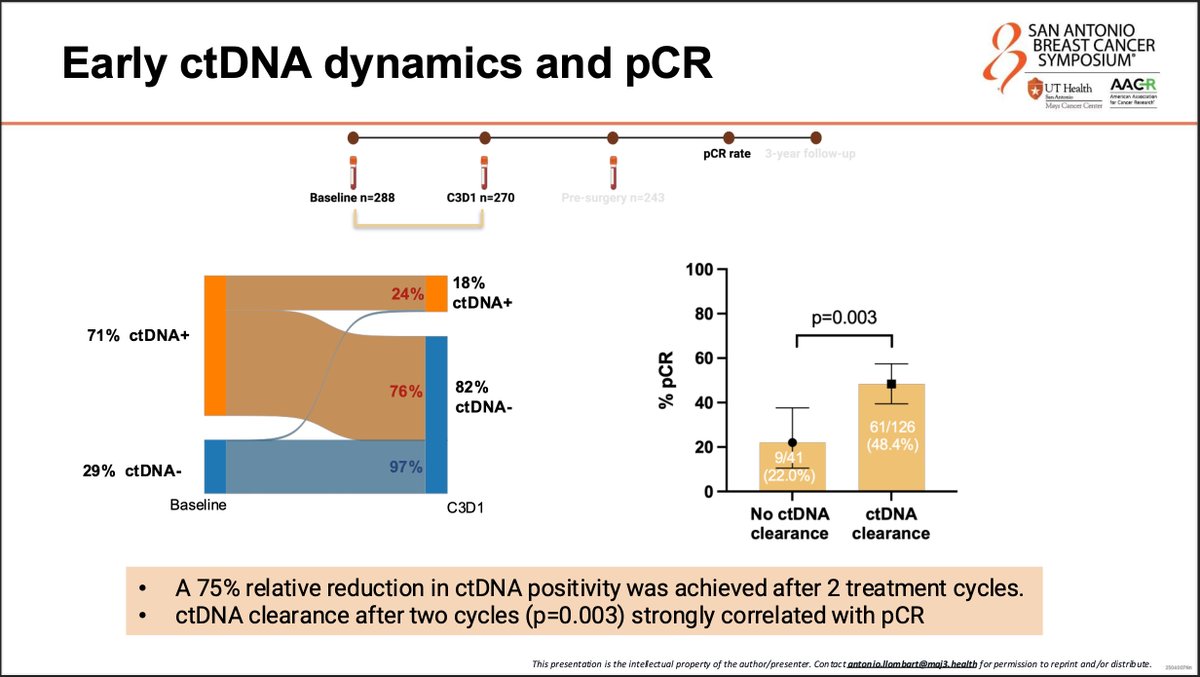
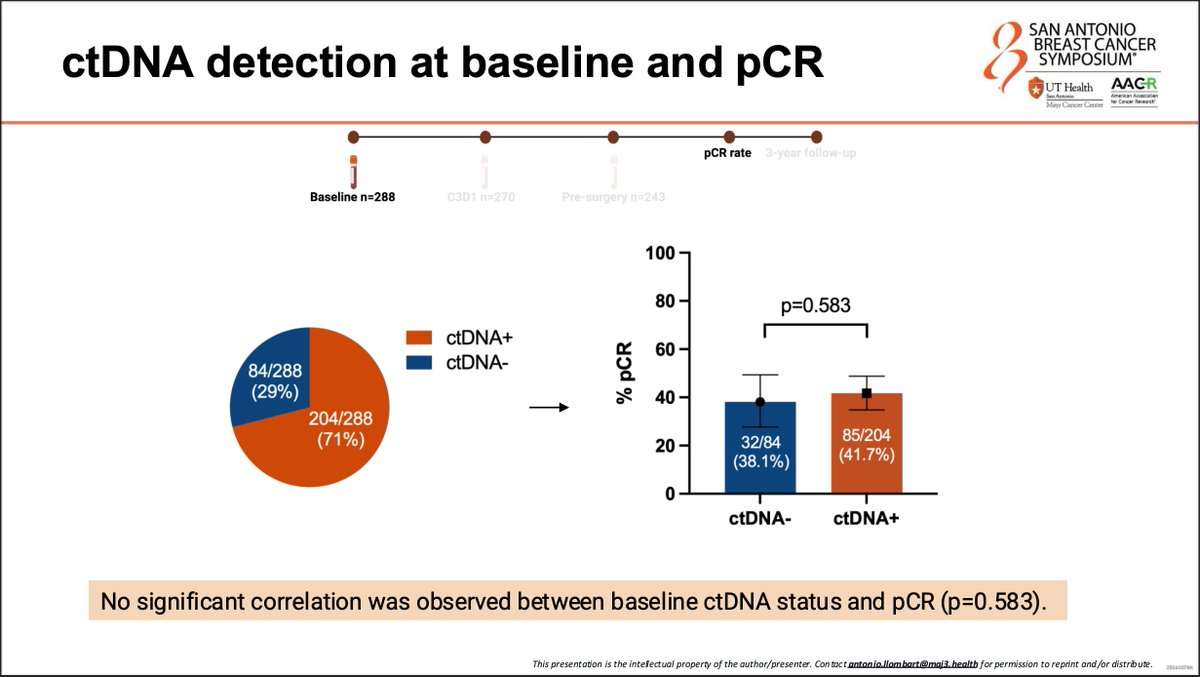
• ctDNA detected in 71% of patients; associated with stage & nodal status.
• Baseline ctDNA did NOT predict pCR — reinforcing that tumor biology is dynamic, not static.
⚡ Early treatment dynamics:
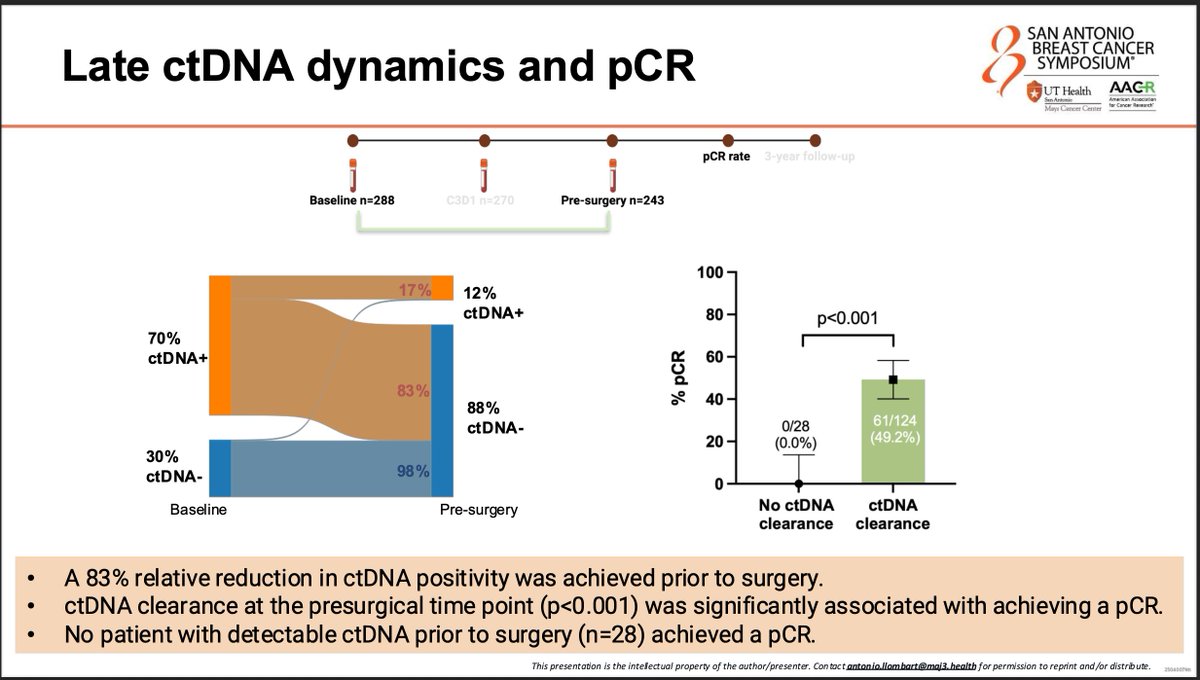
• ctDNA clearance by C3D1 strongly correlated with pCR (p=0.003).
• Early molecular response outperformed baseline biomarkers.
🧬 Pre-surgery signal (most impactful):
• 83% achieved ctDNA clearance pre-surgery.
• 0% of patients with detectable ctDNA at surgery achieved pCR — a powerful negative predictive marker.
• Pre-surgery ctDNA positivity associated with worse 3-year iDFS.
📈 Survival:
• Both baseline ctDNA negativity and ctDNA clearance (early & late) predicted significantly better 3-year iDFS.
🌍 Why this matters now:
This study strengthens a growing paradigm:
ctDNA is emerging as an actionable tool to refine risk stratification, guide treatment escalation/de-escalation, and potentially reshape how we personalize therapy in early HER2+ disease—beyond imaging and pathology.
🔜 Clinical horizon:
• Identify high-risk patients who may benefit from novel escalation (e.g., T-DXd strategies).
• Support de-escalation trials for early molecular responders.
• Integrate methylation-based ctDNA assays into upcoming HER2+ adjuvant/neo-adjuvant designs.
An important translational contribution from PHERGain, pointing to the future of molecularly adaptive treatment in HER2+ eBC.
@OncoAlert@weoncologists@ReduzziCarol
🚀 Our launch event was a success!
It featured an insightful discussion & a deeply moving patient testimonial that underscored the urgency of our mission.
🙌 Thank you for fueling our work!
Our momentum continues straight to SABCS!
Here our abstracts: https://t.co/WpV49zc38n