Single-cell or spatial?
Our new technology - Slide-tags - allows both in the same experiment, enabling true single-cell multi-modal spatial genomics
➡️ https://t.co/i1m5T4bEme
Just released! This Amazing! #AlphaGenome — an AI system that predicts an organism’s genome sequence from its photograph.
It regularly achieves accuracy competitive with experiment. Beta version at 25% but now >99% for Homo sapiens!
An automated FACS machine 🧪
Takes a commercial instrument, and adds a robotic arm + software to auto-generate gates & send updates to Slack.
"Reduces hands-on effort by 93%"
A group at @czibiohub built the tools & open-sourced everything!
https://t.co/9zkHM1vyGd
Today we report on a programmable technology for large-scale gene integration into the genome in @NatureBiotech which tries to solve a long-standing challenge in the gene editing field https://t.co/EdWoIAq7UP w @jgooten@MIT 1/x
Almost every abstract has a line that says "however, bla bla bla is still poorly understood" and it's never clear what's the cutoff for being understood
Our study on single-nucleus and spatial profiling of pancreatic cancer was published today @NatureGenet and will be the cover story in the August issue: https://t.co/stMOT1NZYc.
I’m excited to introduce our Retro-Cascorder, out today in @Nature! This molecular device logs barcoded receipts of gene expression in a temporal genomic ledger. Sequence the ledger --> recover the history of gene expression. https://t.co/aGkyUbRBJW
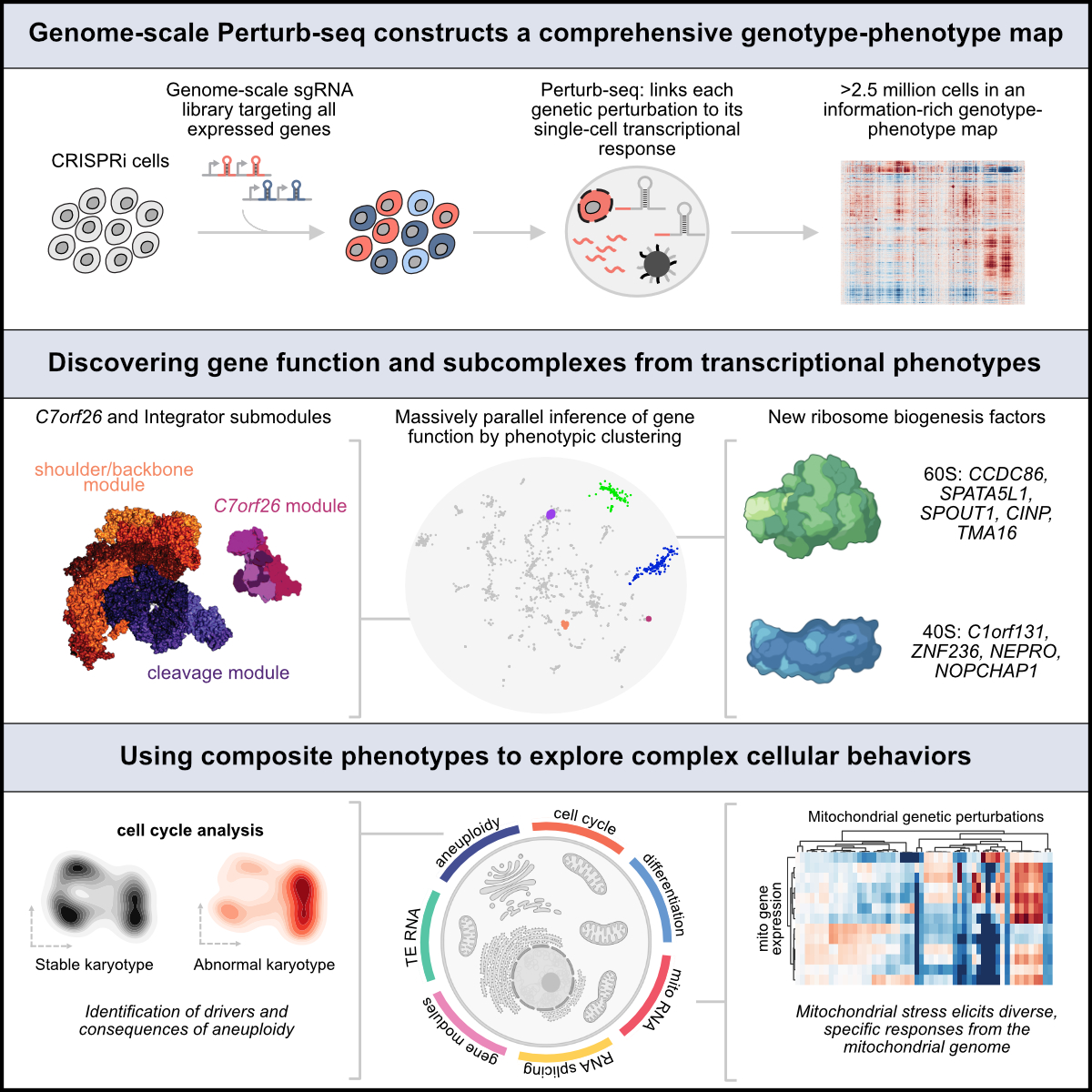
Our genome-scale Perturb-seq paper is out today in Cell! https://t.co/ErZZWSJ3VB @CellCellPress@JswLab
Thanks to all the authors and reviewers for their contributions. See the thread below for key findings.
A thread about using color as a design tool in science presentations. Color is a great tool to separate different categories of information, to highlight information, or to establish an emotional tone. 🧵1/20
Excited to share that our @NatureBiotech paper with Aviv Regev on Multicellular Programs (MCPs) is now out with a fully automated data-driven method to identify MCPs from #singlecell or spatial data #behindthepaper: https://t.co/k7kPmW4NF0 https://t.co/bgcmYxPwnB (1/19)
Small but mighty! This is a video of a killer T cell of the immune system destroying a monstrous ovarian cancer cell. I recently captured this data on a spinning disc confocal microscope.
Excited to share the work from Noah “MC” Lee in the lab. Noah found a way to use Lenti-Cre and implement the Tuba-seq platform developed by @LabWinslow with the @PetrovADmitri lab in a mouse model of #SCLC, identifying TSC1 as a tumor suppressor in vivo https://t.co/Fh35NoxHCP
Our in vivo prime editing study where we corrected a metabolic liver disease is finally out in STM. Congrats to Desiree, Tanja, Lukas and all other co-authors and many thanks to our collaborators! https://t.co/Y4gzWHEfqC
New work from our lab: How can we program T-cells to make better immunotherapies? ⌨️💻🦠
Take a tour of the paper in this fantastic thread from first author (and multi-disciplinary innovator) @MatLegut ⤵️⤵️⤵️
I teamed up with @AaronNewmanLab to answer an important clinical question via #liquidbiopsy:
Can peripheral blood features predict severe #immunotherapy toxicity?
Very excited to share our results @NatureMedicine: https://t.co/mpyIYLXmKl
To me, a major problem is the viewpoint that there is/should be a one-way flow from academia -> industry. Academia should recruit industry scientists at all levels and vice versa. Half of our lab has sig industry experience and it has transformed the way we approach questions.
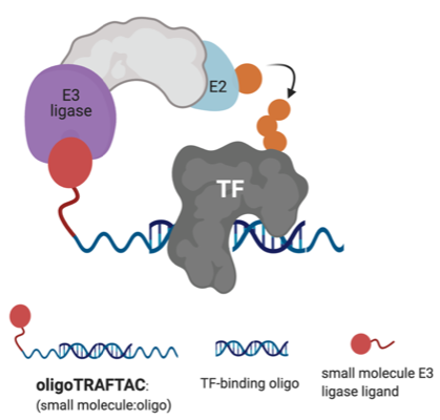
Ever wanted to quickly make a #PROTAC degrader of a #TranscriptionFactor? Check out our latest generation of TRAFTACs- just a TF binding sequence dsDNA oligo coupled to our VHL ligand. PoC studies degraded Myc and #brachyury. https://t.co/X1TbzwP3qu