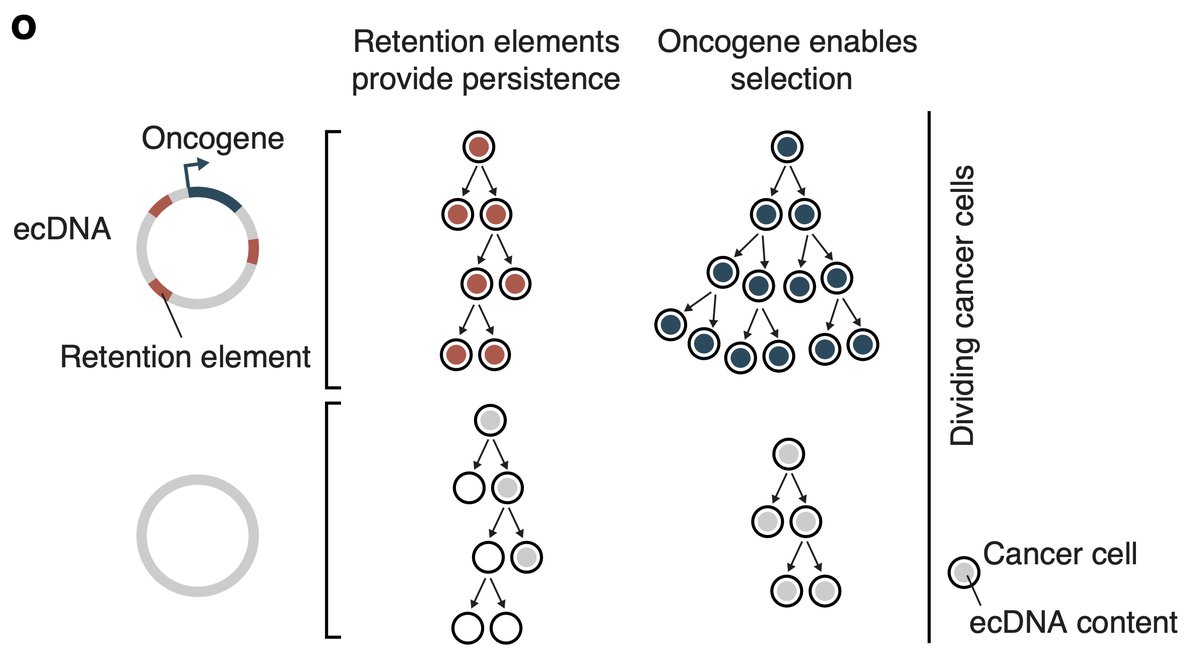
Our paper is out in @Nature! Oncogenes are often copy-number amplified on extrachromosomal DNA (ecDNA) in cancer, but how is ecDNA inherited by dividing cells? Here we identified elements within ecDNA that promote its retention in dividing cells. 1/11
https://t.co/jYAZwj64am
Congrats to postdoctoral fellow King Hung (@kinglhung) on being named a Damon Runyon Fellow, supporting research on how cells communicate to coordinate tissue behavior, a process disrupted in cancer. Using flatworms, he studies how physical and biochemical signals guide regeneration through live-cell tracking. More: https://t.co/YJdhQ3nOwE
Happy to receive funding from Damon Runyon Fellowship / HHMI for the next 4 years! We're working on some fundamental questions in tissue biology and I'm excited to share more soon. Grateful to @ardemp for the mentorship!
https://t.co/ifBgGWK7M3
So excited to see our work profiling the tumor microenvironment in triple negative breast cancer out @NatureCancer! Please give it a read, super proud of this one :)
For a full description of what we found, see below for a detailed tweetorial. https://t.co/GPj6nK4b18
@hhlee@CultivariumFRX Would be huge for the tissue regeneration field if you figure out how to deliver transgenes into different planarian species (sexual and asexual).
Most people eat small (~1-2% body weight) and frequent (2-3x/day) meals. But Burmese pythons 🐍🐍 can fast for >1 yr and eat 100% of their weight in a single meal. What happens in snakes after eating? What lessons they can teach us about human physiology? https://t.co/BzvQeMf8np
Stanford Medicine researchers found that tiny cancer-linked DNA circles “hitchhike” on chromosomes to spread during cell division. Blocking this attachment may offer a new avenue for future cancer therapies.
https://t.co/WnSH66mTnh
This was probably one of my crazier ideas early in grad school and was such a fun project to work on. Check out this awesome short video from @JuliaBauman2 highlighting this work!
ecDNA biology is one of those weird, fascinating corners of bio that hook me every time there's a new result. So I loved reading about this one from @HowardYChang & Paul Mischel's labs in @Nature.
Very interesting implications for design of non-diluting, non-integrating gene therapy vectors!
Great work Venkat & @kinglhung 😀
My lab is recruiting postdoc candidates interested in CRISPR synthetic biology and functional genomics approaches to study and engineer tissue injury responses! https://t.co/5ESgJ1FxFV
Tremendous work by @kinglhung and @HowardYChang ! This recent discovery answers the most critical question on ecDNA maintenance! @Nature Are you a non-scientist? No worries! Check this non-scientist-friendly summary! https://t.co/WxrJf20YYj
Our paper is out in @Nature! Oncogenes are often copy-number amplified on extrachromosomal DNA (ecDNA) in cancer, but how is ecDNA inherited by dividing cells? Here we identified elements within ecDNA that promote its retention in dividing cells. 1/11
https://t.co/jYAZwj64am
It was great mentoring and working with Venkat Sankar on this project. Also great working with @HowardYChang, Paul Mischel, Aditi Gnanasekar, Ivy Wong, and other collaborators on this project. 11/11
Our paper is out in @Nature! Oncogenes are often copy-number amplified on extrachromosomal DNA (ecDNA) in cancer, but how is ecDNA inherited by dividing cells? Here we identified elements within ecDNA that promote its retention in dividing cells. 1/11
https://t.co/jYAZwj64am
Overall, we propose that ecDNA is not only selected in cancer because of oncogenes, it is also actively retained because of retention elements, allowing it to persist in a growing cancer cell population. 10/11