Please join @gregory_landua and @dave_fortson from Regen Network to dig into Regen's AI centered product development to support scaling of ecological repair and regeneration around the world.
Special thanks to @BioFiProject for their leadership on this dynamic topic.
Beyond Extraction: What Can AI Actually Do for Bioregional Regeneration?
📆 November 3 ⏰ 12 – 2 PM EST
🔗 Register here: https://t.co/t6A4Ss6VI8
What that looks like in practice: data centers paying into the watersheds they draw from. Fences coming down so wildlife can move again. Land stewardship paid like a real career.
Part 1 of 2. Read it 👇
https://t.co/AE5Tty1ZgU
The fight over AI and data centers has hardened into two camps: build everything, or stop everything.
@gregory_landua new essay argues both camps are wrong — and that the way through runs through place.
Earthbound Pluralism: A Civilizational Ethic 🧵
The premise: human ways of living — hunter-gatherer to farmer to urban to spacefaring — are a spectrum, not a ladder. None of them ranks above the others.
And planetary boundaries aren’t the goal. They’re the instrument. The goal is active stewardship of a living planet.
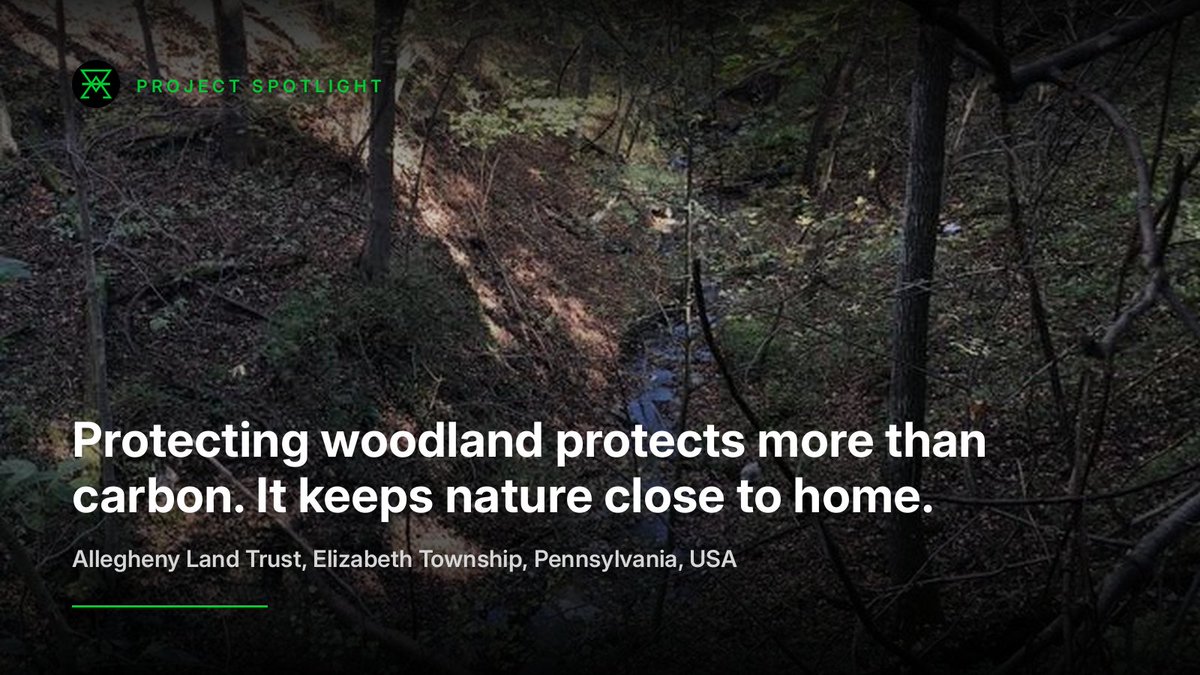
A standing forest is already doing the work. It holds the carbon it has spent decades absorbing, keeps pulling more from the air every year, and shelters the wildlife and open space that disappear the moment the chainsaws arrive. Protect it, and all of that stays. Clear it, and none of it comes back in our lifetimes.
At Buena Vista Heights, Allegheny Land Trust protected a 124-acre woodland near Pittsburgh from residential development. Its maple, cherry and oak-hickory trees shelter wildlife, while local hikers, birders and mountain bikers can explore the forest. Within the Youghiogheny River watershed, the woodland also contributes to water quality for the region. Carbon credit revenue helps cover acquisition costs, stewardship and further land conservation.
Registry: @regen_network
Available Supply: ~2,115 tCO2eq
More about Regen at: https://t.co/FtEyRfYbtN
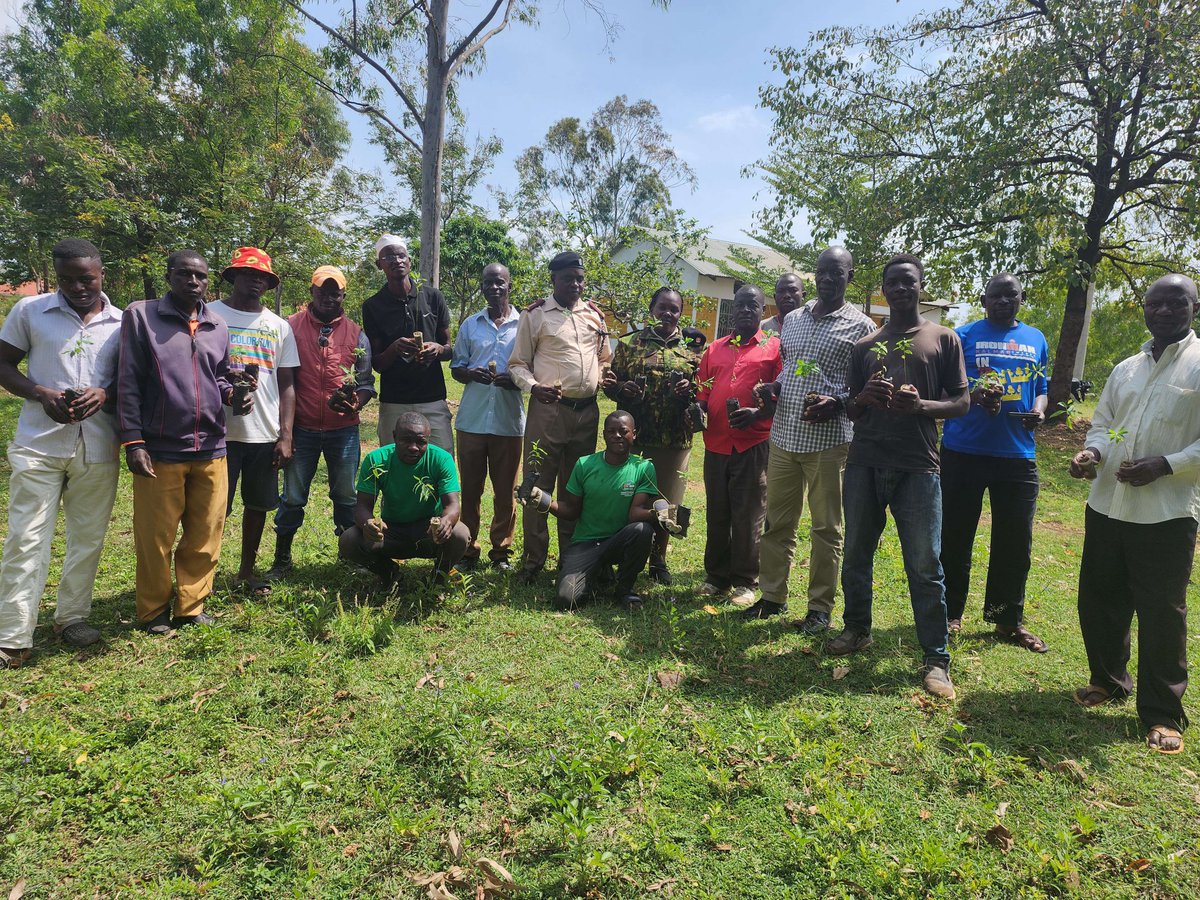
Building real impact, by growing food security, educating children, provide clothes and shelter, friend we need to share our love for our people, let us build together.@regen_network.@agroforestDAO.#Letsgrow
About Regen Registry:
1/ Who decides what counts as a credible ecological credit? On @regen_network's Registry, the answer is a process anyone can follow 🧵
2/ New crediting protocols open for public comment, with at least 2 weeks of community feedback before they move forward.
3/ Then comes expert review: scientists and practitioners examine the methodology.
4/ Approved protocols are voted on and logged on-chain, leaving a permanent, public record of what was approved and when.
5/ New credit types, beyond carbon, go through community governance too. Example: Terrasos Biodiversity Units in Colombia, which include jaguar conservation 🐆
6/ Trust in nature markets comes from processes you can inspect.
https://t.co/KLqC3DwnSx
1/8 The Amazon arrives in New York with something to say.
From Sept 20–26, ASHA joins #ClimateWeekNYC2026 with one demand: an Amazon free of new fossil fuel frontiers, and full recognition of Indigenous sovereignty and self-determination.
Meet the delegation 🧵
Inside Regen Registry: Bring your own methodology
First in a recurring series taking one part of the Registry at a time.
Ecological repair is plural at every scale, but standard environmental markets recognize only a few credit types, leaving critical work—like soil restoration or biodiversity corridors—uncredited.
On Regen Registry, project developers author their own credit protocols. They define the work, evidence, and measurement, which then undergo independent peer review. Partners like Terrasos, SeaTrees, ERA Brazil, and Ecometric have all designed custom protocols this way.
"What attracted us to Regen Registry in the first place was their willingness to work with external methodology and credit class developers. This flexibility to develop a new credit class when we encounter a new ecosystem means we can work potentially with any environment." — David Wright, CEO, Ecometric
Key advantages:
👉 Speed: Reaching first issuance takes months instead of years, providing timely support to active projects.
👉 Independence: Issuances are recorded transparently on an open, immutable ledger independent of central servers.
To date, Regen Ledger mainnet records 187 registered projects across 17 countries, 57 active issuances, 13 protocols, and 80 credit batches.
Regen will be at New York Climate Week @ClimateGroup September 21 - 25. We are putting on a couple of events - please dm if you are interested in attending!
Governance Alert - Proposal 74 - Proof of Authority Transition - set REGEN emissions to zero
From the author: The final step of the Proof-of-Authority transition (RFC #70), after #72 (honest blocks_per_year, passed) and #73 (max_validators 11, passed and in effect). One standard x/mint MsgUpdateParams — no chain upgrade, effective the moment it passes. THE MECHANISM: x/mint currently emits at the corrected 3.50% — about 8.39M REGEN a year on a 239.7M supply. That emission buys no security: min_commission is 0, so at current prices a validator’s take from emission is measured in cents, and the curated authority set runs on infrastructure budgets and conviction either way. What emission actually does is move value from non-stakers to stakers, block by block. WHAT THIS CHANGES: three fields — inflation_max 3.50% to 0, inflation_min 3.50% to 0, inflation_rate_change to 0. Every other mint param is read live from the chain at build time and passed through untouched. Supply becomes fixed at ~239.7M REGEN. WHAT IT DOES NOT DO: it takes nothing from anyone. Delegations, unbonding, fees, slashing, and governance are untouched. Staking rewards from emission end — that is the point — and every holder keeps the share of supply they already have, permanently. A future MsgUpdateParams can reverse it if the network ever chooses to mint again. CONFIRM WITHOUT TRUSTING ME: take total supply at two heights a few days apart and annualize the difference. Today it shows ~3.50%; after this passes it shows zero. That is the whole proposal.
https://t.co/gbcG458pI6
Governance Alert - Proposal 71 is live - Proof of Authority
PoA transition (Plan A): set max validators to 7
Voting ends in 5 days.
https://t.co/lLc1PZjMYh
1/3
🚨 Public Hearing · IACHR
196th Period of Sessions of the Inter-American Commission on Human Rights: "Situation of Indigenous women defenders in contexts of illegal economies"
🧵
🚨🚨Governance Alert: Props 67 and 69 are LIVE.
Prop 67: clamp REGEN emissions to a flat 3.50% (inflation_max = inflation_min) - Voting ends in 2 Days
Prop 69: Recover IBC Client with Quicksilver-2. Voting ends in 6 days
Details: https://t.co/cEwYrwzNxl
Regen Governance Alert - Voting ends July 25
"....Every block, REGEN inflation dilutes holders for security we are currently overpaying for, as discussed in #64.
This proposal routes a slice of that same revenue into standing deflationary pressure: the “buy/lock pressure for REGEN” the WG has wanted, tied strictly to real network activity.
It requires no new code, starts small, and scales only with actual network revenue. That keeps the mechanism bounded and prevents it from over-promising."
https://t.co/0u1Rcvkoks
New OPIS whitepaper: nature is moving from sustainability language into procurement reality. Biodiversity Net Gain, TNFD, EU nature credits, UK Nature Security Assessment — buyers now ask what does a credit actually represent?
That's the question @regen_network's registry is built to answer:
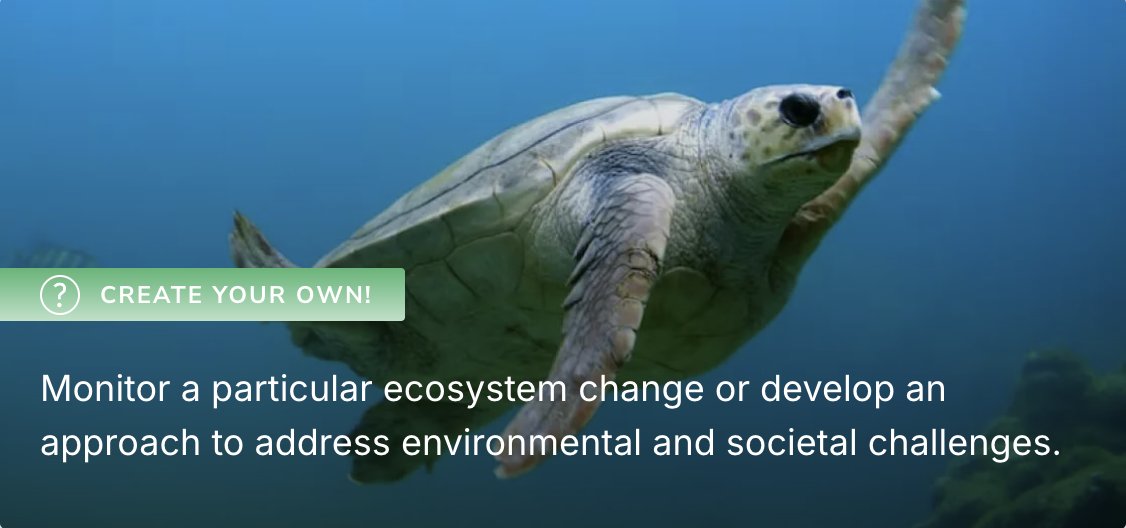
🌊 @sustainsurf — marine restoration
🌿 @TerrasosCo — Colombia habitat banks
🦌 ERA — umbrella species stewardship
🐆 Biocultural Jaguar Credit / @AmazonHeadwater — Indigenous-led Amazon stewardship
Credit integrity is the whole game.
https://t.co/QLcc4MxKTW