Did @10xGenomics just make newer versions of Cell Ranger open source? https://t.co/5aGEEN9dL8 (cc @sjackman, @luizirber). This is a huge win for open, transparent, and reproducible science if it’s the case!
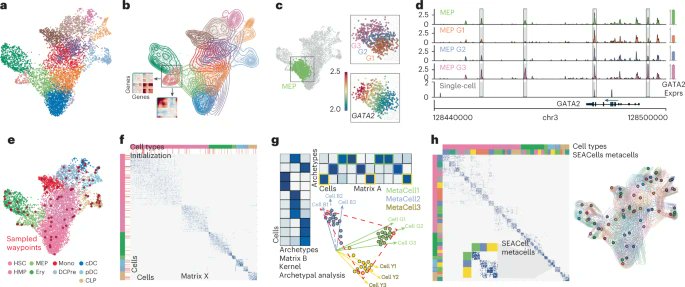
What gets erased when you integrate #singlecell data across samples/studies, and can you get it back? When samples are from e.g. healthy & disease, should you simply massage cells together? FINALLY, I feel we can answer this question: https://t.co/0PrkIZDyDp
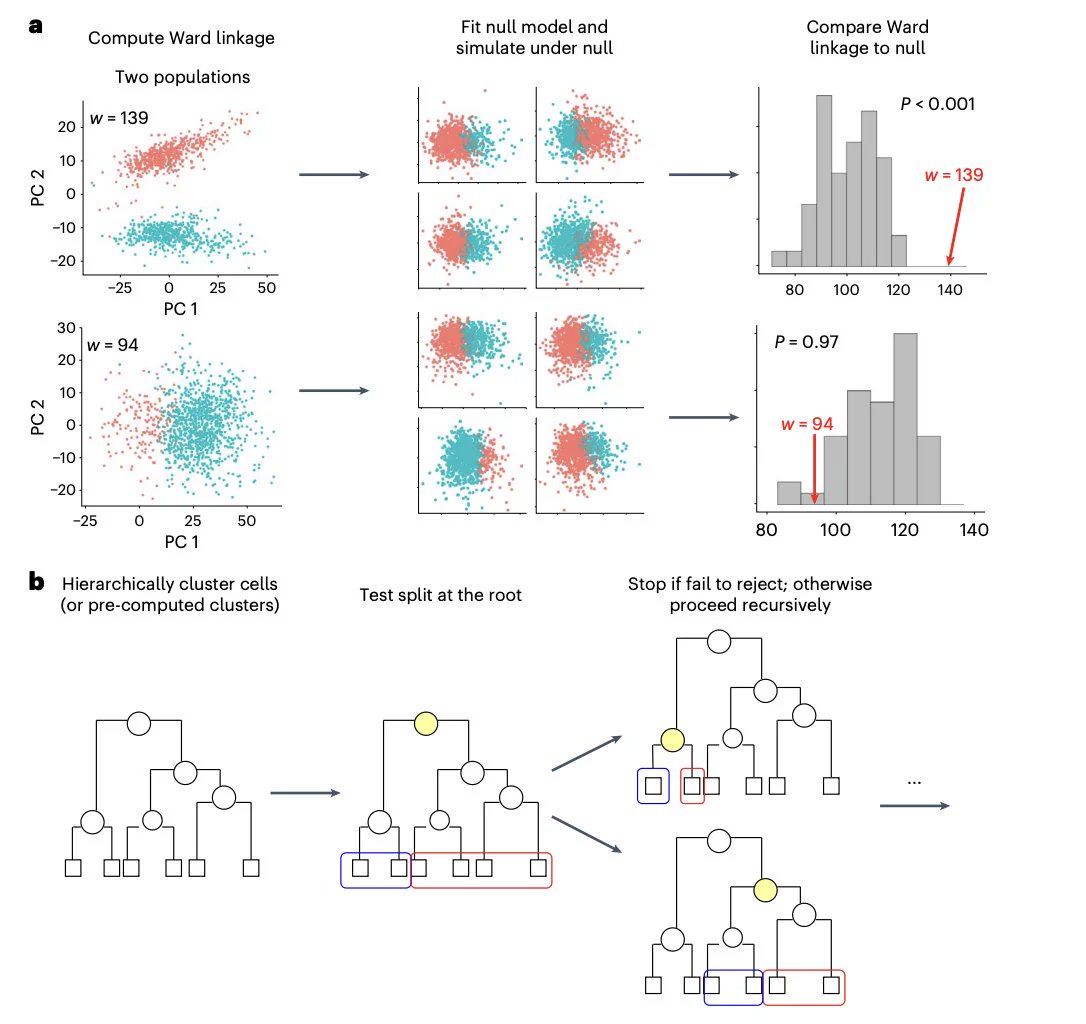
Clustering algorithms report clusters even when none exist. In single-cell RNA-Seq pipelines, novel cell types are often identified by clustering algorithms. Expanding on Kimes et al.'s work, we introduce significance analysis for single-cell RNA-Seq data: https://t.co/ut1kPjKVCM
1. Excited to share our new paper in @Nature! With over 1000 tumors analyzed by scRNA-seq, we provide a systematic pan-cancer characterization of transcriptional intra-tumor heterogeneity (ITH)
https://t.co/u1aHEatzVz
Even so, thorough mixing after an 'integration' method only means "good" if you're analyzing technical replicates. Beta-cells w/beta-cells is fitting priors on what's important variation; 27% of the beta-cell transcriptome is circadian regulated.
https://t.co/pLL55jGIE3
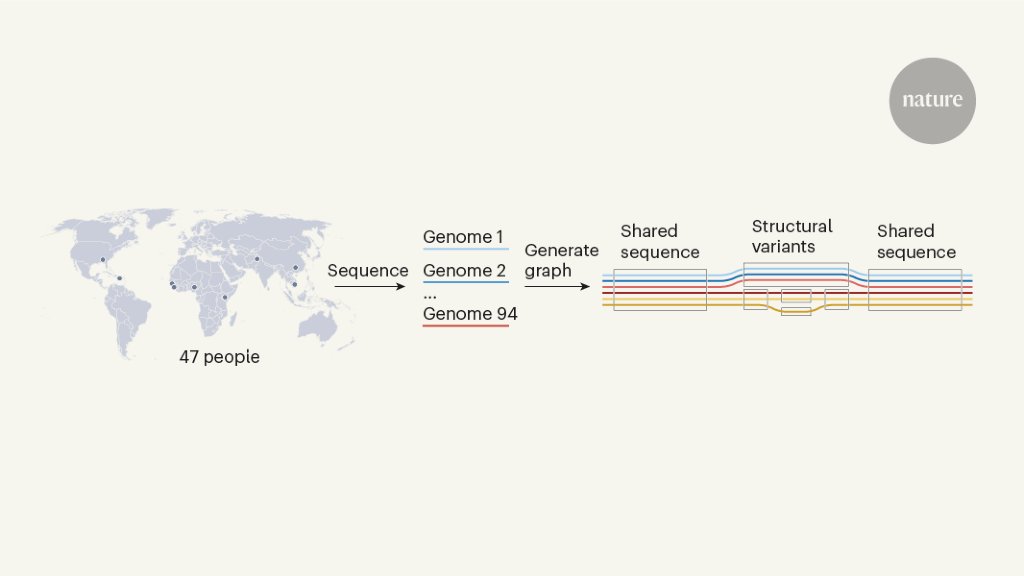
A human reference pangenome has been generated. In this Forum,@AryaMassarat & @mgymrek tell us how it was built, and Brian McStay & Hakon Jonsson discuss the insights into repetitive sequence that we are already gaining from it https://t.co/8lH7p1I3oG
Reactivated transposable elements generate chimeric tumor-specific antigens that are shared among different cancers and could provide potential pan-therapeutic targets. #NBThighlight https://t.co/NPF6qZTLMt
@shyam_lab @lawrensonlab @SashaGusevPosts@themis_brown Batch correction is the WORST for cancer because each cancer IS different and unique. Batch correction is ALWAYS terrible in cancer and we NEVER do it. The number of times we had to argue with reviewers on this point!!!
As I reflect on my grad school experience during Carolina's day of giving, I'm very grateful to one of my professors @natstann for her mentorship this past year, which resulted in me submitting my first first-author paper! #UNCGradStudents@UNC_GradSchool https://t.co/qq66Vml313
How reproducible are #bioinformatic pipelines really? 🤔
In pursuit of this question, I asked three lab members to run my pipeline on the same CUT&Tag data (4 conditions, 3 biological replicates, and 2 epigenetic marks). 💻
#Genomics#snakemake#AcademicChatter
Hey #MedTwitter
Here are the basics of survival curve and hazard ratio interpretation. Trust me it's conceptually easy. Dreaded terminology will be decoded.
Ever wondered what a hazard ratio really means? What is a survival function? What is cox proportional hazards?
🧵
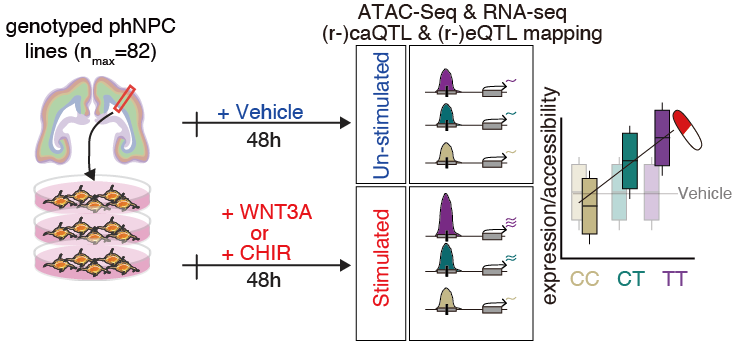
Excited to share our new preprint, where we investigated context-specific gene regulation and QTLs by stimulating 🪄⚡️ the Wnt pathway in human neural progenitor cells🧠 (co-led with two wonderful grad students @brandonDLe@jmvalone4 in @jsteinlab) https://t.co/CNDbm2tvnR 1/🧵
Happy to share our work published today in @Nature, where we show that a subset of disease-associated variants in intrinsically disordered regions (IDRs) result in aberrant phase separation and nucleolar dysfunction. https://t.co/vnyXuVR6pH
protip: when ask for help with a bioinformatics problem, explain what you want, what you have tried, and what's the problem. Better to include the data and code.
If you are not willing to put effort into asking a good question, do not expect people to make an effort to answer.