https://t.co/bGg9yGuZ31 is joining the Cointelegraph Accelerator Cohort! ⚡️
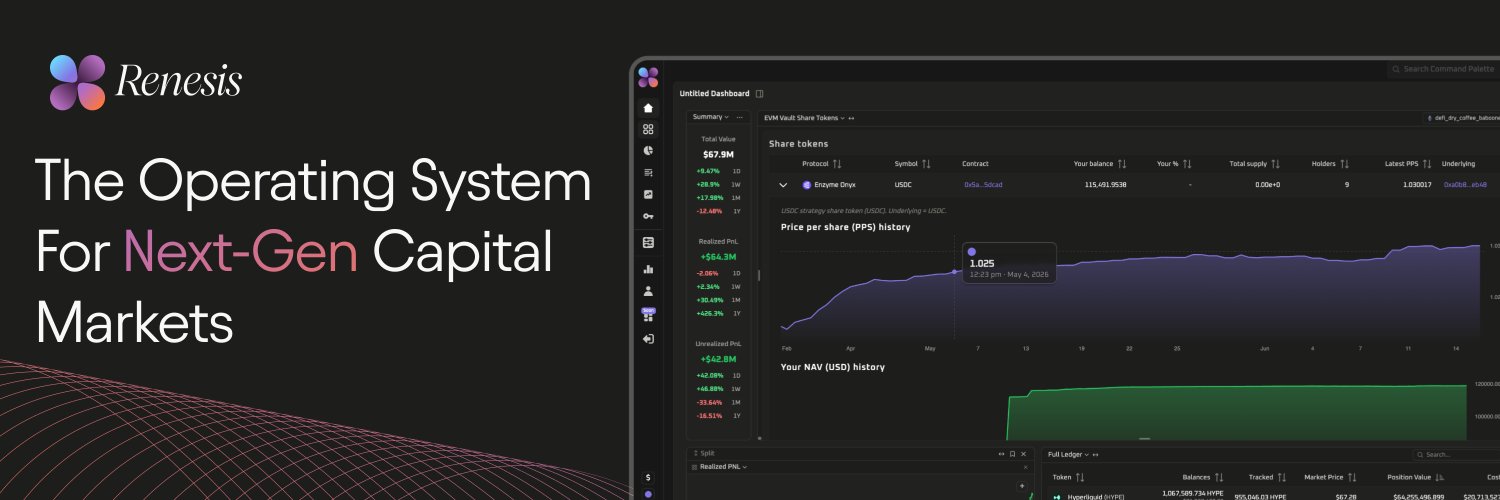
We're building the first DeFi-native institutional operating system for crypto funds, unifying portfolio management, execution and reporting across CeFi and DeFi.
Excited to be part of the cohort and looking forward to working alongside the @CointelegraphAc team as we continue building infrastructure for institutional crypto.
There are now 856 managed DeFi vaults, run by 131 curators across 18 protocols with $11.3B in assets.
For a fund managing positions across vaults, that means tracking different strategies, curators and share prices.
Renesis tracks every vault position by its live share price, all in one view. 🤝
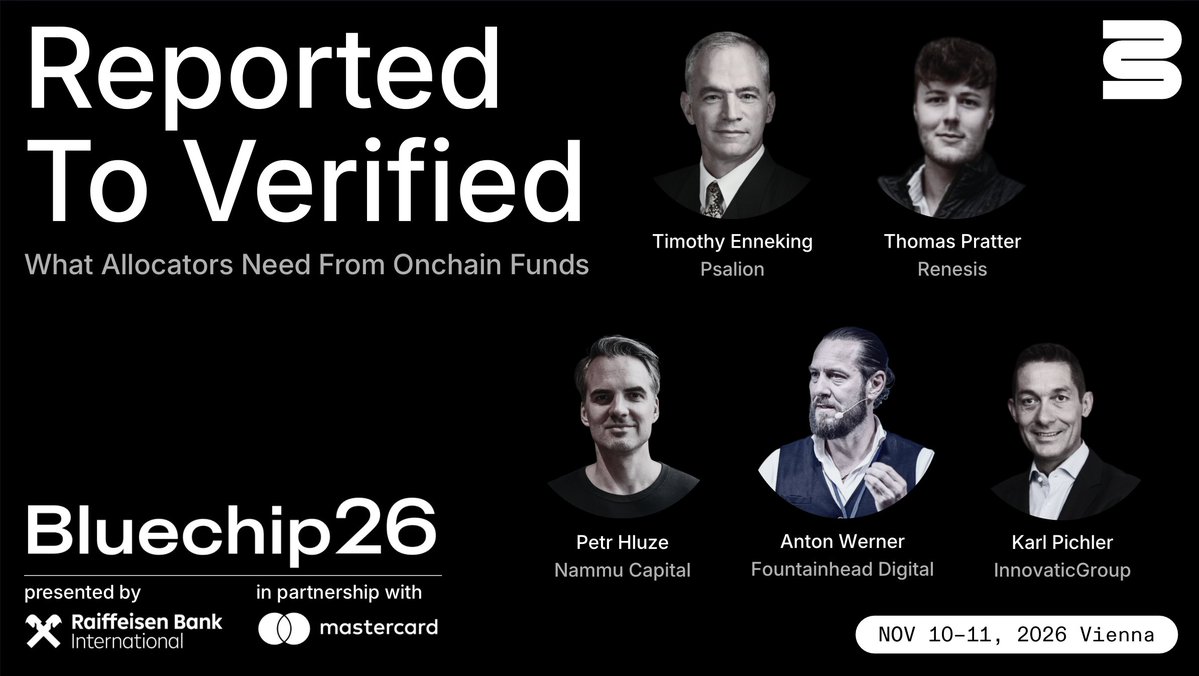
📢 Reported To Verified: What Allocators Need From Onchain Funds
Panel discussion at Bluechip26, featuring:
• Timothy Enneking, Psalion
• Thomas Pratter (@0xPratter), Renesis
• Petr Hluze (@PetrHluze), Nammu Capital
• Anton Werner, Fountainhead Digital
• Karl Pichler, InnovaticGroup
Bluechip26 is the world's first and leading conference dedicated to crypto safety. Get tickets at https://t.co/RpMEfcaPGb.
📍 Nov 10-11 in Vienna
Onchain credit now has several layers behind the asset:
1. Asset manager
2. Curator
3. Lending protocol
4. Issuer
Each layer adds costs, risks or both.
We break down your fund's returns by protocol and position, so you can see where the yield really comes from.
@hosseeb Isn't this basically what the best funds already do with proprietary research & alt data?
Newsroom could be an extension of that, but it'd be a pretty expensive way to generate alpha. 👀
5/
Diligence doesn't stop after the money comes in.
Allocators flagged funds that added leverage, new DeFi positions or listed securities without telling the LPs.
Each change brings new risks and new reporting.
A short note to LPs explaining why goes a long way.
The takeaway from all this is that preparation and communication are what stand out to investors most.
What do allocators really look for in a crypto fund beyond the returns?
Plenty of funds with good numbers still got stuck in due diligence last year.
These are the things that came up again and again.
Save this one for your next DDQ. 🧵
4/
Other questions coming up in almost every process:
i) How do you track leverage and when do you get liquidated? ( A big one since the October 2025 crash. )
ii) Why do your reports arrive late?
iii) What controls sit around self-custody?