🚨 EXCITING NEWS! 🚨Our 2nd manuscript, “Bringing #BigTeamScience to Comparative Cognition Research: Challenges and Ways Forward”, is now accessible @PsyArXiv! 🙌🥳Thanks to everyone who contributed. What a fascinating writing experience! 👉 https://t.co/dRygAKn0c6 | #OpenScience
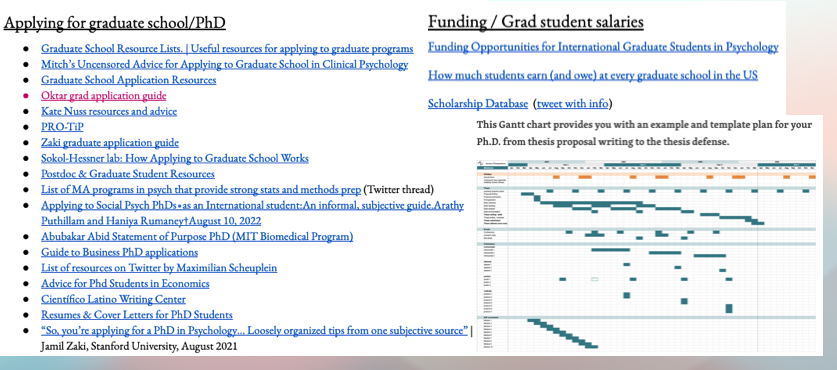
Navigating job opportunities as an #ECR is tough🥲 Check out "Psychology Academic Life and Job Market" via @giladfeldman for transparency insights (link in🧵. #OpenScience advocates transparency & so should our job market! Interested in updating this resource? Volunteers needed!
Have you already marked your calendars for @OHBM@brainhackorg 2024 in Seoul, Korea, from June 20th to 22nd, 2024?
Can't make it in person? Join us online at no cost!😇
Secure your spot early: https://t.co/JG919mUceU
Dear all, please see the programm for the Early Career Researchers (JuWis) at the Psychology & Brain Conference 2024 ... still some workshop registrations available 🧠 https://t.co/LTJVv2j77N
Stepping up to guide FORRT’s Team Summaries, where we clarify the open science glossary and more. 🧠
Join us as a collaborator to further this mission! #FORRT#OpenScience
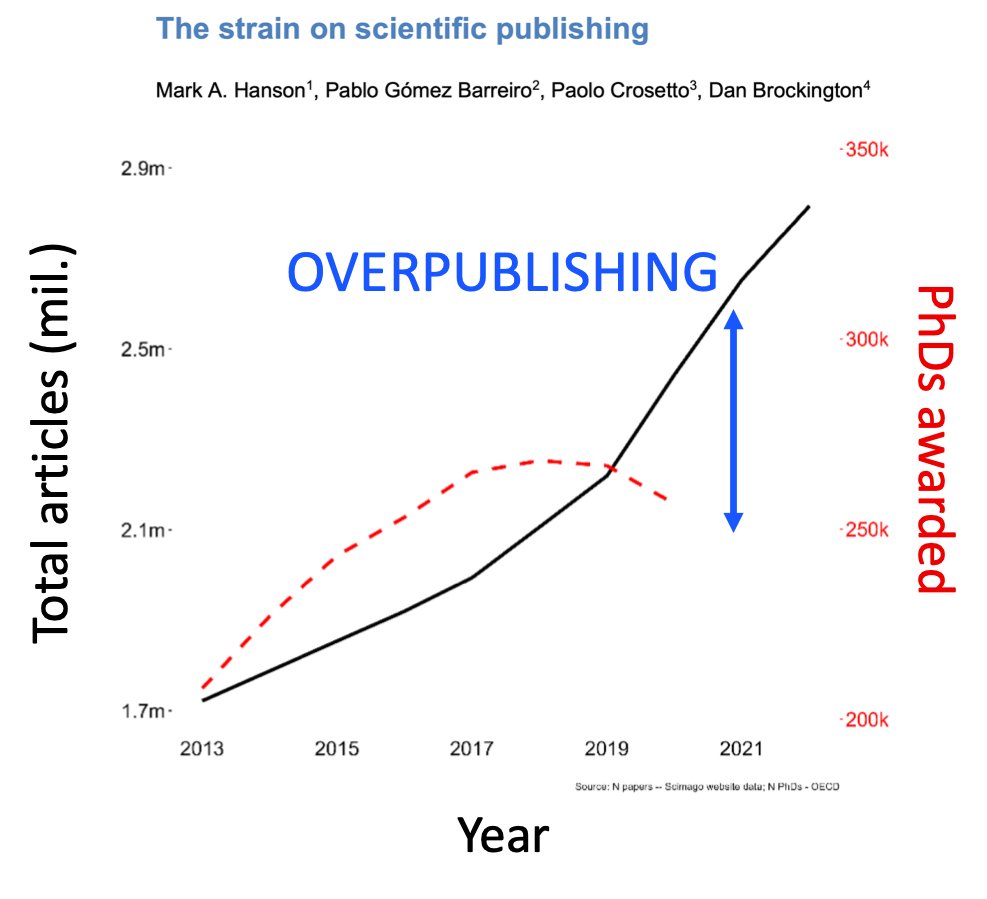
Overpublishing puts enormous stress on students and PIs.
And brings tons of money to publishers in STEM.
A new study shows that the number of papers is increasing FASTER than the number of #PhD graduates.
It’s an amazing work with very useful statistics. Huge kudos to the authors!
▫️
Main outcomes:
1️⃣ In 2022 the number of articles is 47% higher than in 2016. The amount of writing, reviewing and editing workload per scientist is increased enormously.
2️⃣ “Special issues” is a strategy for publishing lots of papers with reduced review time. This is possible due to the “publish or perish” pressure and clearly benefits the publishers.
3️⃣ The publishing time varies widely!
MDPI = 37 days. Frontiers = 72 days. Elsevier = 134 days. Springer = 157 days. Nature = 185 days.
4️⃣ The article rejection rates do not seem to correlate with publisher growth. However, rejection rates decline with increased use of special issue publishing.
5️⃣ Certain for-profit gold-open-access publishers create an increasing number of special issues, with uniquely reduced turnaround times, and in specific cases, high impact inflation and reduced rejection rates.
6️⃣ The authors suggest a new metric - Impact Inflation, which is reflected in self-citation within the same journal. For example, MDPI has a high impact inflation due to excessive self-citation compared to other publishers.
Conclusions and my opinion:
- Scientists have to spend a lot more time on reviewing and writing than before (on average).
- The more papers are published, the more the quality is compromised.
- Scientific progress has become partially bound to the business models of publishers and their revenue (a sad reality today).
- There is a huge lack of transparency. Much of these data had to be ‘web-scraped’ from numerous sources in order to get a full picture. We clearly need regulators to mandate open access to publisher’s statistics.
- Reduce the number of special issues! Those typically have low standards.
▫️
Science, publishing and funding make a trio that is very hard to disentangle.
However, research quality is controlled by the community.
This is why preprint + community review can make a big difference.
#AcademicTwitter #AcademicChatter
🌟Join the ReproducibiliTea team! 🍵🌱 We're seeking new organizers to lead upcoming sessions and shape discussions. Make a positive impact in the community by joining us! Interested? Get in touch to learn more and be part of the team #Berlin#OpenScience
We're noticing a lot of movement to Mastodon. To get you started, here's a list of #OpenScience folks who are already on Mastodon 🐘 https://t.co/xzZm3lL41Y
📢 Join our Journal Club on June 21st, 6 PM Berlin time, as we discuss "Developing an open science 'mindset'". Explore reproducibility challenges and statistical understanding (https://t.co/fsaWSPdT83)
Sign up here: https://t.co/O5J50K5XfW
#OpenScience
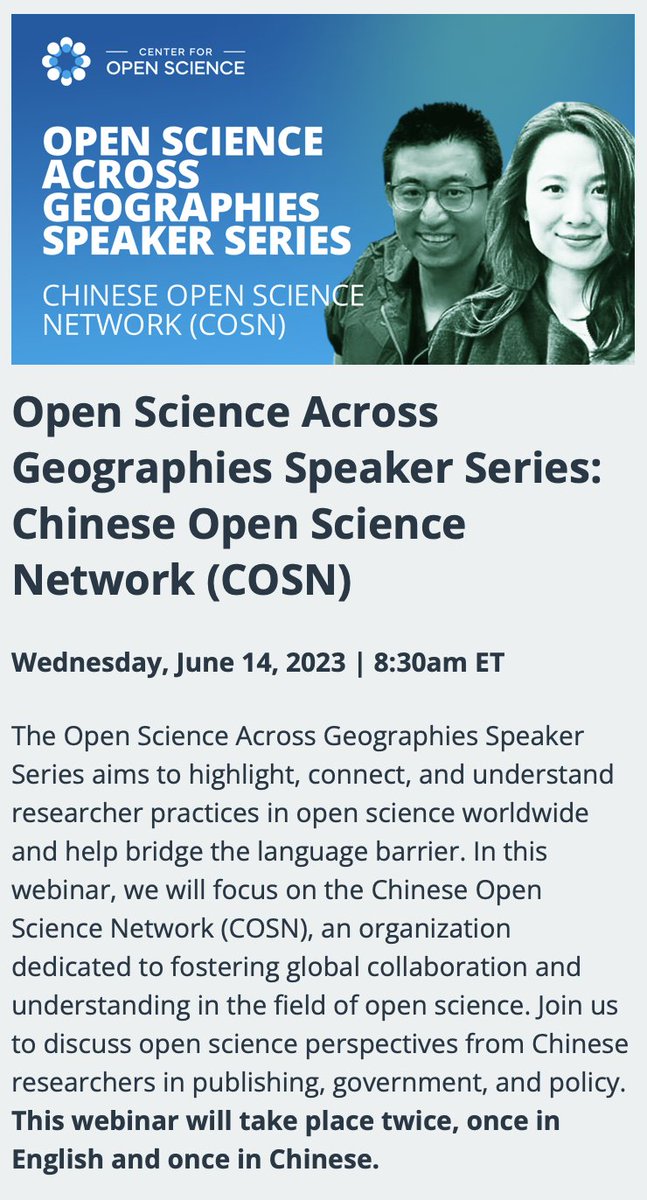
Curious about Chinese researchers in #OpenScience?
Join us - Open Science Across Geographies Speaker Series @OpenSciChina @QingWan99752335
📅 June 14 | 8:30am ET
Discover insights from publishing, government, and policy experts.
Don't miss out! Sign up now👇 @OSFramework
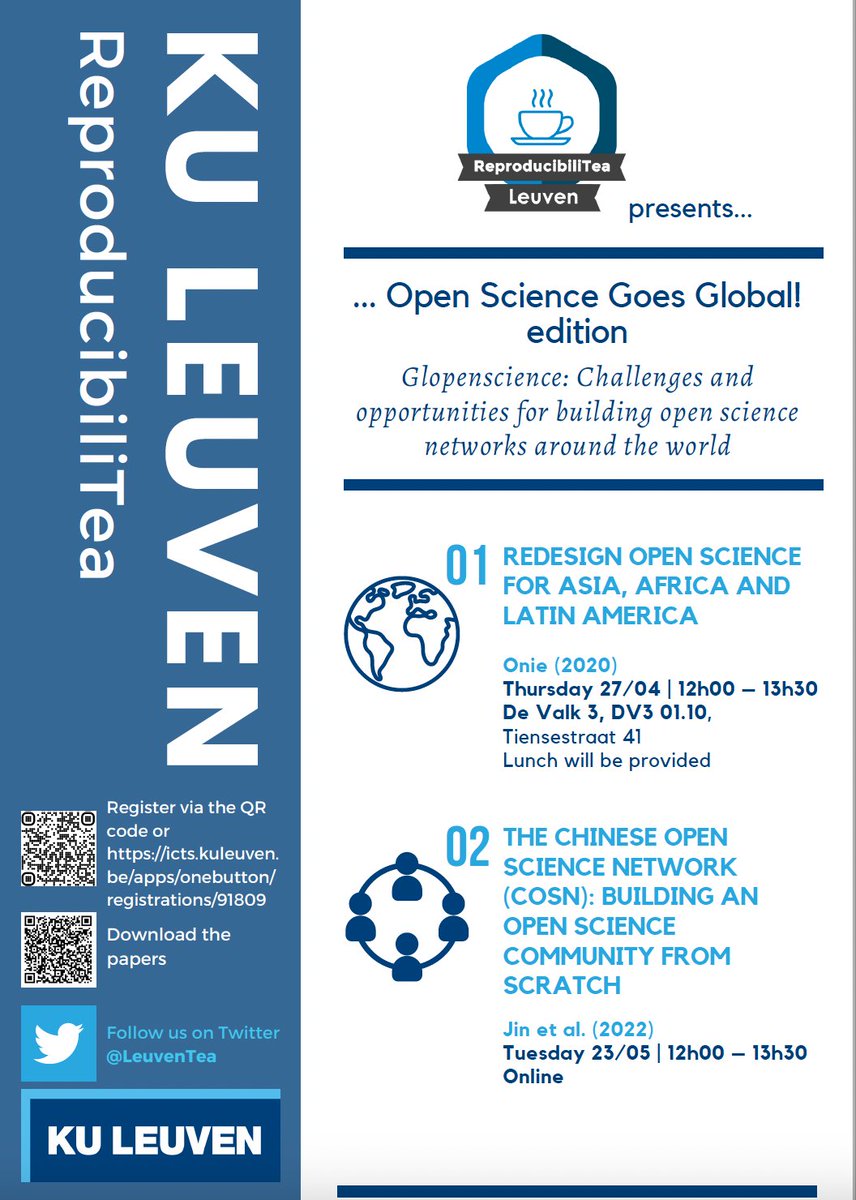
Looking forward to today's ReproTea Leuven session, where we will be discussing @Haiyang_J & colleagues' paper about @OpenSciChina! If you're a @KU_Leuven student or staff member, you can join us by signing up with the link in the poster. 🫖 #OpenScience@KULeuvenOpenSc
Get ready for our next online journal club this summer semester! 🌞 We'll kick off with 'Creating clear and informative image-based figures for scientific publications' (https://t.co/Qx0kWI5Sh0) on May 24.
sign up here: https://t.co/zq6xZ5JtkQ
See you soon! 👋
We're excited to announce the schedule for our summer semester online journal club! 🙌 Curious about Chat(GPT) and the future of scientific publishing? Join us next week for an insightful discussion!
Sign up:
https://t.co/xkBGR29Ynq
Don't miss our journal club at today 6pm CET where we'll discuss the paper "Transparency, Reproducibility, Clarity, and Memorability in Writing Empirical Articles" https://t.co/Av21ao6ctx #journalclub#research. dm for zoom link
I had only recently switched to @Mastodon since I had previously been a little skeptical. Now, though, lots of the folks I chat to sign off with their @Mastodon handle.
Here, I provide a simple 6 steps guide on "How to migrate your Twitter followers to Mastodon seamlessly."🧵/7
We kindly invite you to our biweekly journal club session this Wednesday (9 Nov) at 6PM on Zoom!☕️📚
We will be discussing the paper on Ten simple rules for good research (https://t.co/SQDHBS4k5M)
Dm for more info @ufangyang@EvaMariaFunk Lina Hellwig