This review is a great weekend read on translational genomics.
How do we move from genetic associations to novel biology and ultimately therapeutic hypotheses at multiple scales (from molecular changes, to cellular architectures, to organs, to disease?)
A major epigenetics study using UK Biobank samples will unlock new insights into the biological basis for human health & disease ✅
Led by @UniofExeter, the research will transform how we understand, predict & treat health outcomes including heart conditions, dementia & cancer.
🚨Claude can now simplify research at a whole new level.
It transforms stacks of academic papers into clean, structured insights in minutes.
No confusion. Just clarity.
Here are 9 prompts to make it effortless 👇
Save this 🔖
Here are my four GWAS lectures of ~20 minutes each for the International Statistical Genetics Workshop 2026.
They're part of the broader workshop curriculum but also work as standalone lectures covering the basics of GWAS from the ground up.
Videos are below 👇🏽
Our Human Multiomic Development Atlas paper is out in Nature today! A heart-felt "thank you" to all co-authors for their tireless work on this complex yet exciting project! Congrats all! https://t.co/iUiZz00KOt
How do #T2D genetic clusters shape metabolism? New study identifies 337 associated metabolites & distinct metabolic pathways across 8 T2D genetic clusters, highlighting metabolic heterogeneity & potential therapeutic targets. #Metabolomics@XianyongYin https://t.co/ST8egaz64g 🔓
23/ #TopNephrology 5th place #NephJC
FLOW set the benchmark in '24; 2025 consolidated +extended GLP-1 RA renoprotection
REMODEL= mechanistic trial| semaglutide with advanced renal imaging, biomarkers& paired biopsies 👉 intrarenal effects in CKD+T2D
https://t.co/x5dBwqCmrE
Longitudinal Income Dynamics and Risk of End-Stage Kidney Disease in Type 2 Diabetes: A South Korean Population–Based Cohort Study
https://t.co/CqJf25PE90
#ESKD#VisualAbstract
Excited to share a milestone published in @NatureMedicine from our decade-long effort to build The Human Phenotype Project, a unique longitudinal cohort with unmatched depth of clinical and multi-omic profiling, enabling truly predictive, personalized medicine.
Led together with @ericxing, it is a global collaboration between @WeizmannScience, @MBZUAI, and Japanese partners, spanning 30,000+ participants and continuing to grow internationally
By devising AI models trained on individuals deeply profiled with genetics, microbiome, glucose, sleep, bone density, and more, we can now forecast diseases before symptoms appear and simulate treatment or lifestyle outcomes.
Key findings:
• Re-defined metabolic risk thresholds
• Predicted menopause impact via biological aging
• Mapped organ-specific aging trajectories
• Developed models for early detection of diabetes & heart disease
This dataset is a blueprint for digital health twins, AI-driven tools grounded in real-world, longitudinal data
Data access: https://t.co/qRrFPaY4as
Full paper: https://t.co/dayU9YYIlC
Thanks to all the people who led this work: Lee Reicher, Smadar Shilo, Anastasia Godneva, Guy Lutsker, Liron Zahavi, Saar Shoer, David Krongauz, Michal Rein, Sarah Kohn, Tomer Segev, Yishay Schlesinger, Daniel Barak, Zachary Levine, Ayya Keshet, Rotem Shaulitch, Maya Lotan-Pompan, Matan Elkan, Yeela Talmor-Barkan, Yaron Aviv, Maya Dadiani, Yonatan Tsodyks, Einav Nili Gal-Yam, Haim Leibovitzh, Lael Werner, Roie Tzadok, Nitsan Maharshak, Shin Koga, Yulia Glick-Gorman, Chani Stossel, Maria Raitses-Gurevich, Talia Golan, Raja Dhir, Yotam Reisner, Adina Weinberger, Hagai Rossman, and Le Song
And special thanks to all participants of the Human Phenotype Project
RESEARCH
Based on 337 human kidney & plasma samples, the authors generate the first kidney pQTL dataset & explore novel risk loci relevant for cardio-kidney-metabolic health.
#metabolism#liver#proteomics
https://t.co/PcqeNx2cVZ
Aldosterone and aldosterone synthase inhibitors in cardiorenal disease | American Journal of Physiology-Heart and Circulatory Physiology | American Physiological Society https://t.co/PYWgIoqy2G
Mendelian randomization (MR) is widely used to infer causality.
But beyond a few textbook examples, we lack large-scale benchmarks of truly causal effects to validate how well MR methods perform.
This study offers a scalable framework👇
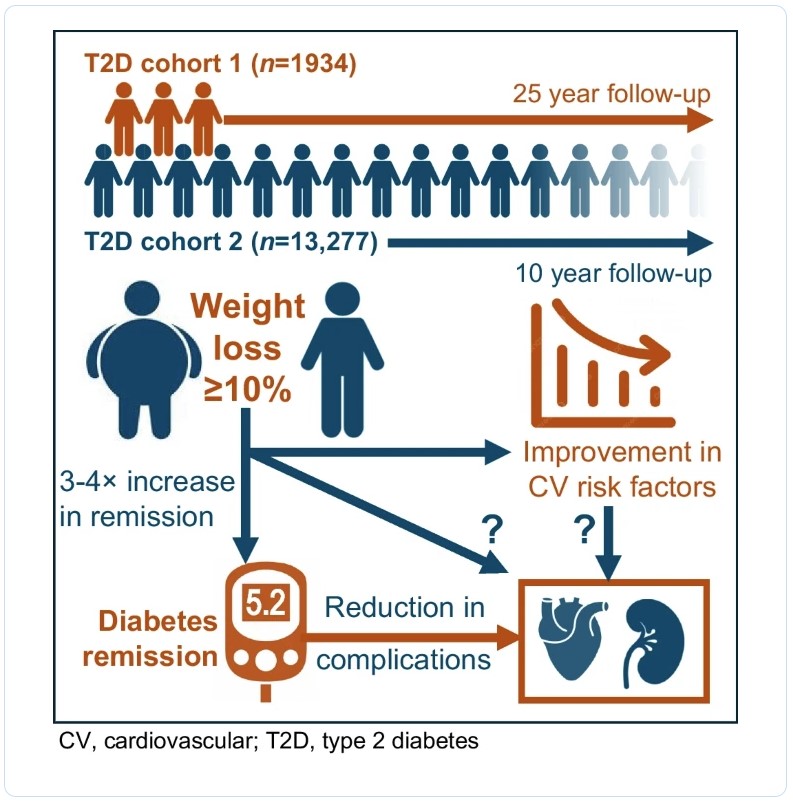
Up front & free to read in our June issue #editorspicks: Early weight loss, diabetes remission and long-term trajectory after diagnosis of type 2 diabetes: a retrospective study https://t.co/2mv7ct6sSp
In adults with type 2 diabetes & increased risk of CV disease, targeting systolic BP <120 mmHg significantly reduces major CV events vs standard <140 mm Hg.
Results of a RCT (DOI: 10.1056/NEJMoa2412006)
More intensive BP control = better outcomes.
Summary 👇via @NEJM
A retrospective study on early weight loss and long-term glycaemic trajectory after diagnosis of #T2D shows that remission, more than weight loss, affects future occurrence of chronic complications. @UniPadova@Sid_Italia@FRBiomedica@gpfadini https://t.co/2mv7ct70HX 🔓
Nice summary of our paper by Anna Kottgen @MatthiasWuttke GWAS scorecard prioritizes kidney genes using coding and regulatory variants | @NatRevNeph https://t.co/OGgz4tPdjV