BREAKING NEWS
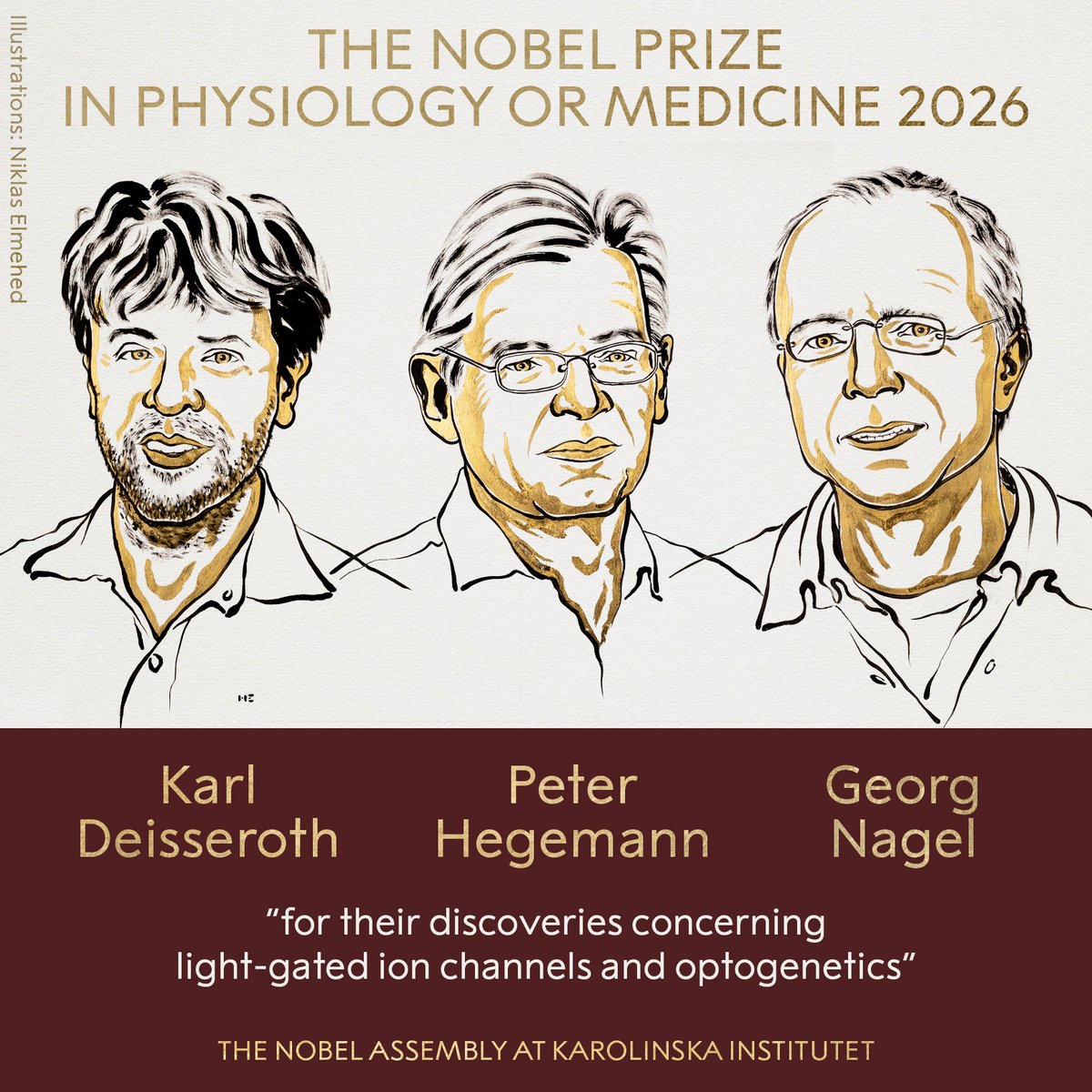
The 2026 #NobelPrize in Physiology or Medicine has been awarded to Karl Deisseroth, Peter Hegemann and Georg Nagel “for their discoveries concerning light-gated ion channels and optogenetics.”
Today, Sculpta releases the first demonstration of bioorthogonal barcoding ("bobcoding"), the process by which we:
1) covalently attach oligonucleotide barcodes to RNA at multiple internal positions with two-step chemistry, and 2) perform a multiplexed reverse transcription reaction to generate barcoded cDNA libraries with >99% barcoding accuracy.
To the best of our knowledge, it is the first time ever that either of these steps have ever been performed by anyone. No one has ever broken the barrier of multiplexing prior to any enzymatic step in library preparation, driving simplicity and higher data quality. Instead of other methods that add 0 or 1 barcode, we add one barcode every ~300bp, adding redundancy and fidelity to RNA measurements.
In our first application described in our pre-print below, we used bobcodes to create the first RNA isoform-resolved drug screening platform. It beats Novartis' DRUG-seq platform by:
- generating full length transcript capture of RNA isoforms, instead of just 3' end counting
- capturing 25-fold more RNA splicing events
- reducing barcode swapping by 10-fold
- using 18 fewer PCR cycles (~250,000 less amplification)
- reducing sample-to-sample variability in gene expression measurements
- eliminating costly and cumbersome library fragmentation/tagmentation steps completely
- reducing workflow complexity and number of steps
- reducing overall protocol duration by ~25%
Though our chemical barcoding method improved transcriptomic data quality while also being simpler and faster than all existing methods, the implications of this work go well beyond this particular use case:
The gate to greater applications of AI in transcriptomics is not a lack of compute. Nor is it a lack of data volume. The elephant in the room has always been our limited ability to faithfully and accurately measure cellular RNAs.
Sculpta now has line of sight to build what we call the first ground truth transcriptomics platform [for single cell, spatial and more] for the future of biological research, drug development and AI-enabled discoveries for the betterment of human health and longevity.
[PS Until the kind folks at bioRxiv get through the apparent backlog of AI slop submissions, Sculpta will host the pre-print PDF on our website. You can sign up for product offerings and other updates at this link too]
https://t.co/QPApERi7RT
@piersmorgan Simple answer actually. The idf did know that at some point something might happen. Just as hizbollah and the irgc knew that at some point something might happen. The one who takes the initiative has the advantage. No one can stay primed for such long time periods. Simple
been off this platform since recent fascist trends; wanted to post this science update. @VantommeGil has completed a beautiful paper on how prefrontal cortex boosts the gain of signals from thalamic reuniens nucleus to amplify the hippocampal mPFC dialogue https://t.co/hqYA0l5q5r
@footballtweet@marca Pele and Maradona are unbeatable at positions 1 and 2. Choose the order you want. Messi can probably be considered for the #3 pick
🎉Exciting news! Our lab's first paper, "Vocal labeling of others by nonhuman primates," is now published in @Science! 🐒 Dive into our findings on how marmoset monkeys use vocal labels similar to human names and dialects. Check it out! 1/6
https://t.co/7iHBLByfRW
This week in @NatureProtocols we are sharing a detailed method for transplanting human stem cell–derived neural organoids into the somatosensory cortex of newborn rats as well as assays to functionally probe host circuit integration of the graft and test behavor.
This is the 3rd article in a series to share step-by-step protocols for generating regionalized neural #organoids and #assembloids (links below), and is also the basis for our international Stanford @BrOrganogenesis hands-on course here on campus.
Work led by the remarkable trio Kevin Kelley (@kevinwkelley), Felicity Gore & Omer Revah (@RevahLab)! and in collaboration with the @KarlDeisseroth lab.
We are looking for a new manager for our microscopy core facility @ELSCbrain@HebrewU. It's a great opportunity for Ph.D.-level scientists with experience in optical imaging, please spread the word