How does art mark a novel scientific achievement?
The artistic cover of Nature Medicine becomes a visual expression of innovation rooted in heritage.
Concept and Lead Emirati Artist Maryam AlHathboor and Collaborative Artist Fatima Baobaid from the Dubai Health team designed the cover to reflect the UAE and Dubai’s position as a hub for advanced science and knowledge.
#CreativeDubai
Dubai's Medcare Royal Speciality Hospital has become the first outside the US to administer Itvisma, a new drug that treats spinal muscular atrophy, to an adult patient
Read more: https://t.co/a5CgObf9Xj
Dr. Hanan Al Suwaidi, Deputy CEO and Chief Academic Officer of Dubai Health and Provost of Mohammed Bin Rashid University of Medicine and Health Sciences, highlights how the integration of Care, Learning, and Discovery across Dubai Health supports research and innovation to advance health for humanity.
@DubaiHealth
تسلّط الدكتورة حنان السويدي، نائب المدير التنفيذي والمدير التنفيذي للشؤون الأكاديمية في "دبي الصحية"، ونائب مدير "جامعة محمد بن راشد للطب والعلوم الصحية" للشؤون الأكاديمية، الضوء على دور تكامل محاور الرعاية والتعلّم والاكتشاف في "دبي الصحية" في دعم البحث العلمي، وتعزيز جهود الارتقاء بصحة الإنسان.
@DubaiHealth
A research study led by scientists from Dubai Health and MBRU has been featured on the cover of Nature Medicine, one of the world’s most prestigios medical journals.
This milestone reflects the remarkable progress of Dubai’s scientific research ecosystem, elevating quality of life and advancing health for humanity.
To learn more about the study, visit the link:
https://t.co/BmJzYDfOxb
We’re featured on the cover of @NatureMedicine ! We report the implementation and outcomes of the first citywide premarital genomic screening program in a Middle Eastern population. Full article: https://t.co/f0b41Gwo0q
I chaired the Dubai Health Board of Directors meeting, where I was briefed on the performance of our research mission within Dubai Health and its impact on advancing health for humanity.
Dubai's continued achievements in health and medicine are significant. Over the past decade, scientists from Dubai Health and Mohammed Bin Rashid University of Medicine and Health Sciences (MBRU) have published more than 2,300 peer-reviewed papers in leading international journals. Additionally, faculty members from Dubai Health and MBRU have been named on Stanford University’s list of the world’s top 2% most influential scientists for four consecutive years. And solidifying these achievements, a study by our scientists was recently published and featured on the cover of “Nature Medicine,” one of the world’s most prestigious medical journals.
I extend my sincere appreciation to all our scientists for their dedicated efforts, and we encourage them to continue this path in service of humanity.
New @ScienceMagazine
Why is the heart resistant to cancer?
Role of the heart beat!
Mechanical force helps protect the heart from cancer
https://t.co/ZaxGeRUbFN
We're hiring! 🔬🏔️ Looking for curious, open-minded, and multidisciplinary #PhD candidates to research at the intersection of #mitochondria, #metabolism, #imaging & #physiology, with the #Alps as a backdrop. Sounds like you or someone you know? Link below!
@unil
This paragraph by Richard Feynman hits so hard:
“Fall in love with some activity, and do it! Nobody ever figures out what life is all about, and it doesn’t matter. Explore the world. Nearly everything is really interesting if you go into it deeply enough. Work as hard and as much as you want to on the things you like to do the best. Don’t think about what you want to be, but what you want to do. Keep up some kind of a minimum with other things so that society doesn’t stop you from doing anything at all.”
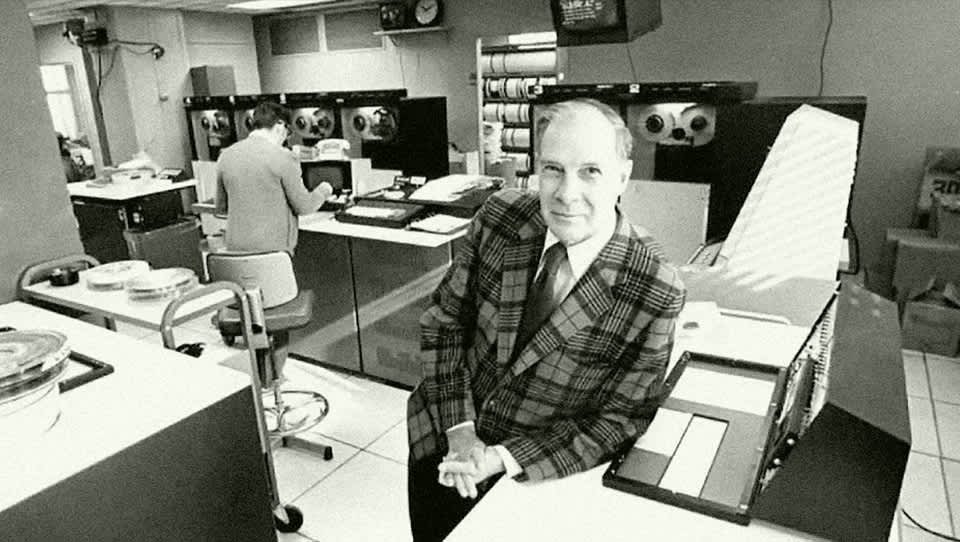
A mathematician who shared an office with Claude Shannon at Bell Labs gave one lecture in 1986 that explains why some people win Nobel Prizes and other equally smart people spend their whole lives doing forgettable work.
His name was Richard Hamming. He won the Turing Award. He invented error-correcting codes that made modern computing possible. And he spent 30 years at Bell Labs sitting in a cafeteria at lunch watching which scientists became legendary and which ones faded into nothing.
In March 1986, he walked into a Bellcore auditorium in front of 200 researchers and told them exactly what he had seen.
Here's the framework that has been quoted by every serious scientist for the last 40 years.
His opening line landed like a punch. He said most scientists he worked with at Bell Labs were just as smart as the Nobel Prize winners. Just as hardworking. Just as credentialed. And yet at the end of a 40-year career, one group had changed entire fields and the other group was forgotten by the time they retired.
He wanted to know what the difference actually was. And he said it wasn't luck. It wasn't IQ. It was a specific set of habits that almost nobody is willing to follow.
The first habit was the one that hurts the most to hear. He said most scientists deliberately avoid the most important problem in their field because the odds of failure are too high. They pick a safe adjacent problem, solve it cleanly, publish it, and move on. And because they never swing at the hard problem, they never hit it. He said if you do not work on an important problem, it is unlikely you will do important work. That is not a motivational line. That is a logical one.
The second habit was about doors. Literal doors. He noticed that the scientists at Bell Labs who kept their office doors closed got more done in the short term because they had no interruptions. But the scientists who kept their doors open got more done over a career. The open-door scientists were interrupted constantly. They also absorbed every new idea passing through the hallway. Ten years in, they were working on problems the closed-door scientists did not even know existed.
The third habit was inversion. When Bell Labs refused to give him the team of programmers he wanted, Hamming sat with the rejection for weeks. Then he flipped the question. Instead of asking for programmers to write the programs, he asked why machines could not write the programs themselves. That single inversion pushed him into the frontier of computer science. He said the pattern repeats everywhere. What looks like a defect, if you flip it correctly, becomes the exact thing that pushes you ahead of everyone else.
The fourth habit was the one that hit me the hardest. He said knowledge and productivity compound like interest. Someone who works 10 percent harder than you does not produce 10 percent more over a career. They produce twice as much. The gap doesn't add. It multiplies. And it compounds silently for years before anyone notices.
He finished the lecture with a line I have never been able to shake.
He said Pasteur's famous quote is right. Luck favors the prepared mind. But he meant it literally. You don't hope for luck. You engineer the conditions where luck can land on you. Open doors. Important problems. Inverted questions. Compounded hours. Those are not traits. Those are choices you make every single day.
The transcript has been sitting on the University of Virginia's computer science website for almost 30 years. The video is free on YouTube. Stripe Press reprinted the full lectures as a book in 2020 and Bret Victor wrote the foreword.
Hamming died in 1998. He gave his final lecture a few weeks before. He was 82.
The lecture that explains why some careers become legendary and others disappear is still free. Most people who could benefit from it will never open it.
Pancreatic cancer has one of the most suppressive tumor microenvironments in oncology.
But two pancreatic cancer results dropped today. Both matter.
1. BioNTech mRNA neoantigen vaccine: nearly all responders still alive at 6 years. 98% of induced T cells were de novo — the immune system learned to see a cancer it had always been blind to.
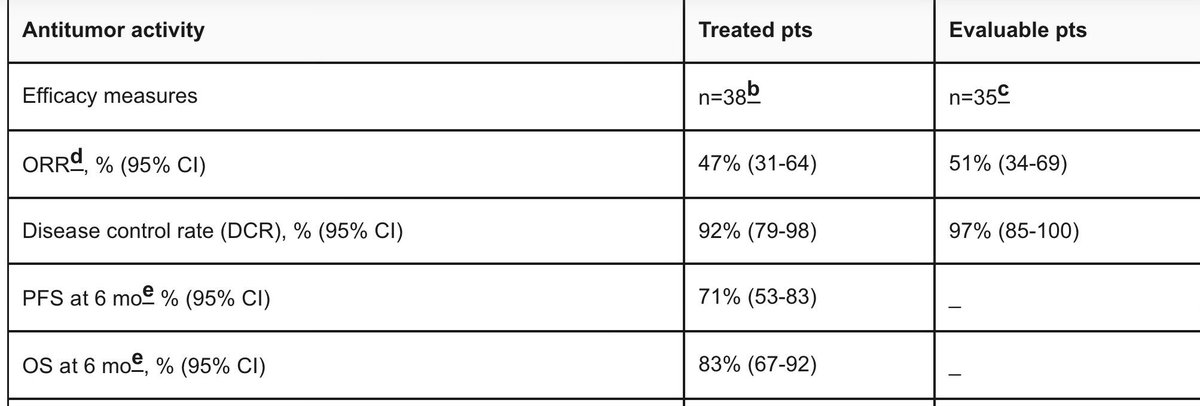
2. Daraxonrasib: 47% ORR, 92% disease control as first-line monotherapy. KRAS G12D, undruggable for 40 years, finally has a drug.
Different mechanisms. Same disease. Both working.
<13% of patients survive 5 years. That number is about to change.
great day for science! 🔥
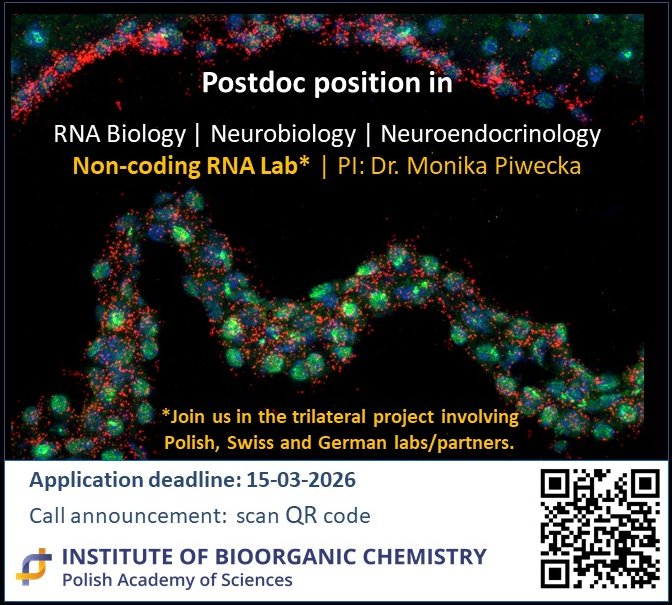
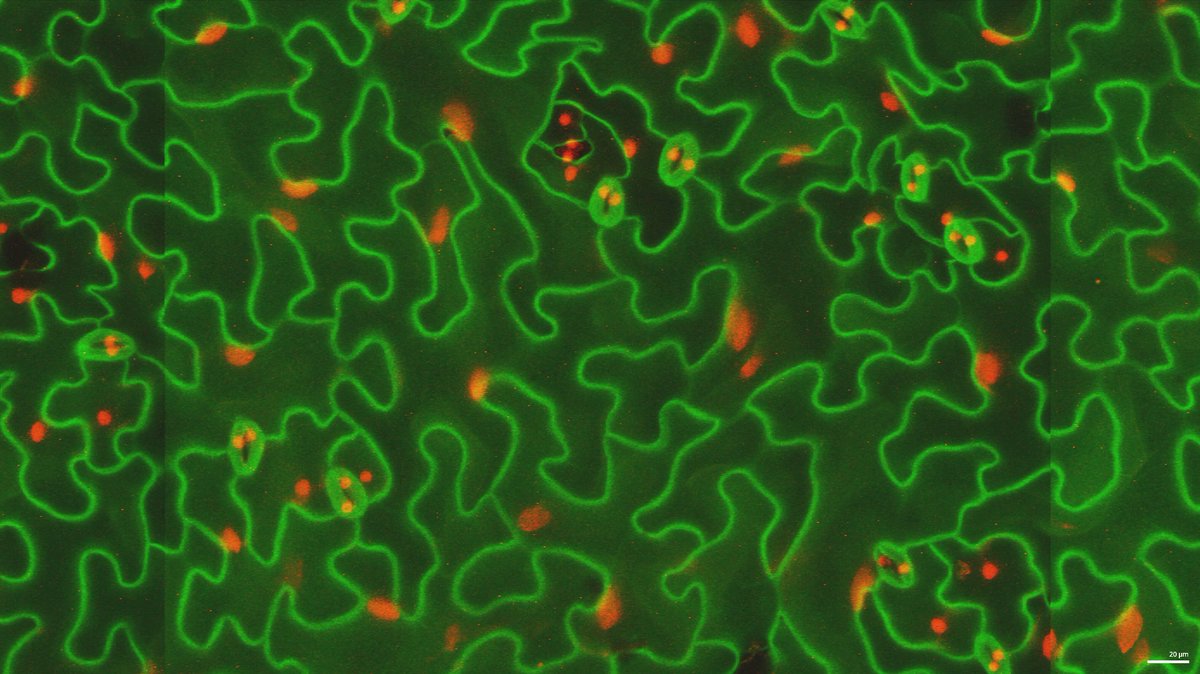
We are looking for a post doc to work on a new and exciting project on plant N6-methyladenosine-binding proteins.
Please spread the word!
https://t.co/j6mnIRWsc4
Please spread the word. We have open positions for outstanding postdoctoral researchers interested in studying the mechanisms of cancer evolution and new ways to intercept it!
#Hiring#Postdoc#ScienceTwitter#CancerResearch#CancerBiology
Details below:
Come join us 🙂 The Buenrostro lab at the Broad is looking for a few Research Associates to start ~Summer 2026.
If you’re comfortable with rodents, excited about single-cell tech, and weirdly into hematopoiesis… you’ll fit right in.
https://t.co/iSTsshi2XZ
A Postdoctoral Associate position is available in the Roeder Laboratory at Cornell University in Ithaca, NY with a focus on researching Polyploidy. Apply by March 1. Please spread the word. https://t.co/NkKgAEb1uj