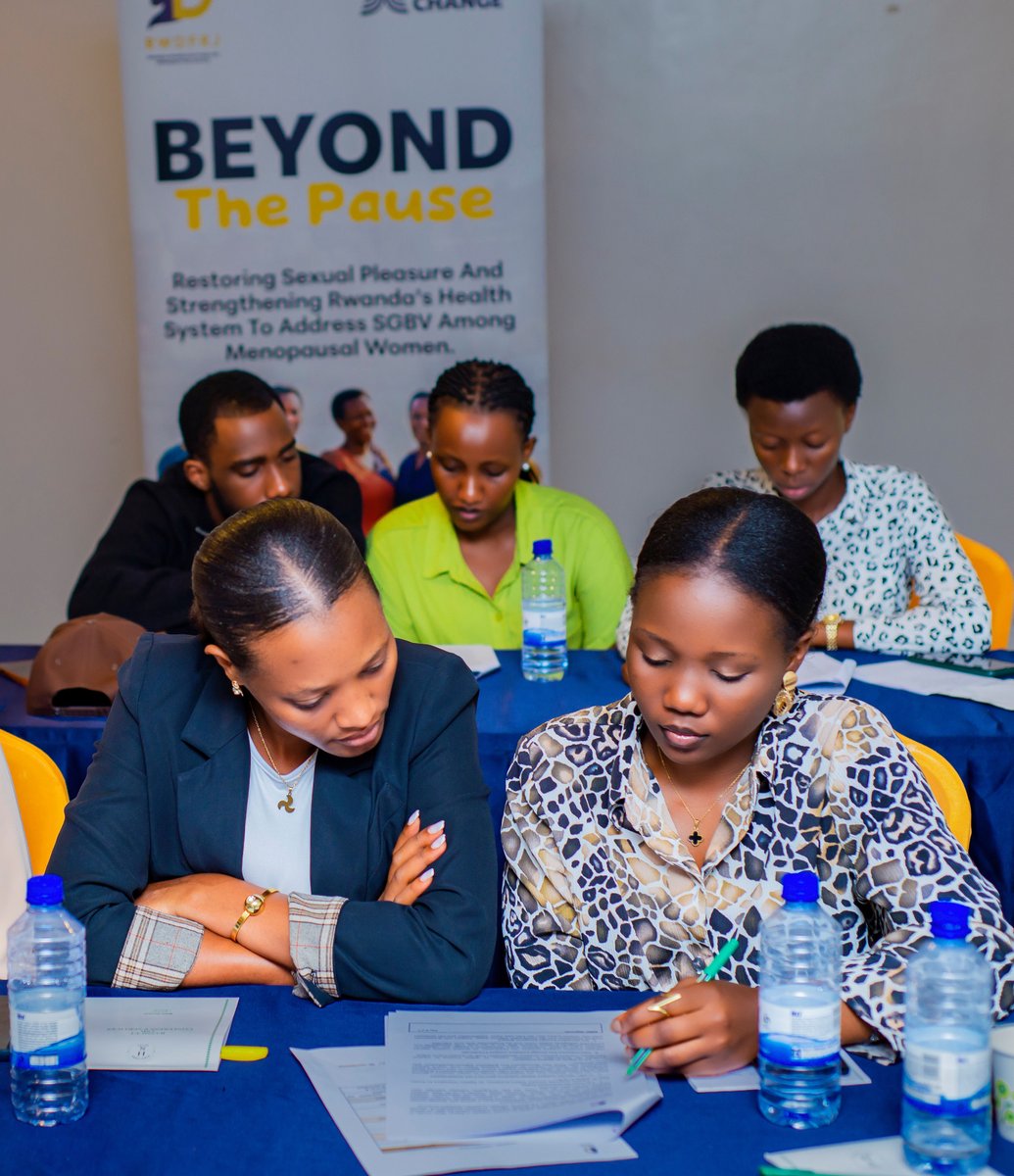
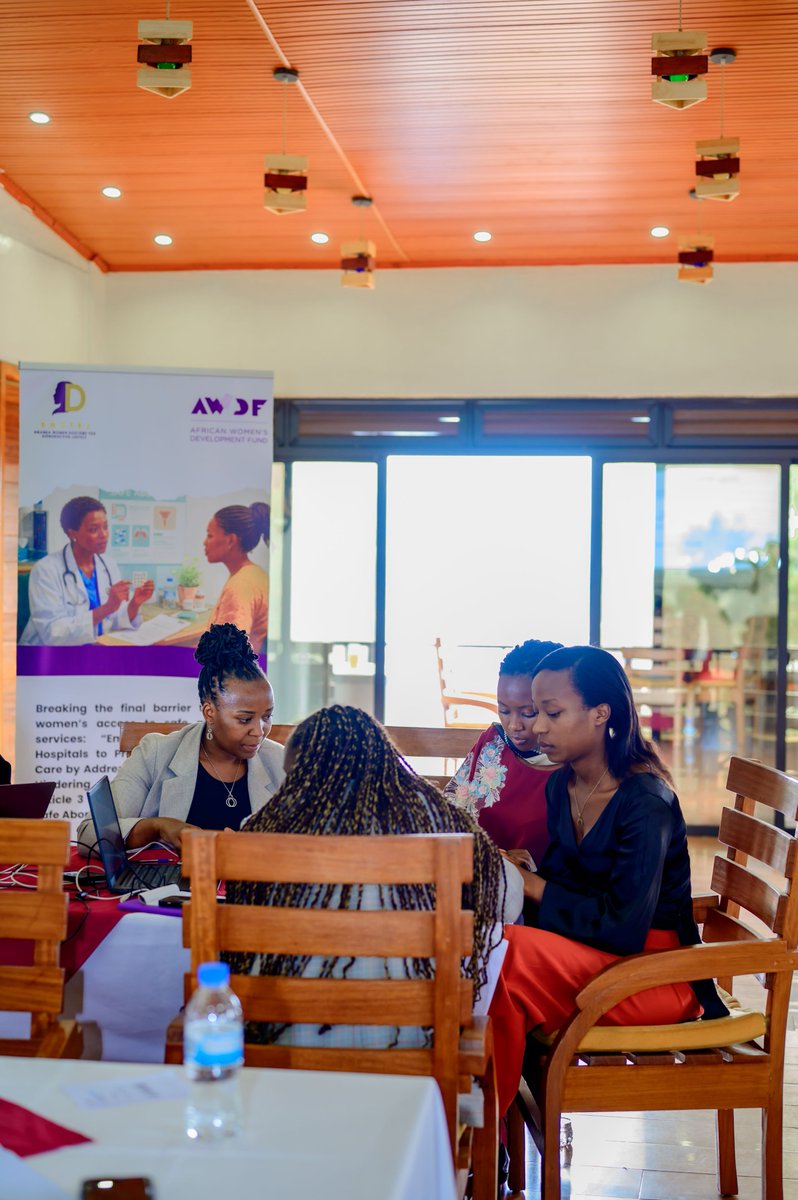
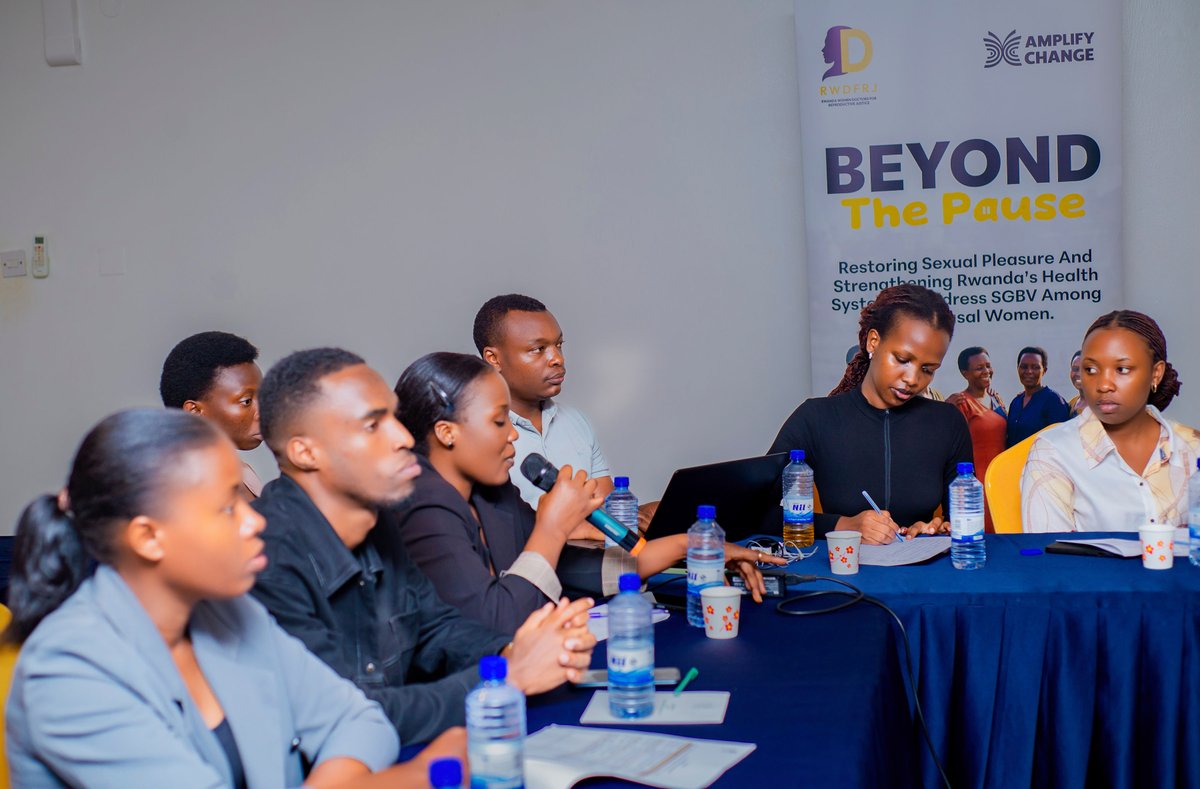
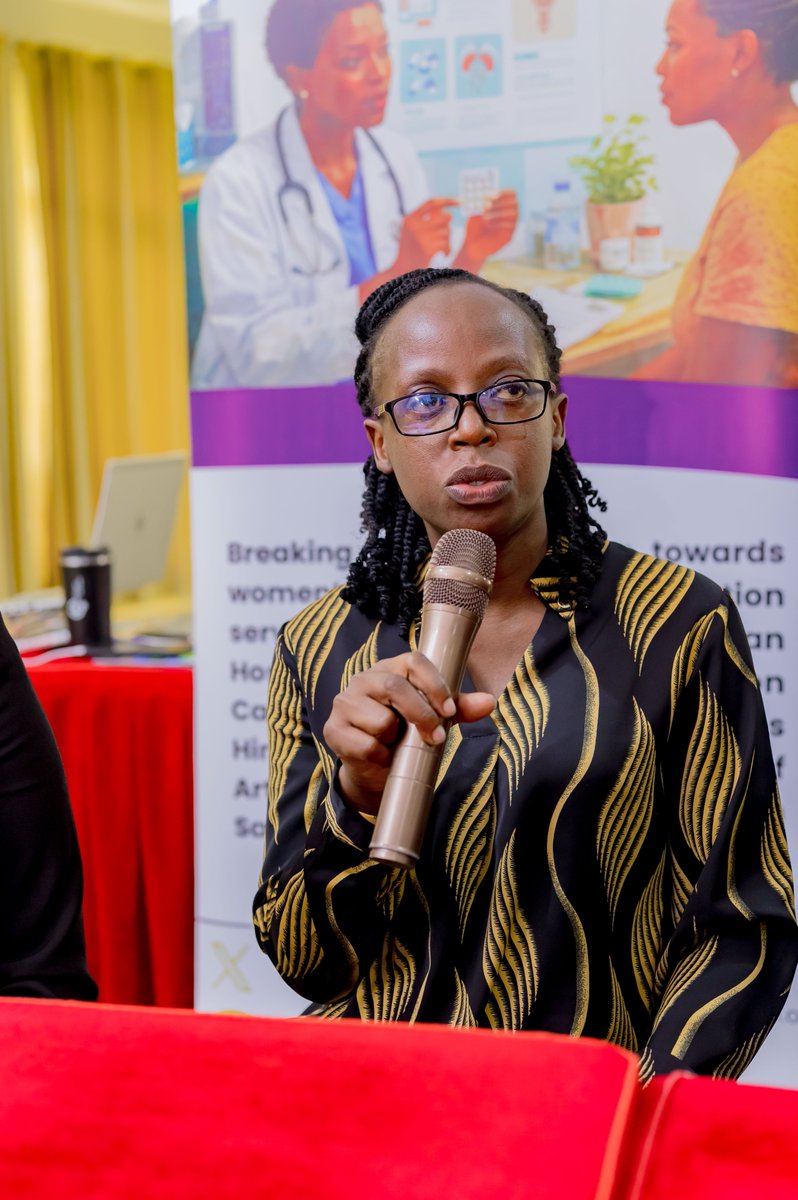
@doctors_women concluded its two-day data collectors’ training under the Beyond the Pause (BTP) Initiative.
Today, we focused on the practical application of data collection procedures, including questionnaire administration, interviewing techniques, and ethical engagement with study participants.
We remain committed to ensuring data quality, protecting participants’ rights, confidentiality and documenting women’s lived experiences in a safe, respectful manner.
Beyond the pause, every woman’s voice matters.
“Women’s experiences do not become less important with age; every woman deserves to be heard at every stage of life.”
Today, @doctors_women began a two-day training for data collectors under the Beyond the Pause (BTP) Initiative, which aims to address sexual and gender-based violence affecting menopausal women in Rwanda.
The first day focused on menopause, study methodology, participant screening, and ethical data collection, with a strong emphasis on privacy, confidentiality, and participant safety.
As we prepare for data collection, we are equipping our data collectors to listen with empathy, uphold research ethics, and ensure that women’s experiences are documented with dignity and respect.
Let’s break the silence around menopause and make sure no woman’s voice is overlooked.
#BeyondThePause
#MenopauseAwareness
#RWDFRJ
Mental health is part of our well-being, yet too many people still struggle in silence.
This #WorldMentalHealthDay, under the theme “Lived Experiences Heard: Real Voices, Real Change,” @doctors_women calls for greater awareness, compassionate support, and safe spaces where people can share their experiences without fear of stigma or judgment.
Let’s listen, check in on one another, and work towards accessible, inclusive mental health care for all.
#WorldMentalHealthDay2026
#MentalHealthMatters
Evidence tells the story. Strategy helps people hear it and act on it!
From 31 August to 1 September, @doctors_women joined women's rights organizations (WROs), community-based organizations (CBOs), advocacy organizations, and other partners for a two-day workshop organized by @HDIRwanda on Advancing Evidence-Based Safe Abortion Advocacy.
The workshop aimed to strengthen our capacity to communicate evidence on safe abortion access through effective messaging and media engagement, while building our ability to identify target audiences, advocacy opportunities, key messages, and evidence sources to support our advocacy efforts.
From exploring evidence and tools such as the Guttmacher Safe Abortion Calculator and to working with the Media and Advocacy Toolkit, we reflected on important lessons: evidence only creates impact when people can understand it, connect with it, and use it, and how we communicate sensitive information matters just as much as the message itself.
As we begin the six-month mentorship, we look forward to putting these lessons into practice, turning evidence into strategic advocacy, stronger public conversations, and meaningful action for safe abortion access.
#AdvancingHealthRights
#SRHR
#EvidenceToAction
📢 We're Hiring | Program and Communication Officer
RWDFRJ is looking for a passionate Program and Communication Officer to join our team.
Ready to make an impact? We would love to hear from you!
🗓 Application Deadline: 26 July 2026
For more details, click here: https://t.co/QvMJ2OlObp
As life expectancy increases in Rwanda, more women are spending a significant part of their lives after menopause, making it a public health issue that deserves greater attention.
This morning, @doctors_women joined @bbkigalifm for an important discussion on "Beyond the Pause: Understanding Menopause and the Hidden Challenges Women Face During This Stage of Life."
Through Beyond the Pause Project, RWDFRJ is generating evidence on menopause and its intersection with Sexual and Gender-Based Violence (SGBV). Through research, advocacy, and community engagement, we aim to strengthen healthcare responses, inform policy, and ensure that women experiencing menopause are seen, heard, and supported.
Menopause is a natural stage of life, not a disease. Yet, it remains surrounded by silence, myths, stigma, and misinformation. During the discussion, we explored its physical, emotional, and psychological impacts, emphasizing that every woman's experience is different. We also highlighted the need for evidence-based care, accurate information, and supportive families, workplaces, communities, and healthcare systems.
The conversation does not end here. Let's continue breaking the silence, challenging stigma, and creating a society where every woman can navigate menopause with dignity, confidence, and the support she deserves.
We are proud to launch the Rwanda Women Doctors For Reproductive Justice Annual Report 2025, a reflection of a year marked by dedication, progress, and collective impact in advancing reproductive justice.
Together, we strengthened advocacy, expanded services, empowered communities, and advanced equitable healthcare.
This milestone was made possible by our members, partners, and stakeholders whose trust and collaboration continue to drive our mission forward.
Join us in advancing Reproductive Justice for all.🌟
Click to read the full Annual report 👉: https://t.co/sn96QDZKmw
@doctors_women participated in the Youth Forum on Preventing Teenage Pregnancy and Improving Access to ASRH Information, organized by @Imbuto Foundation in partnership with @Migeprof and @UNFPA, under the theme: "Empowering Youth, Strengthening Families: Accelerating Action to End Teenage Pregnancy in Rwanda."
The discussions highlighted the urgent need to address the root causes of teenage pregnancy, including limited access to education, misinformation and myths about #ASRH, peer pressure, poverty, and sexual violence.
Ending teenage pregnancy requires collective action. Expanding access to comprehensive sexuality education, youth-friendly health services, stigma-free counseling, and justice can transform the lives of young people across Rwanda.
A key highlight was the launch of the Parent-Adolescent Communication (PAC) program , an important initiative that will strengthen open and honest conversations within families. When parents and young people communicate openly, they build trust, make informed decisions, and create safer, healthier futures.
Together, we can empower youth, strengthen families, and accelerate action to end teenage pregnancy in Rwanda.
#EndTeenagePregnancy
#ASRH
#YouthEmpowerment
“Lasting change begins with conversations that bring together diverse voices, experiences, and ideas”.
Today, @doctors_women successfully convened stakeholders from across different sectors to officially establish the Rwanda Fem Tech Network (RFTN). This aimed to advance gender equality and inclusion within Rwanda’s growing technology and innovation landscape.
The discussions highlighted the importance of collaboration, collective learning, mentorship, ethical innovation, and creating spaces where women and girls can actively participate in shaping the future of technology. The establishment of RFTN marks an important step toward strengthening connections among individuals and organizations working at the intersection of gender, technology, innovation, and social justice.
This is just the beginning, and RFTN look forward to growing this community and advancing impactful conversations and actions.
"Every month, more than 2 billion people around the world menstruate, yet millions of girls and women still cannot afford menstrual products" - @unwomenafrica
As we mark Menstrual Hygiene Day 2026, @doctors_women continues to advocate for a future free from period poverty, menstrual stigma, and the silence surrounding menstruation. For many girls, periods still mean missing school, losing confidence, facing shame, or struggling without adequate menstrual products and sanitation facilities. Menstrual health is a fundamental human right connected to health, education, dignity, and gender equality.
Breaking period stigma starts with open conversations, access to accurate information, affordable menstrual products, and supportive communities that empower girls and women instead of excluding them.
We must create environments where no one feels ashamed of a natural biological process and where every girl can manage her period safely and confidently. RWDFRJ remains committed to advancing menstrual health awareness, gender justice, and equitable access to sexual and reproductive health information and services for all.
Together for a #PeriodFriendlyWorld
“Every stitch made and every skill learned is a step toward confidence, independence, and hope.” - Ishami Initiative
Teenage pregnancy remains a significant public health and social challenge in Rwanda. About 8% of teenage girls have begun childbearing, with many of them facing school dropout, stigma, economic dependence, mental health challenges, and limited opportunities for their future.
Recognizing these realities and the urgent need to support young mothers beyond motherhood alone, @doctors_women officially launched the Ishami Initiative, a six-month empowerment program supporting teenage mothers aged 15-19 through tailoring skills development, peer support, mentorship, and Sexual and Reproductive Health and Rights (SRHR) education.
Through the initiative, RWDFRJ is creating a safe and supportive space where young mothers can rebuild confidence, develop practical income-generating skills, and access comprehensive SRHR education, including contraception, prevention of repeat unintended pregnancies, healthy relationships, parenting, mental health support, and access to youth-friendly healthcare services.
At RWDFRJ, we believe every girl deserves dignity, support, and the opportunity to thrive regardless of her circumstances. Through Ishami Initiative, we are transforming vulnerability into resilience, empowerment, and hope.
#IshamiInitiative
“A girl should never have to choose between her dignity and her education because of her period.” 💜
As RWDFRJ Women’s Health Week comes to a close, @doctors_women continues to remind everyone that menstruation is nothing to hide or be ashamed of. It is a natural part of life, yet many girls and women still experience it in silence because of stigma, misinformation, poverty, and limited access to menstrual hygiene support.
During our recent radio discussion, we reflected on what menstrual dignity truly means. It is not only about managing periods, but also about ensuring access to safe menstrual products, clean water, sanitation facilities, accurate menstrual health information, and supportive spaces where menstruation is treated with dignity and respect.
Too many girls still miss school because of fear, stigma, lack of support, and inadequate resources. This is not only a health issue, but also an education, equality, and economic issue.
Every girl deserves the dignity, support, and opportunities to stay confident, safe, and in school. Now is the time to move beyond the conversation and take action.
“Not all wounds are visible, and women’s mental health deserves just as much attention as physical health.”
As we mark Day 5 of RWDFRJ Women’s Health Week, we are raising awareness about women’s mental health and the importance of creating supportive and stigma-free spaces where women and girls can seek care, support, and healing.
Women face many pressures within families, workplaces, schools, and communities, and these
responsibilities can greatly affect their emotional and psychological well-being. Yet, mental health challenges among women often remain misunderstood or untreated due to stigma, gender inequality, violence, economic stress, and limited access to care.
Globally, women are 1.5 times more likely to experience depression than men, and more than 10% of pregnant women and new mothers experience postpartum depression.
At RWDFRJ, we believe mental health is a human right and a public health priority. No woman or girl should ever feel ashamed to ask for support.
#WomensHealthWeek2026
Today, @doctors_women joins Rwandans and the world in solemn remembrance of the 1994 Genocide against the Tutsi in Rwanda.
We honor the lives lost, stand in solidarity with survivors, and reaffirm our shared commitment to remembrance, unity, and resilience.
Let us remember, unite and renew.
#Kwibuka32
“Women don’t need to find a voice; they have a voice. They need to feel empowered to use it, and people need to be encouraged to listen.” Meghan Markle.
@doctors_women organized VCAT Training for women physicians to strengthen both their clinical competence and commitment to compassionate, rights-based SRHR care.
During the sessions, women providers examined the Epidemiology of Unsafe Abortion in Rwanda and reviewed Rwanda’s SRHR Legal Framework to ensure safe, ethical, and client-centered SRHR service delivery.
Using the Social-Ecological Model, the training highlighted how gender roles, stigma, cultural beliefs, and structural barriers affect equitable access to comprehensive SRHR services. During VCAT training, providers reflected on personal values, built empathy, and renewed their dedication to fulfilling professional duties.
This VCAT training was an important step toward reducing preventable maternal mortality and morbidity and improving access to comprehensive reproductive health care for all women and girls.
@awdf
45% of all induced abortions worldwide are unsafe, and in law restricted settings, only 1 in 4 abortions is safe. Protective laws alone aren’t enough; they must be clearly understood, interpreted correctly, and properly implemented.
Under our initiative that aims to break barriers to SRH services supported by @awdf01 , @doctors_women conducted a 2 days VCAT (Values Clarification and Attitudes Transformation) session specifically for our coordination team. It was a meaningful space for reflection, learning, and honest dialogue.
The training strengthened our internal alignment, deepened understanding of Rwanda’s legal framework on safe abortion, and encouraged us to examine how personal values, stigma, and systemic barriers shape implementation and access.
By building a shared foundation of knowledge and advocacy values, we are better equipped to raise awareness, combat stigma, and mobilize support for reproductive justice across Rwanda.
Did you know❓❓Women make up only about 30% of scientists worldwide🌍.
Today as we celebrate the International Day of Women & Girls in Science, @doctors_women joins the global community in honoring the power, brilliance, and impact of women and girls in science.
This year’s theme, “From Vision to Impact: Redefining STEM by Closing the Gender Gap”, inspires us to not only innovate in labs and clinics but also turn knowledge into real-world impact, ensuring that no woman or girl is left behind in the science revolution.
RWDFRJ reaffirms its commitment to empowering girls and young women to pursue careers in STEM. Through career guidance, mentorship, research, advocacy, and clinical care, we are actively working to close gender gaps hindering women to fully exercise their scientific potential👩🔬
“Transforming practice begins with stepping into someone else’s shoes.”
As Day 2 of #VCAT training came to an end, healthcare providers moved beyond theory and applied SRHR ethical principles through practical, reflective exercises. Activities like the Four Corners on Values and Cross the Line helped healthcare providers to reflect on how personal beliefs and biases can influence clinical decision-making.
Through the “Why Did She Die?” exercise, providers reviewed case scenarios to identify how stigma, delayed care-seeking, provider bias, and gaps in the referral system can contribute to poor maternal health outcomes; strengthening critical reflection and promoting timely, respectful, and evidence-based #SRHR care.
Stay tuned for more insights & learning ahead!
#VCAT
#HealthcareProviders
“Yesterday’s session helped me better understand the current ministerial order, especially the decentralization of safe abortion services to the health center level. As a psychologist, I also learned that my role is to provide legal, client-centered clinical support; not to interrogate the clients.”
We began Day 2 of #VCAT with reflections from Day 1, where healthcare providers shared key takeaways. They highlighted that conscientious objection must never compromise clinical care and stressed the importance of understanding Rwanda’s legal framework governing abortion services.
Day 1 showed a strong commitment from healthcare providers to deliver timely, stigma-free, and evidence-based #SRHR care.
#VCAT2026
#EthicalSRHR
"Healthcare provider attitudes shape access to comprehensive sexual and reproductive healthcare services".
@doctors_women coordinated a consultative workshop bringing together academics, medical doctors, and civil society organizations to review the Values Clarification and Attitude Transformation (VCAT) Manual.
The revised VCAT Manual will serve as a key resource for future VCAT sessions, supporting healthcare providers to reflect on their values, challenge stigma, and deliver ethical, rights-based reproductive healthcare services.
This collaborative space encouraged an interdisciplinary dialogue based on real clinical experience and academic insight, ensuring the VCAT Manual will be contextually relevant, evidence-based, and responsive to the realities of reproductive health in Rwanda.
#VCAT
#EndStigma
#EthicalHealthcare
@awdf