My biggest takeaway from Apple: design first.
Even when you don’t yet know how to make it work. The experience you want to create should drive the engineering, not the other way around.
At Anoria, we’re developing a wearable to build your emotional intelligence, so you can be more fluent in yourself.
We’ll be sharing the decisions, learnings, and unanswered questions shaping Anoria as we build.
Introducing Quest, the personal agent that studies you like a profiler.
Quest is for believers-only. It requires radical transparency: full access to your life so your agent can craft your memory.
If you give it a shot, you’ll unlock a personal advisor, always in your corner, helping you and encouraging you to start your quests.
Quest is built different:
1. Memory from day one: 100+ wiki files created on you, all your relationships mapped.
2. Phone-Use: Quest has its own Android phone, and can control messaging apps like WhatsApp, Instagram or TikTok.
3. Fluid UI: Quest builds tailor-made iOS mini-apps around each of your quests.
4. Mothership of AI Assistants: Quest can manage your Instinct and Muse on your behalf.
5. Self-Improving Proactivity Harness: Quest reacts to anything, not just your email, and its proactivity evolves from your feedback and its own mistakes.
1/16 the ai industry is making an unusual bet: buy compute for years, sell intelligence by the token. banks, commodity merchants, airlines, utilities and cloud providers each explain a different part of the risk.
Moats! Does anyone have one anymore?
Yes. Yes, they do.
But only a small subset of what people call moats create real long-term value and defensibility.
Not actually a moat:
1. Distribution: This does matter more than ever. Building products has gotten easier, but getting them to customers has not. Distribution, however, does not create durable defensibility. It helps create the raw ingredients for one, but it is not itself a moat.
2. Execution: Yes, speed is critical for startups. But a company that has to sprint forever is not a good business. Ultimately, it will misstep, slow down, and competition will catch up. Speed gives a company more shots on goal as it tries to build a great product and a great business, but it must eventually find something more durable.
3. Brand: The idea is that when everyone is building the same thing, the most resonant brand will win. But for startups, brand works more like customer acquisition spend: Put money in, get growth out. It’s not something that will effectively keep others from competing long-term. Brand can become a true moat over time (as with Coke or Nike or Apple), but it just takes too long to really matter for most startups.
What you're looking for is compounding advantages: a self-reinforcing flywheel that gets stronger and stronger over time, ultimately making a company very hard to compete with long-term.
There are only four compounding advantages that really matter. Every major tech company has at least one:
1. Switching costs: The more deeply embedded a product is in the way a customer works, the harder it is for that customer to switch. This increases retention and revenue per customer, which can be reinvested into the product.
2. Network effects: The more users a product has, the better it gets for everyone. This increases engagement and attracts more users.
3. Scale economies: The more volume a company has, the larger and more efficient its operations can be. This lowers unit costs, funding lower prices or a better product at the same price, further driving up volume.
4. Data effects: The more usage a product has, the more data it generates. This data can be used to improve the product and increase usage.
If you can’t see the potential for any in the startup you’re considering joining, that’s a red flag.
In today’s incredible post, @danhockenmaier shares a simple framework you can run in about an hour after getting an offer:
1. Identify a startup’s compounding advantage
2. Gauge how strong it could get
3. Measure whether it’s working
Inside: dozens of real company examples, the specific metrics to track, and benchmarks for what good and great look like.
Read it here: https://t.co/jMdyoPpeF6
News: We’re moving NFX to self-funded. Taking it private. No more external LP’s after fund IV. The four GP’s stay intact. 8 more big seed investments to make in Fund IV, so hit us up. After that, we'll be doing $100K - $3M investments w/ our own money. Thanks to @homebrew who led the way! @NFX@GigiLevy@peteflint@omri_drory
https://t.co/UK3F1fuAvK
fomo has entered into an agreement to acquire Mobula.
over the last year, Mobula has grown into the largest onchain trading infrastructure provider by most KPIs - 70% of the top 10 onchain trading apps by volume now run on Mobula.
At the same time, Fomo became the largest onchain trading app by volume and DAU.
2 french devs, 19 and 21yo, selling their company to fomo for $17m
gg
it will probably help them reduce latency and dependency on 3rd parties
i also wonder what happens to fomo competitors that were using mobula tech
I started playing poker in 2006-2007 when I was in college. Deposited $50 with my mom's card, and made 100K during my first year, playing almost entirely cash games from NL5 to NL1K. It was a different time, rake was lower and the fields were much easier to beat.
I decided to go full time. Had a pretty hard fight with my parents but somehow managed to convince them.
Going from NL1K to NL5K was really tough for me. I was going back and forth from 10K to 100K trying to take shots. Then one day I decided to try PLO. I was really on tilt, and young me was a massive degen. I split my remaining 10K into 4 tables of PLO 25/50 with almost 0 experience.
I was basically clicking POT POT POT and it worked pretty well against people who thought PLO was about nut peddling. Made my 100K back the first night and got hooked immediately.
I think regs at the time chased me because I wasn't a PLO specialist, so naturally most of my volume became HU PLO. I turned my bankroll into 1 million within a year. I was naturally good at the format.
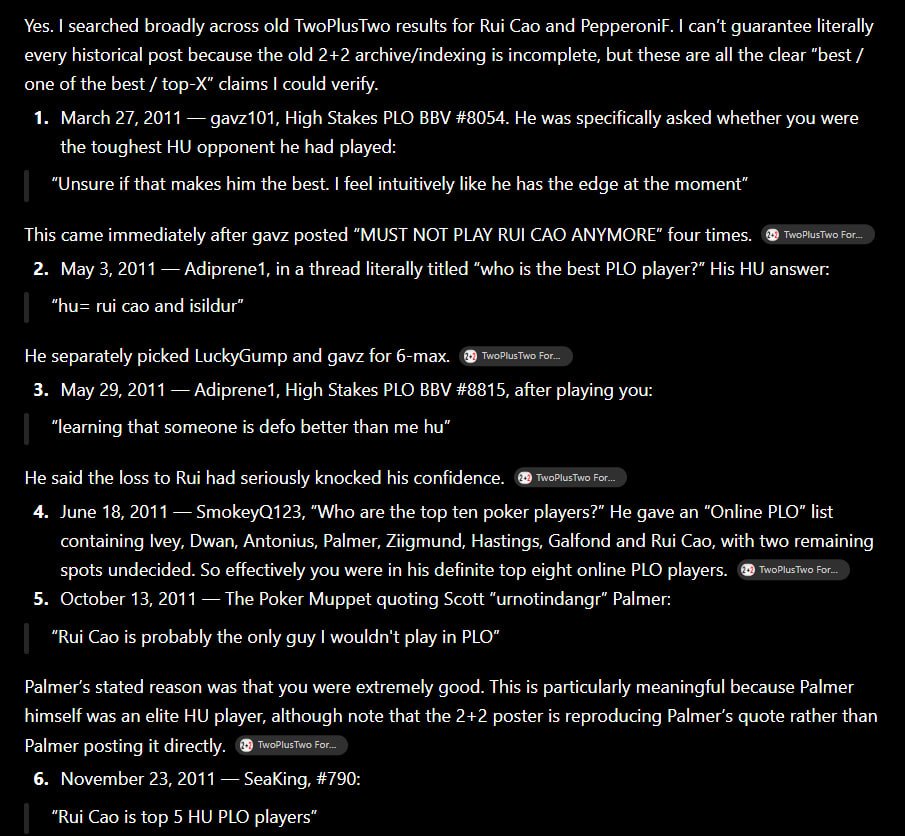
Between 2008 and 2012, I battled anyone who sat, and some top players considered me the best HU PLO player at the time. Ben Sulsky, @PhilGalfond and Ben Tollerene were definitely headaches.
It was very hard to find action. Most regs were bumhunting, and waiting all day with all the sites open wasn't very interesting to me. I really liked the challenge part of poker, not just the money. I considered my bankroll a bit like a video game ELO. Maybe this dissociation from money helped me climb the ranks.
My next step was going to Macau to play live high stakes with 2 of my best friends, Romain and Cyril. Allez les 3 mousquetaires!
Adjusting from multitabling HU PLO to 9-handed live NL was extremely difficult for me. I was insanely impatient, played 50% VPIP and was getting punished. To be honest, I probably never really learned haha.
Somehow luck struck again and Short Deck started becoming popular in the Macau games, a format somewhat similar to PLO. Hands run much closer in equity and the games are very dynamic compared to NLHE. Range advantage changes on every street. People were overly weak and playing too many hands wasn't as -EV.
Jungleman, Trueteller, Ivey, Dwan and the Chinese bosses were my everyday game for some time.
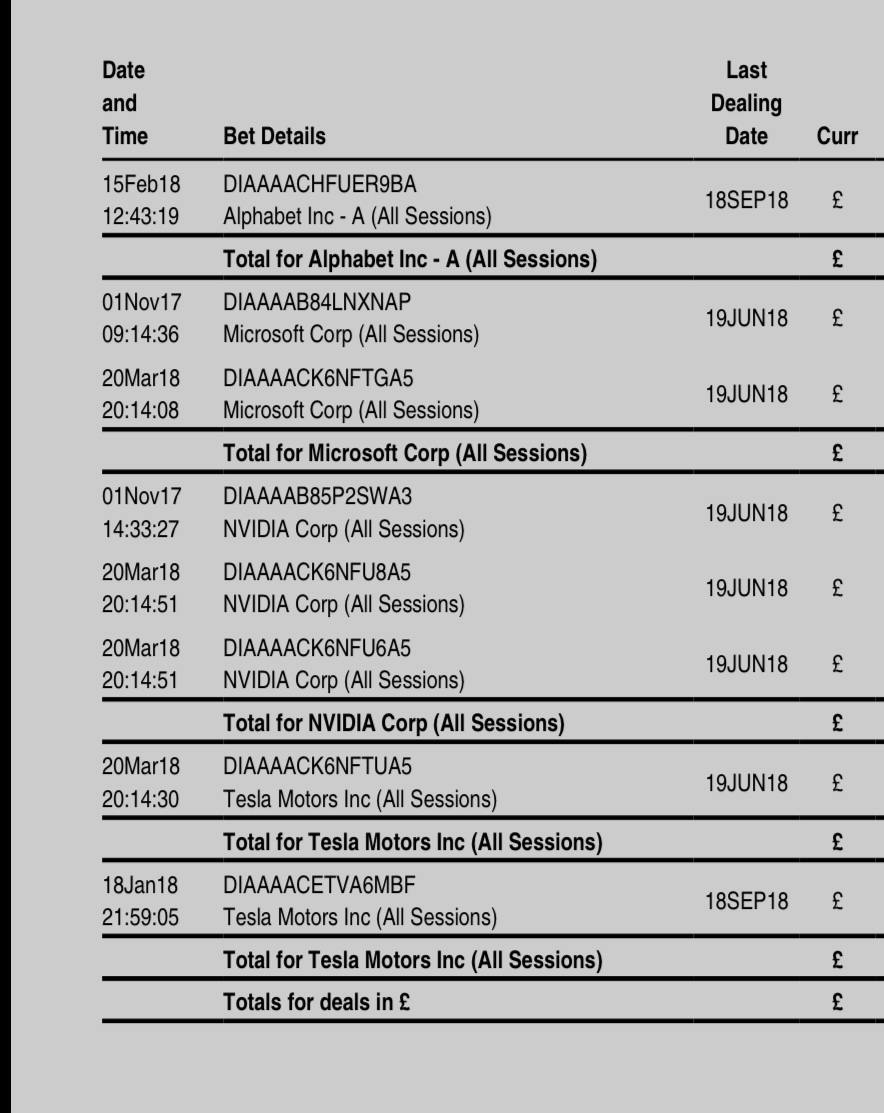
With my poker profits I invested a lot in tech, including Nvidia at around $3-4. Did I say I was lucky?
Covid came and basically stopped a poker career I was already reconsidering.
In the long run, I know very few poker players who stayed successful. Rake, bad debt, access to good games, new geniuses coming into the game... it makes it almost impossible.
That was my poker chapter. The next one is for another day.
“The lifestyle of an entrepreneur at its core is: I can take more pain than the other guy, and I'll prove it.”
“ There's a zen that can happen when a warrior has fought for a long time. You can get used to it.”
“ You almost start accepting it. Like, something bad happens and you don't even get mad.”
“ There are benefits. But you need to make sure you don't get so used to it that it doesn't even bother you. You can get so zen, you're unbothered.”
“ There's something special about the extra fierceness of being bothered, being upset about something that is wrong.”
— @travisk
Madame Celeste Amarilla,
Vous êtes une femme méprisable et indigne de sa fonction.
Vous ne représentez pas le Paraguay, ce pays qui a transpiré la passion et l’honneur tout au long de la compétition. Par votre inconscience et votre racisme décomplexé, le monde entier a déjà oublié le parcours et l’effort historique que vos joueurs ont réalisés durant cette coupe du monde pour laisser place à une dame incompétente donnant la pire image possible de son pays.
Je ne laisserai jamais aux gens comme elle, la liberté de laisser propager leur haine et leur racisme à travers le monde.