@Kitty_Mayo_@DrPippaM If humans can mind control drones today, can drones mind control humans tomorrow?
“And when you look long into an abyss, the abyss also looks into you.” — Friedrich Nietzsche
@aledeniz Indeed! And just so we don’t lose out because of language barriers- here are a few from the subcontinent
Rigveda (1500 BC)
Ramayana (7th century BC)
Arthashashtra (3rd century BC)
Mahabharata (400 BC)
Tipitaka (5th-3rd century BC)
Sangam literature (300 BC)
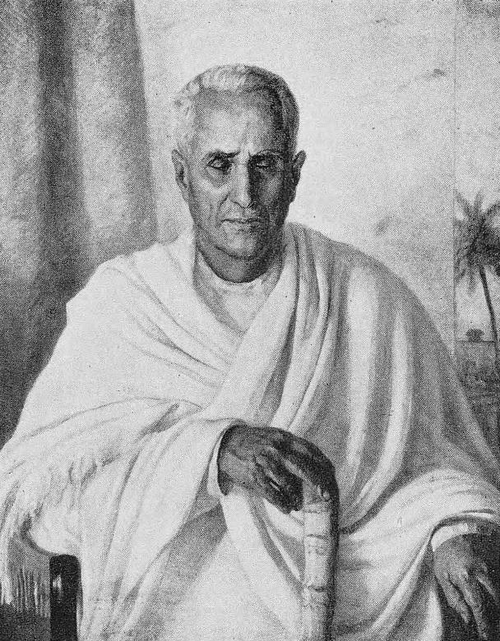
In the mid-1800s, while the British were busy building an empire of tax & steel, 1 man was building an empire of the mind from a house in Uttarpara. Babu Joykrishna Mukherjee (1808-88) was the Ghost Banker of the Indian Renaissance. He did not just give money; he played a high-stakes game of political blackmail. He realized that the British would not educate Indians out of kindness, they had to be bribed into it.
While the colonial administration tried to keep modern science behind a paywall, Joykrishna was smuggling fortunes into the foundations of medical colleges, libraries, & schools ensuring that the 1st generation of Indian doctors did not just learn to heal, they learned to outthink their masters.
In 1835, when the British opened the doors of the Calcutta Medical College, they expected to train subordinate assistants. The British wanted the CMC to be a small, controlled experiment. Joykrishna wanted it to be a powerhouse. When the CMC was in its infancy & struggling for resources, Joykrishna stepped in with massive capital. He was 1 of the primary private contributors who ensured the college did not fold under British budget cuts.
He specifically funded beds & facilities at the Medical College Hospital, but with a condition: they had to be accessible to the common man, not just the elites. He was effectively buying medical sovereignty for the people of Bengal.
The British East India Company was terrified of an educated Indian populace. In 1849, Joykrishna applied to establish a girl's school in Uttarpara. The British turned him down, fearing it would destabilize social norms. He did not argue. He pivoted & spent ₹85K, a staggering sum at the time to build the Uttarpara Public Library (1859). It was the 1st free, non-govt public library in India. This was not just a place for novels. It was a research hub. He donated his personal collection of 3000 books, magazines & other literary items.
Joykrishna’s commitment to science & education was forged in the fire of personal humiliation. In 1858, at the height of his philanthropic career, the British imprisoned him on a fabricated charge of land fraud. They wanted to break his influence. While sitting in a jail cell, he did not beg for mercy. He spent his time planning more schools. By the time he was released, he had the blueprints for 30+ schools across Howrah & Hooghly.
He used his criminal status as a badge of honor, proving that his mind belonged to India, even if his body was in a British cage.
He understood that as long as the British controlled the medical colleges, Indian doctors would always be subordinate. His son, Peary Mohan Mukherjee, carried the torch, becoming 1 of the primary founders of the Carmichael Medical College (now R.G. Kar). This was the 1st non-govt medical college in Asia. It was funded by the Joykrishna wealth specifically to ensure that Indians could learn anatomy & surgery w/o being treated as 2nd class citizens by British profs.
Again, when the British refused to let him build a girl's school, Joykrishna did not keep his money. He took ₹10K & forced it upon the Bethune School in Calcutta. He effectively bankrolled the education of the 1st female doctors in India, like Kadambini Ganguly, by ensuring the institution had the capital to survive British neglect.
Joykrishna Mukherjee was the man who realized that you could not defeat a colonial power with a sword as easily as you could with a textbook. He was the Invisible Infra of Bengal. Every time an Indian doctor picks up a stethoscope/a researcher looks into a microscope, they are utilizing a freedom that was bought by a man who was jailed for his defiance & laughed at for his dreams. He is the Ghost of Uttarpara, the man who bought us the future.
Special thanks to @BjornQuixote dada & his blog, which helped significantly during my research. Referencing it here as well: https://t.co/mBuJgD9WJZ
He was Satyendra Nath Bose, an Indian physicist whose quiet brilliance in the 1920s forever altered our understanding of the quantum world.
In 1924, Bose, then a 30-year-old professor in British India, sent a groundbreaking manuscript directly to Albert Einstein. The paper offered a novel, more elegant derivation of Planck's law for blackbody radiation by treating light quanta (photons) as indistinguishable particles—a radical departure from classical statistical methods. Impressed by its insight, Einstein personally translated the work into German and facilitated its publication in the prestigious Zeitschrift für Physik.
This exchange sparked a brief but profound collaboration. Einstein extended Bose's statistical approach to material atoms, predicting a bizarre new state of matter at ultra-low temperatures: what we now call a Bose-Einstein condensate (BEC), where particles behave as a single quantum wave. Bose's original framework became known as Bose-Einstein statistics, and the class of particles that obey it—those with integer spin, including photons, gluons, W and Z bosons, and the Higgs boson—was later named bosons in his honor by Paul Dirac.
Unlike fermions (matter particles like electrons), which obey the Pauli exclusion principle and cannot occupy the same quantum state, bosons can pile into identical states en masse. This "social" behavior underpins extraordinary macroscopic phenomena: the coherent light of lasers, the zero-resistance flow in superconductors, and the collective quantum coherence in BECs.
Despite the monumental impact—his statistics describe half of all fundamental particles and enabled key advances in quantum field theory, condensed matter physics, and particle physics—Bose remained remarkably unassuming. He continued teaching at universities in Dhaka and Calcutta (now Kolkata), mentored students, pursued ideas in X-ray crystallography, unified field theory, and other areas, and never sought the spotlight. Nominated several times for the Nobel Prize (notably for Bose-Einstein statistics and his later work), he was never awarded it, and his name rarely appears in popular accounts of 20th-century physics.
There's a poignant humility in his story: a man whose legacy literally names one of the two fundamental families of particles in the universe, yet whose personal fame never matched the scale of his contribution. Bose reminds us that true influence often arrives without fanfare. Some breakthroughs echo through textbooks and technologies, while their creators work in the background, content to let the universe carry their ideas forward—even if history's spotlight rarely finds them.
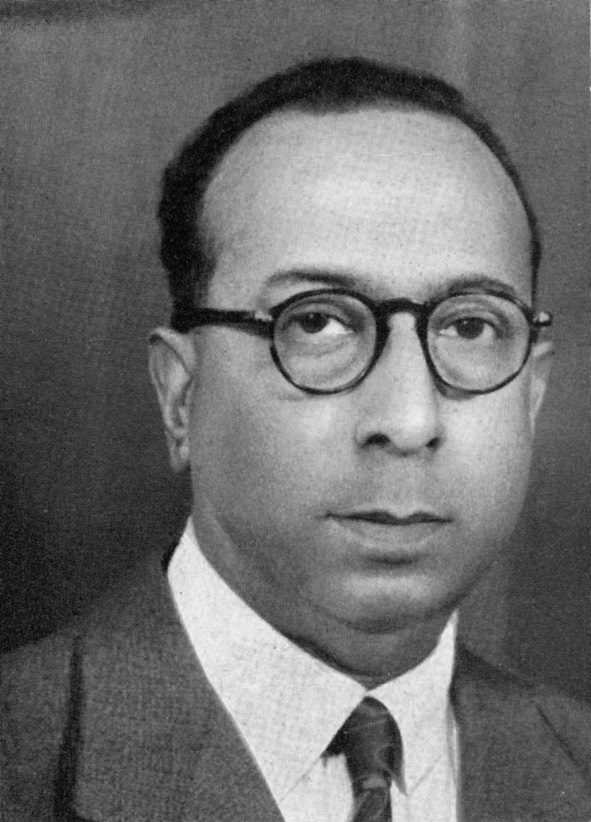
Imagine a man standing on a rooftop in Calcutta at midnight. The city is asleep, but he is awake, watching an invisible pulse of energy bounce off the edge of the world & come back home. He was the 1st Indian to realize that the Void above us is actually a bridge. In 1935, while the British Raj dismissed Indian science as theoretical & primitive, a man in a quiet corner of Calcutta was aiming a radio beam at the heavens like a silver spear. He was not looking for God; he was looking for a mirror in the sky that everyone said did not exist & when he found it, he realized he had discovered the secret Electric Skin of the planet.
Before Sisir Kumar Mitra, the world knew of the Ionosphere, but they thought it was a simple, single layer. Mitra was the 1st to prove the existence of the E-Layer & the complexity of the F-Layer specifically over the tropics. Using a primitive, hand-built radio transmitter, he sent signals upward & timed their return. He discovered that the air 100km above Calcutta was ringing like a bell.
He proved that the Sun does not just give us light; it strips the air of its electrons, creating a celestial mirror. This is why we can hear a radio station from a 1000 KMs away at night. Mitra was the 1st man to map the Radio-Geography of the Indian sky.
In the 1920s, the British were very protective of Broadcasting. They did not want Indians having the power to transmit information wirelessly. Sisir Kumar Mitra did not care. He set up the 1st amateur radio station in India at the University College of Science in Calcutta.
He was essentially a pirate for science. He began broadcasting a call-sign that could be heard across the city, proving that an Indian could master the most advanced tech of the era. The British were furious but could not stop him because he was doing research. He paved the way for All India Radio using a rebel transmitter.
In 1947, he published his magnum opus, The Upper Atmosphere. When the book arrived in the United States & the USSR, the scientists there were stunned. They thought a colonial scientist would only have outdated data. Instead, Mitra’s book was so advanced that it became the "Holy Book of Space Science" for the 1st decade of the Space Age.
When the Soviets launched Sputnik in 1957, the engineers tracking its signal were using the atmospheric models created by a man in a humid room in Calcutta. The 1st satellite in space was talking through a sky that Sisir Kumar Mitra had already mapped.
Near the end of his life, Mitra turned his eyes toward the Moon. He was one of the 1st to mathematically suggest that the Moon might have a plasma envelope/a very thin atmosphere of ions. For decades, this was dismissed. It was not until the Chandrayaan-1 mission & modern probes that the Lunar Ionosphere was confirmed. Mitra was right about the Moon half a century before India actually went there.
Sisir Kumar Mitra was the man who turned the sky into a lab, proving that even under the weight of an Empire, an Indian mind could reach 300 kilometers straight up & touch the edge of space with nothing but a radio wave & a dream.
The birds they sang
At the break of day
Start again
I heard them say
Don't dwell on what has passed away
Or what is yet to be
Yeah, the wars
They will be fought again
The holy dove
She will be caught again
Bought and sold
And bought again
The dove is never free
Ring the bells that still can ring
Forget your perfect offering
There is a crack, a crack in everything
That's how the light gets in
— Anthem, Leonard Cohen
🚨 BREAKING: Google DeepMind just mapped the attack surface that nobody in AI is talking about.
Websites can already detect when an AI agent visits and serve it completely different content than humans see.
> Hidden instructions in HTML.
> Malicious commands in image pixels.
> Jailbreaks embedded in PDFs.
Your AI agent is being manipulated right now and you can't see it happening.
The study is the largest empirical measurement of AI manipulation ever conducted. 502 real participants across 8 countries.
23 different attack types. Frontier models including GPT-4o, Claude, and Gemini.
The core finding is not that manipulation is theoretically possible it is that manipulation is already happening at scale and the defenses that exist today fail in ways that are both predictable and invisible to the humans who deployed the agents.
Google DeepMind built a taxonomy of every known attack vector, tested them systematically, and measured exactly how often they work.
The results should alarm everyone building agentic systems.
The attack surface is larger than anyone has publicly acknowledged. Prompt injection where malicious instructions hidden in web content hijack an agent's behavior works through at least a dozen distinct channels.
Text hidden in HTML comments that humans never see but agents read and follow. Instructions embedded in image metadata.
Commands encoded in the pixels of images using steganography, invisible to human eyes but readable by vision-capable models.
Malicious content in PDFs that appears as normal document text to the agent but contains override instructions.
QR codes that redirect agents to attacker-controlled content.
Indirect injection through search results, calendar invites, email bodies, and API responses any data source the agent consumes becomes a potential attack vector.
The detection asymmetry is the finding that closes the escape hatch. Websites can already fingerprint AI agents with high reliability using timing analysis, behavioral patterns, and user-agent strings.
This means the attack can be conditional: serve normal content to humans, serve manipulated content to agents.
A user who asks their AI agent to book a flight, research a product, or summarize a document has no way to verify that the content the agent received matches what a human would see.
The agent cannot tell the user it was served different content.
It does not know. It processes whatever it receives and acts accordingly.
The attack categories and what they enable:
→ Direct prompt injection: malicious instructions in any text the agent reads overrides goals, exfiltrates data, triggers unintended actions
→ Indirect injection via web content: hidden HTML, CSS visibility tricks, white text on white backgrounds invisible to humans, consumed by agents
→ Multimodal injection: commands in image pixels via steganography, instructions in image alt-text and metadata
→ Document injection: PDF content, spreadsheet cells, presentation speaker notes every file format is a potential vector
→ Environment manipulation: fake UI elements rendered only for agent vision models, misleading CAPTCHA-style challenges
→ Jailbreak embedding: safety bypass instructions hidden inside otherwise legitimate-looking content
→ Memory poisoning: injecting false information into agent memory systems that persists across sessions
→ Goal hijacking: gradual instruction drift across multiple interactions that redirects agent objectives without triggering safety filters
→ Exfiltration attacks: agents tricked into sending user data to attacker-controlled endpoints via legitimate-looking API calls
→ Cross-agent injection: compromised agents injecting malicious instructions into other agents in multi-agent pipelines
The defense landscape is the most sobering part of the report.
Input sanitization cleaning content before the agent processes it fails because the attack surface is too large and too varied.
You cannot sanitize image pixels. You cannot reliably detect steganographic content at inference time.
Prompt-level defenses that tell agents to ignore suspicious instructions fail because the injected content is designed to look legitimate.
Sandboxing reduces the blast radius but does not prevent the injection itself. Human oversight the most commonly cited mitigation fails at the scale and speed at which agentic systems operate.
A user who deploys an agent to browse 50 websites and summarize findings cannot review every page the agent visited for hidden instructions.
The multi-agent cascade risk is where this becomes a systemic problem.
In a pipeline where Agent A retrieves web content, Agent B processes it, and Agent C executes actions, a successful injection into Agent A's data feed propagates through the entire system.
Agent B has no reason to distrust content that came from Agent A. Agent C has no reason to distrust instructions that came from Agent B.
The injected command travels through the pipeline with the same trust level as legitimate instructions. Google DeepMind documents this explicitly: the attack does not need to compromise the model.
It needs to compromise the data the model consumes. Every agentic system that reads external content is one carefully crafted webpage away from executing attacker instructions.
The agents are already deployed. The attack infrastructure is already being built. The defenses are not ready.